Tempo Markings
Tempo
Pronounced TEM-poh
Tempo is the speed of the beat in a piece of music. Composers show it with an Italian word such as Andante or Allegro, with a metronome mark in beats per minute, or with both.
Tempo is how fast the beat goes. Clap along to a song and the speed of your claps is its tempo. The notes on the page only say how long each sound lasts compared with the beat; the tempo turns those proportions into real time. A quarter note can last a full second in a slow piece and a quarter of a second in a fast one.
The word is Italian for "time". Musicians say tempos or, more traditionally, tempi for the plural.
How tempo is written
At the top of a piece, above the first bar, you will usually find one or both of these:
- A tempo word, most often Italian: Adagio (slow), Andante (walking), Allegro (fast). Composers also write in their own languages: Langsam in German, Vif in French, or simply "Slowly".
- A metronome mark such as ♩ = 96: ninety-six quarter-note beats per minute, a speed you can set exactly on a metronome. The unit is BPM, beats per minute.
A word alone leaves room for judgment, and a number alone says nothing about character. That is why many editions print both: "Allegro (♩ = 132)".
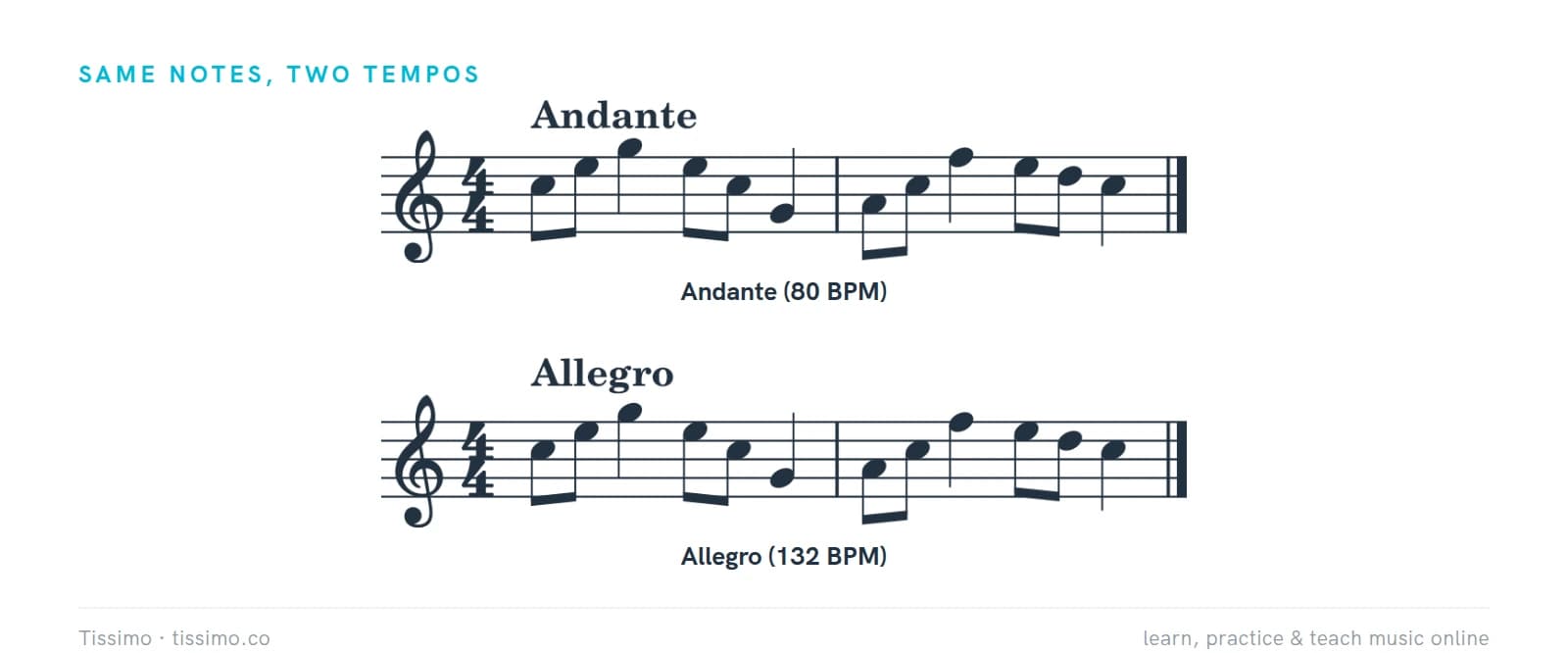
From slow to fast
The common Italian tempo words run roughly like this, from slowest to fastest: grave, largo, lento, larghetto, adagio, andante, andantino, moderato, allegretto, allegro, vivace, presto and prestissimo.
Metronome tables attach number ranges to these words, but the tables disagree with one another, and the words describe mood as well as speed: allegro literally means "cheerful". Treat any range as a starting point, not a rule.
Changing the tempo
The tempo does not have to stay fixed through a piece:
- Gradual changes: ritardando and rallentando slow down; accelerando and stringendo speed up.
- Sudden changes: più mosso (more motion) and meno mosso (less motion) start a new speed at once, and ritenuto holds back immediately.
- Returns: A tempo brings back the speed you had before a change, and tempo primo returns to the opening tempo.
- Flexibility: rubato lets the beat stretch and push for expression while the overall pulse survives.
Choosing and keeping a tempo
When a piece gives only a word, choose a speed at which the fastest notes stay clear and the slowest notes still feel connected. Then keep it: most players rush the easy bars and slow down in the hard ones. Practicing with a metronome, starting below the target speed and raising it a few clicks at a time, is the standard cure. The Tempo & the Metronome handout explains the routine, and Dynamics & Tempo Ladders lets you put the tempo words in order and match them to metronome marks.
When the tempo bends, Ritardando & Accelerando shows how to slow down, speed up and snap back, and Match the terms checks that you can tell tempo from the other basic words.
Common questions
What is the difference between tempo and rhythm?
Rhythm is the pattern of long and short notes and rests. Tempo is how fast the beat goes while you play that pattern. Change the tempo and the same rhythm simply goes by faster or slower.
What tempo should I practice a piece at?
Slower than the final tempo: at a speed where every note is correct and even. Raise the metronome a few clicks at a time, and go back down as soon as notes start to break.
Practice it: free worksheets
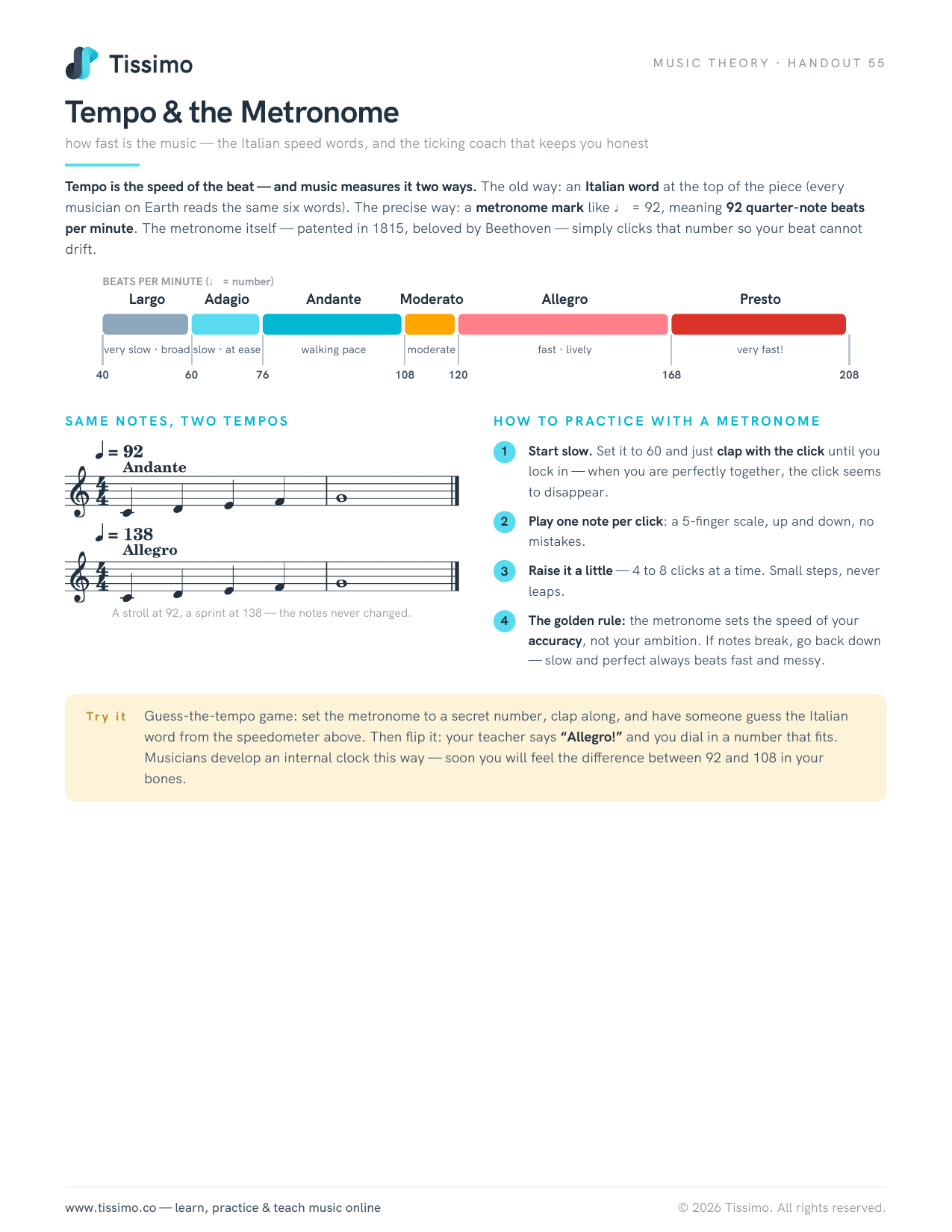 Tempo & the Metronomehow fast is the music — the Italian speed words, and the ticking coach that keeps you honest
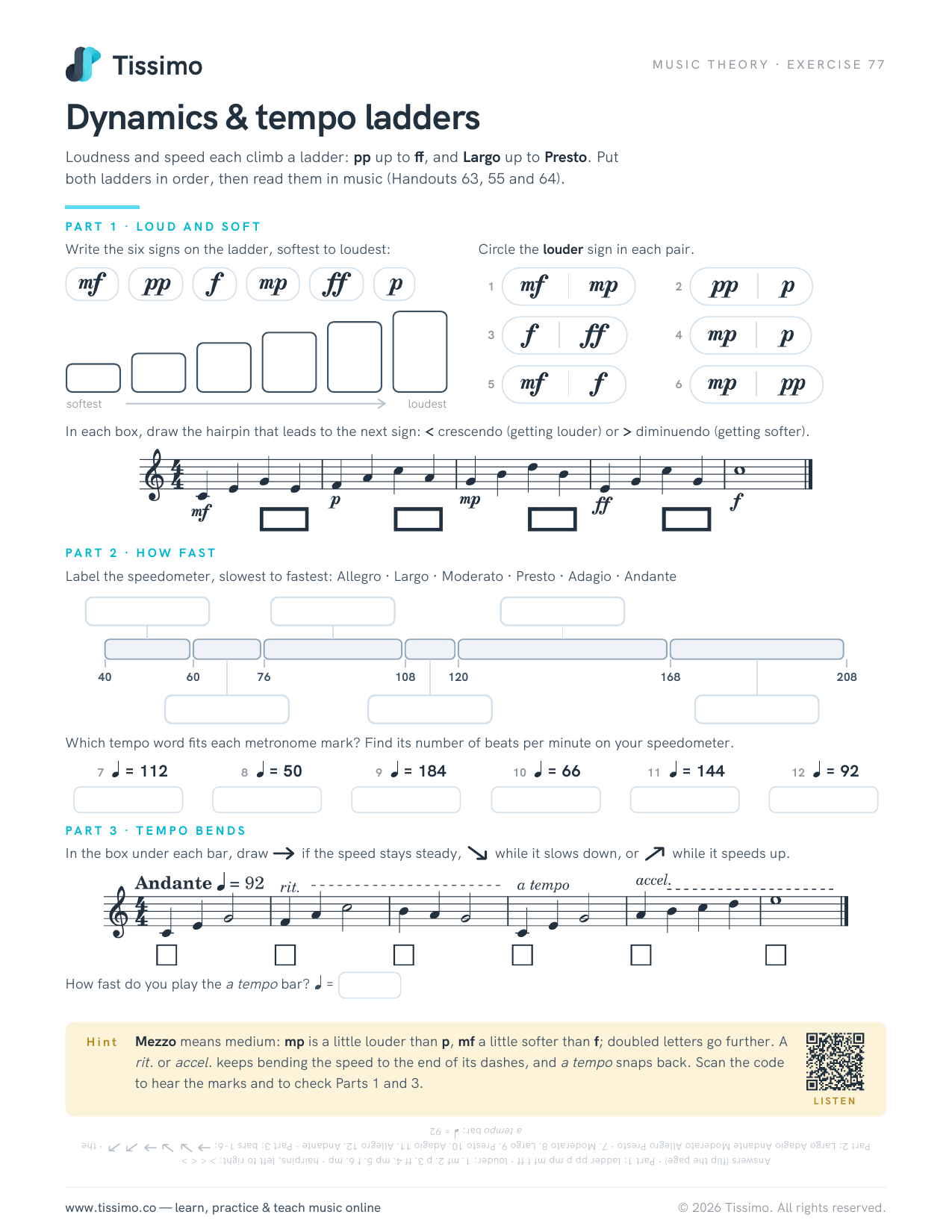 Dynamics & tempo laddersLoudness and speed each climb a ladder: pp up to ff, and Largo up to Presto. Put both ladders in order, then read them in music (Handouts 63, 55 and 64).
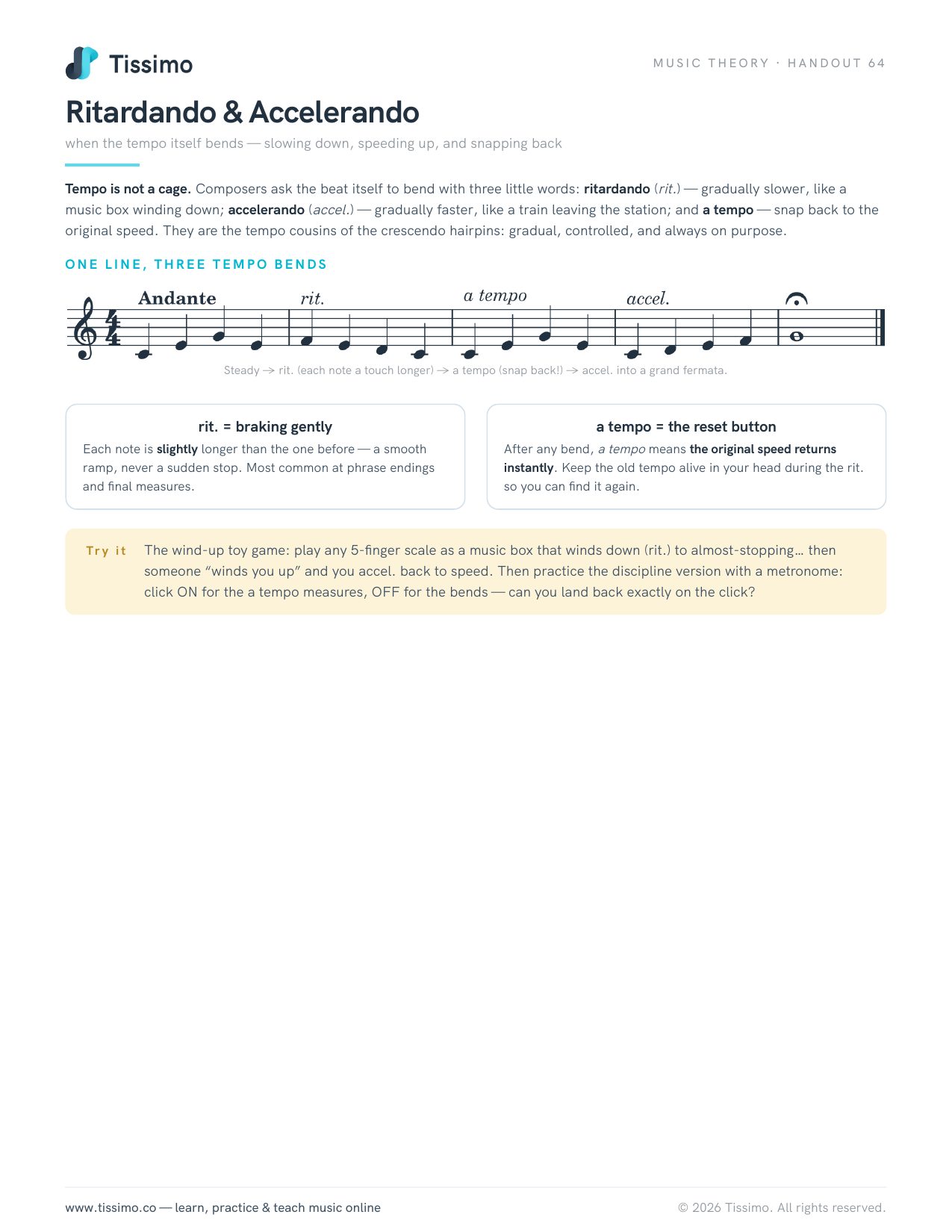 Ritardando & Accelerandowhen the tempo itself bends — slowing down, speeding up, and snapping back
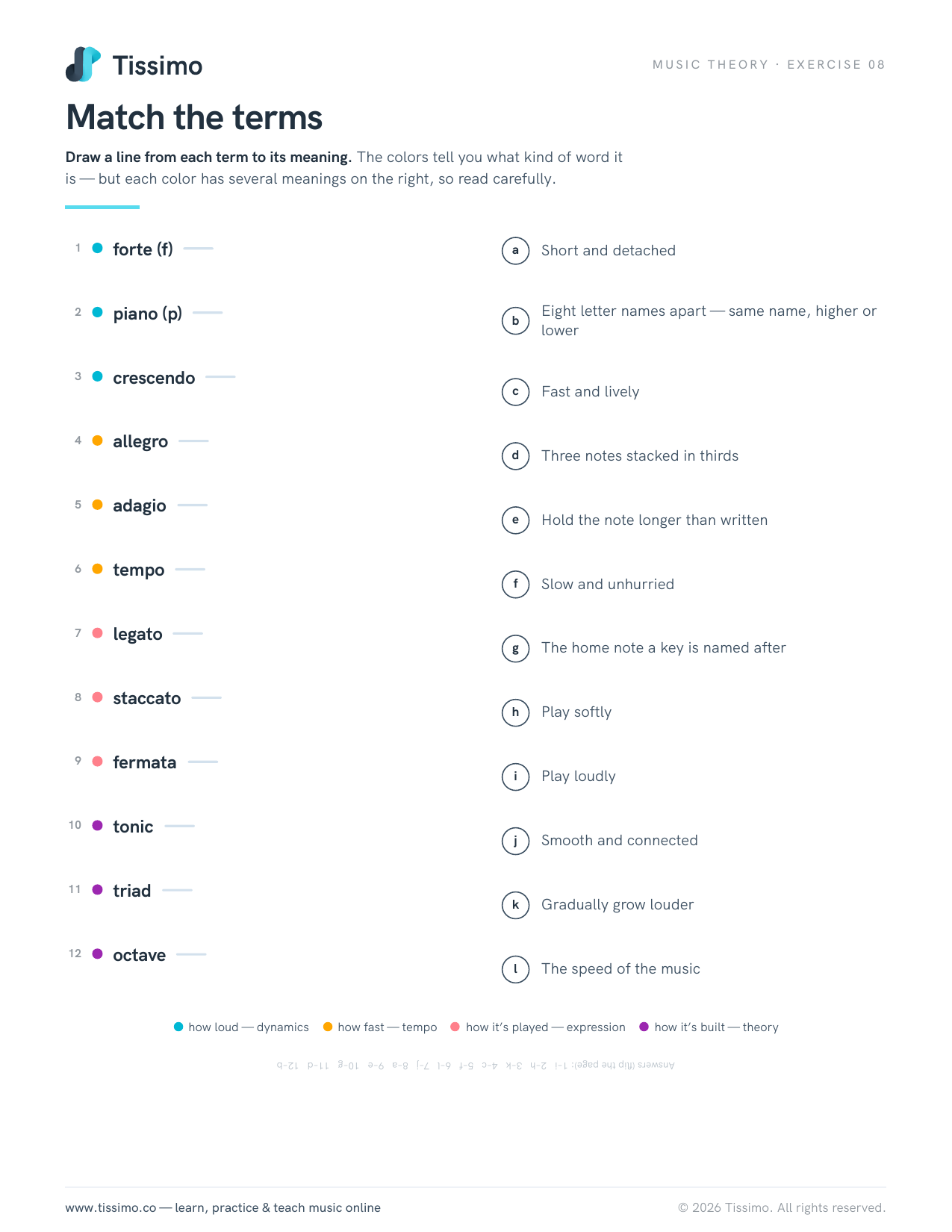 Match the termsDraw a line from each term to its meaning. The colors tell you what kind of word it is — but each color has several meanings on the right, so read carefully.