Tempo Markings
Tempo Primo
Pronounced TEM-poh PREE-mohWritten as Tempo I
Tempo primo, usually printed Tempo I, means return to the first tempo: the speed at the start of the piece or section, after a passage played at a different tempo.
Tempo primo means "first tempo". Usually printed Tempo I, often in bold like a tempo word, it tells you to go back to the tempo at the start of the piece or section after a passage in a different tempo.
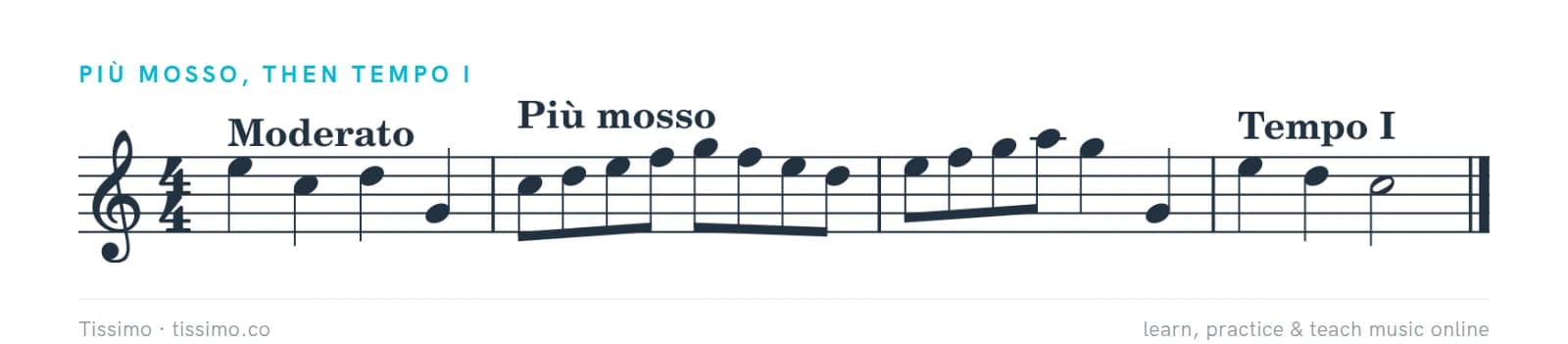
When you meet it
A piece might open moderato, move into a faster section marked più mosso or a slower one marked meno mosso, and then come back with Tempo I, very often at the point where the opening music returns. The marking saves the composer from repeating the original tempo word or metronome mark, and it makes clear that the return is to the opening tempo, not merely to the tempo just before.
Tempo primo or a tempo?
A tempo usually follows a gradual change (a rit. or accel.) and restores the speed you had just before it. Tempo I restores the first tempo, even after several different tempos. Some composers use the two loosely, so read the context: when the opening theme comes back, the opening tempo usually comes back with it.
Playing it
Before you reach Tempo I, recall the opening speed. In practice, hum the first bars of the piece just before the return, or set the metronome to the opening tempo and check whether you land on it. A return that is a little too fast or too slow is easy for listeners to notice, because they have just heard the opening at the right speed.
To practice returning to a tempo you have left, use the a tempo line in Ritardando & Accelerando.
Common questions
What does Tempo I mean in music?
Tempo I is short for tempo primo, "first tempo": go back to the speed the piece or section started at.