Tempo Markings
Moderato
Pronounced moh-deh-RAH-toh
Moderato is a tempo marking meaning at a moderate speed: neither fast nor slow. It sits between andante and allegro, often around 108 to 120 beats per minute, and is also used to soften other tempo words.
Moderato means "moderate" in Italian: a medium tempo, neither fast nor slow. On many charts it sits around 108 to 120 beats per minute, just faster than andante and just slower than allegretto and allegro.
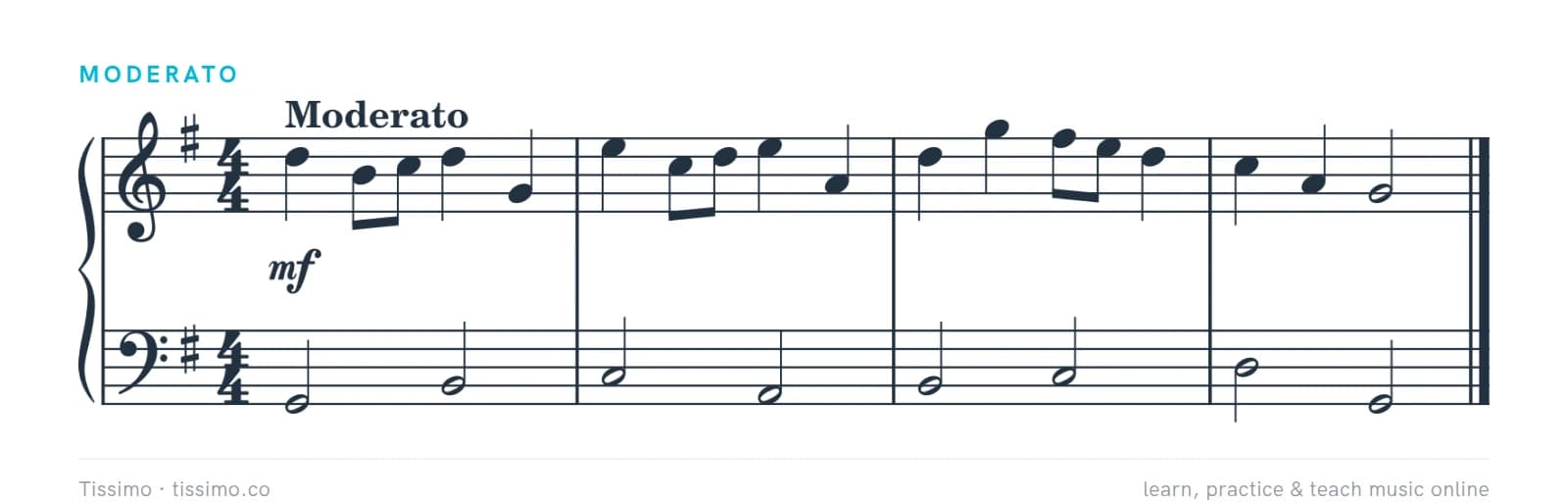
On its own and as a modifier
As a tempo word on its own, moderato asks for a comfortable, steady speed with no particular hurry. Used with another word, it tones that word down:
- Allegro moderato: moderately fast, a calmer allegro.
- Moderato cantabile: at a moderate pace, singing.
- Andante moderato: a fairly brisk walk.
The first movement of the Sonatina in G attributed to Beethoven is marked Moderato; our Sonatina in G study walks through it.
Choosing a moderato tempo
Because moderato is the middle of the scale, it is a good default when you are learning a piece: fast enough to hear the shape of the phrases, slow enough to play every note cleanly. If the piece has many sixteenth notes, start at the lower end of the range; if it moves mostly in quarter notes, the upper end will feel natural.
Moderato is the rung between Andante and Allegro on the tempo ladder in Dynamics & Tempo Ladders; Match the terms: level 2 and the Musical terms & signs chart define it as a medium speed.
Common questions
Is moderato faster than andante?
Yes. Andante is a walking pace; moderato is a little quicker, a medium tempo between andante and allegro.
Practice it: free worksheets
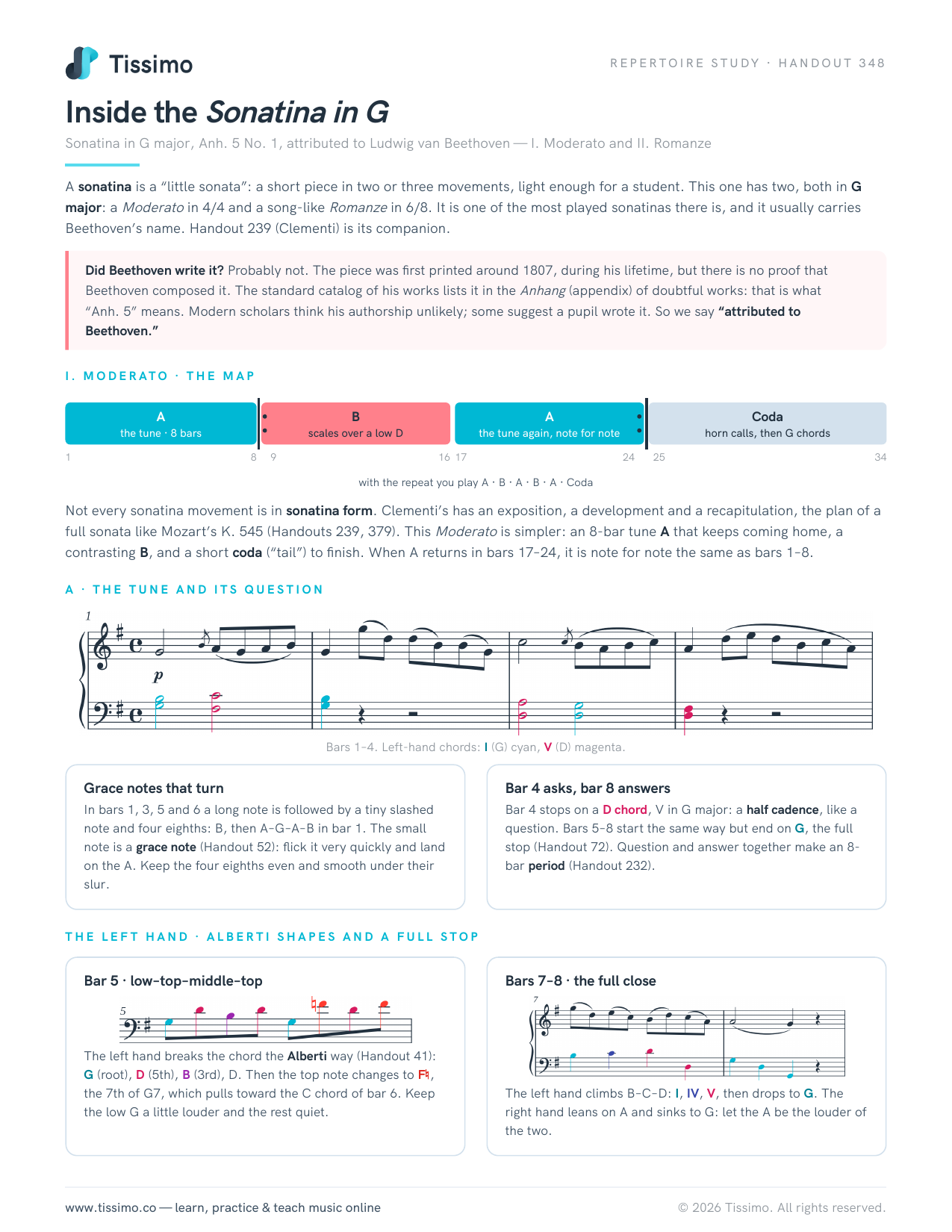 Inside the Sonatina in GSonatina in G major, Anh. 5 No. 1, attributed to Ludwig van Beethoven — I. Moderato and II. Romanze
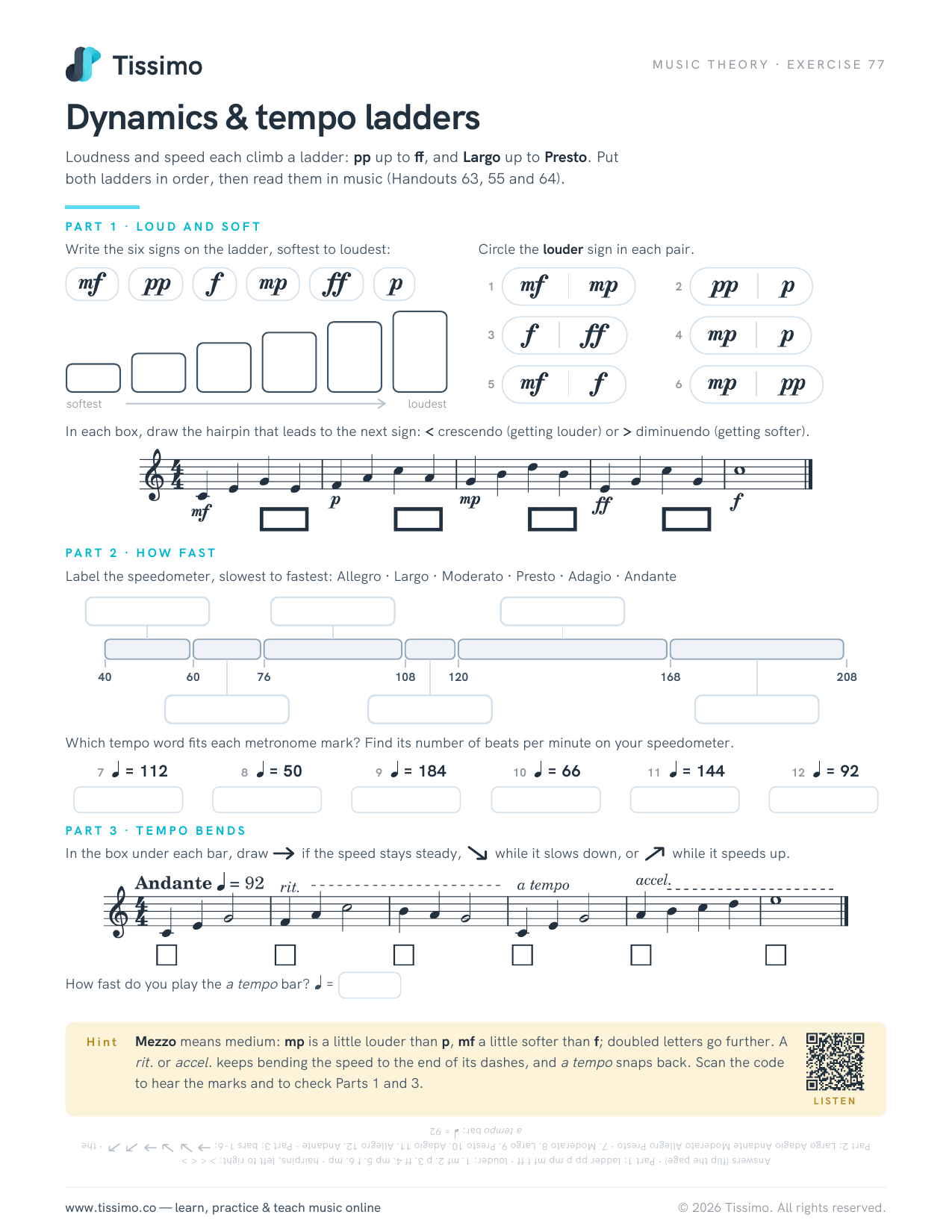 Dynamics & tempo laddersLoudness and speed each climb a ladder: pp up to ff, and Largo up to Presto. Put both ladders in order, then read them in music (Handouts 63, 55 and 64).
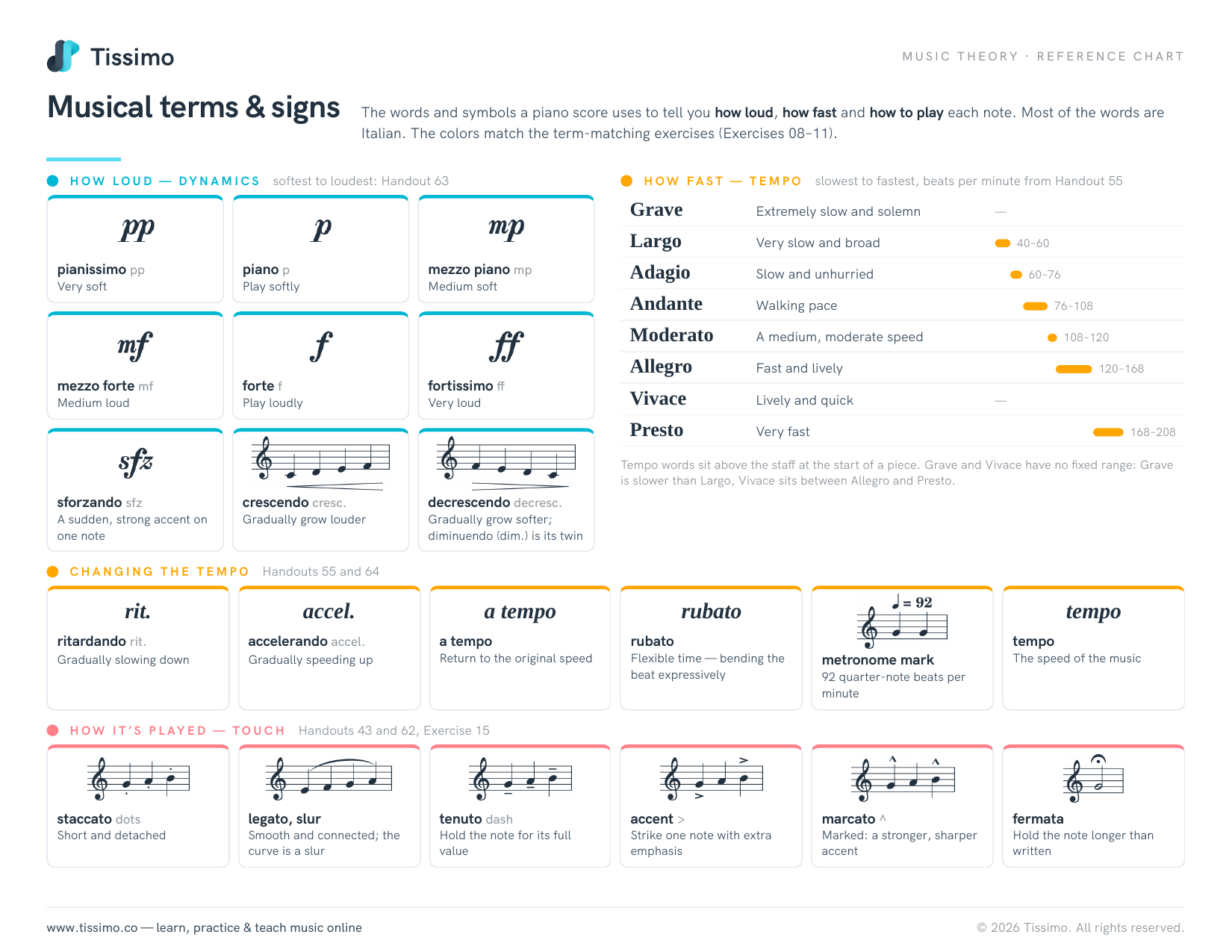 Musical terms & signsThe words and symbols a piano score uses to tell you how loud, how fast and how to play each note. Most of the words are Italian. The colors match the term-matching exercises (Exercises 08–11, 74 and 75).
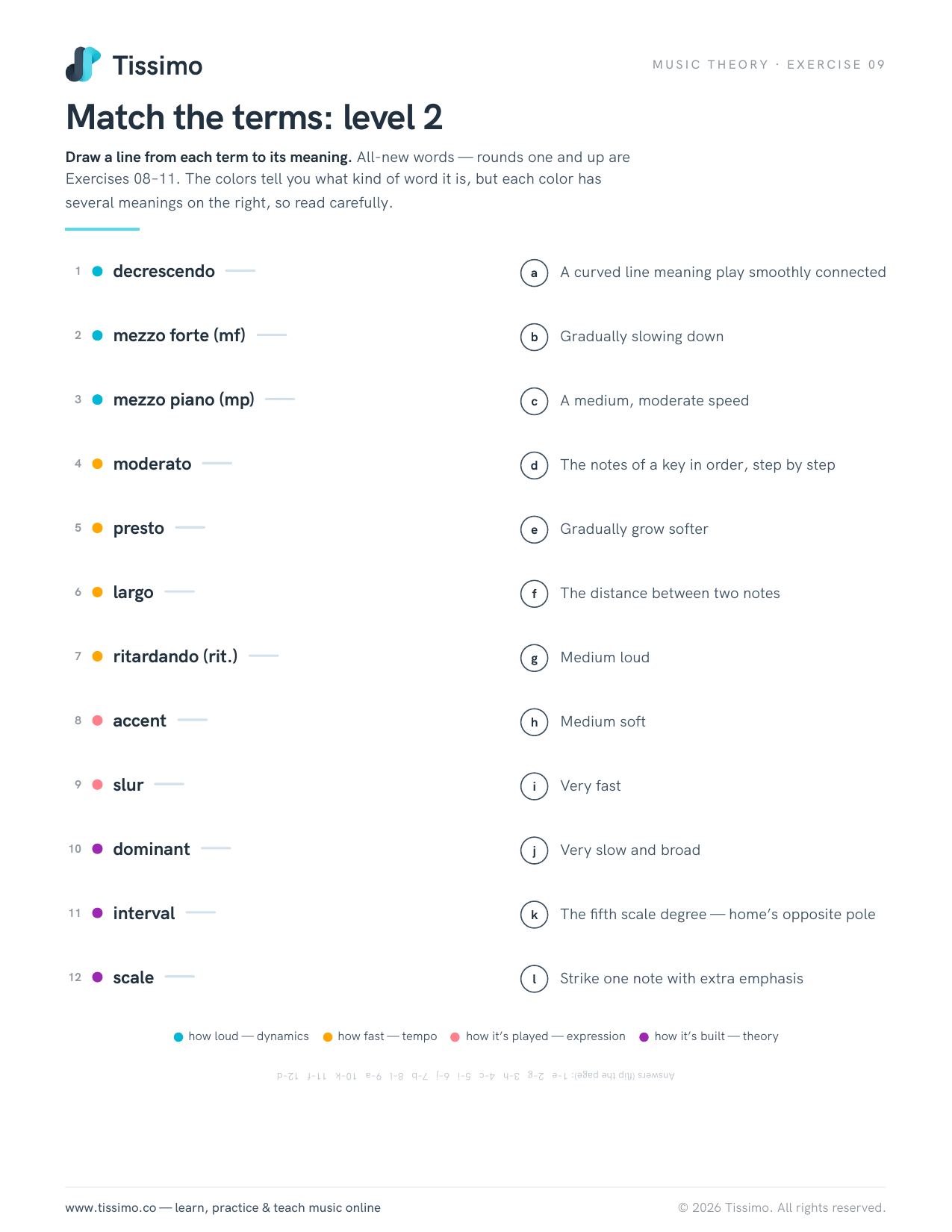 Match the terms: level 2Draw a line from each term to its meaning. All-new words — rounds one and up are Exercises 08–11. The colors tell you what kind of word it is, but each color has several meanings on the right, so read carefully.