Tempo Markings
Lento
Pronounced LEN-toh
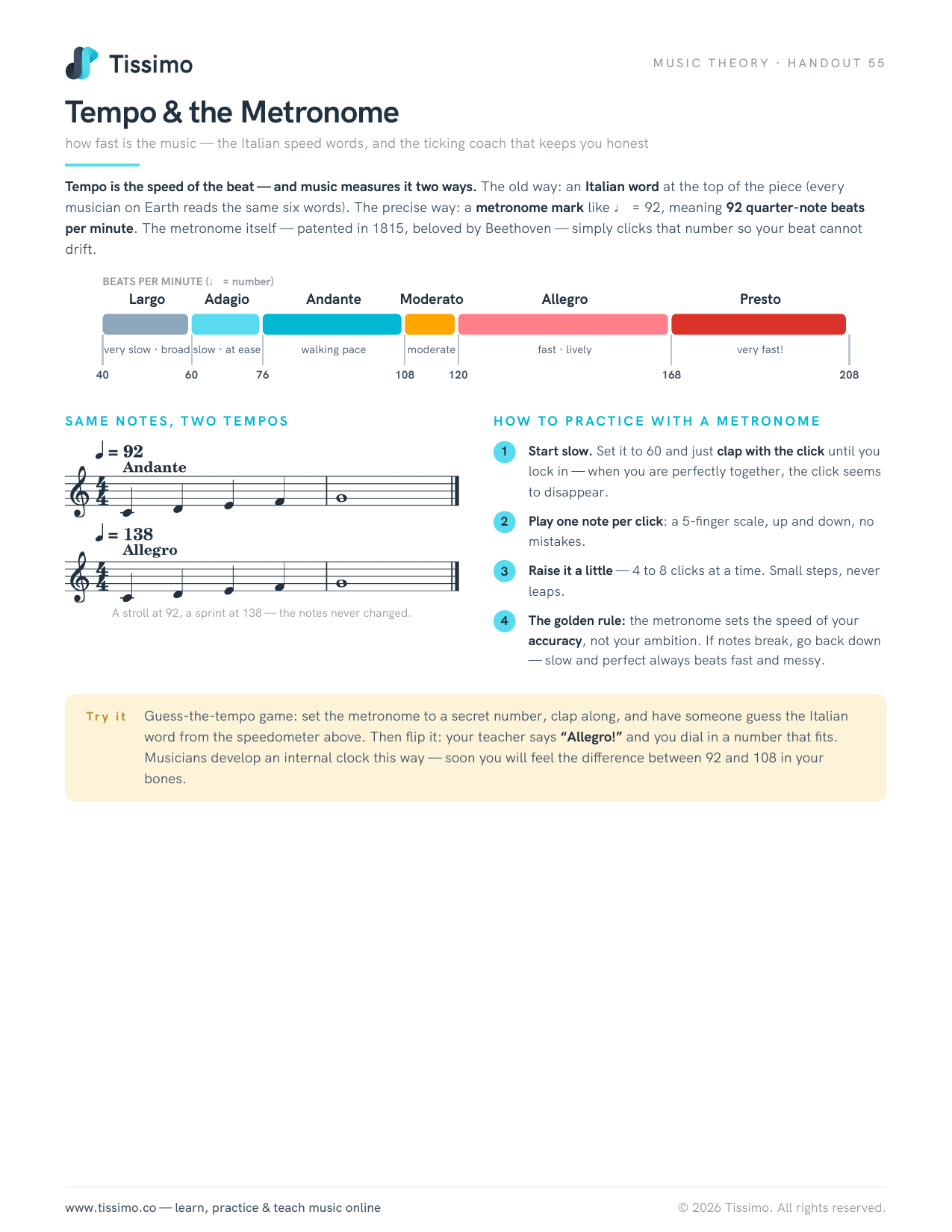
Lento is a tempo marking meaning slow. It sits in the same range as largo and adagio, often around 40 to 60 beats per minute, but without their extra character: the word simply says slow.
Lento is the plainest of the slow tempo words: in Italian it simply means "slow". Metronome charts usually place it in the same region as largo and adagio, often around 40 to 60 beats per minute, and they disagree about the exact order of the three. What lento does not carry is extra character. Largo adds breadth, adagio adds ease and grave adds weight; lento just tells you to take your time.
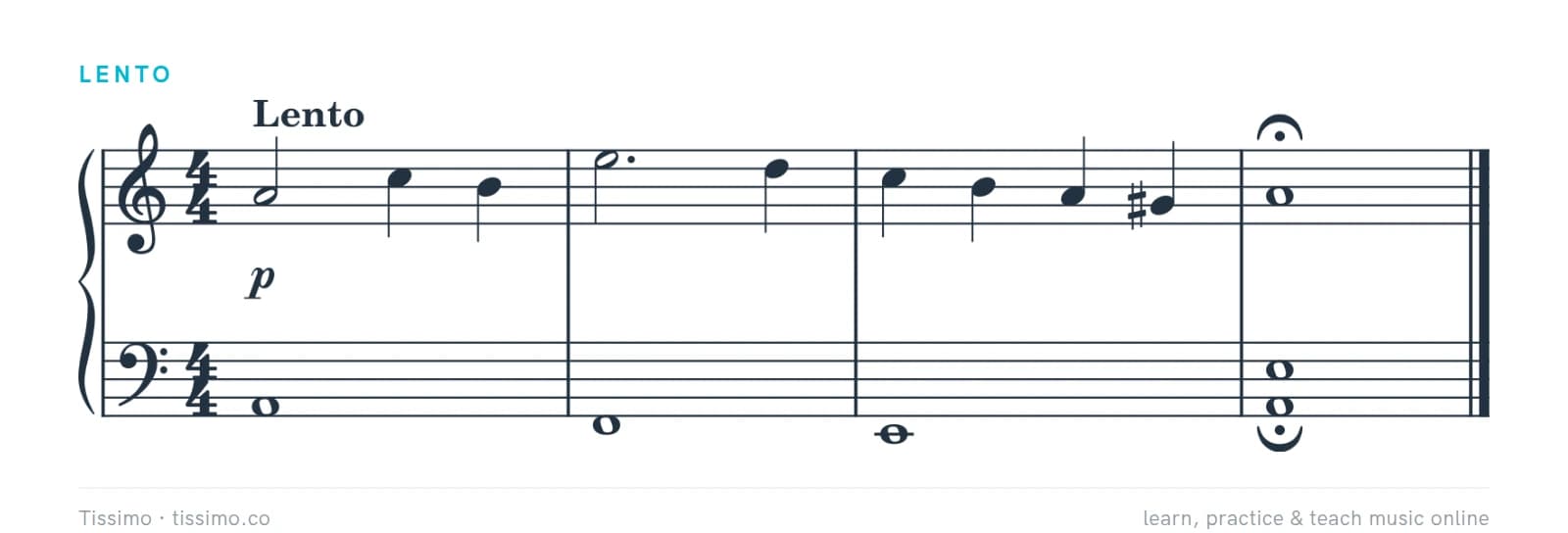
Lento with modifiers
Because the word is so plain, composers often qualify it:
- Lento assai or molto lento: very slow (see assai and molto).
- Lento ma non troppo: slow, but not too slow (see ma non troppo).
- Lento e sostenuto: slow and sustained (see sostenuto).
The same word in other languages
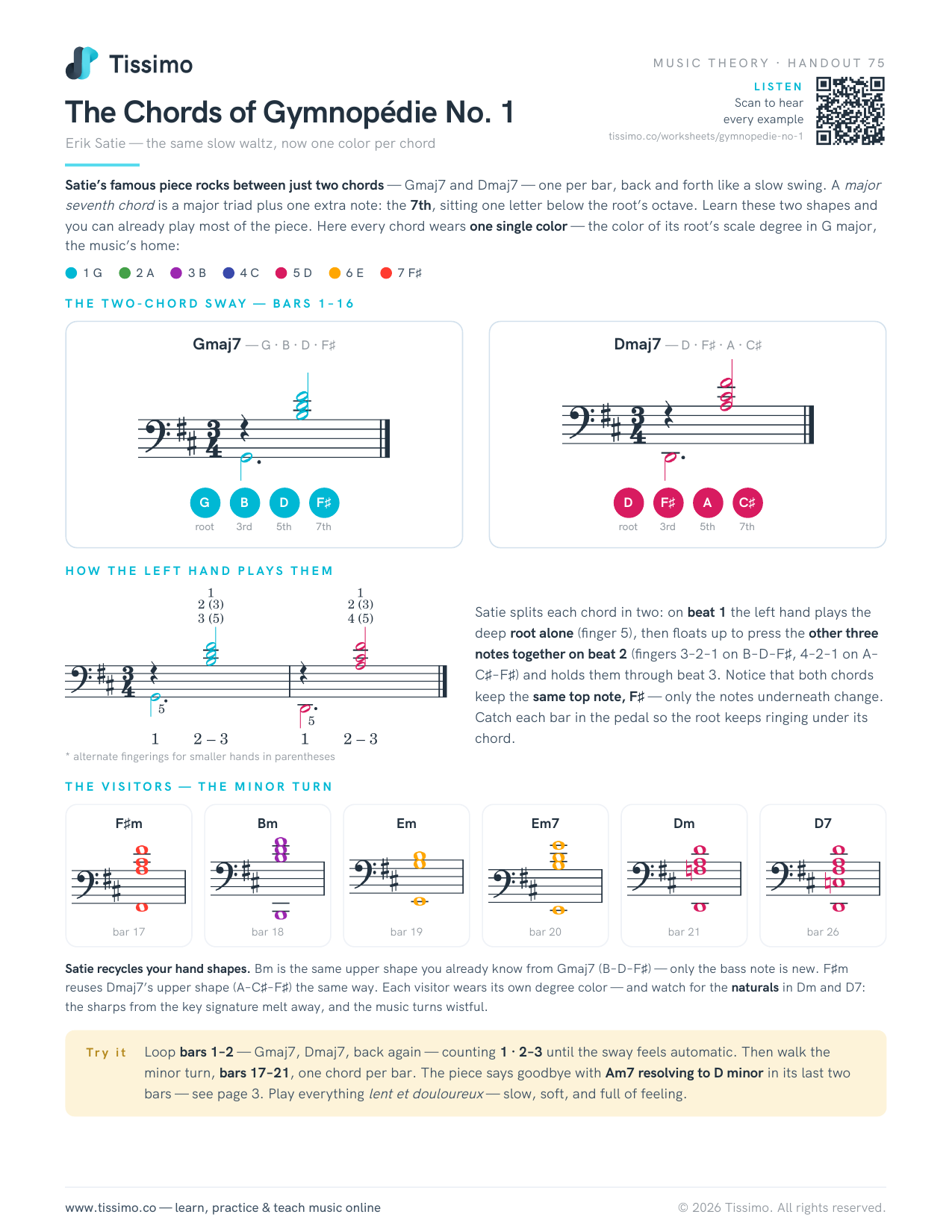
French composers write Lent, German composers Langsam. Satie's Gymnopédie No. 1 is marked Lent et douloureux, "slow and sorrowful"; our Gymnopédie No. 1 study looks at its chords.
Playing lento
Slow tempos expose every unevenness. Count steady subdivisions, hold long notes for their full value, and know where each phrase is heading, so the music sounds unhurried rather than stopped.
Lento is not one of the six words on the speedometer in Tempo & the Metronome, but it belongs in roughly the same band as Largo.
Common questions
Is lento slower than adagio?
Usually, yes: most charts put lento a little slower than adagio. The ranges overlap, though, and composers chose between the words partly for their character.