Tempo Markings
Assai
Pronounced ahs-SAH-ee
Assai is an Italian modifier meaning 'very'. It intensifies the tempo word it follows: Allegro assai is very fast, Adagio assai very slow, much like molto.
Assai means "very" or "very much". It usually follows a tempo word and strengthens it: Allegro assai is very fast, Adagio assai or Lento assai very slow. In practice it works much like molto, and Allegro assai and Allegro molto are close in meaning.
Where you see it
- Allegro assai: the first movement of Beethoven's "Appassionata" Sonata, Op. 57, is marked this way.
- Presto assai, Vivace assai: as fast or lively as the music will go.
- Adagio assai, Lento assai: very slow.
- Occasionally with expression words: assai espressivo, very expressive.
A small debate
In older Italian, assai could also mean "enough" or "quite", and a few musicians have argued that an 18th-century Allegro assai meant "fairly fast" rather than "very fast". Most performers and dictionaries today read assai as "very", and that is the safe default. If a piece seems unplayable at "very fast", though, the debate is a reminder that tempo words describe character as much as speed.
Playing it
Treat assai as permission to go toward the edge of the tempo range for the main word, while keeping every note clear. A very fast tempo that blurs the music is not what the composer meant.
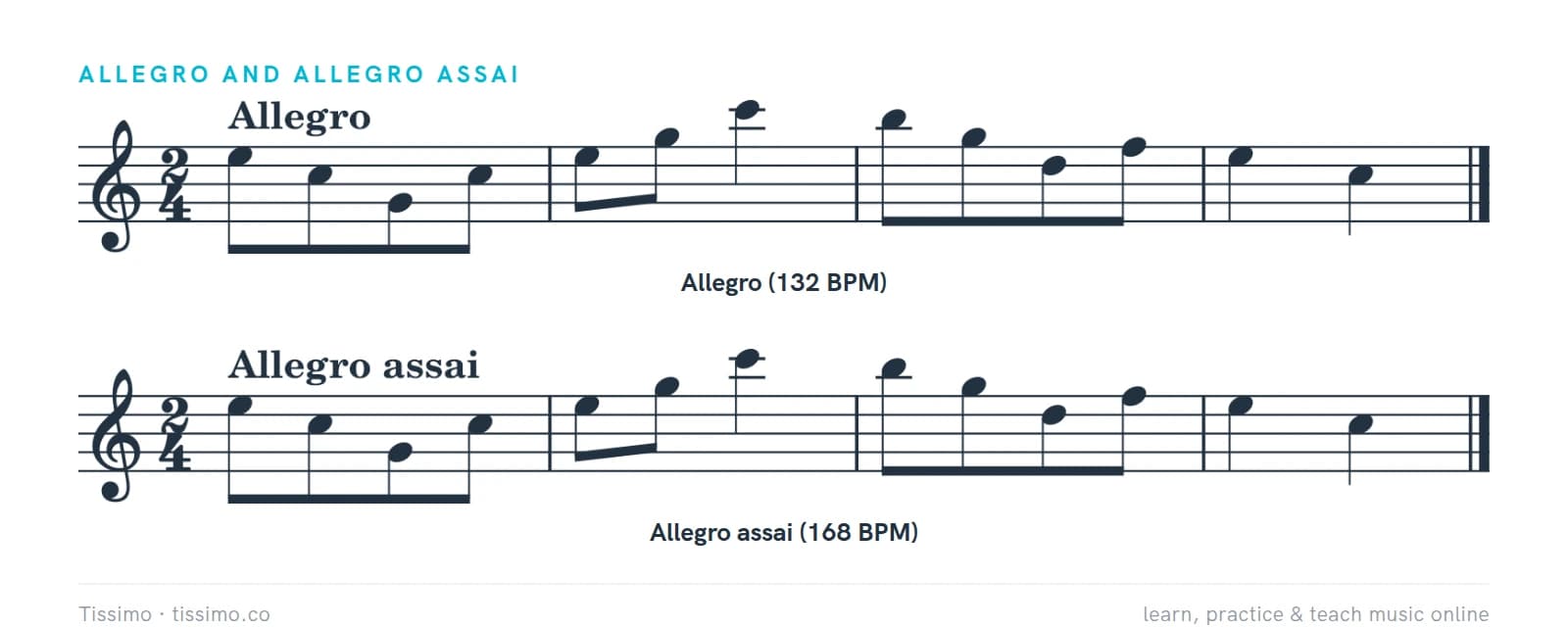
A metronome makes the difference easy to hear: try the two tempos in the example with the routine from Tempo & the Metronome.
Common questions
Is assai the same as molto?
Very nearly. Both mean "very", and Allegro assai and Allegro molto ask for much the same tempo. Composers chose between them partly by habit.