Tempo Markings
Larghetto
Pronounced lar-GET-toh
Larghetto is a tempo marking meaning fairly slow: a little less slow than largo. The -etto ending makes largo 'smaller', so the music moves a little more easily, often around 60 to 66 beats per minute.
Larghetto is largo with a diminutive ending. In Italian, -etto makes a word smaller, so larghetto means "a little broad", and in tempo terms that means a little less slow. Many charts put it at roughly 60 to 66 beats per minute, between largo and adagio, though as with every tempo word the ranges vary from one chart to the next.
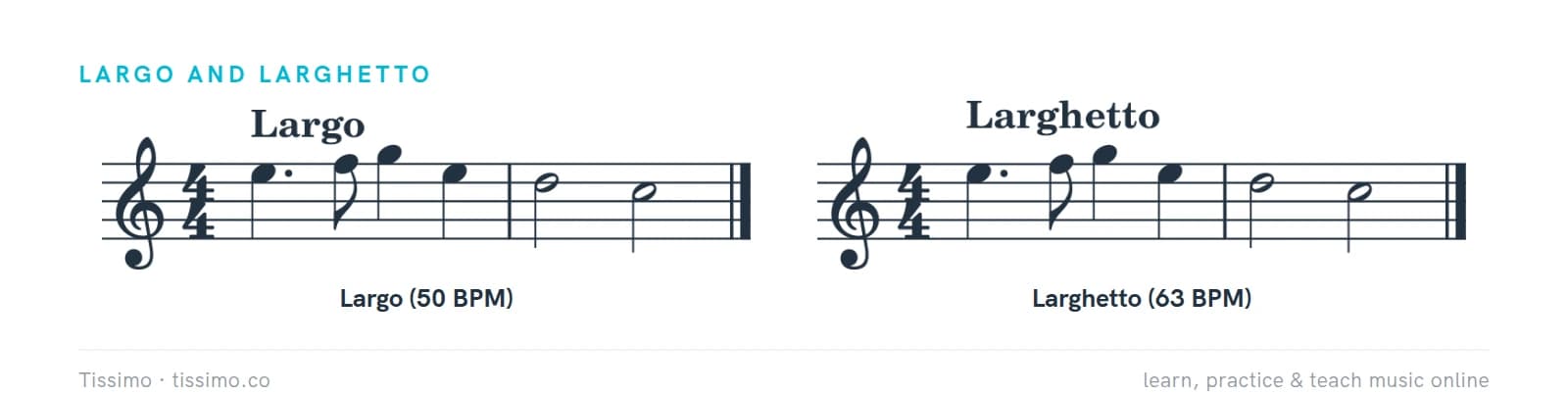
The same logic works across the tempo vocabulary: allegretto is a little less fast than allegro, and andantino is "a little andante". A diminutive moves the tempo toward the middle of the scale.
Character
Larghetto keeps some of largo's breadth but lets the line flow. It often marks graceful, lyrical slow movements. The slow movement of Chopin's Piano Concerto No. 2 in F minor is a well-known Larghetto: a long, ornamented melody that needs space but must not stall.
Playing larghetto
Choose a beat you can feel as an unhurried walk in slow motion. If you need to count every eighth note to stay together, you may have slipped back toward largo; if the music begins to sound casual, you are drifting toward andante. Singing the melody at your chosen tempo is a quick test: if you run out of breath in the middle of a phrase, the tempo is probably too slow.
Larghetto is not one of the six words on the speedometer in Tempo & the Metronome, but you can pencil it in yourself, just above Largo.
Common questions
Is larghetto faster or slower than largo?
Faster. The -etto ending makes largo 'smaller', so larghetto is a little less slow, usually placed just below adagio.