Tempo Markings
Metronome
Pronounced MET-ruh-nohm
A metronome is a device or app that clicks at a steady, adjustable speed measured in beats per minute. Musicians use it to set a tempo and to practice keeping the beat even.
A metronome produces a steady click, beep or flash at a speed you choose, measured in beats per minute. Set it to 60 and it ticks once a second; set it to 120 and it ticks twice a second. Composers use metronome numbers to tell you the tempo they want, and players use the device to practice keeping the beat even.
Mechanical and digital metronomes
The classic metronome is a wind-up pyramid with a swinging pendulum. A sliding weight on the pendulum sets the speed: move the weight up and the swing gets slower, move it down and it gets faster. Its scale is marked in fixed steps (40, 42, 44 … 60, 63, 66, 69, 72, 76, 80 … 208), the same numbers you see in many printed metronome marks.
Electronic metronomes and phone apps can set any number, accent the first beat of each bar, sound subdivisions (two or three clicks per beat) and find a tempo when you tap a button in time. A click track is the same idea used for recording.
Johann Nepomuk Maelzel commercialized the mechanical metronome in the early 19th century, building on a design demonstrated by Dietrich Nikolaus Winkel in 1814. That is why a tempo is sometimes written "M.M. ♩ = 96": M.M. stands for Maelzel's Metronome.
How to practice with a metronome
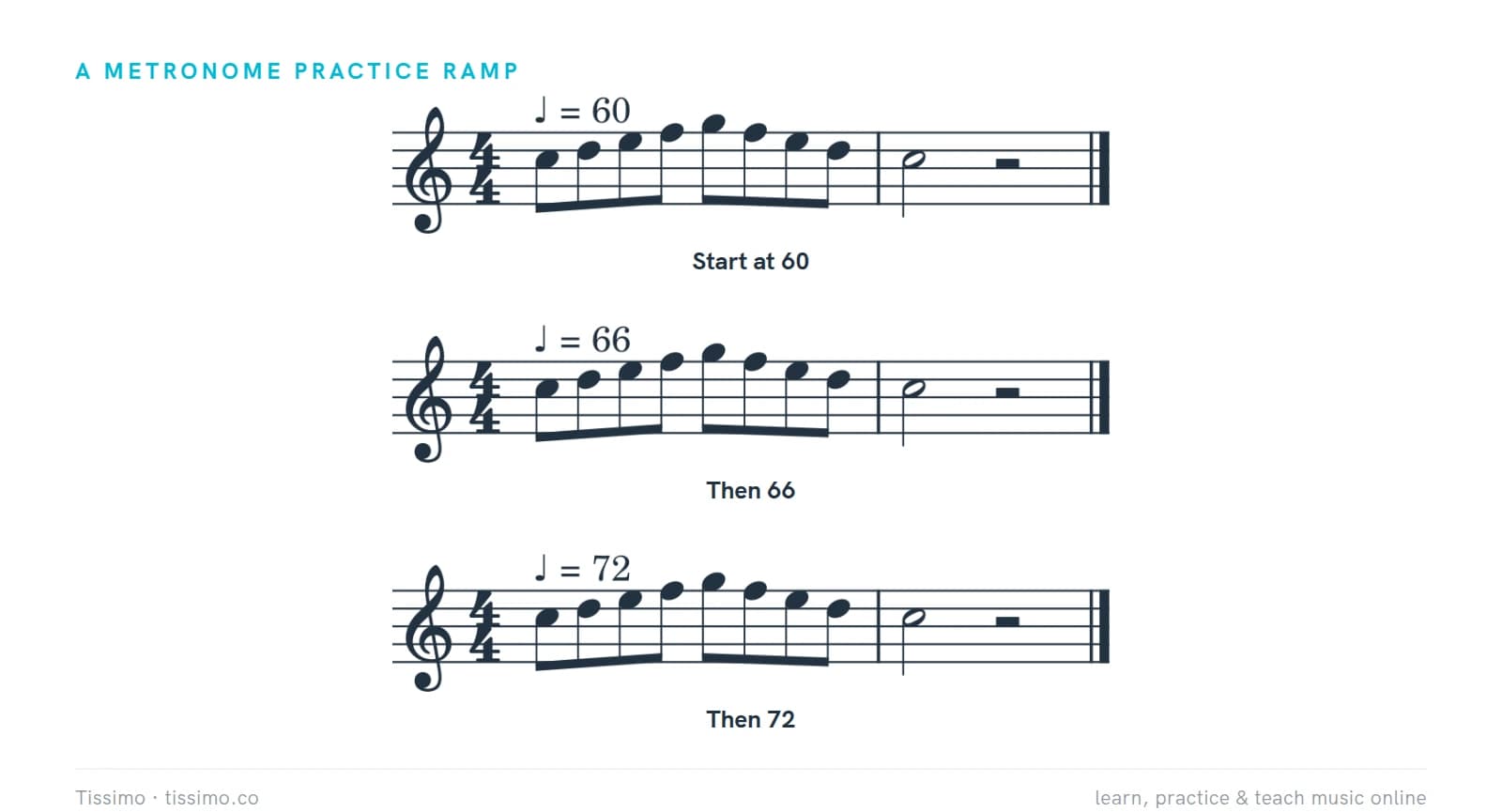
- Start slowly, at a speed where every note is correct and even. 60 is a good first setting.
- Play one note per click (or two, if the passage moves in eighth notes) and listen until the click seems to disappear into your playing.
- Raise the speed a little at a time, one or two notches. If notes start to break, go back down.
- Now and then, turn the click off for a few bars and back on. If you are still together, your inner pulse is working. Keep the Pulse Through Silence and The Click Comes Back train exactly that.
Jazz musicians often set the click on beats 2 and 4 only, so it sounds like a drummer's backbeat and leaves beats 1 and 3 to them.
What a metronome is not
A metronome keeps time; it does not make music. A passage marked rubato or ritardando, or one that pauses on a fermata, is not meant to follow a click. Use the metronome to build steady technique and to check your tempo, then turn it off and let the phrases breathe. The Tempo & the Metronome handout sets out a daily routine.
For a wider practice plan that puts the metronome to good use, see How to Practice.
Common questions
Should I always practice with a metronome?
No. Use it to build steady technique, to check your tempo and to work a passage up to speed. Then practice without it, so your own sense of pulse and phrasing can develop.
Which way do you move the weight on a wind-up metronome?
Slide it up the pendulum to slow the ticking down, and down toward the pivot to speed it up. Line the weight up with the number you want on the scale behind the pendulum.
Practice it: free worksheets
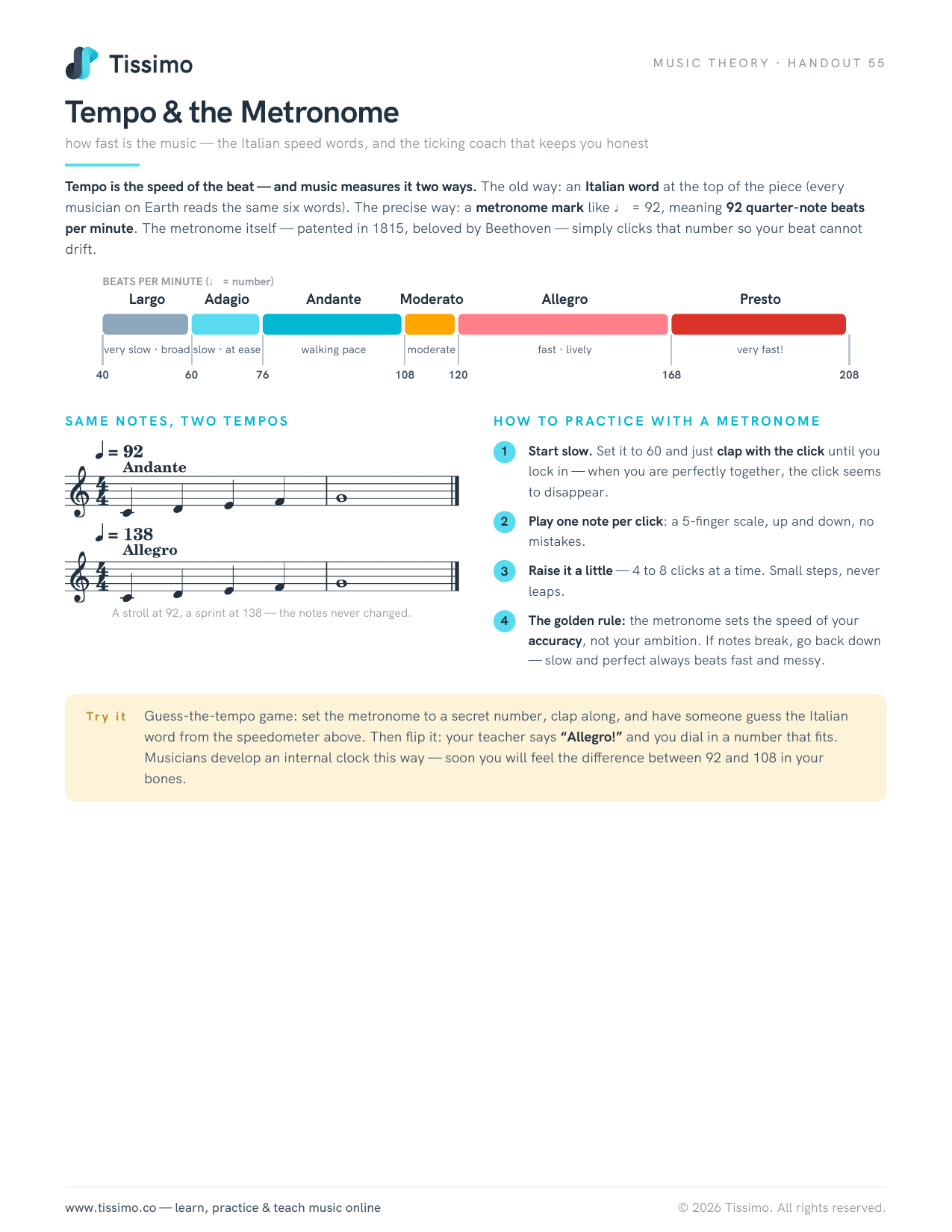 Tempo & the Metronomehow fast is the music — the Italian speed words, and the ticking coach that keeps you honest
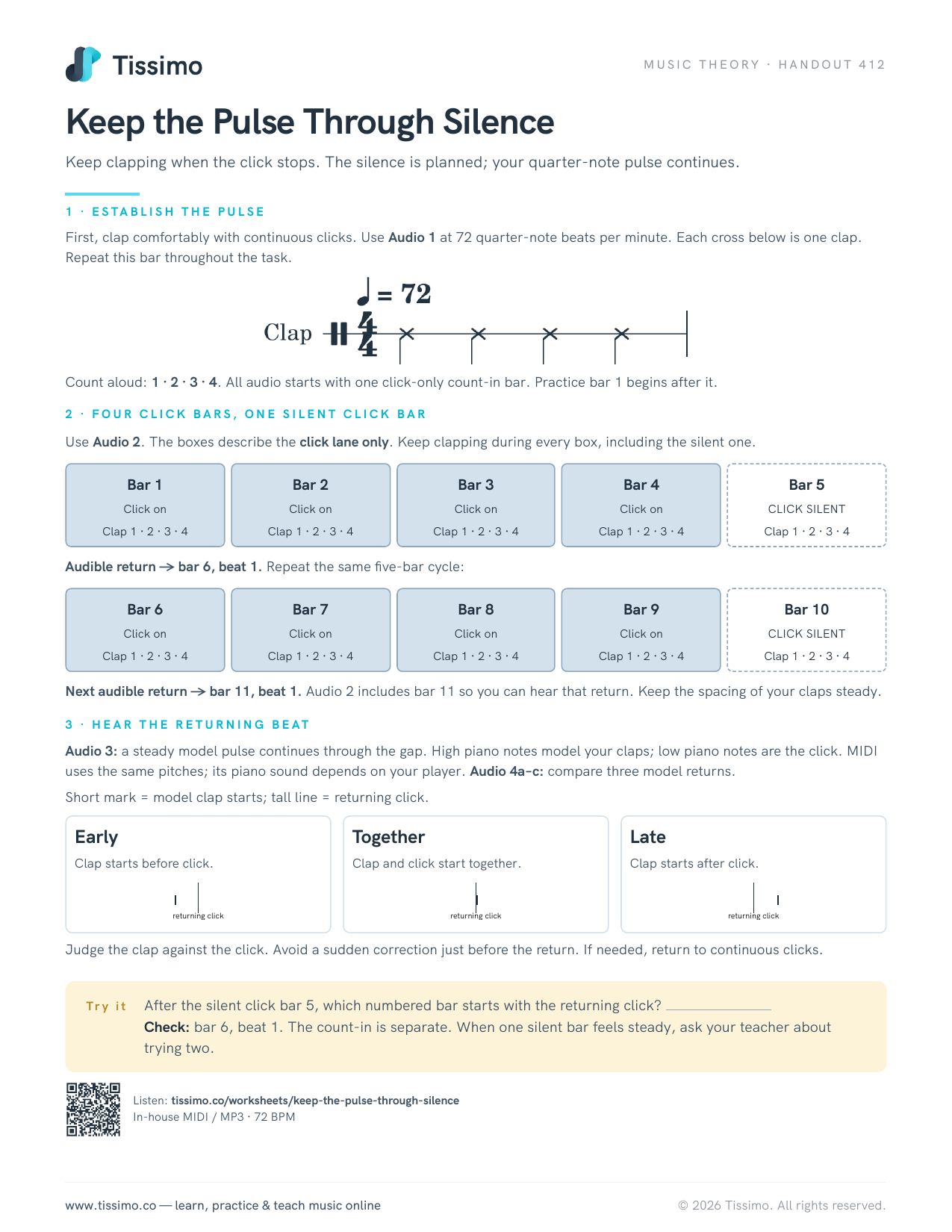 Keep the Pulse Through SilenceKeep clapping when the click stops. The silence is planned; your quarter-note pulse continues.
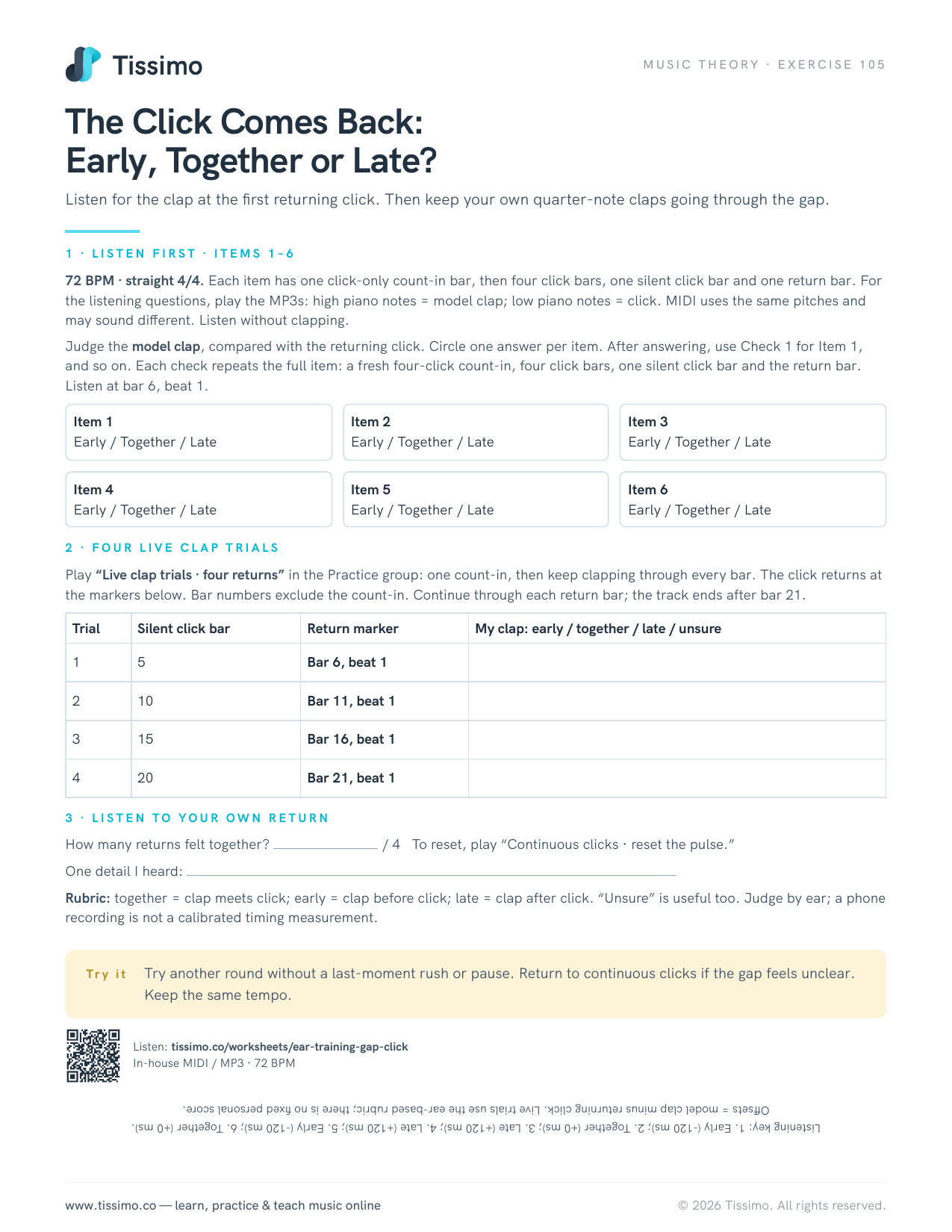 The Click Comes Back: Early, Together or Late?Listen for the clap at the first returning click. Then keep your own quarter-note claps going through the gap.
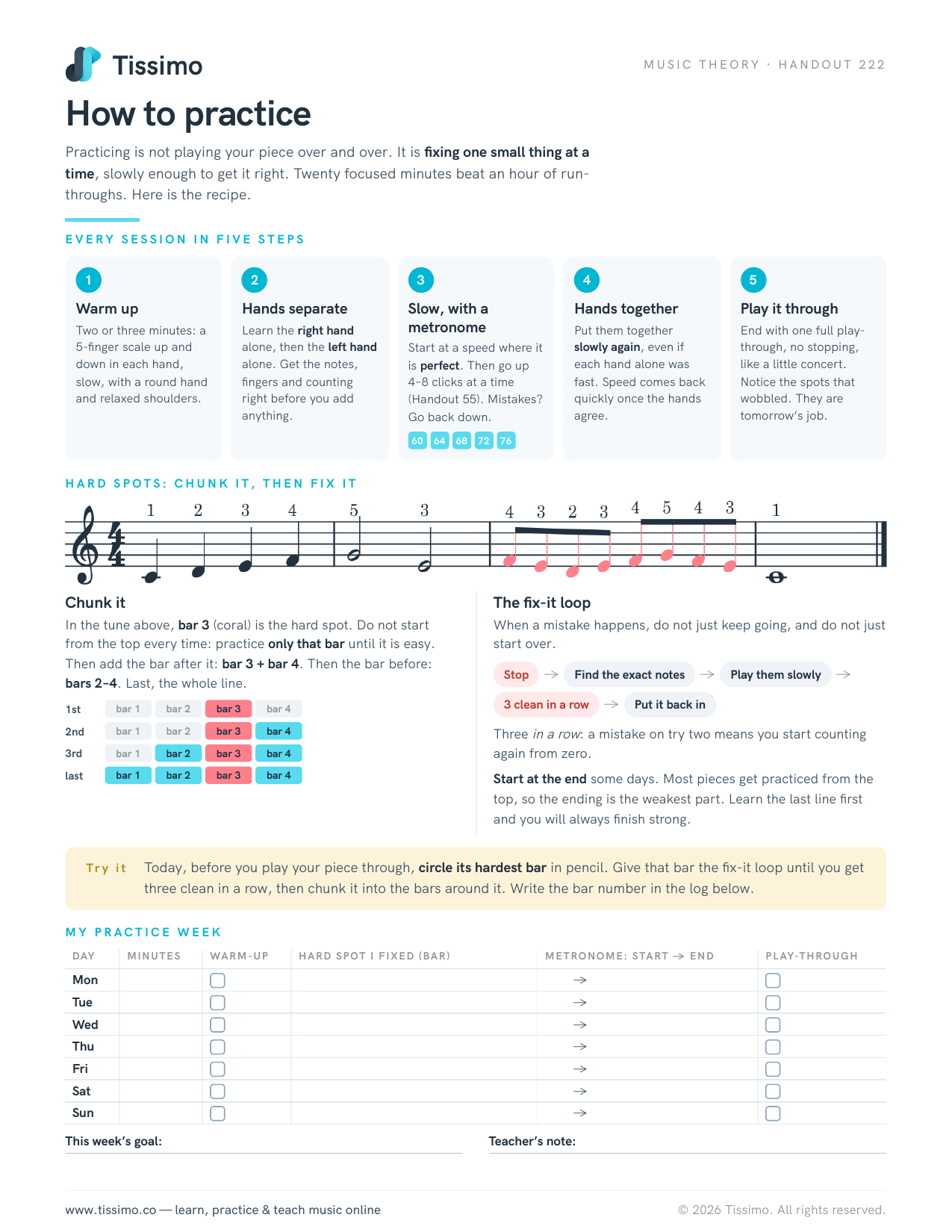 How to practicePracticing is not playing your piece over and over. It is fixing one small thing at a time, slowly enough to get it right. Aim for short, focused sessions, not hour-long run-throughs. Here is the recipe.