Tempo Markings
Largo
Pronounced LAR-goh
Largo is a tempo marking meaning slow and broad. It is one of the slowest common tempo words, often given as about 40 to 60 beats per minute, with a wide, spacious feel.
Largo means "broad" or "wide" in Italian, and that is how it should feel: a slow tempo with plenty of space around every note. Metronome charts often place it at about 40 to 60 beats per minute, just above grave and in the same slow neighborhood as lento and adagio.
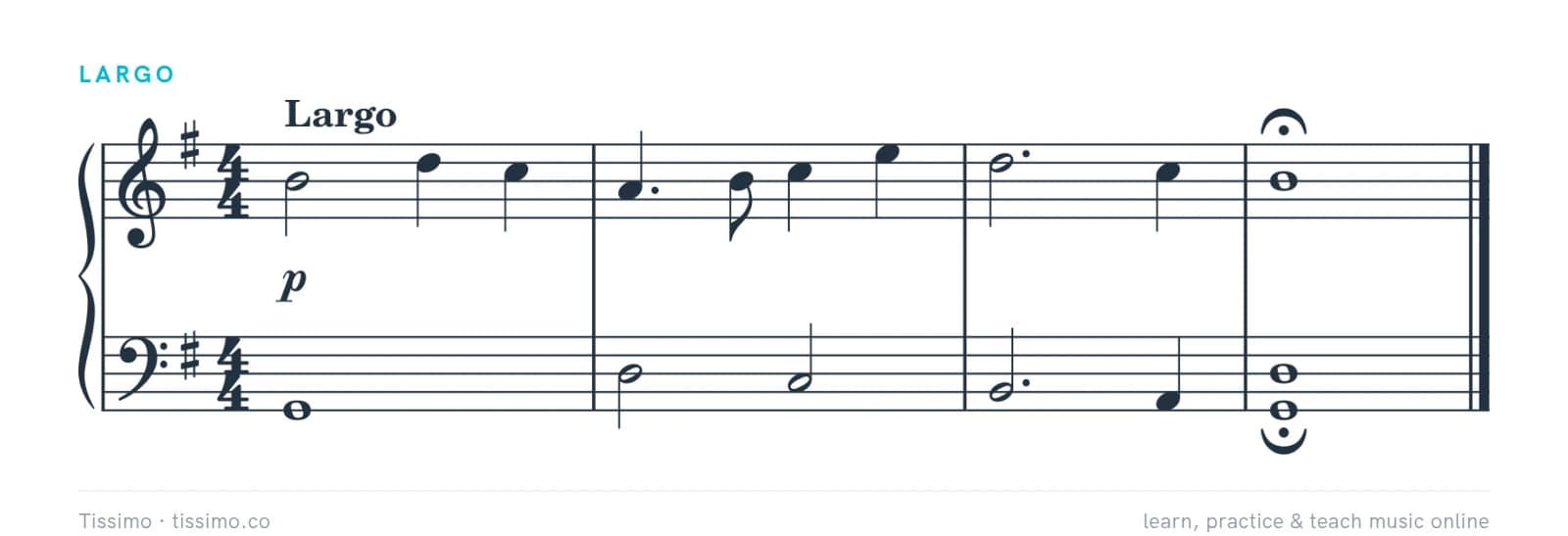
Largo, lento and adagio
All three ask for a slow tempo, and the charts do not fully agree on their order. Most modern tables put largo slowest, then lento, then adagio. The words also differ in character: largo is broad and spacious, lento is simply slow, and adagio (literally "at ease") is relaxed. The diminutive larghetto, "a little largo", is a little less slow.
Largo in real music
Chopin's Prelude in E minor, Op. 28 No. 4, is marked Largo: a long, sighing melody over left-hand chords that change one note at a time. Our Prelude in E minor study looks at it bar by bar. The slow second movement of Dvořák's "New World" Symphony is another famous Largo.
Playing largo
- Count the eighth notes in your head, so long notes get their full length.
- Keep the line moving. Slow does not mean static: lean toward the high point of each phrase and relax after it.
- Connect the harmony. On the piano, the sustain pedal helps, changed cleanly with each new chord.
A common mistake is to let largo get slower and slower as the piece goes on. Check your tempo against a metronome at the start, in the middle and near the end.
Largo is the slowest band of the speedometer in Tempo & the Metronome and the first rung of the tempo ladder in Dynamics & Tempo Ladders; Match the terms: level 2 and the Musical terms & signs chart define it as very slow and broad.
Common questions
How slow is largo?
Usually about 40 to 60 beats per minute, but take that as a starting point. Metronome charts differ, and the music itself (how many short notes it has, how long its phrases are) should guide the final choice.
Practice it: free worksheets
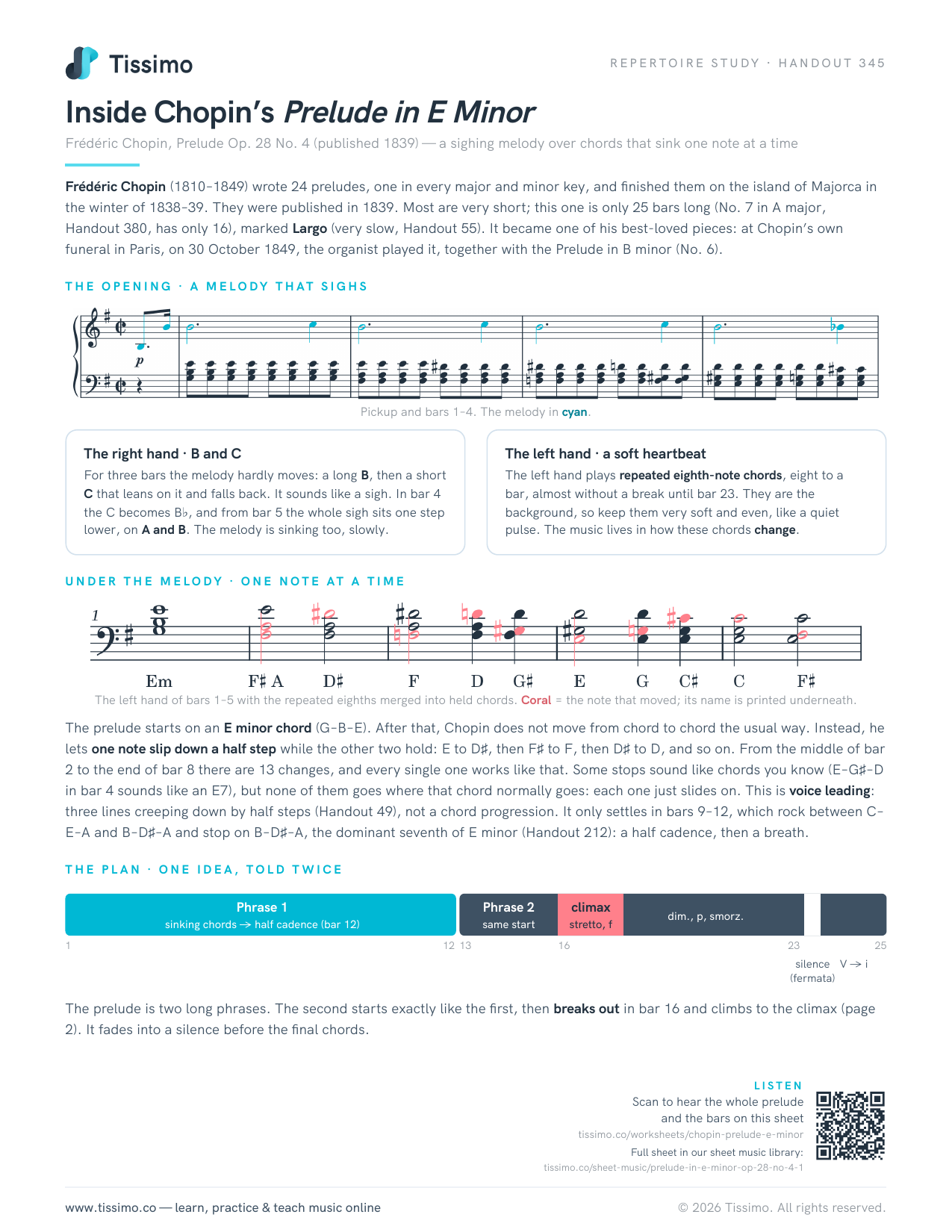 Inside Chopin’s Prelude in E MinorFrédéric Chopin, Prelude Op. 28 No. 4 (published 1839) — a sighing melody over chords that sink one note at a time
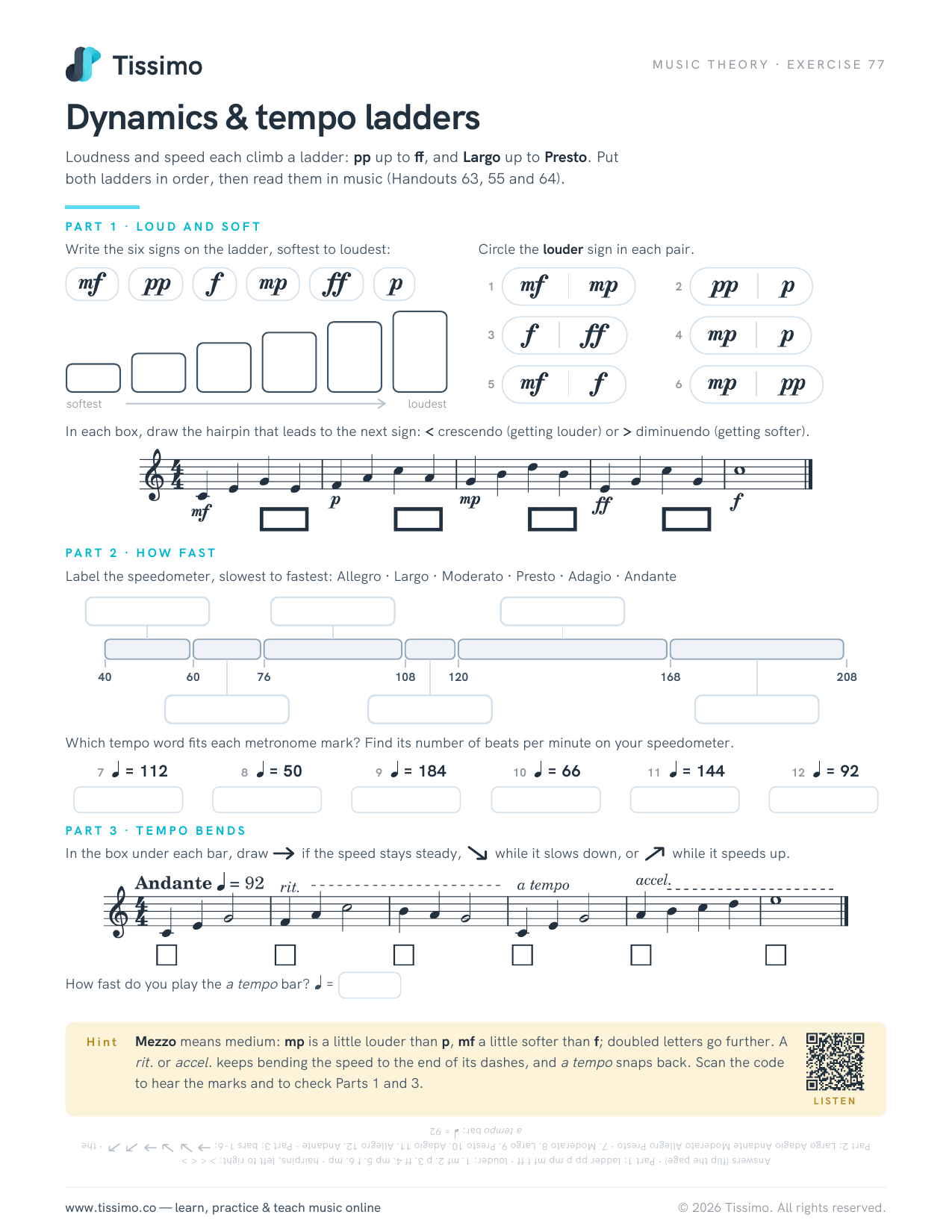 Dynamics & tempo laddersLoudness and speed each climb a ladder: pp up to ff, and Largo up to Presto. Put both ladders in order, then read them in music (Handouts 63, 55 and 64).
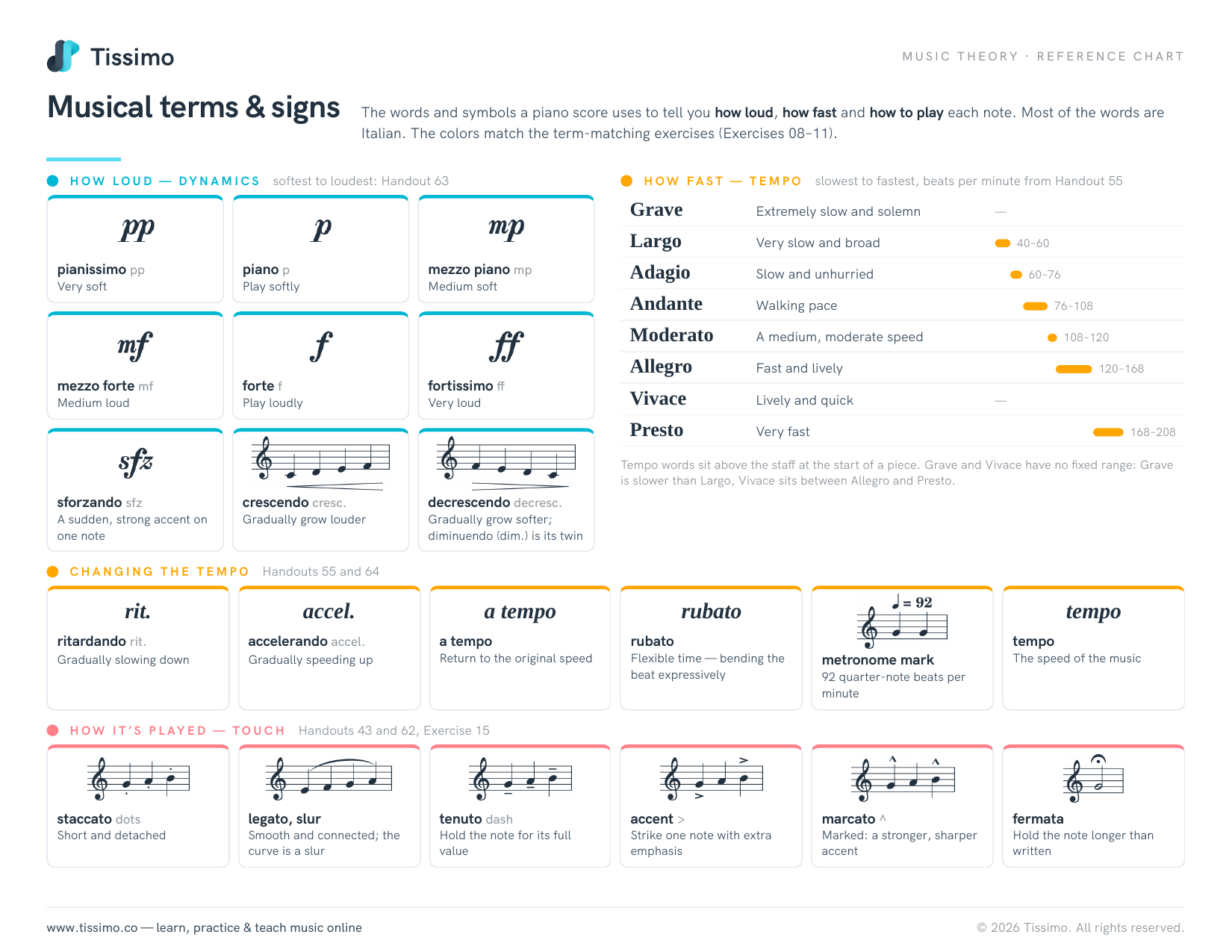 Musical terms & signsThe words and symbols a piano score uses to tell you how loud, how fast and how to play each note. Most of the words are Italian. The colors match the term-matching exercises (Exercises 08–11, 74 and 75).
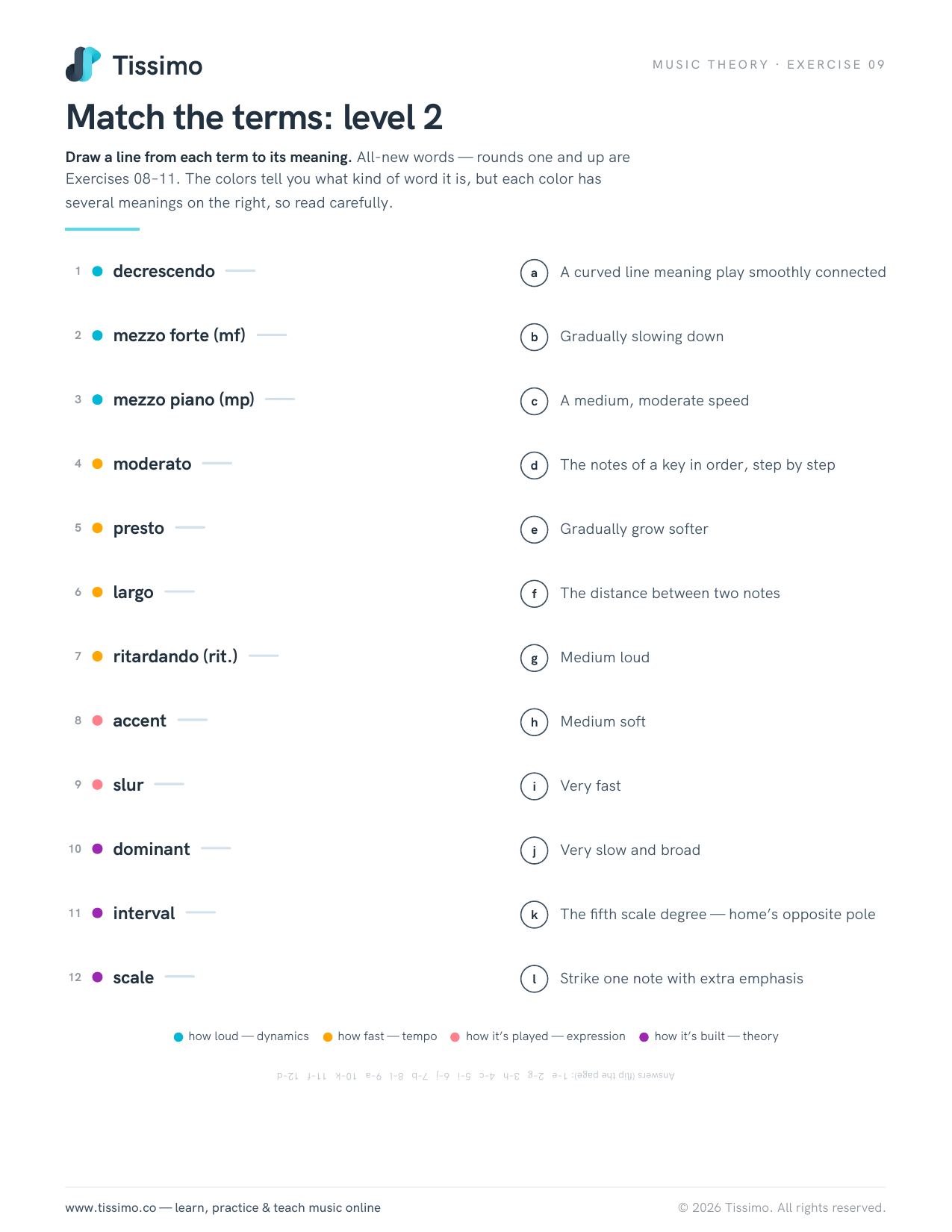 Match the terms: level 2Draw a line from each term to its meaning. All-new words — rounds one and up are Exercises 08–11. The colors tell you what kind of word it is, but each color has several meanings on the right, so read carefully.
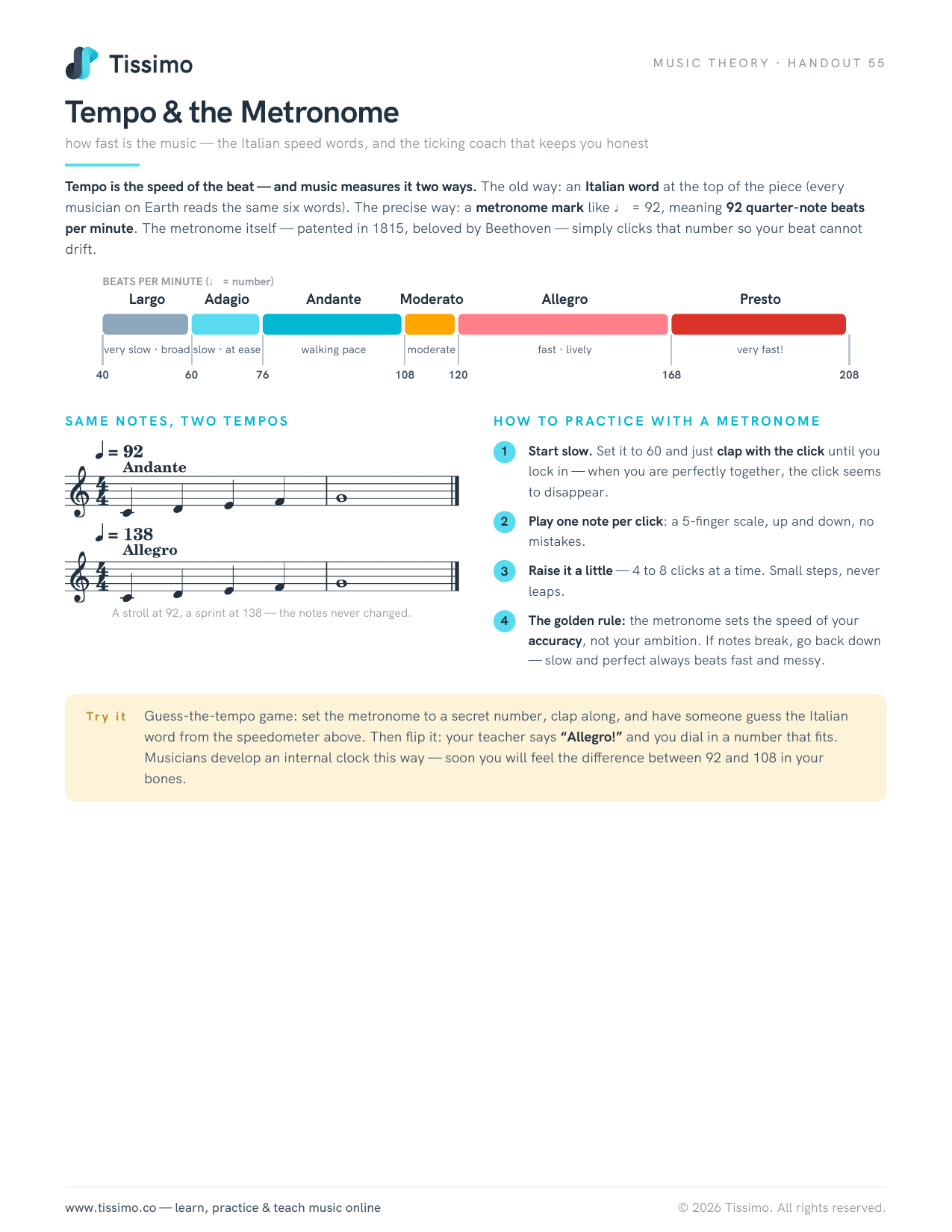 Tempo & the Metronomehow fast is the music — the Italian speed words, and the ticking coach that keeps you honest