Technique & Performance
Sustain Pedal (Damper Pedal)
Written as Ped.
The sustain pedal (damper pedal) is the right-hand pedal of a piano. Pressing it lifts every damper off the strings, so notes keep ringing after you let go of the keys.
The sustain pedal is the pedal on the right, the one you will use most. Inside the piano, almost every key has a felt damper resting on its strings. When you release a key, the damper drops back and stops the sound. Pressing the sustain pedal lifts all the dampers at once, so the notes you play keep sounding after your fingers leave the keys. The other strings are free to vibrate in sympathy too, which gives the piano a fuller, warmer resonance.
Its proper name is the damper pedal, because it moves the dampers. Many players simply say "the pedal", and on digital pianos and keyboards it is usually labeled "sustain".
How it is written
Pedaling is marked under the bass staff in two ways. The older one is the word Ped. where you press and an asterisk (✻) where you lift. The newer one is a bracket line: the line starts where you press, a notch (a small upward peak) means lift and press again at once, and the line ends where you lift. Both say the same thing. The Pedal marks worksheet practices reading and writing them.
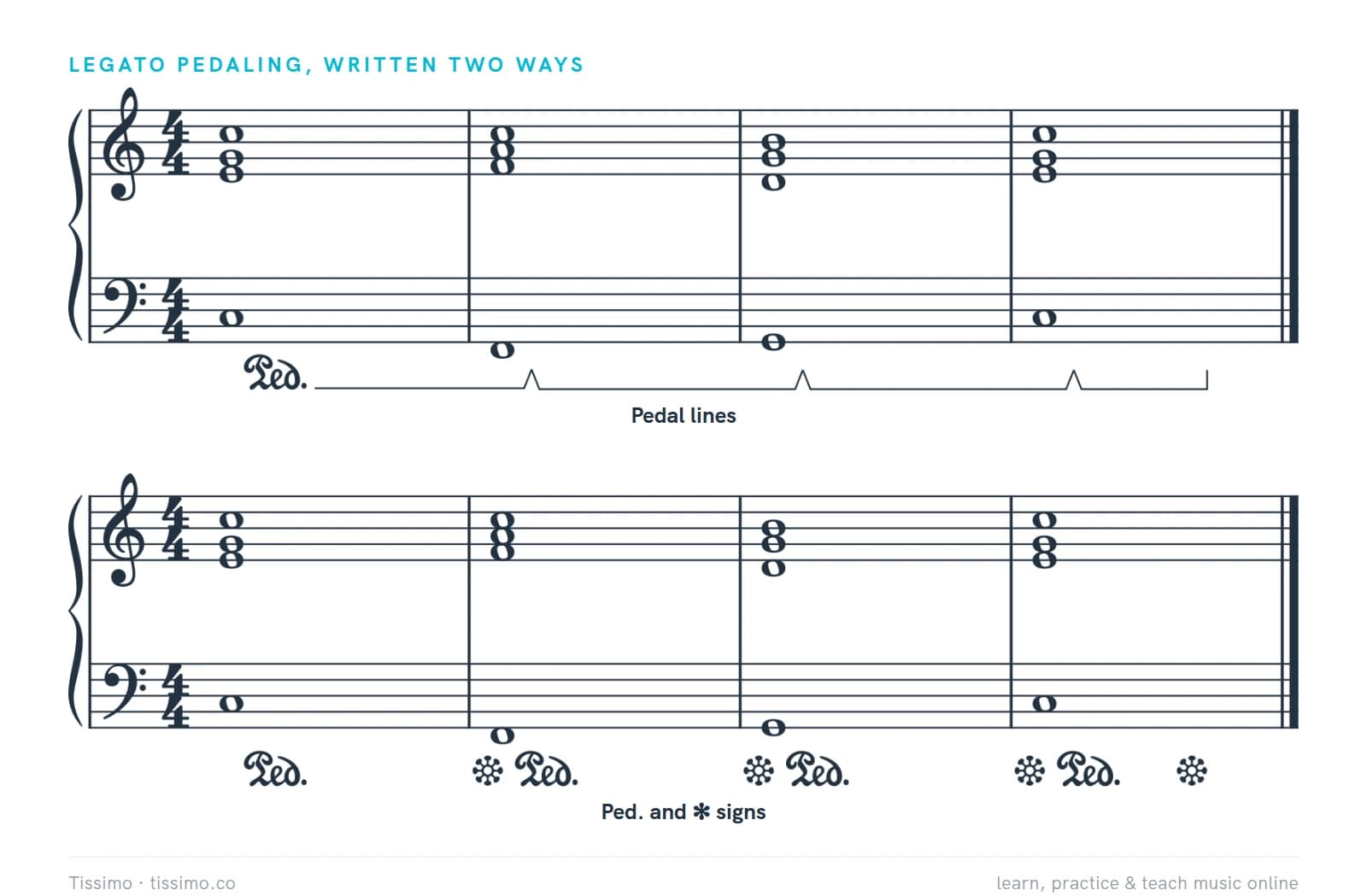
Legato pedaling: the change comes after the note
The most useful pedal skill is the legato pedal change (also called syncopated pedaling). It joins chords without blurring them:
- Play the first chord, and press the pedal just after it sounds.
- Play the next chord. As the new chord goes down, lift the pedal.
- Press the pedal again right after, while your fingers still hold the new chord.
Your fingers carry the sound through the instant the dampers fall, and the pedal then catches the new harmony cleanly. If you press the pedal at the same moment as the keys, you catch the end of the old chord as well; if you wait too long, you hear a gap. Think "play, then pedal": the foot comes up as the hands go down.
Try it today on single notes: play C, D, E, F and G slowly with one finger, changing the pedal on each note, and listen for no gaps and no smears. Then play the chords in the example.
When to change
Change whenever the harmony changes, and whenever a melody would smear across too many notes. Low notes ring longest, so a busy bass line may need more changes. Let your ears decide as well as the markings: pianos and rooms differ, and pedaling that sounds clear on one instrument can blur on another. The Damper Pedal handout shows what happens inside the instrument.
Half pedal and other details
On an acoustic piano you can press the pedal partway. A half pedal lets the dampers brush the strings, thinning the sound without stopping it. Many digital pianos treat the pedal as a simple on/off switch, while some respond to half pedaling. In MIDI, the sustain pedal is controller number 64.
Common questions
Which pedal is the sustain pedal?
The one on the right. On a grand piano the three pedals, from left to right, are usually the soft pedal, the sostenuto pedal and the sustain pedal.
Why does my pedaling sound blurry?
Usually because the pedal goes down with the new note instead of just after it, or because it stays down through a change of harmony. Change the pedal each time the chord changes, lifting as the new keys go down and pressing again right after.
Can you use a sustain pedal on a digital piano?
Yes. Most digital pianos and keyboards have a socket for a sustain pedal. A pedal shaped like a real piano pedal makes the technique easier to carry over to an acoustic piano.
Practice it: free worksheets
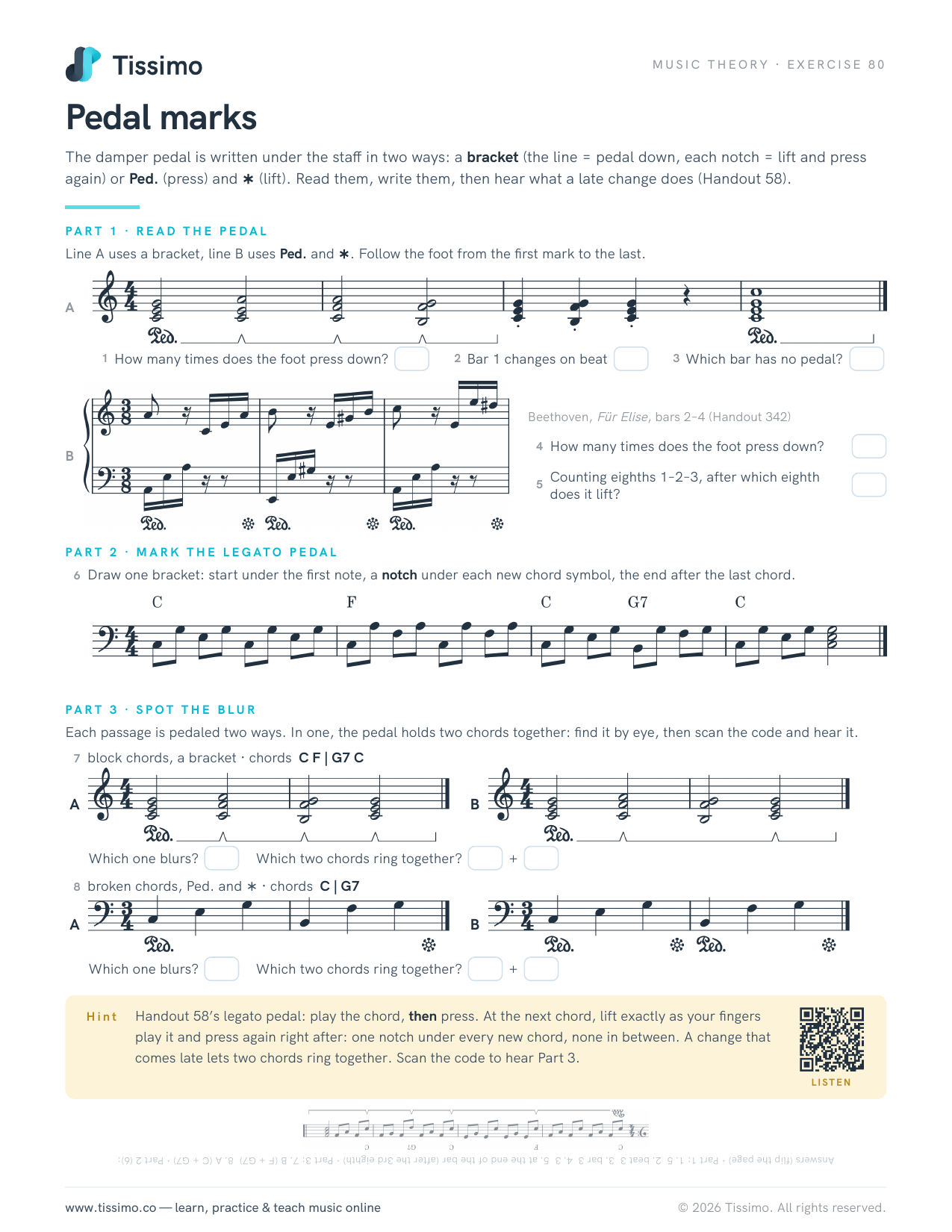 Pedal marksThe damper pedal is written under the staff in two ways: a bracket (the line = pedal down, each notch = lift and press again) or Ped. (press) and ∗ (lift). Read them, write them, then hear what a late change does (Handout 58).
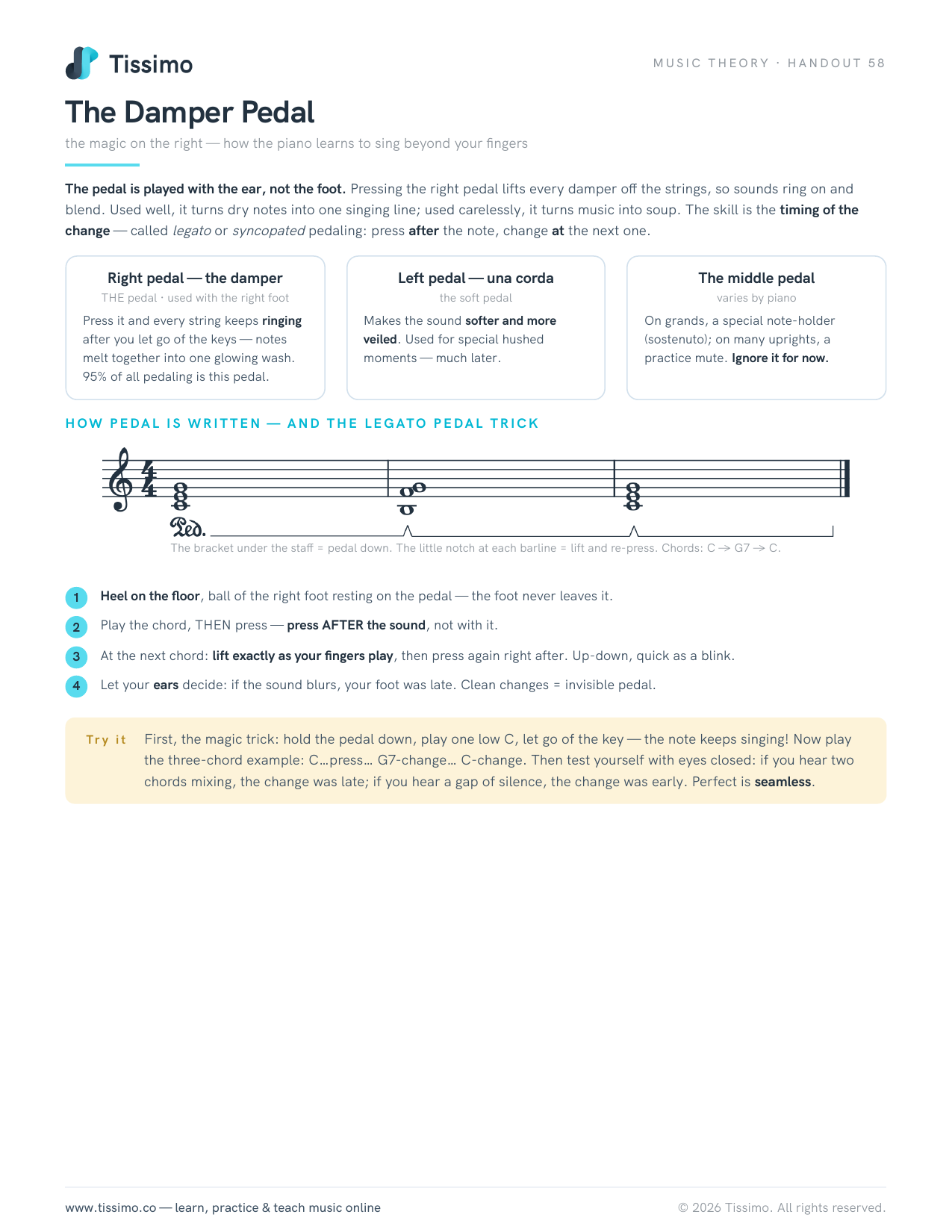 The Damper Pedalthe magic on the right — how the piano learns to sing beyond your fingers
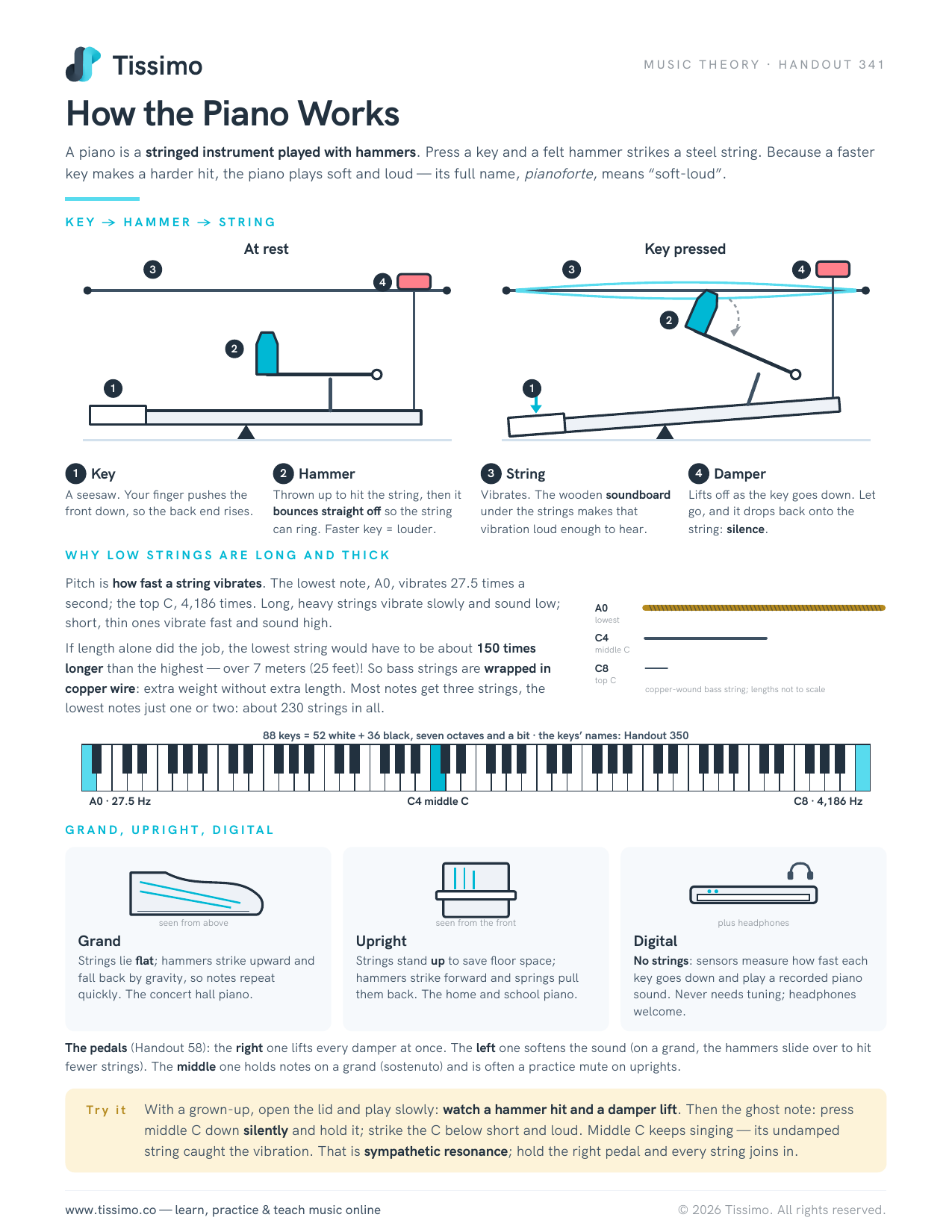 How the Piano WorksA piano is a stringed instrument played with hammers. Press a key and a felt hammer strikes a steel string. Because a faster key makes a harder hit, the piano plays soft and loud — its full name, pianoforte, means “soft-loud”.