Technique & Performance
Sight-Reading
Sight-reading is playing or singing a piece of music from the score the first time you see it, keeping a steady beat and carrying on through mistakes rather than stopping to fix them.
What sight-reading asks of you
When you sight-read there is no time to work anything out note by note. You read ahead, recognize patterns and keep going. The aim is not a perfect performance but a steady, musical first reading: the right rhythm, most of the notes, and no stops. Accompanists, church musicians, ensemble players and studio musicians rely on the skill, and many music exams include a sight-reading test.
Before you play: a 30-second scan
- Key signature. Which sharps or flats? Find them on the keyboard and say them aloud.
- Time signature. How many beats in a bar, and what is the first rhythm?
- Tempo and character. Choose a speed slow enough for the hardest bar.
- Hand position. Find the first note of each hand and the range each hand covers.
- Patterns. Look for scales, repeated bars, chord shapes and sequences. Each pattern is a group of notes you can read as one.
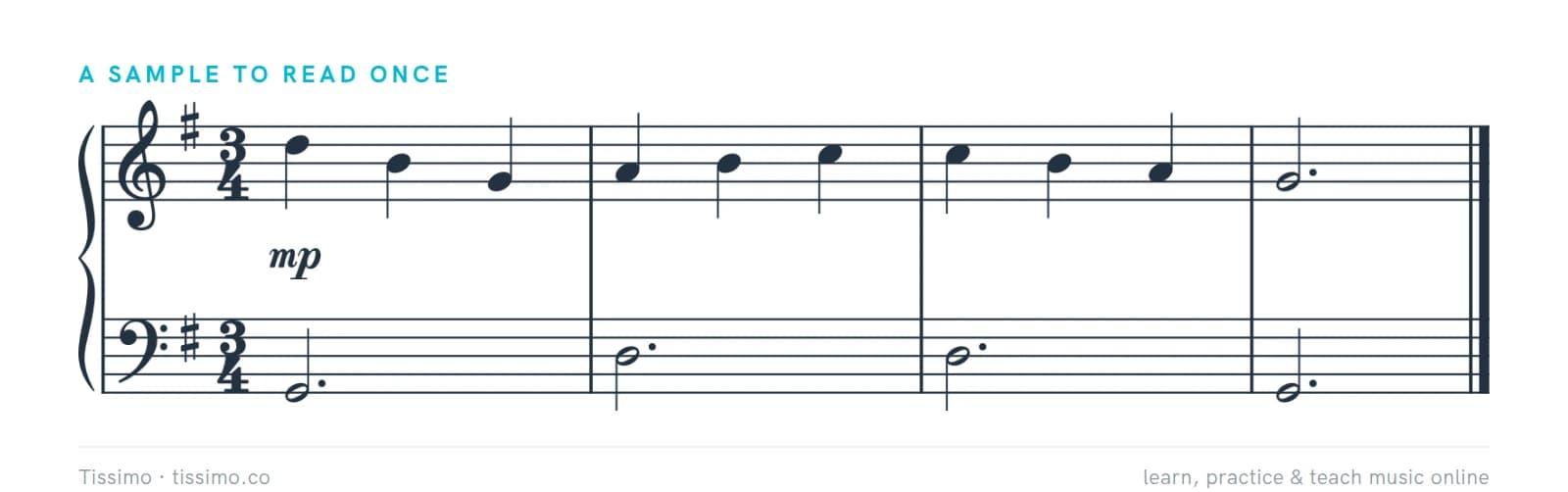
While you play
- Keep the beat above everything. A wrong note in time sounds better than a right note late. If you slip, jump to the next beat and carry on.
- Look ahead. Let your eyes run a beat or two ahead of your hands.
- Keep your eyes on the music. Find the keys by feel and quick glances, so you don't lose your place.
- Read intervals as well as notes. "Up a third, down a step" is faster than naming every letter.
How to get better
Sight-reading improves with quantity: many short, easy pieces, each read once. Choose music clearly easier than what you are learning to perform, so you can keep going without stopping. Five minutes a day does more than an hour once a month. Tissimo's graded sets give you fresh pieces to read once each, starting with Sight-Reading: Set 1 and Set 2, then hands together in Set 3. Fast note recognition helps too: the Name the notes: grand staff worksheet drills it.
A teacher can choose material at exactly the right level for you; book a lesson if you want a reading plan.
Common questions
How can I improve my sight-reading quickly?
Read something new every day, at a level that feels easy, and never stop to correct a mistake. Short daily sessions with lots of different music build the skill faster than long, occasional ones.
Should I look at my hands when sight-reading?
As little as possible. Keep your eyes on the music and find the keys by feel and quick glances; looking down every few notes makes you lose your place.
Practice it: free worksheets
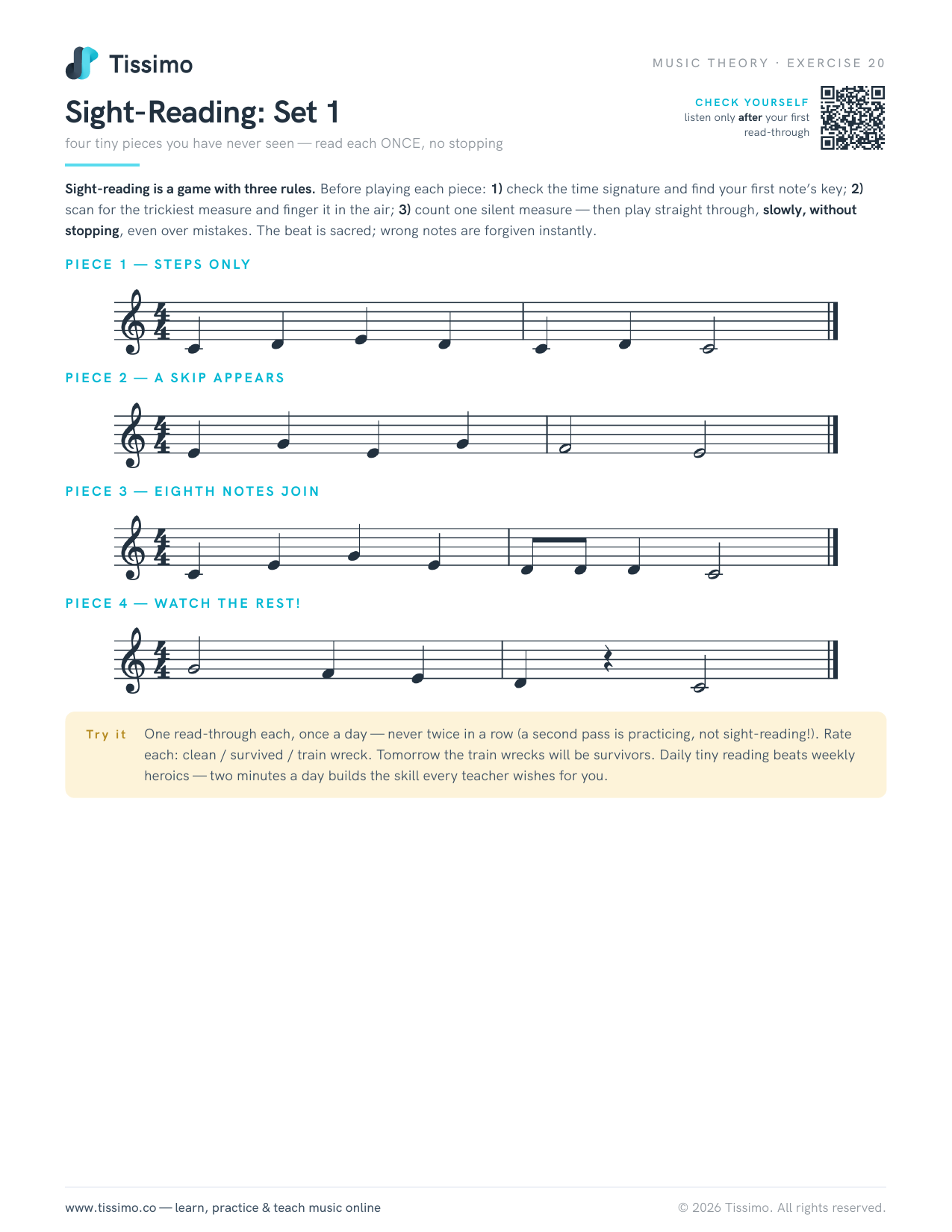 Sight-Reading: Set 1four tiny pieces you have never seen — read each ONCE, no stopping
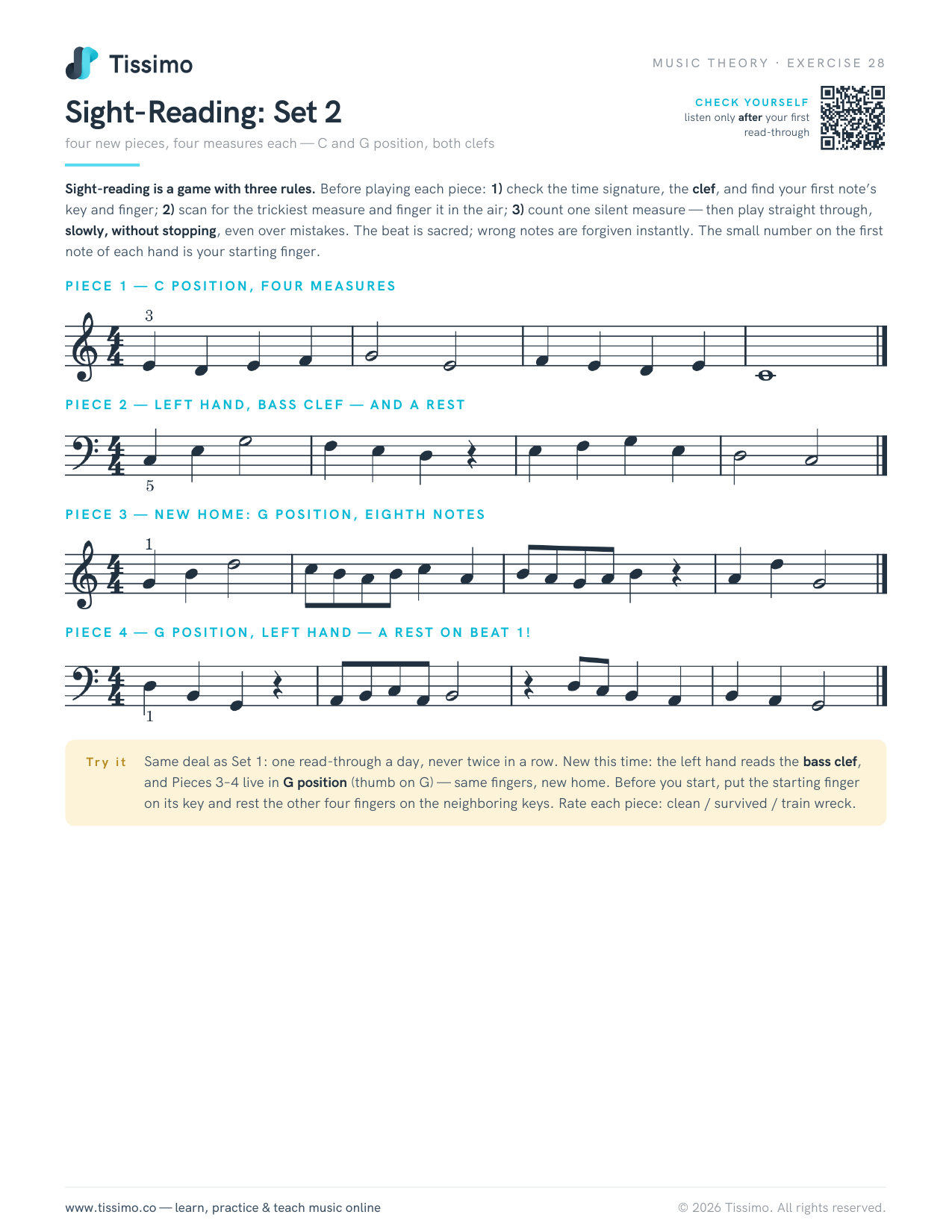 Sight-Reading: Set 2four new pieces, four measures each — C and G position, both clefs
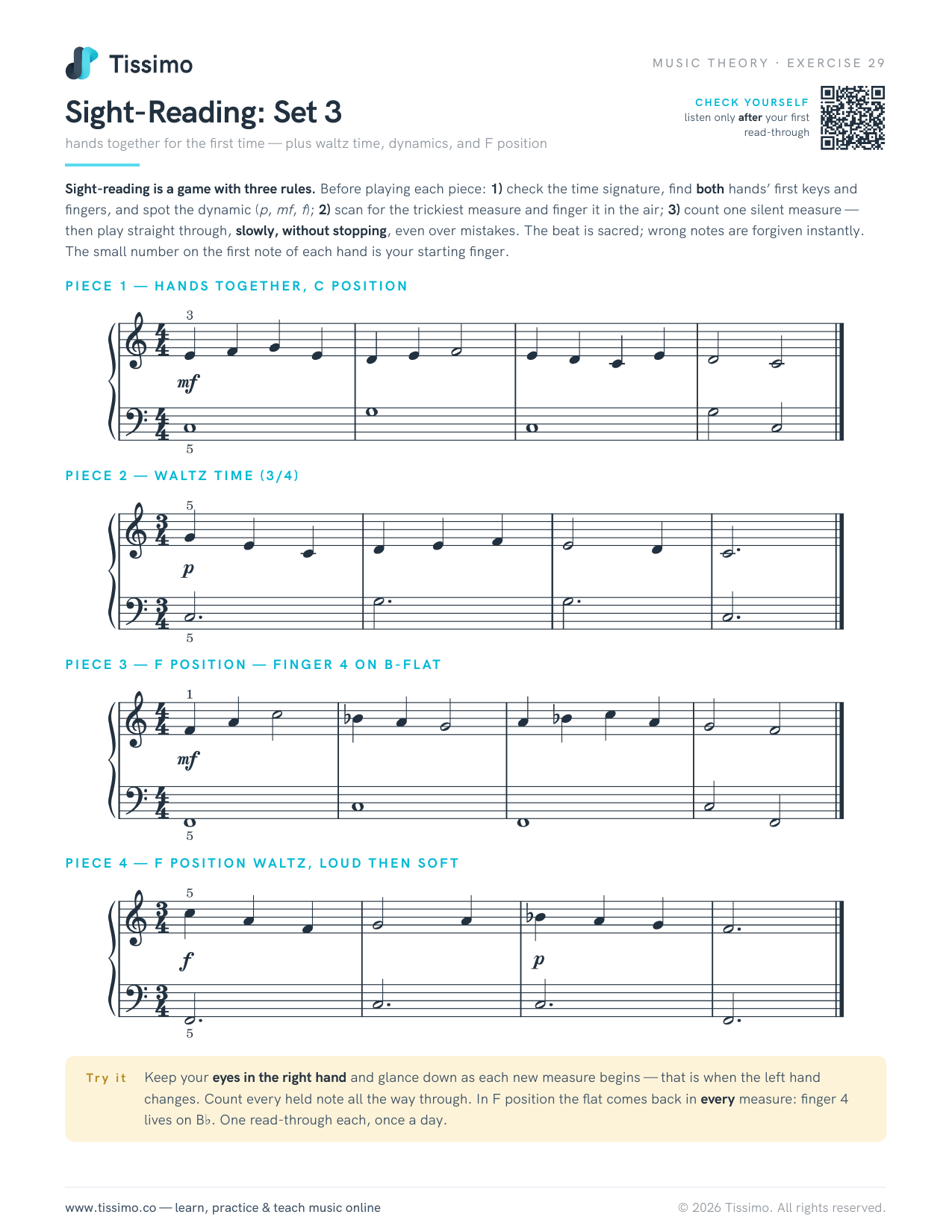 Sight-Reading: Set 3hands together for the first time — plus waltz time, dynamics, and F position
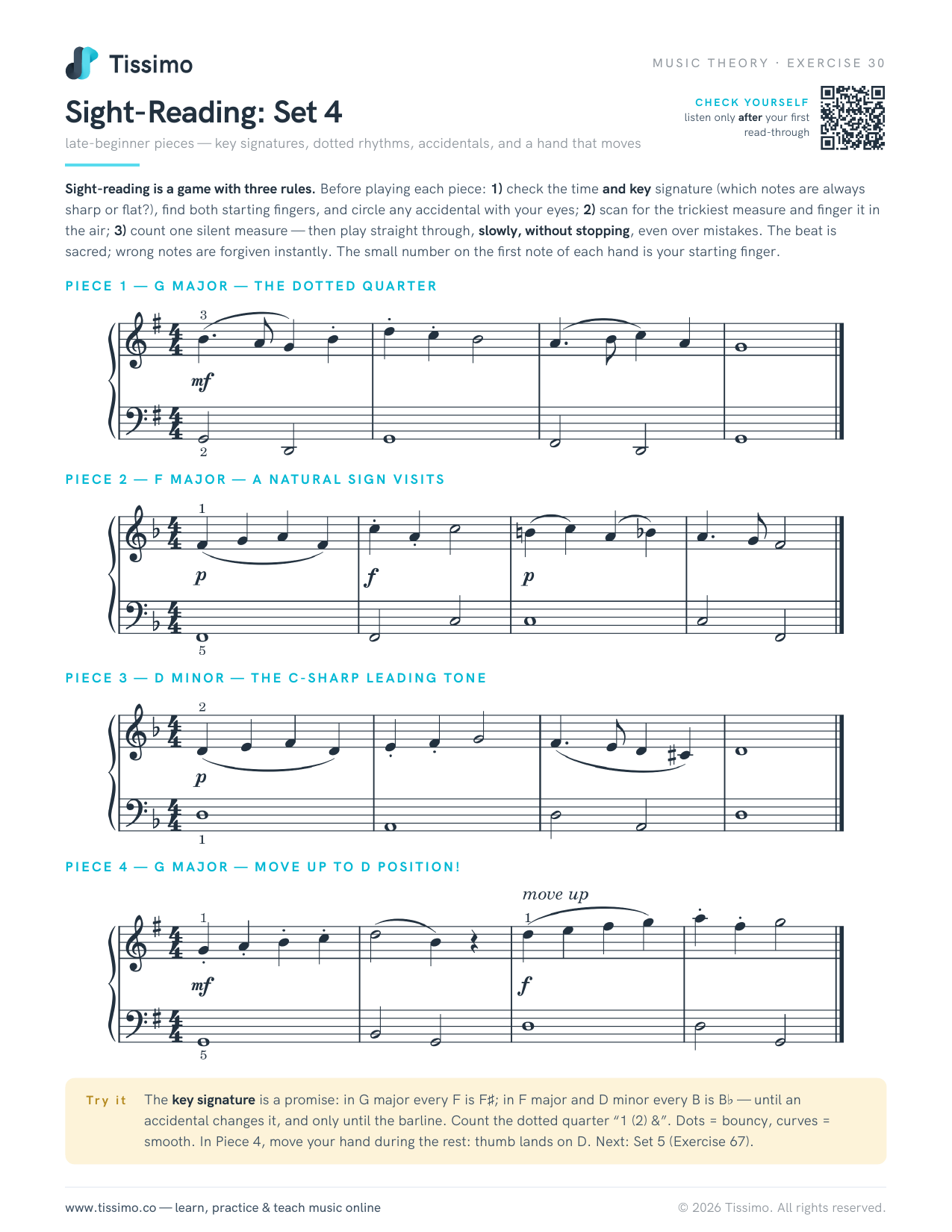 Sight-Reading: Set 4late-beginner pieces — key signatures, dotted rhythms, accidentals, and a hand that moves
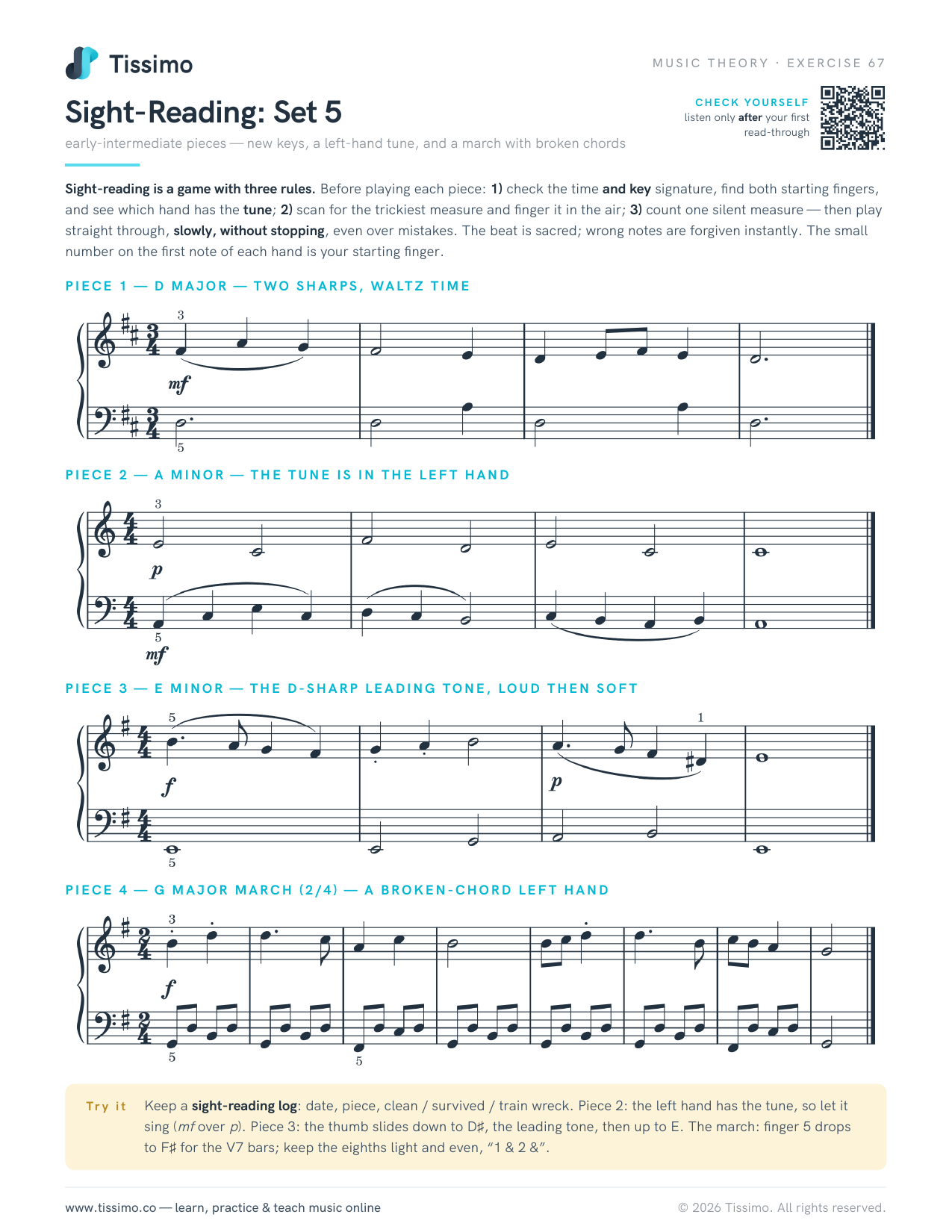 Sight-Reading: Set 5early-intermediate pieces — new keys, a left-hand tune, and a march with broken chords
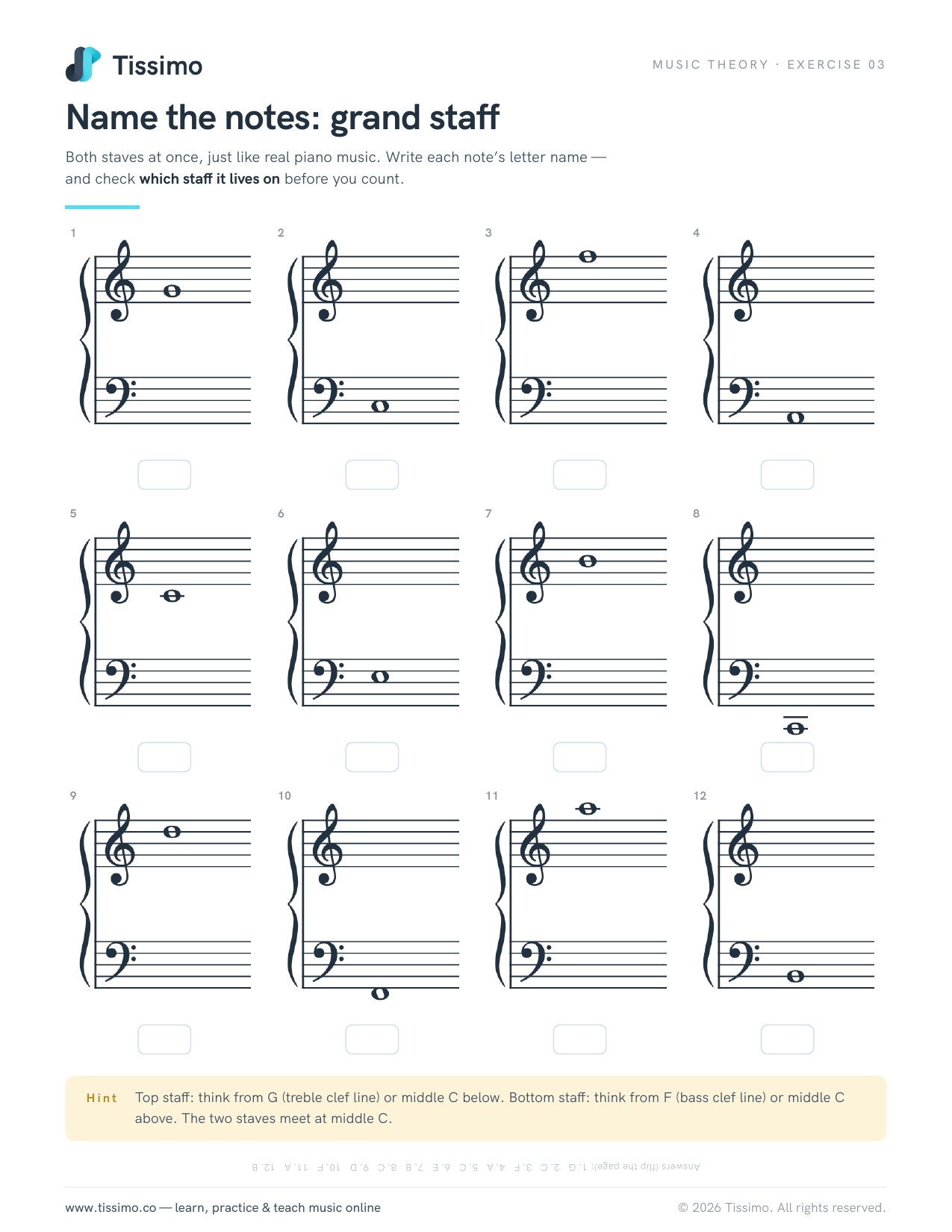 Name the notes: grand staffBoth staves at once, just like real piano music. Write each note’s letter name — and check which staff it lives on before you count.