Notation & Symbols
Key Signature
A key signature is the group of sharps or flats printed after the clef at the start of every line. It tells you which notes are sharp or flat throughout the piece, in every octave, and points to the key.
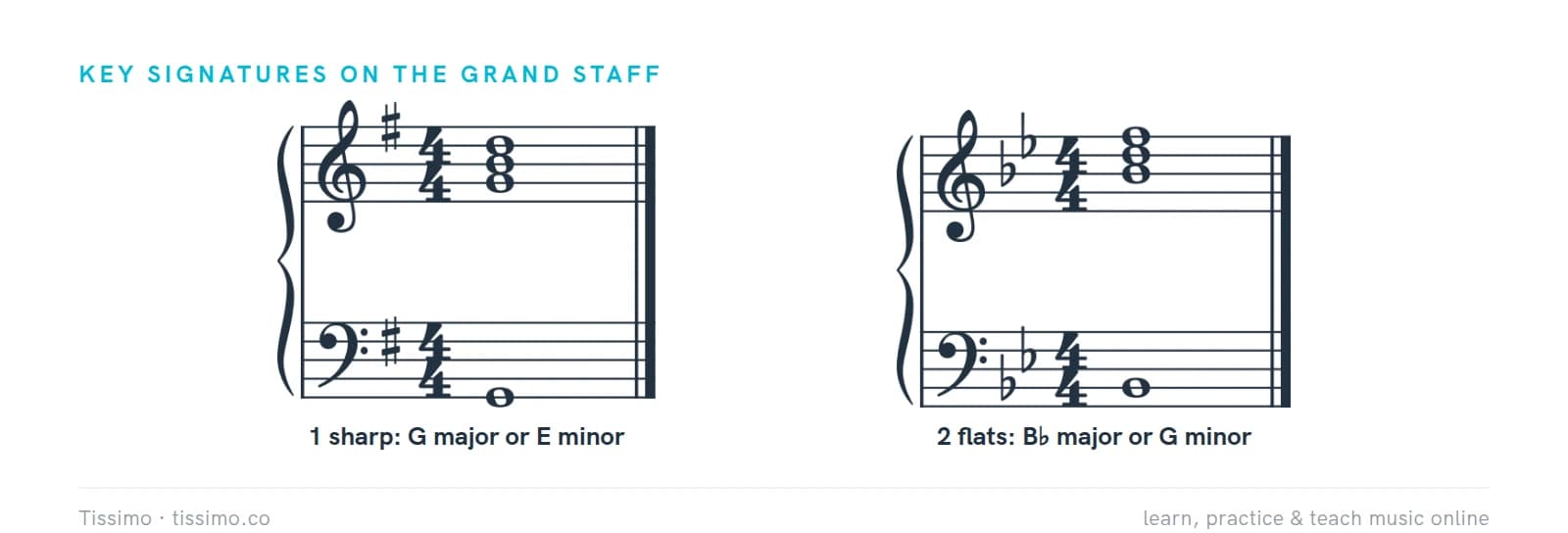
The key signature is the cluster of sharps or flats printed right after the clef at the start of every staff. Each one applies to every note with that letter name, in every octave, for the whole piece or until the key signature changes. A key signature with one sharp on the F line means every F is F♯, unless an accidental says otherwise.
Why key signatures exist
Each major and minor key uses its own set of sharps or flats. D major, for example, uses F♯ and C♯. Instead of writing those sharps before every F and C in the piece, the composer writes them once at the start of each line, and the music is much cleaner to read.
The order of sharps and flats
Sharps and flats always appear in a fixed order:
- Sharps: F, C, G, D, A, E, B
- Flats: B, E, A, D, G, C, F (the same letters backward)
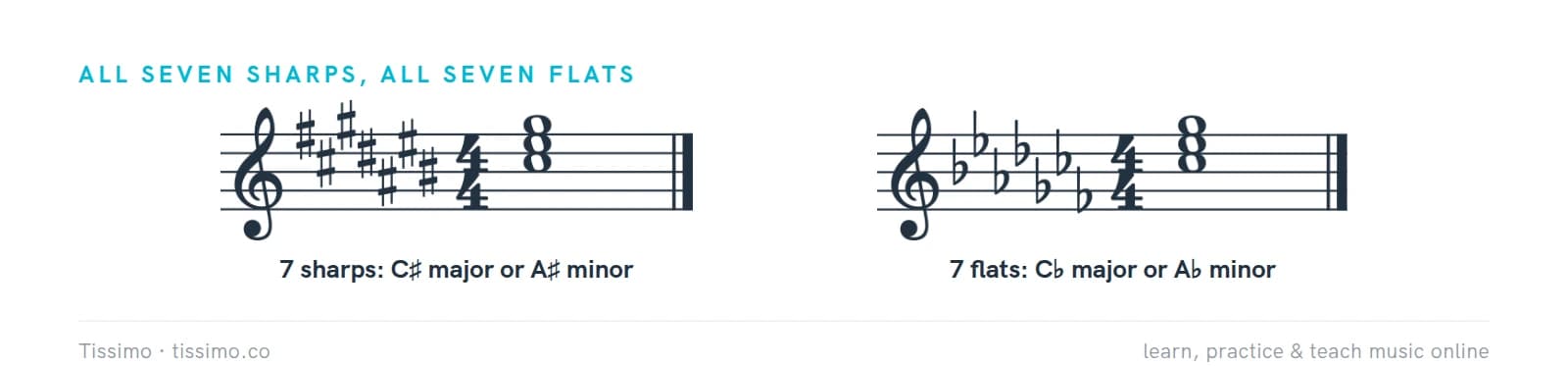
So a key signature with three sharps is always F♯, C♯ and G♯, and one with two flats is always B♭ and E♭. There are fifteen key signatures in all: none, one to seven sharps, and one to seven flats.
Naming the key
- Sharps: the major key is a half step above the last sharp. Last sharp G♯ means A major.
- Flats: the second-to-last flat names the major key. B♭, E♭, A♭ means E♭ major. One flat (B♭) is F major.
- No sharps or flats: C major.
Every key signature is shared by a major key and its relative minor, which starts three half steps lower: one sharp is G major or E minor, two flats are B♭ major or G minor. To tell which one a piece is in, look at its first and last notes and chords, and watch for the raised seventh note that minor keys often use. The circle of fifths arranges all the key signatures in order.
Key changes
A piece can change key signature partway through, usually after a double bar line. Naturals may appear first to cancel sharps or flats from the old signature.
Learn them with Key Signatures: Major & Minor, then test yourself with Name the Key Signatures and Write the key signatures.
Common questions
How do you find the key from a key signature?
With sharps, go up a half step from the last sharp (F♯ means G major). With flats, the second-to-last flat is the key (B♭, E♭, A♭ means E♭ major); one flat is F major. Each signature can also mean its relative minor.
Does a key signature apply to every octave?
Yes. Unlike an accidental, a sharp or flat in the key signature affects every note with that letter name, in every octave and every bar.
Practice it: free worksheets
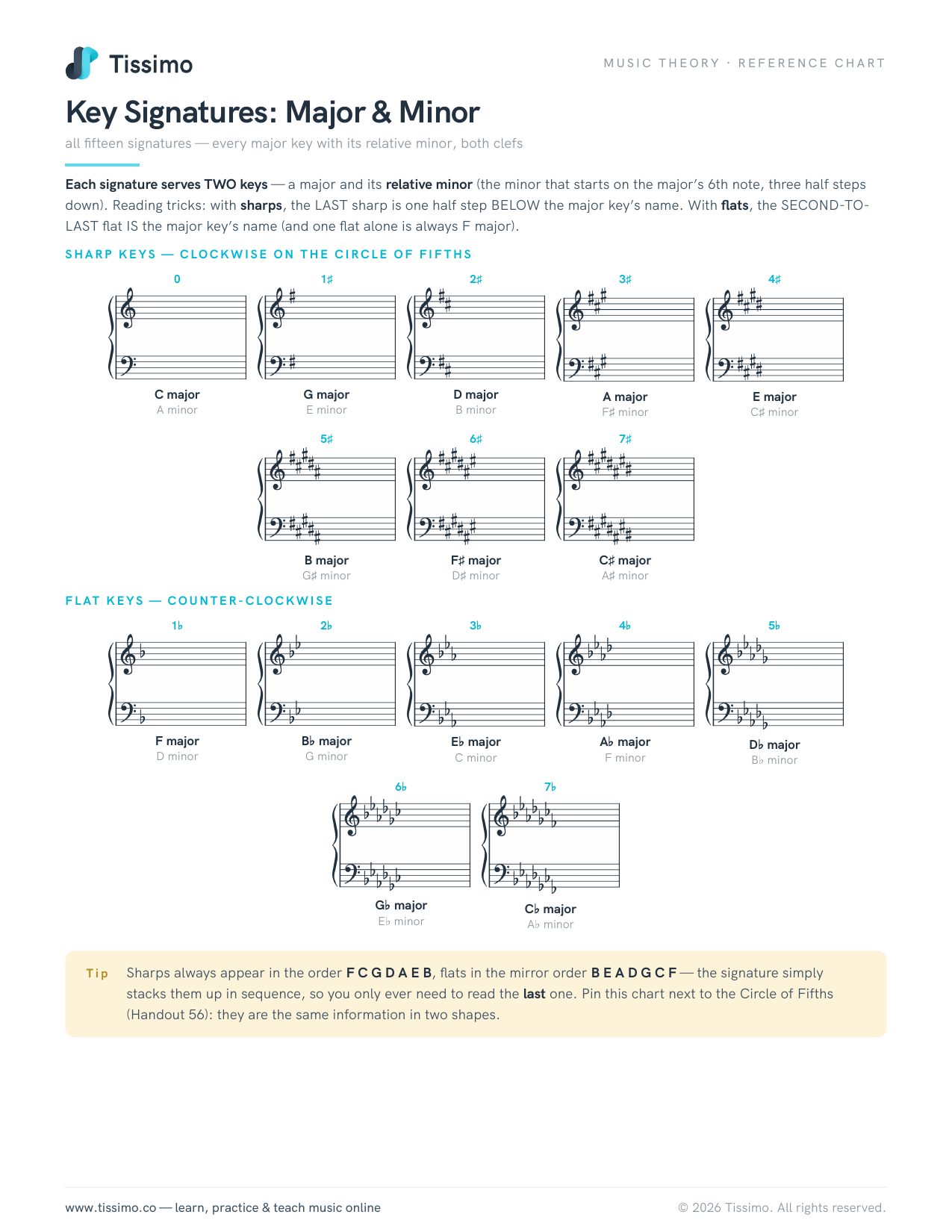 Key Signatures: Major & Minorall fifteen signatures — every major key with its relative minor, both clefs
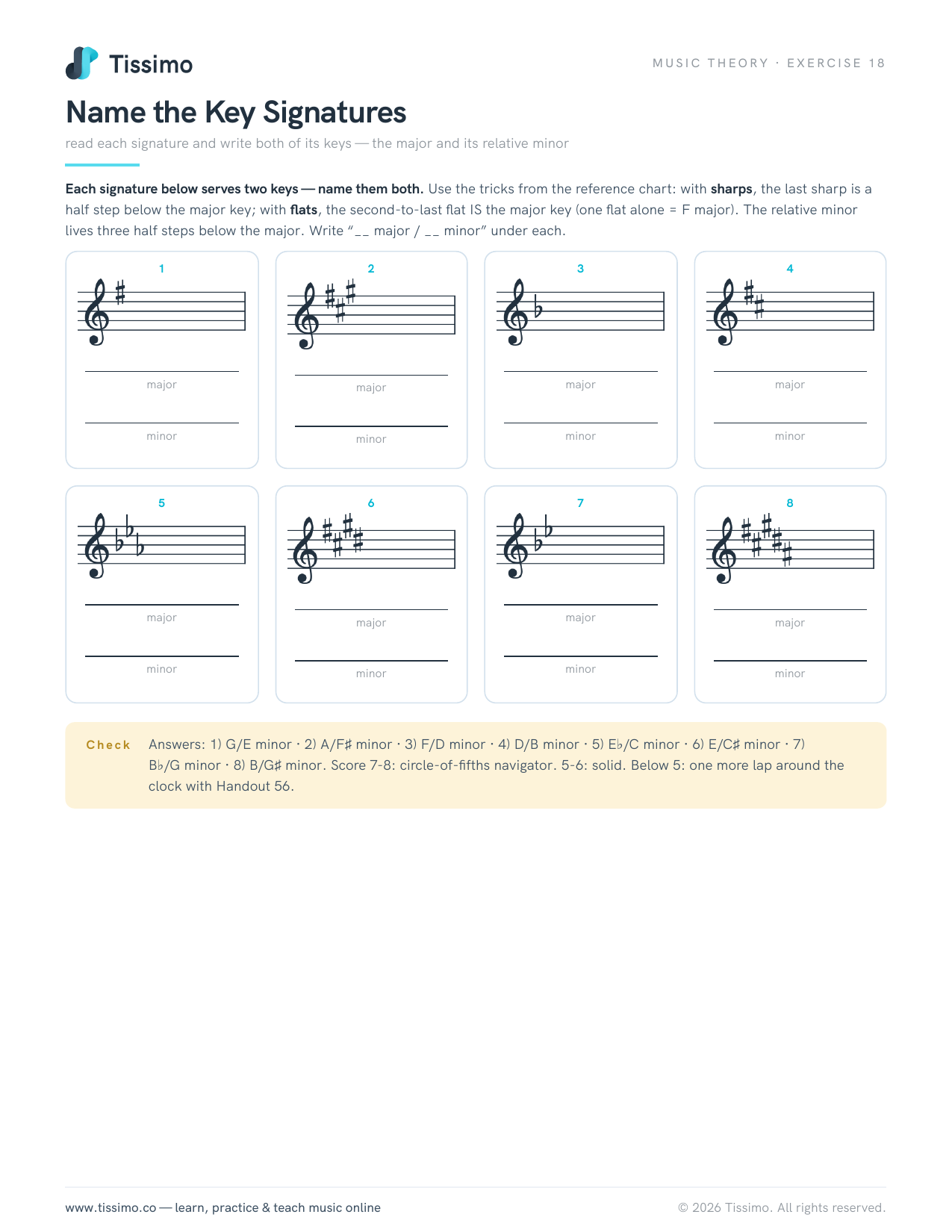 Name the Key Signaturesread each signature and write both of its keys — the major and its relative minor
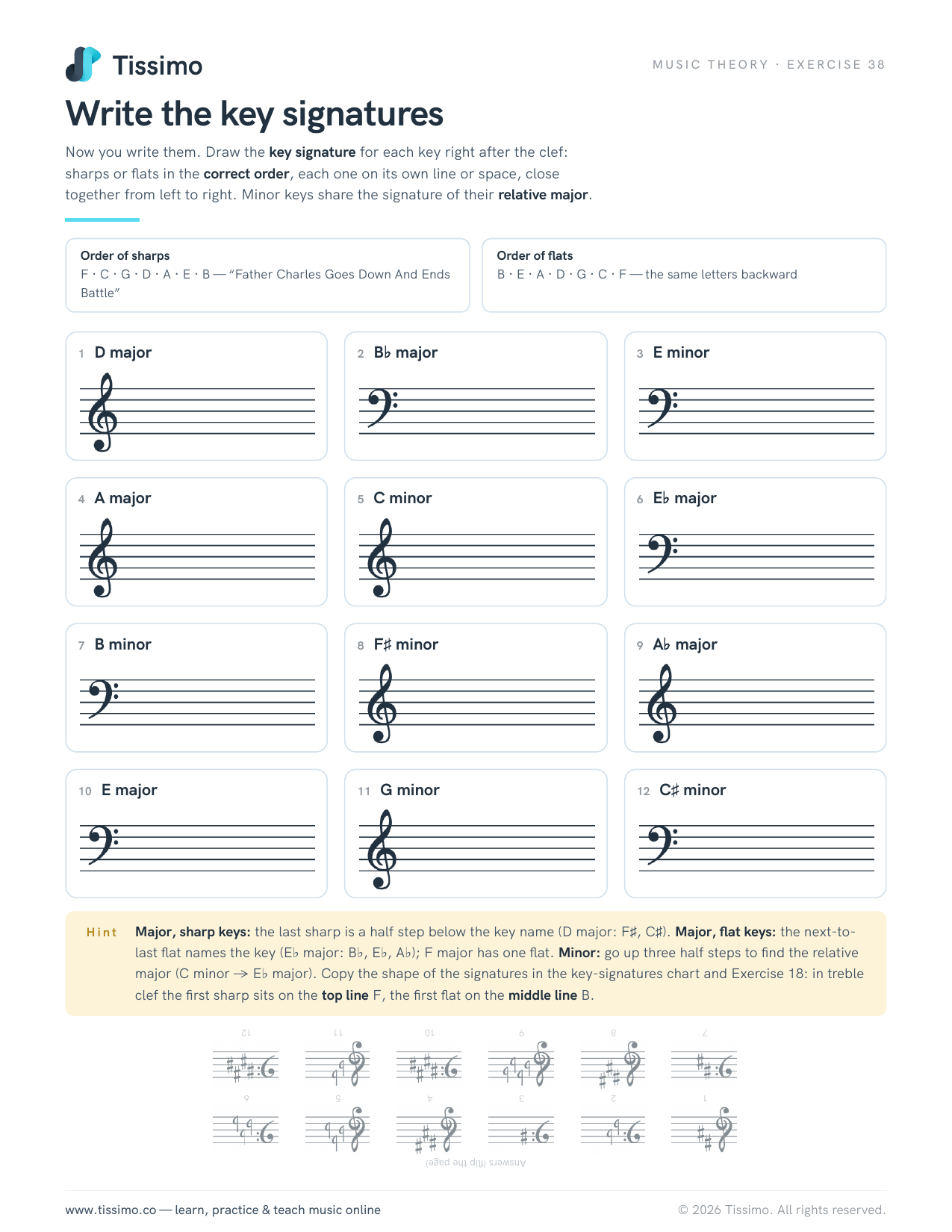 Write the key signaturesNow you write them. Draw the key signature for each key right after the clef: sharps or flats in the correct order, each one on its own line or space, close together from left to right. Minor keys share the signature of their relative major.
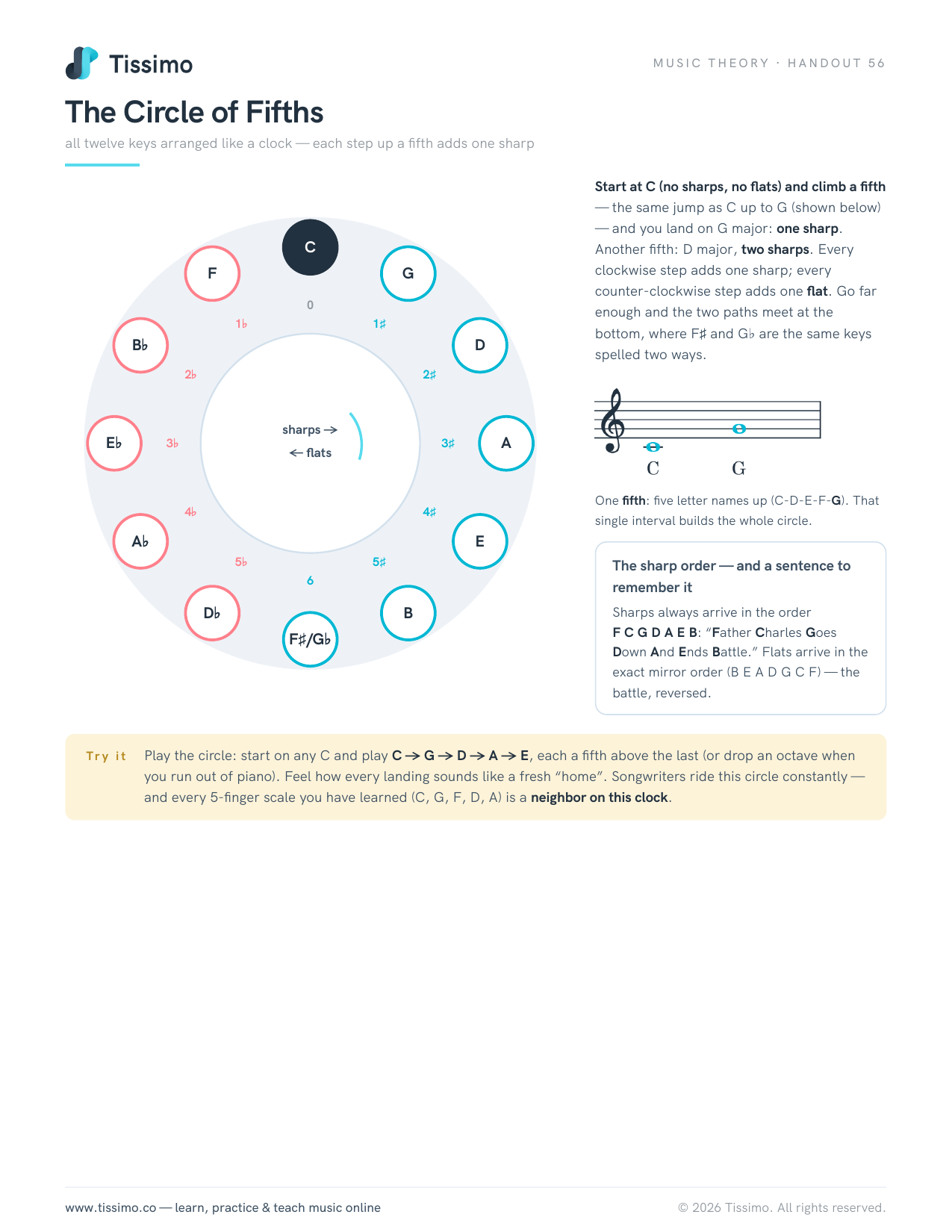 The Circle of Fifthsall twelve keys arranged like a clock — each step up a fifth adds one sharp
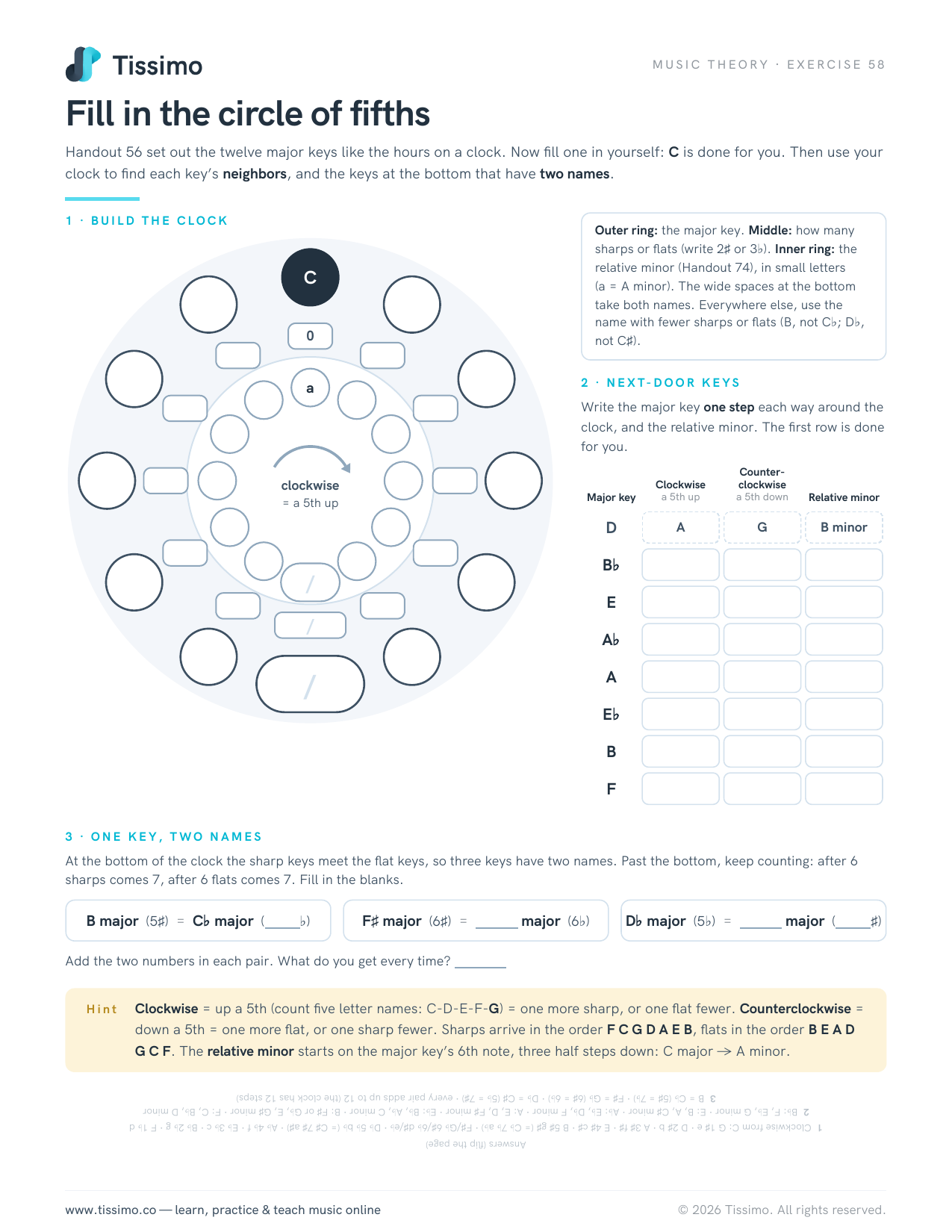 Fill in the circle of fifthsHandout 56 set out the twelve major keys like the hours on a clock. Now fill one in yourself: C is done for you. Then use your clock to find each key’s neighbors, and the keys at the bottom that have two names.
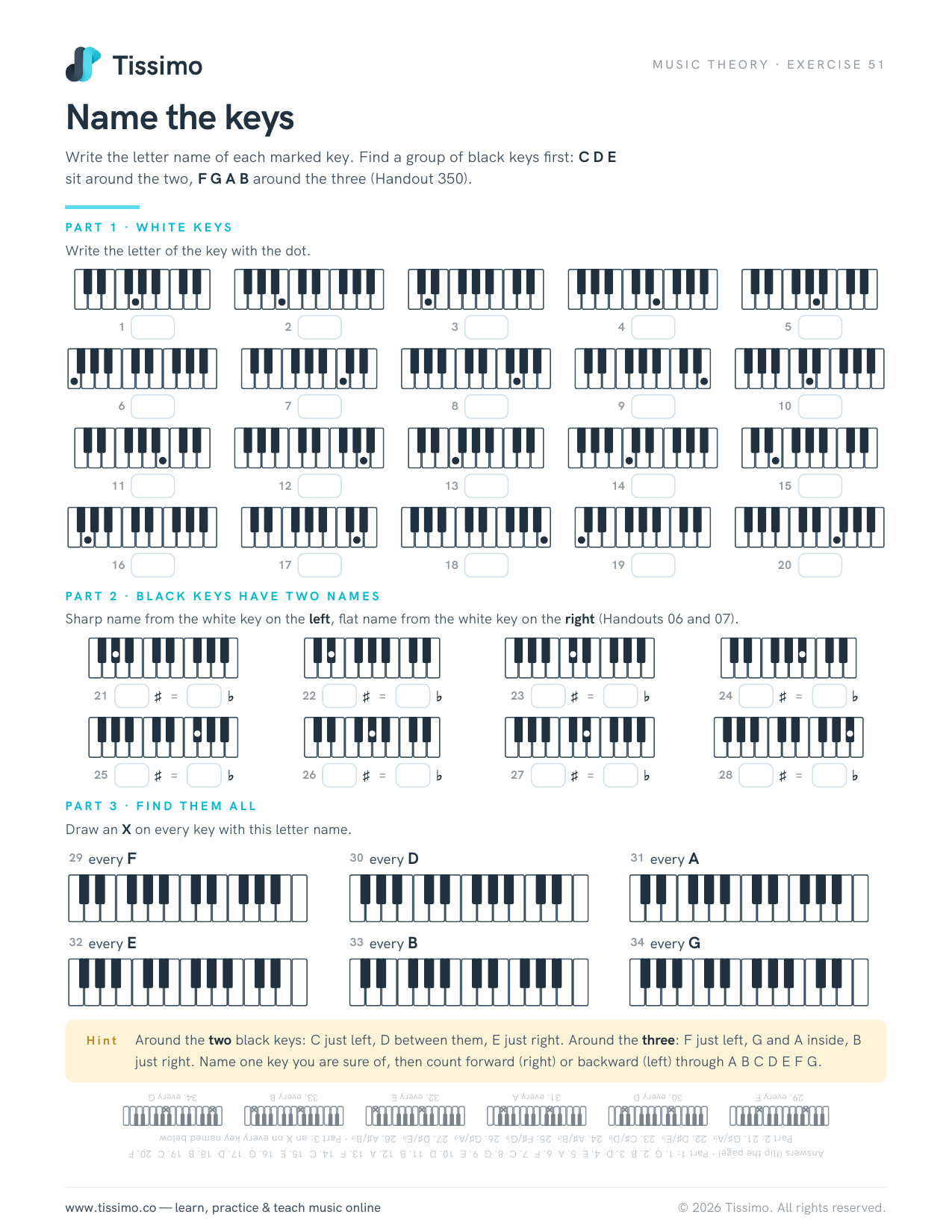 Name the keysWrite the letter name of each marked key. Find a group of black keys first: C D E sit around the two, F G A B around the three (Handout 350).