Notation & Symbols
Double Bar Line
A double bar line is a pair of vertical lines across the staff that marks the end of a section or a change of key, meter or tempo. A thin line followed by a thick one is the final bar line that ends a piece.
A double bar line is two vertical lines drawn close together across the staff in place of a single bar line. It tells you that something is finishing or changing: a section of the piece ends here, or a new key, meter or tempo begins.
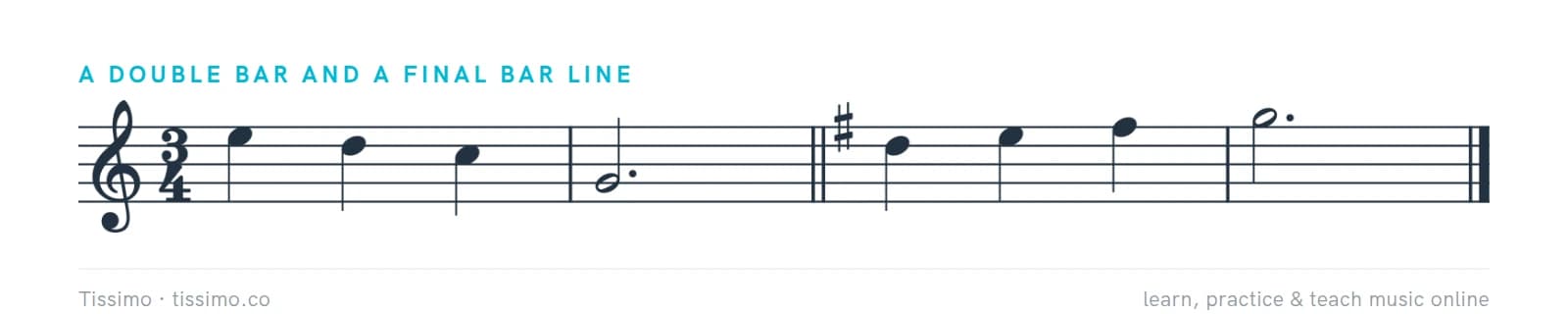
Two kinds
- Thin double bar (two thin lines): the end of a section inside a piece. You often see it just before a new key signature, a new time signature or a new tempo marking, and at a fine in the middle of the page.
- Final bar line (a thin line, then a thick one): the end of the piece or movement. Many musicians call this a double bar as well.
Neither one means "stop" by itself in the middle of the music. You play straight through a thin double bar unless something else, such as a fine, a fermata or a repeat, tells you otherwise.
Double bars and repeats
A repeat sign is a double bar line with two dots beside it: thick and thin lines with the dots on the side of the music to be repeated. Check for the dots. A double bar without them repeats nothing.
A landmark when you practice
Double bars often mark the sections of the piece's form, so they make natural places to start and stop when you practice in sections. They are also a signal to look ahead: if a double bar is coming, check whether the key, the meter or the tempo changes after it, before you get there.
See double bars at work with the other road signs in Navigation Signs.
Common questions
What does a double bar line mean in music?
Two thin lines mark the end of a section, often just before a change of key, meter or tempo. A thin line followed by a thick one marks the end of the piece.
What is the difference between a double bar line and a repeat sign?
A repeat sign is a double bar line with two dots beside it. Without the dots, nothing is repeated.
Practice it: free worksheets
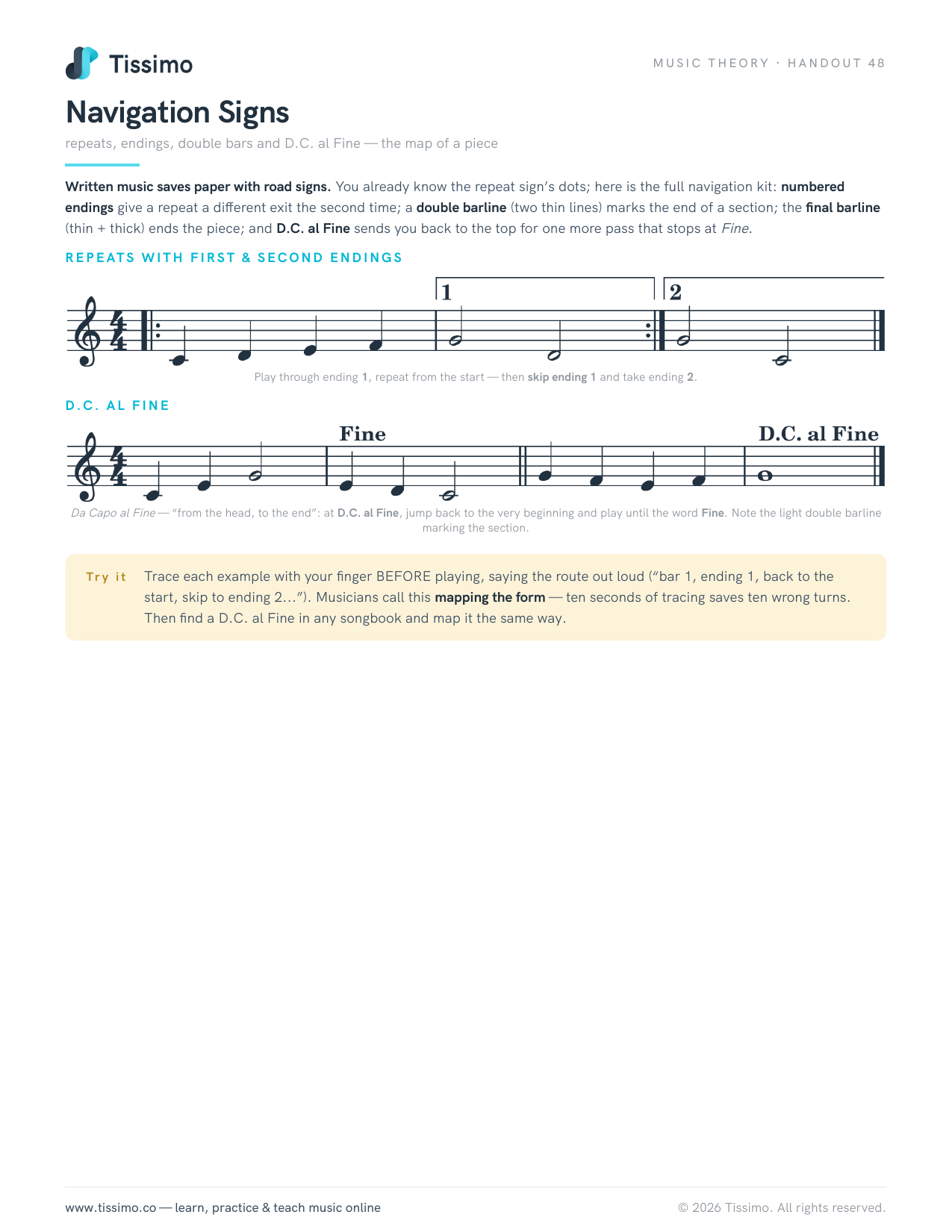 Navigation Signsrepeats, endings, double bars and D.C. al Fine — the map of a piece
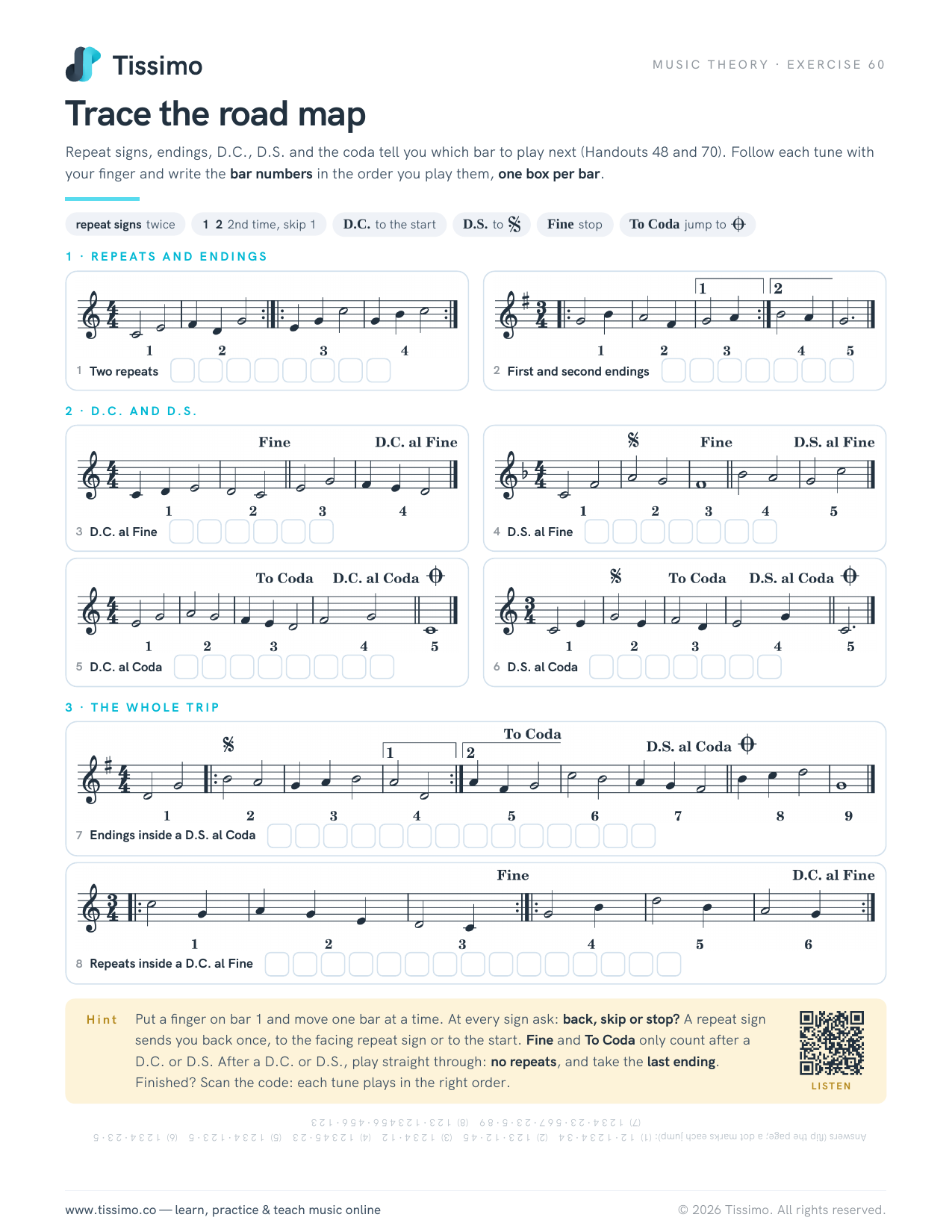 Trace the road mapRepeat signs, endings, D.C., D.S. and the coda tell you which bar to play next (Handouts 48 and 70). Follow each tune with your finger and write the bar numbers in the order you play them, one box per bar.