Notation & Symbols
Staff (Stave)
A staff is the set of five horizontal lines and four spaces that music is written on. Each line and space stands for a pitch: the higher a note sits on the staff, the higher it sounds.
The staff is the grid that written music sits on: five evenly spaced horizontal lines with four spaces between them. A note can sit on a line, with the line running through the middle of the notehead, or in a space, with the notehead fitting between two lines. The higher a note sits, the higher it sounds.
Counting lines and spaces
Musicians count from the bottom up. The bottom line is the first line and the top line is the fifth. The space between the first and second lines is the first space, and the space between the fourth and fifth lines is the fourth (top) space.
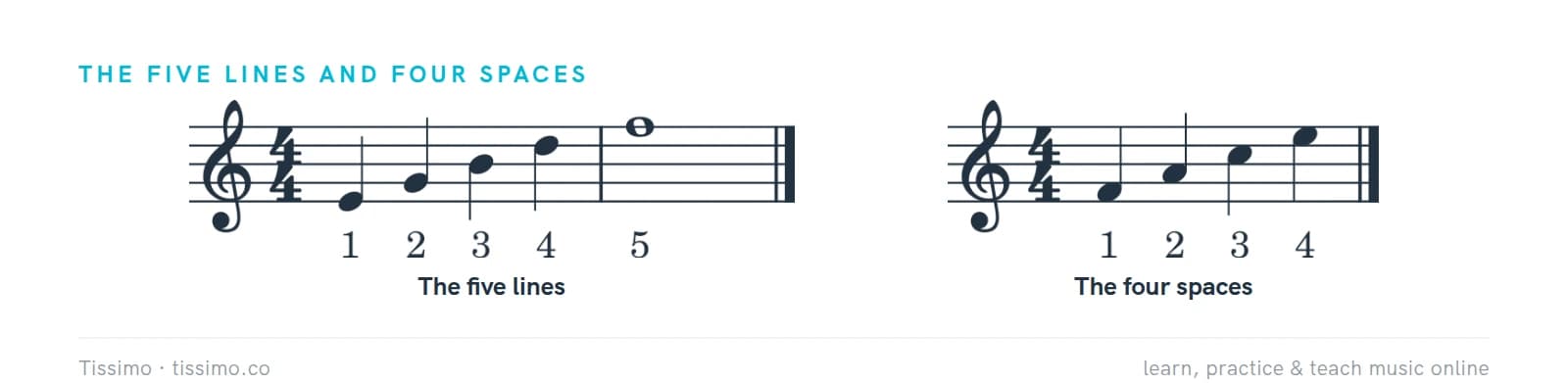
Moving from a line to the space just above it, or from a space to the line just above it, is one step up the musical alphabet. So a run of notes that climbs line, space, line, space spells consecutive letter names, such as E, F, G, A.
The staff needs a clef
On its own, a staff does not say which notes its lines stand for. That is the job of the clef at the start of every line of music. With a treble clef the bottom line is E; with a bass clef the same line is G. After the clef come the key signature and, at the start of a piece, the time signature. Then the notes begin, divided into measures by bar lines.
Beyond five lines
Five lines and four spaces give nine positions, plus one more just below and one just above the staff: about an octave and a half. For anything higher or lower, writers add short ledger lines, change clef, or use an ottava sign. Piano music joins two staves with a brace to make the grand staff, and all the staves you read together form one system.
Staff or stave?
Staff is the usual word in American English; British musicians often say stave. The plural is staves (staffs is also used). Not every staff has five lines: percussion parts often use a single line for one unpitched instrument, Gregorian chant is traditionally written on four lines, and guitar tablature uses one line per string.
Practice the staff and treble clef together with The Staff & the Treble Clef, and draw your own notes on Manuscript Paper.
Common questions
How many lines does a music staff have?
Five lines, with four spaces between them. Notes above or below the staff are written on short ledger lines.
What is the difference between a staff and a stave?
None in meaning. Staff is the usual American word and stave the usual British one; both have the plural staves.
Practice it: free worksheets
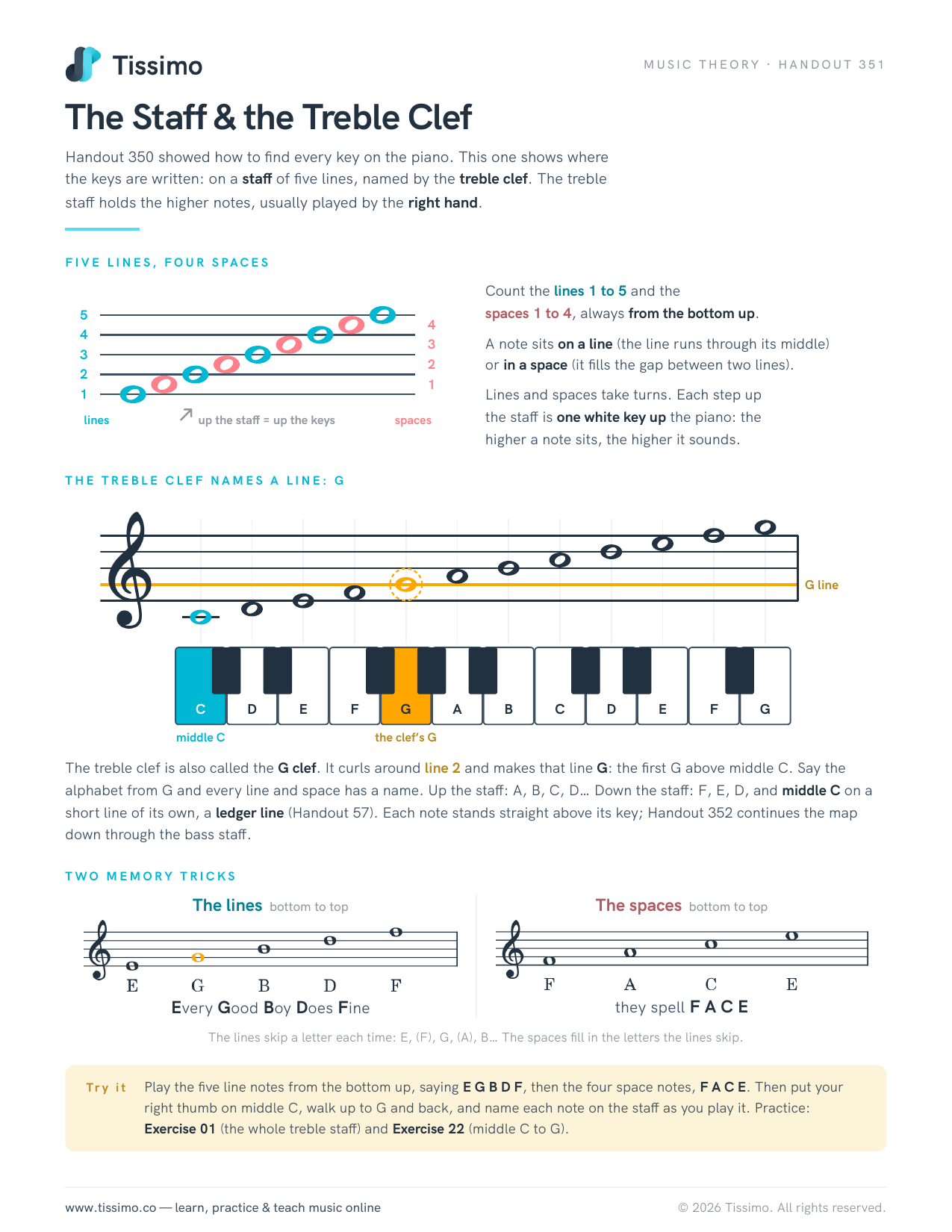 The Staff & the Treble ClefHandout 350 showed how to find every key on the piano. This one shows where the keys are written: on a staff of five lines, named by the treble clef. The treble staff holds the higher notes, usually played by the right hand.
 Manuscript Paper
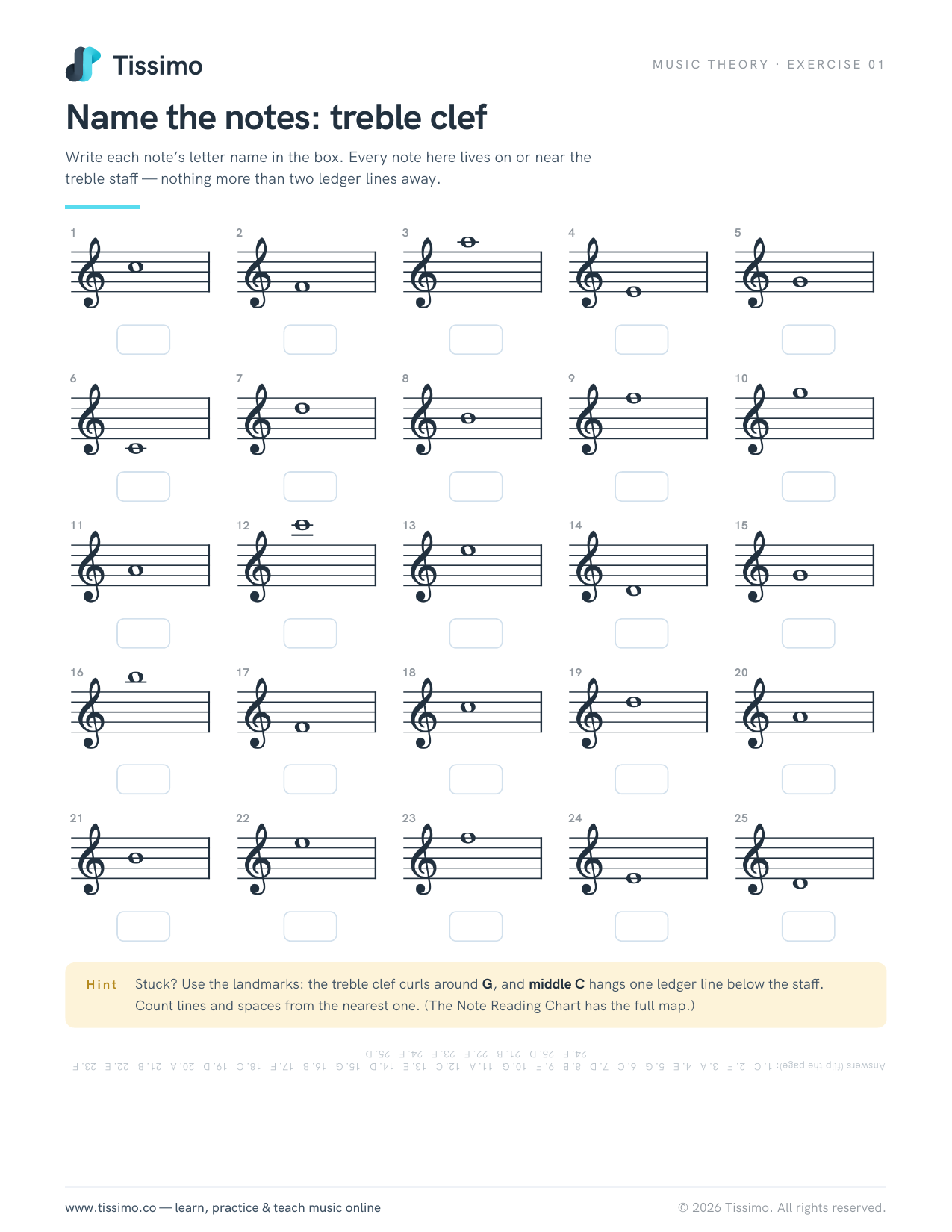 Name the notes: treble clefWrite each note’s letter name in the box. Every note here lives on or near the treble staff — nothing more than two ledger lines away.
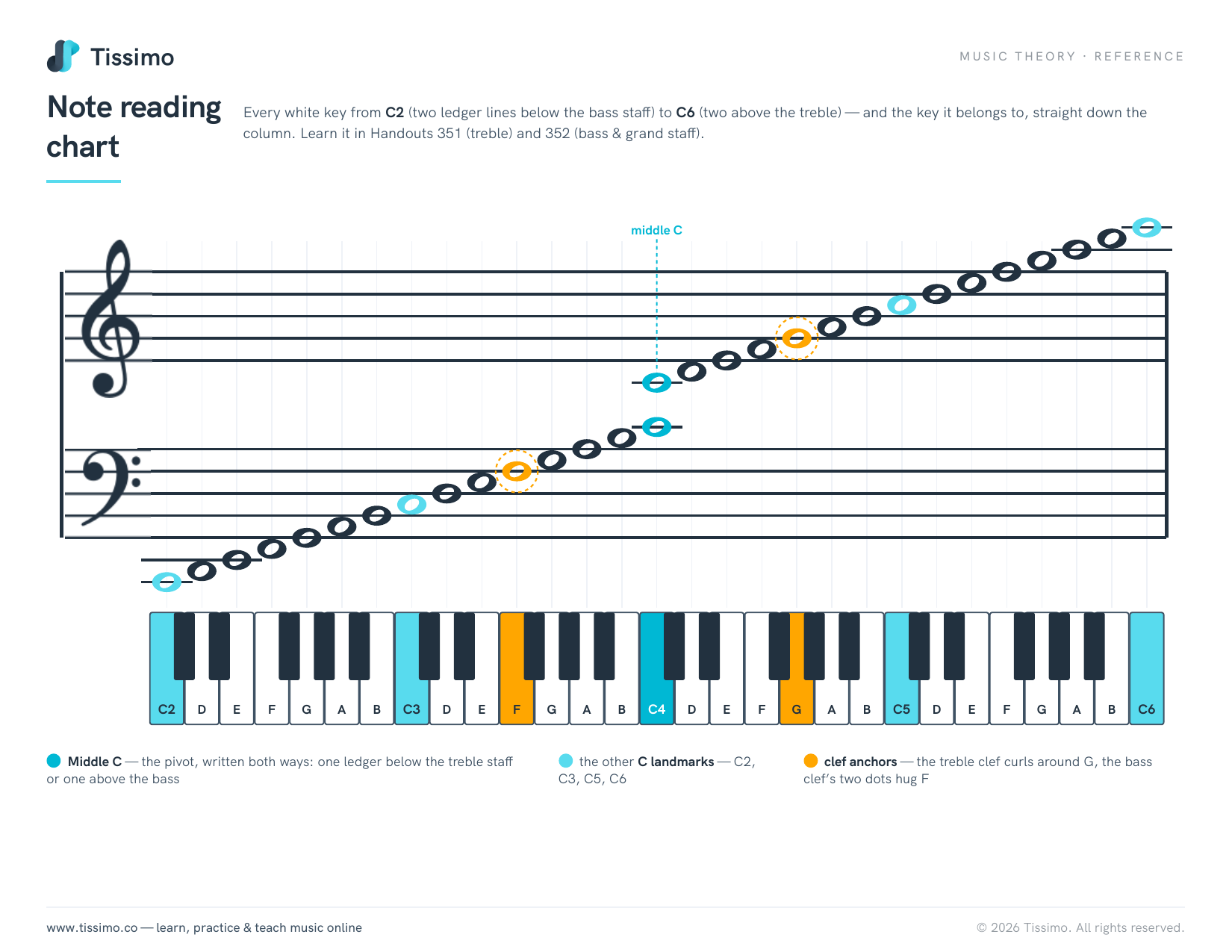 Note reading chartEvery white key from C2 (two ledger lines below the bass staff) to C6 (two above the treble) — and the key it belongs to, straight down the column. Learn it in Handouts 351 (treble) and 352 (bass & grand staff).