Notation & Symbols
Beam
A beam is a thick line that joins the stems of eighth notes and shorter notes in place of their flags. One beam means eighth notes, two mean sixteenths, and the groups show where each beat falls.
A beam is a thick straight line connecting the stems of two or more short notes. It does the same job as a flag: one beam for eighth notes, two for sixteenth notes, three for thirty-second notes. A beam also shows grouping: the notes under one beam usually make up one beat, or half a bar.
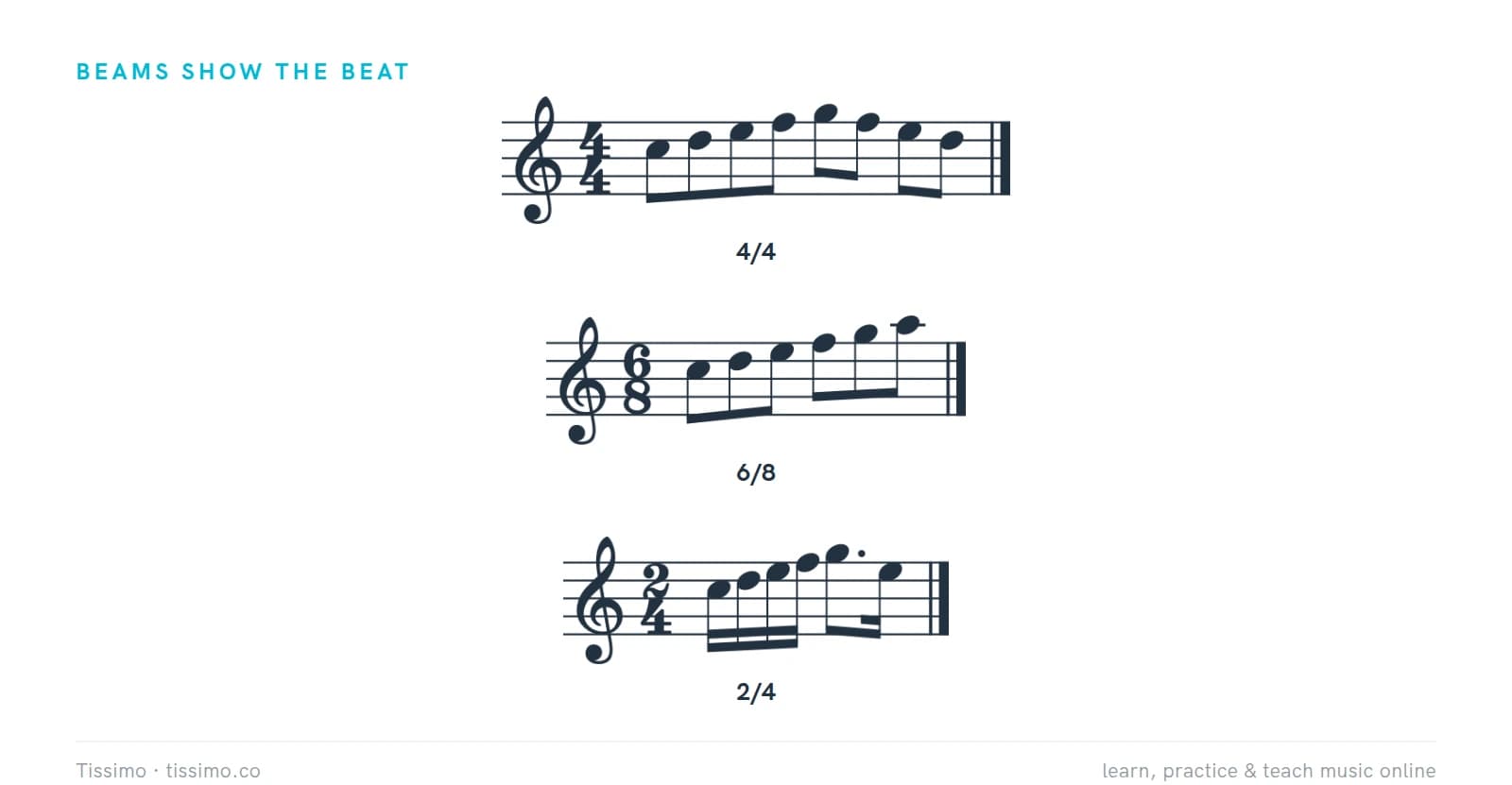
Beam by the beat
The time signature decides the groups.
- In 2/4, 3/4 and 4/4, eighth notes are beamed in pairs, one pair per quarter-note beat. In 4/4, four eighth notes covering beats 1–2 or 3–4 may share one beam, but a beam should not run from beat 2 into beat 3, so the middle of the bar stays visible.
- In 6/8, 9/8 and 12/8 (compound meters), eighth notes are beamed in threes, one group per dotted-quarter beat.
- Sixteenth notes are usually beamed in fours, one group per quarter-note beat.
The rule exists for the reader. A bar beamed by the beat can be counted at a glance; the same notes beamed at random have to be worked out note by note, even though they sound exactly the same.
Mixed values and partial beams
When a beat mixes values, the main beam joins the whole beat and the extra beams join only the shorter notes. A lone sixteenth note in the group gets a short partial beam (a beam stub) pointing toward the note it belongs with, as in the familiar dotted-eighth-and-sixteenth figure.
Direction and slant
All the notes under one beam share a stem direction, chosen by the note farthest from the middle line (see stem). The beam usually slants gently in the direction of the melody, and it is flat when the group starts and ends on the same note.
In vocal music, beams were traditionally broken wherever a new syllable began; many modern editions beam by the beat instead. In piano music a beam can even cross between the two staves of the grand staff when a figure passes from one hand to the other.
Practice with Beaming & Grouping: Show the Beat and Beam the rhythm.
Common questions
What is the difference between a beam and a flag?
They stand for the same length: one beam equals one flag. Beams join several short notes into groups that show the beat; flags are used on single notes.
How do you beam eighth notes in 4/4?
In pairs, one per beat, or in fours covering beats 1–2 or 3–4. Avoid a beam that crosses from beat 2 into beat 3, the middle of the bar.
Practice it: free worksheets
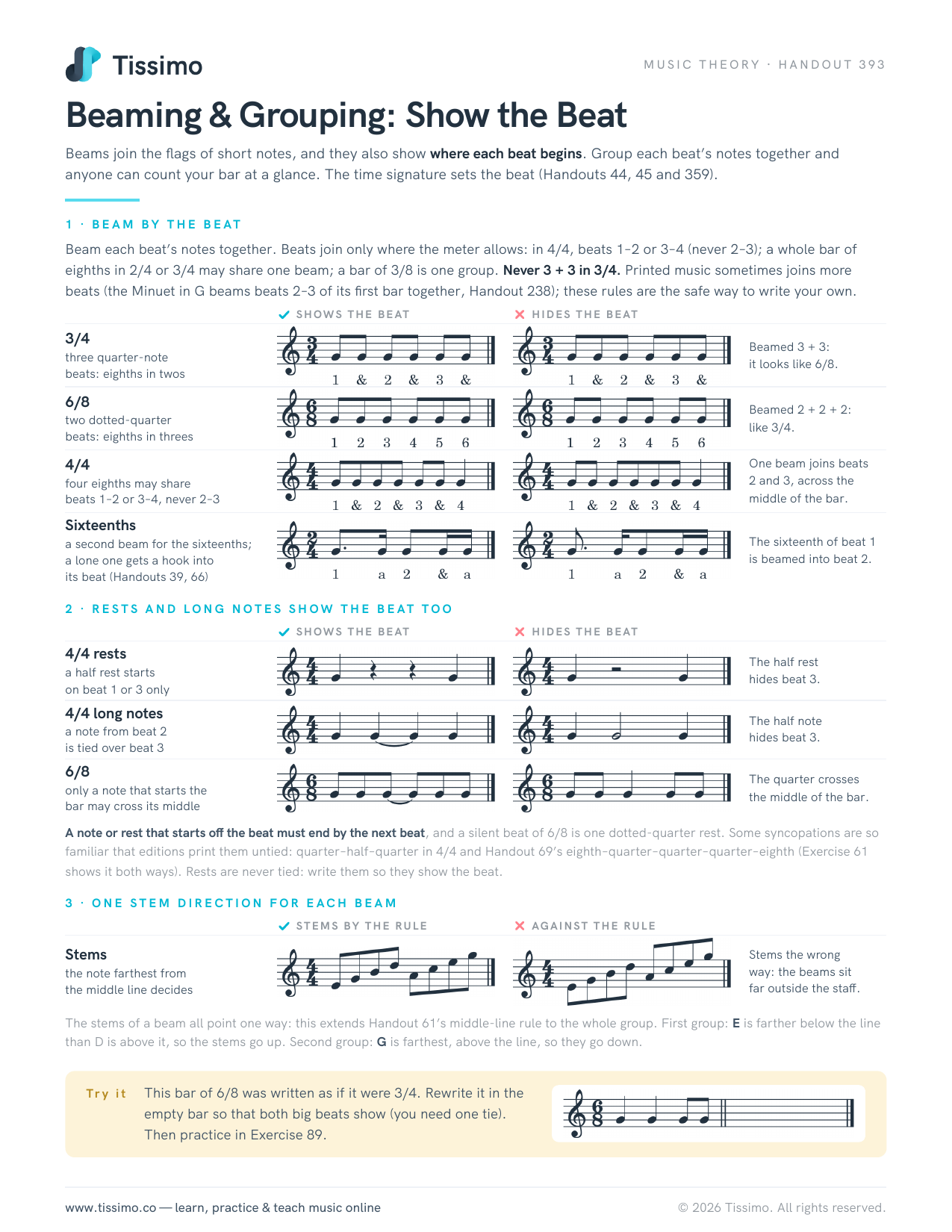 Beaming & Grouping: Show the BeatBeams join the flags of short notes, and they also show where each beat begins. Group each beat’s notes together and anyone can count your bar at a glance. The time signature sets the beat (Handouts 44, 45 and 359).
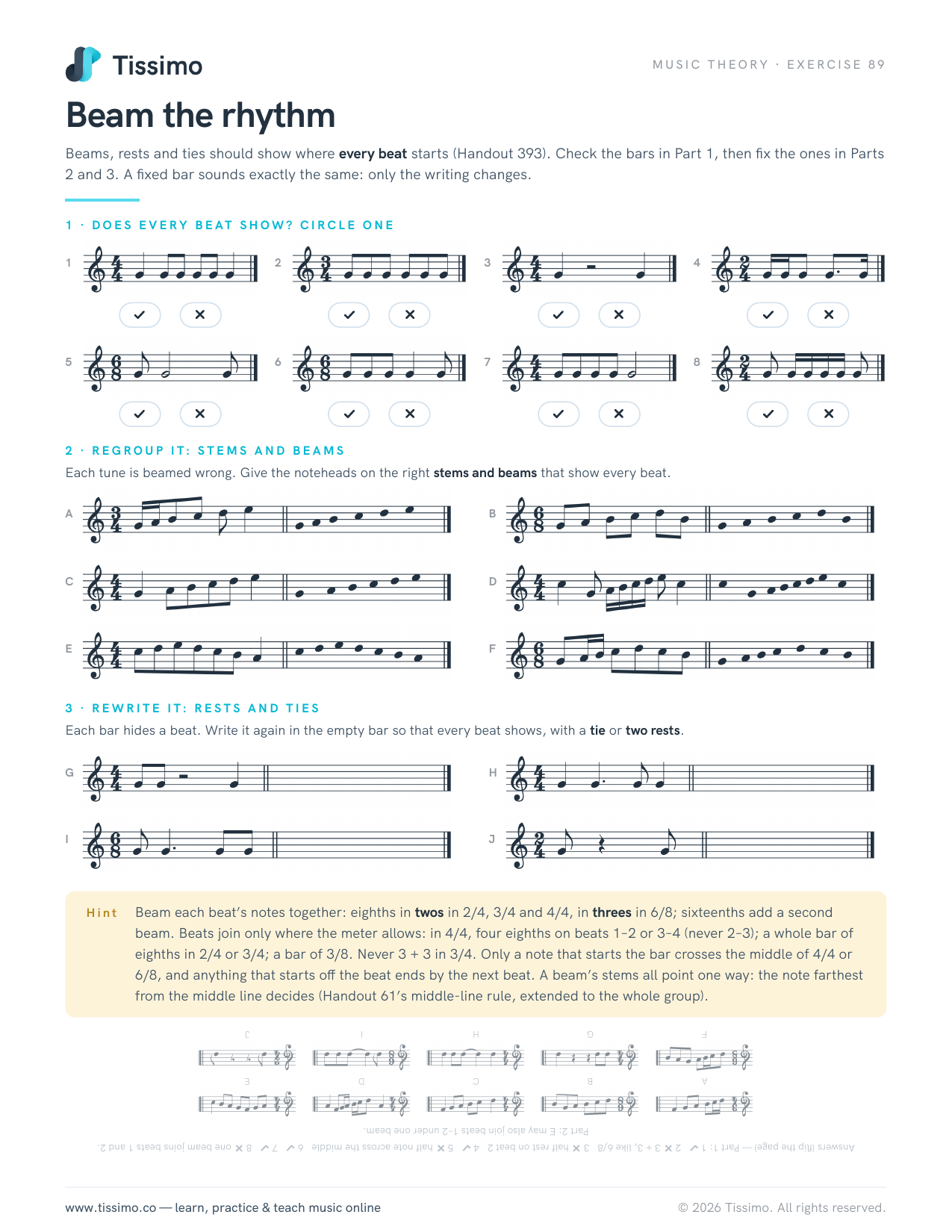 Beam the rhythmBeams, rests and ties should show where every beat starts (Handout 393). Check the bars in Part 1, then fix the ones in Parts 2 and 3. A fixed bar sounds exactly the same: only the writing changes.
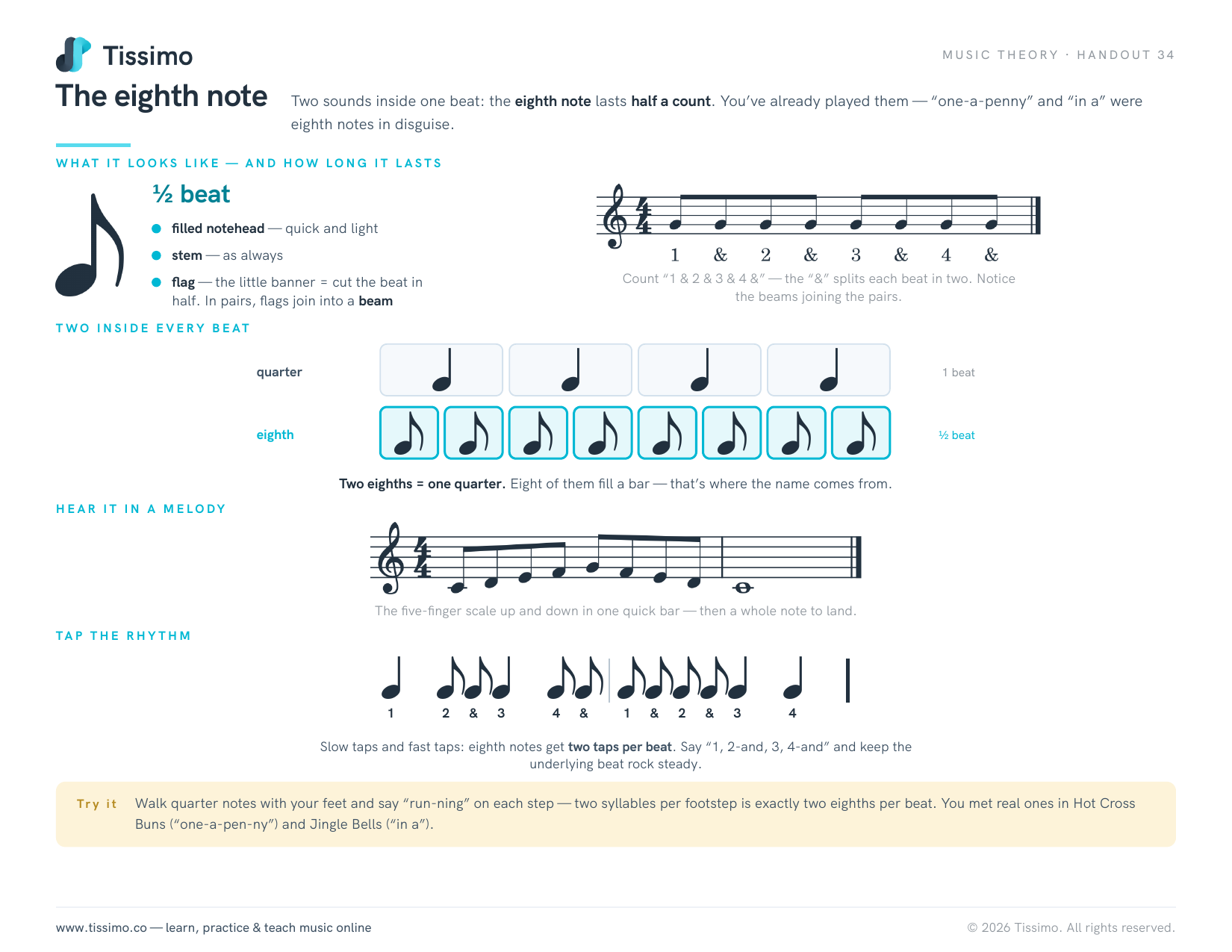 The eighth noteTwo sounds inside one beat: the eighth note lasts half a count. You’ve already played them — “one-a-penny” and “in a” were eighth notes in disguise.
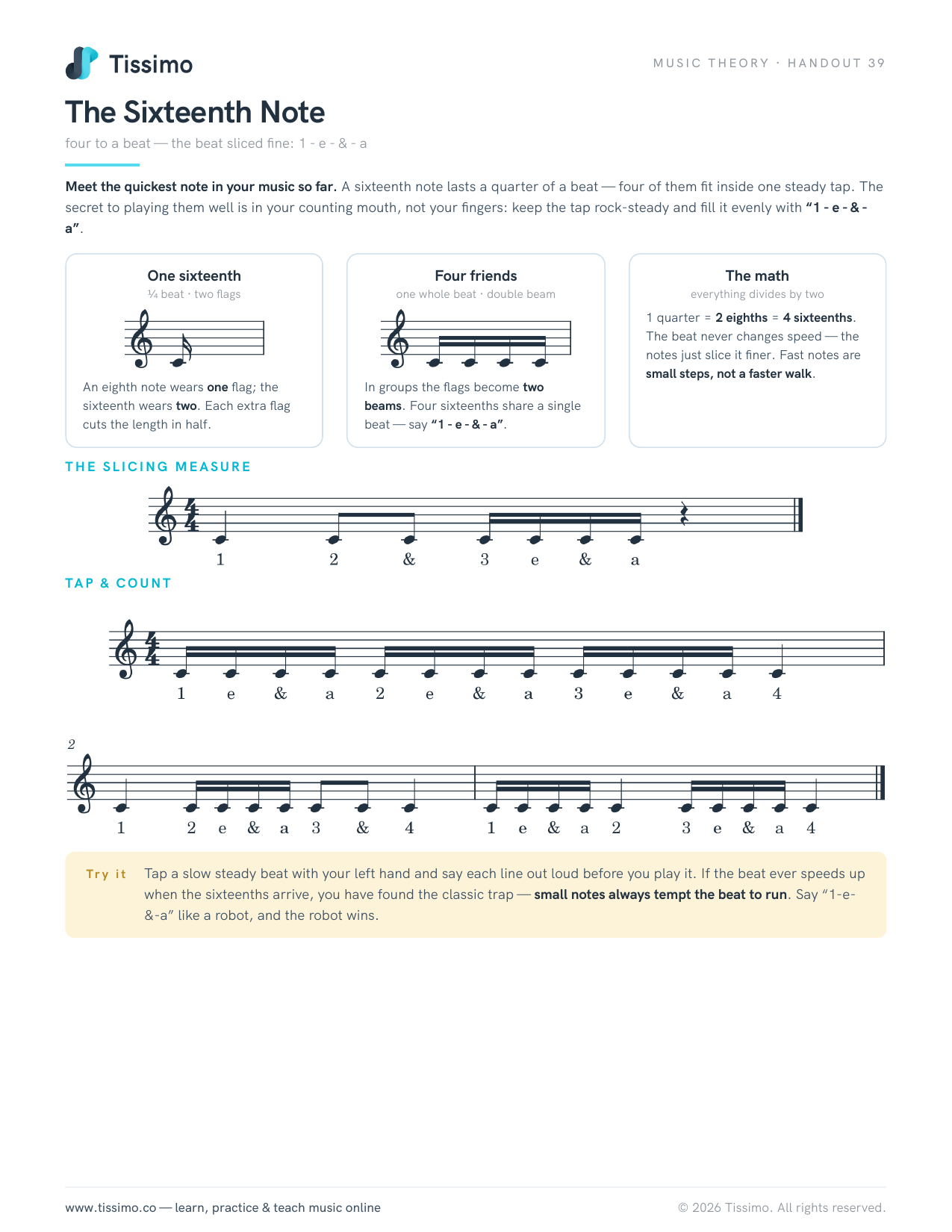 The Sixteenth Notefour to a beat — the beat sliced fine: 1 - e - & - a
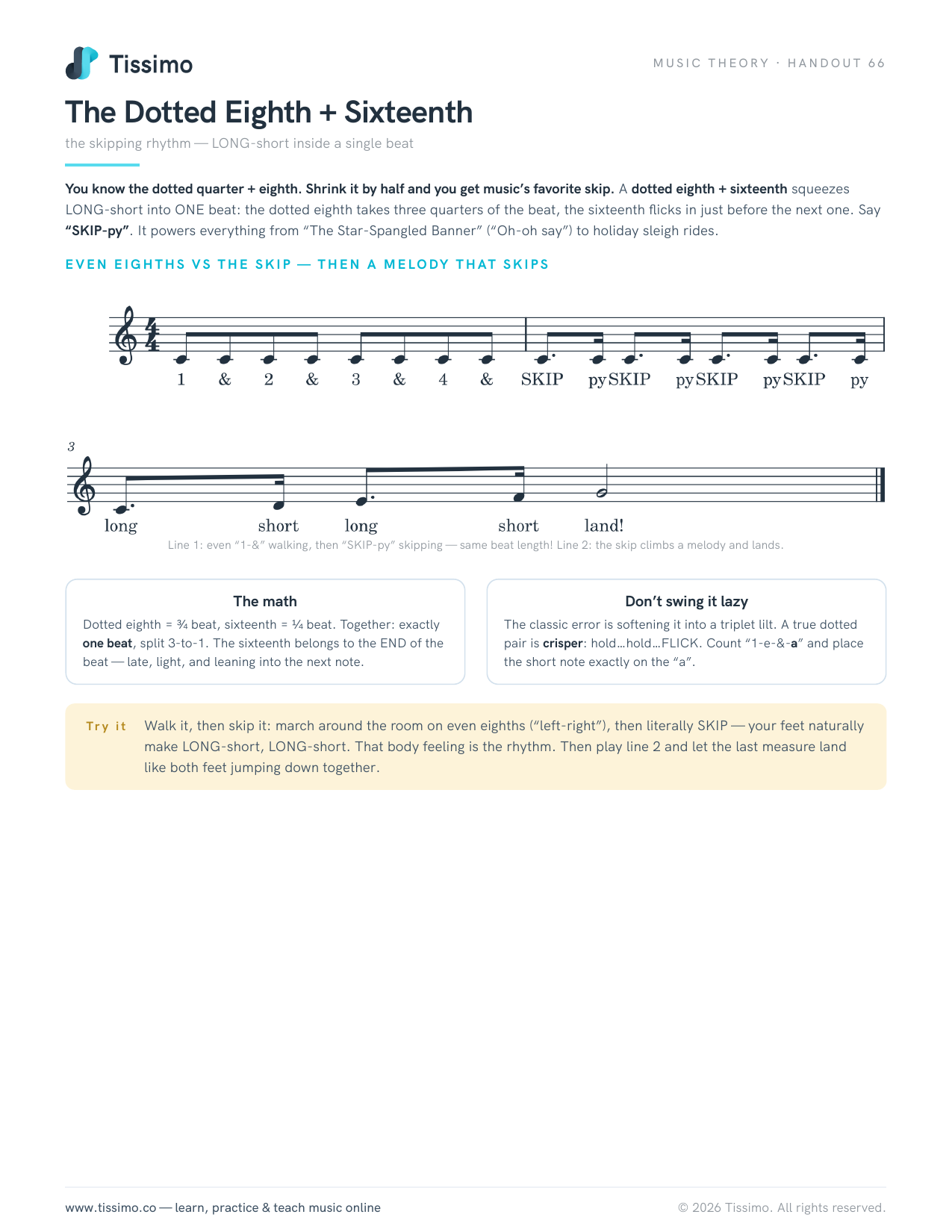 The Dotted Eighth + Sixteenththe skipping rhythm — LONG-short inside a single beat