Notation & Symbols
C Clef (Alto and Tenor Clef)
A C clef is a movable clef whose center marks middle C. On the third line it is the alto clef, read by violas; on the fourth line it is the tenor clef, used by cellos, bassoons and trombones for high passages.
The C clef looks like a tall bracket with two curved halves meeting at a point. Wherever that point sits on the staff, that line is middle C (C4). Unlike the treble and bass clefs, the C clef is regularly placed on more than one line, so before reading you check which line it marks.
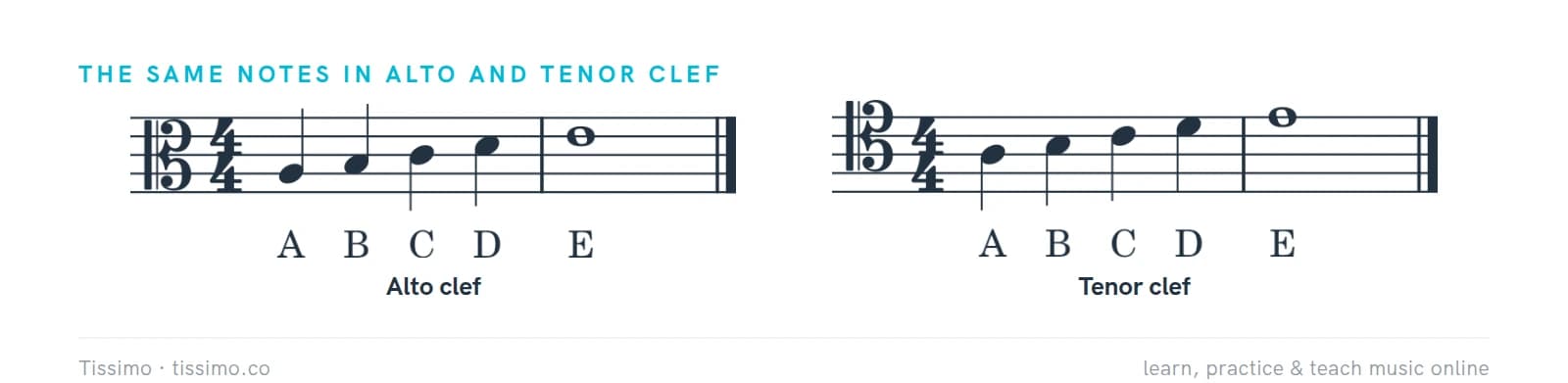
Alto clef
With the point on the middle (third) line, the C clef is the alto clef.
- Lines, bottom to top: F, A, C, E, G.
- Spaces, bottom to top: G, B, D, F.
The viola reads alto clef almost all the time. Its range sits right around middle C, so in treble clef it would need ledger lines below the staff and in bass clef ledger lines above it. The alto trombone also reads alto clef, and older vocal music used it for alto parts.
Tenor clef
With the point on the fourth line, it is the tenor clef.
- Lines, bottom to top: D, F, A, C, E.
- Spaces, bottom to top: E, G, B, D.
Cellists, bassoonists and trombonists read bass clef most of the time and switch to tenor clef for higher passages. It saves them long stacks of ledger lines without jumping all the way up to treble clef.
Other C clefs
Older music, especially vocal music, also puts the C clef on the first line (soprano clef), the second line (mezzo-soprano clef) and the fifth line (baritone clef). Modern editions usually rewrite those parts in treble or bass clef, but you will see them in facsimiles and in some scores used for score-reading practice.
Learning to read it
Start from middle C: find the line the clef points to, call it C and count outward one letter per line or space. Then learn a landmark or two near the edges of the staff. In alto clef, the bottom line is F and the top line G; in tenor clef, the bottom line is D and the top line E. Reading slow, familiar melodies in the new clef, naming each note aloud, builds fluency faster than translating from another clef.
Try Reading alto & tenor clefs, and see a cello part move between clefs in Cello: One Sound Across Two Clefs.
Common questions
What instruments use the alto clef?
Mainly the viola. The alto trombone also reads it, and you will find it in older vocal and keyboard music.
Why does the cello use the tenor clef?
For high passages. Tenor clef keeps those notes on the staff with fewer ledger lines than bass clef, without the bigger jump to treble clef.
Practice it: free worksheets
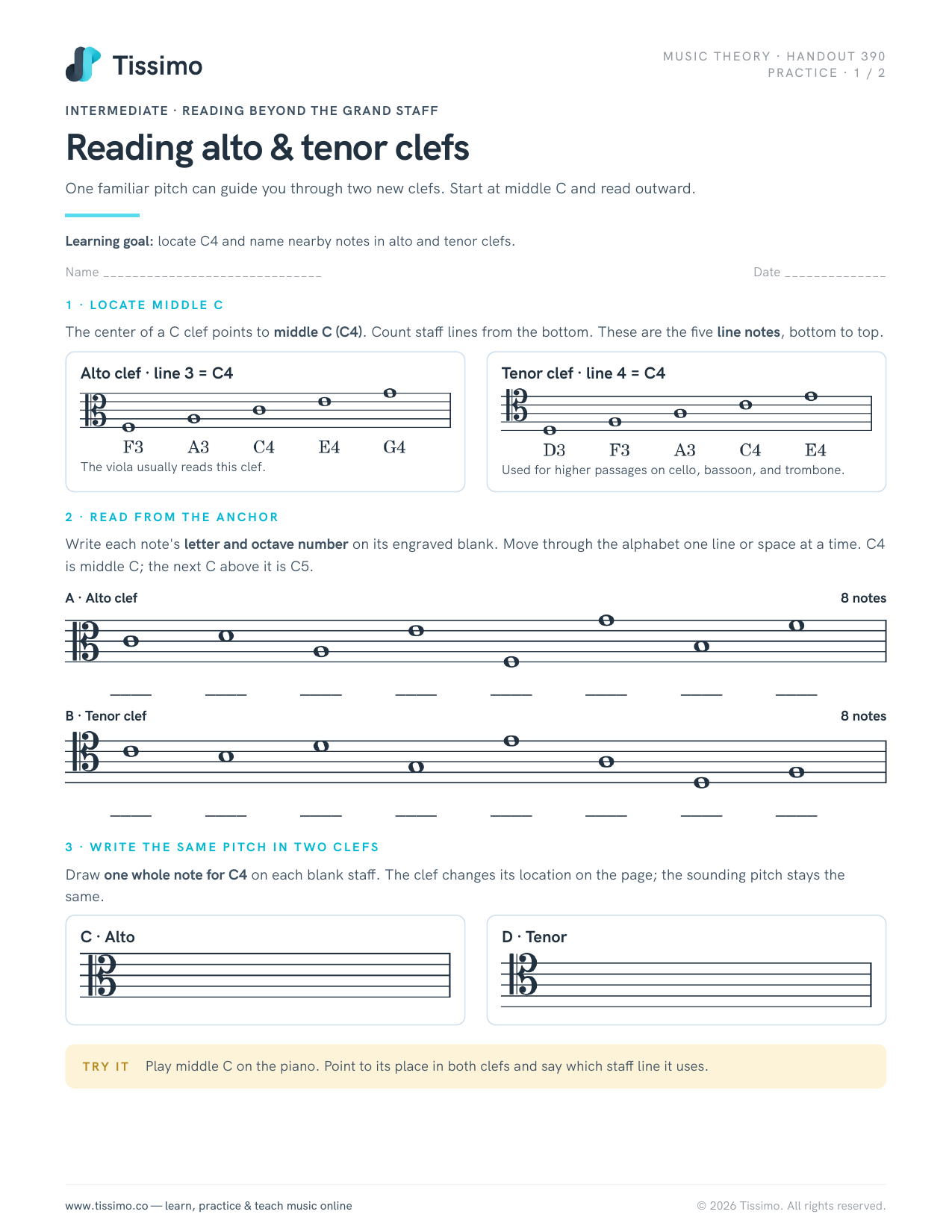 Reading alto & tenor clefsOne familiar pitch can guide you through two new clefs. Start at middle C and read outward.
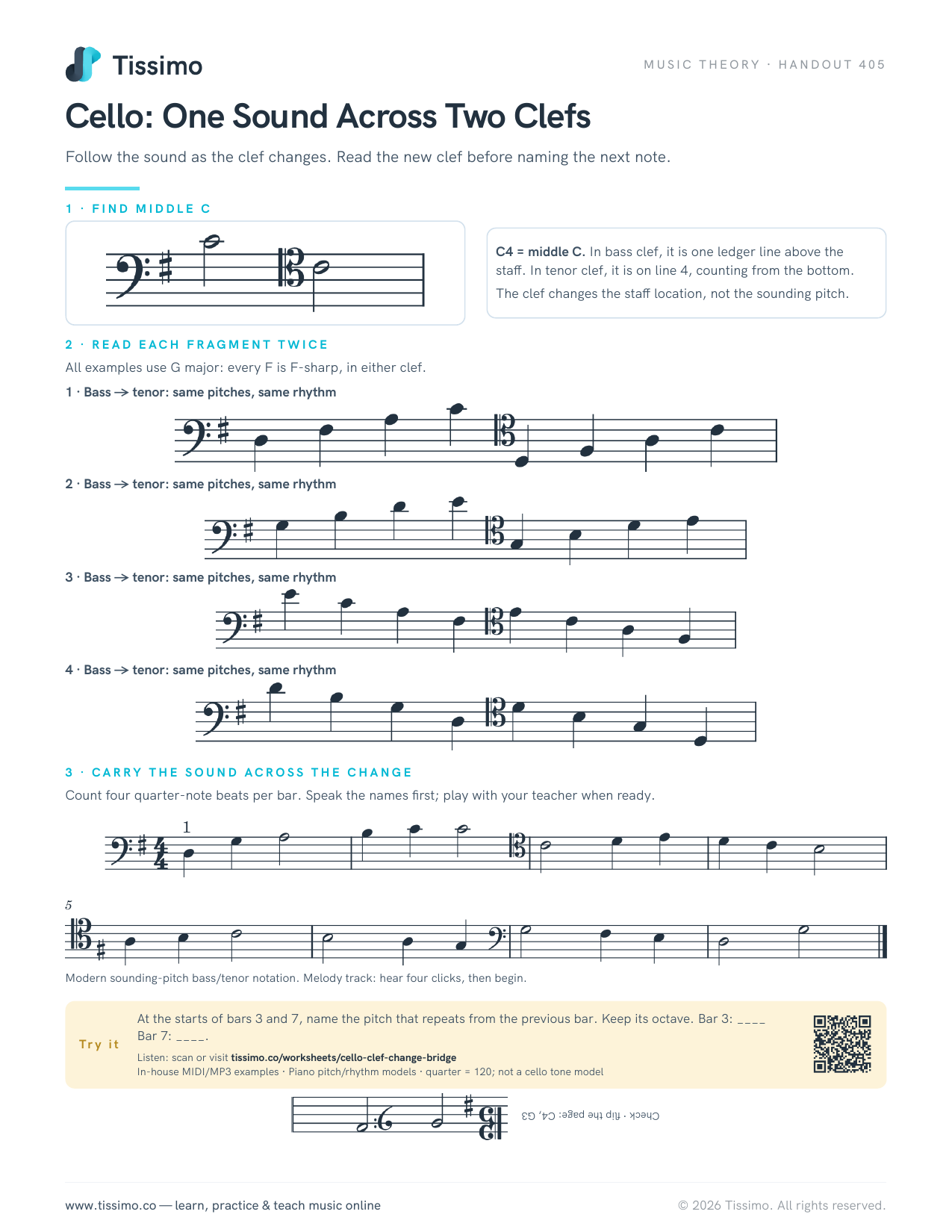 Cello: One Sound Across Two ClefsFollow the sound as the clef changes. Read the new clef before naming the next note.
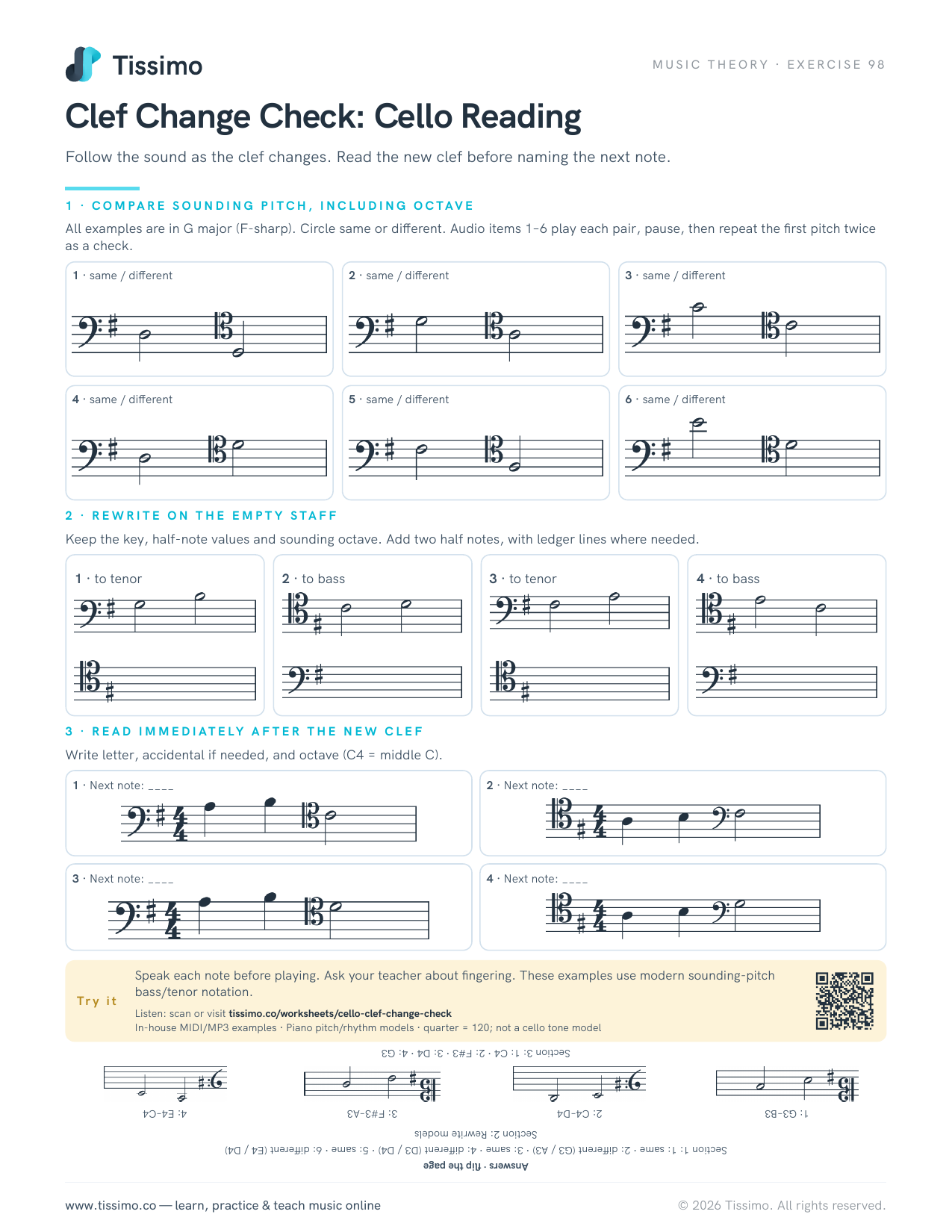 Clef Change Check: Cello ReadingFollow the sound as the clef changes. Read the new clef before naming the next note.