Instruments & Voices
Bassoon
Pronounced buh-SOON
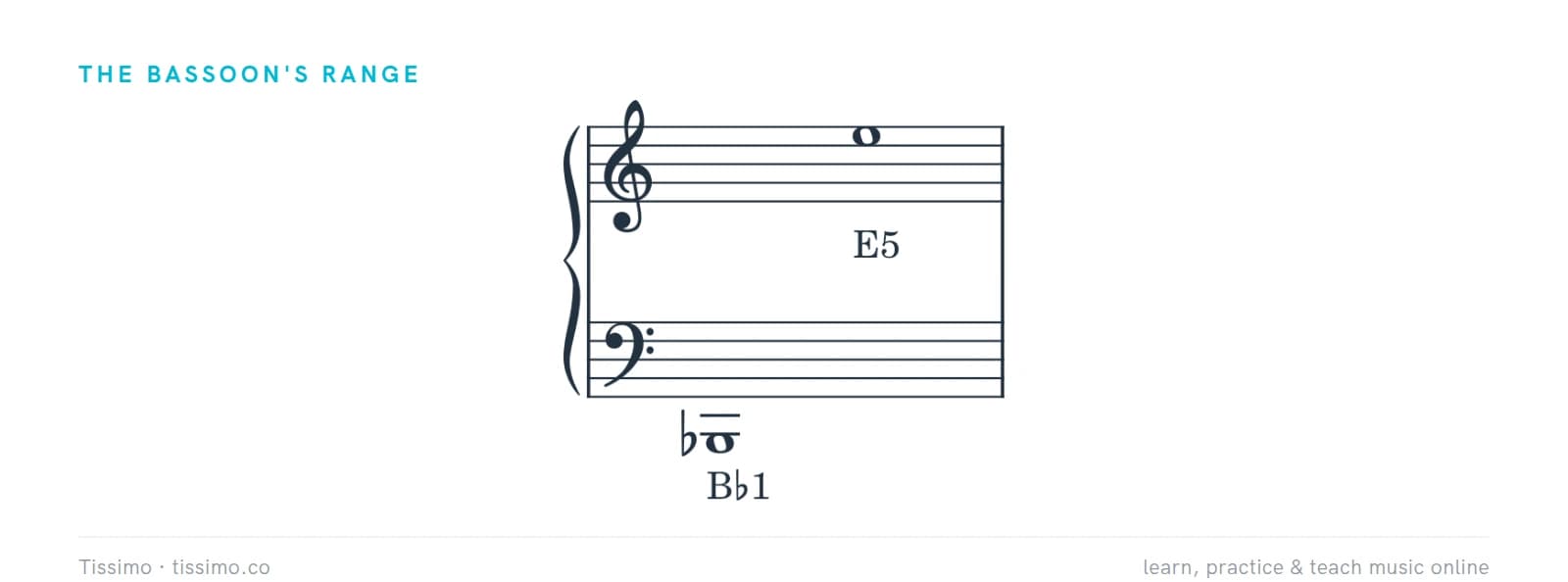
The bassoon is the bass double-reed woodwind: a long wooden tube folded back on itself, played through a curved metal crook. It plays from B♭1 to about E5 and reads bass and tenor clefs at written pitch.
The bassoon is the bass voice of the woodwind family. Like the oboe it uses a double reed, but a larger one, fitted onto a curved metal tube called the bocal (or crook). The wooden body holds a conical tube roughly eight feet (about 2.5 meters) long, folded in half so it stands about as tall as a person. Its sound can be warm and dark, gently lyrical or crisply comic, depending on how it is played.
How a bassoon makes its sound
The double reed vibrates when you blow between its two cane blades, and the air column in the long tube resonates at the pitch your fingers choose. Because the tube is so long, the bassoon has more keys and finger holes than most woodwinds, and both thumbs work several keys each. The left thumb operates the whisper key, which helps lower-register notes speak, and speaker or flick keys that help certain upper notes start cleanly. Most players support the instrument with a seat strap or a neck strap.
Range
The bassoon plays from B♭1 up to about E5, close to three and a half octaves. Its lowest notes are powerful and reedy; its tenor register, around the top of the bass staff and above, is especially expressive.
How bassoon music is written
Bassoon music is written at the pitch it sounds, mostly in bass clef, with tenor clef (a C clef that puts middle C on the fourth line) for higher passages and occasionally treble clef at the very top. Its big relative, the contrabassoon, sounds an octave lower than written and reaches down to about B♭0, among the lowest notes in the orchestra.
Its role
In the orchestra two or three bassoons play the bass of the woodwind section, double the cellos or the horns, and take memorable solos. The bassoon is also part of the wind quintet, the concert band and many Baroque ensembles, where it often played the bass line of the continuo.
Tips for beginners
- Many students start bassoon after a year or two on another instrument, often once their hands are big enough to reach the keys; smaller "short-reach" bassoons exist for young players.
- Soak the reed in water for a minute or two before playing.
- Take in only a little of the reed, and keep a relaxed, rounded mouth shape with the jaw open.
- Learn the tenor clef early; it opens up the bassoon's singing upper range.
Common questions
Is the bassoon a transposing instrument?
No. The bassoon sounds as written, in bass, tenor and occasionally treble clef. The contrabassoon is written an octave higher than it sounds.
Is the bassoon hard to learn?
It takes patience: the fingerings use both thumbs heavily, and the reed needs care. Many players switch to bassoon after starting on another instrument, and the shortage of bassoonists means good players are welcome in almost every school band and orchestra.
Practice it: free worksheets
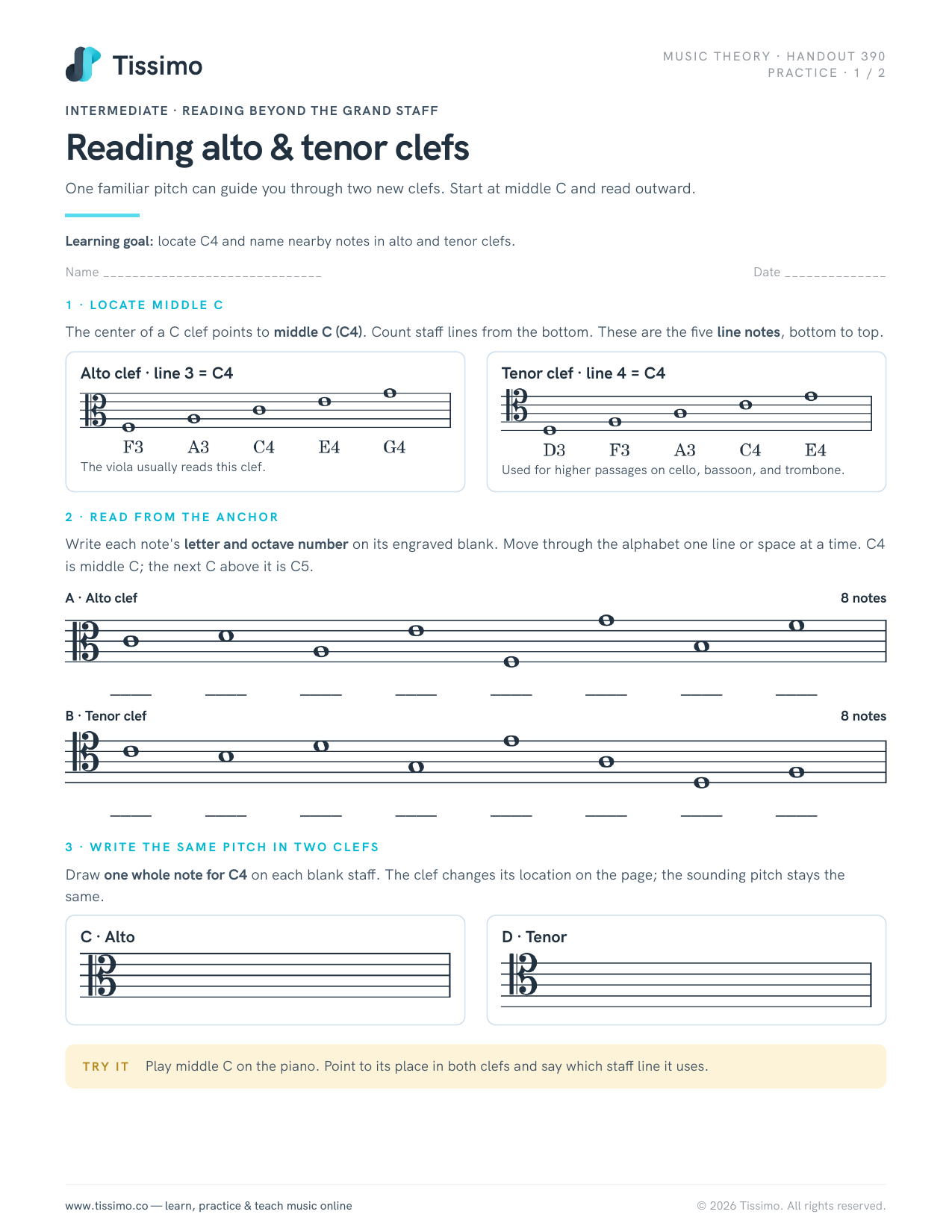 Reading alto & tenor clefsOne familiar pitch can guide you through two new clefs. Start at middle C and read outward.
 The Bass Clef & the Grand StaffThe bass staff holds the lower notes, usually played by the left hand. It works just like the treble staff (Handout 351), but its clef names a different line.
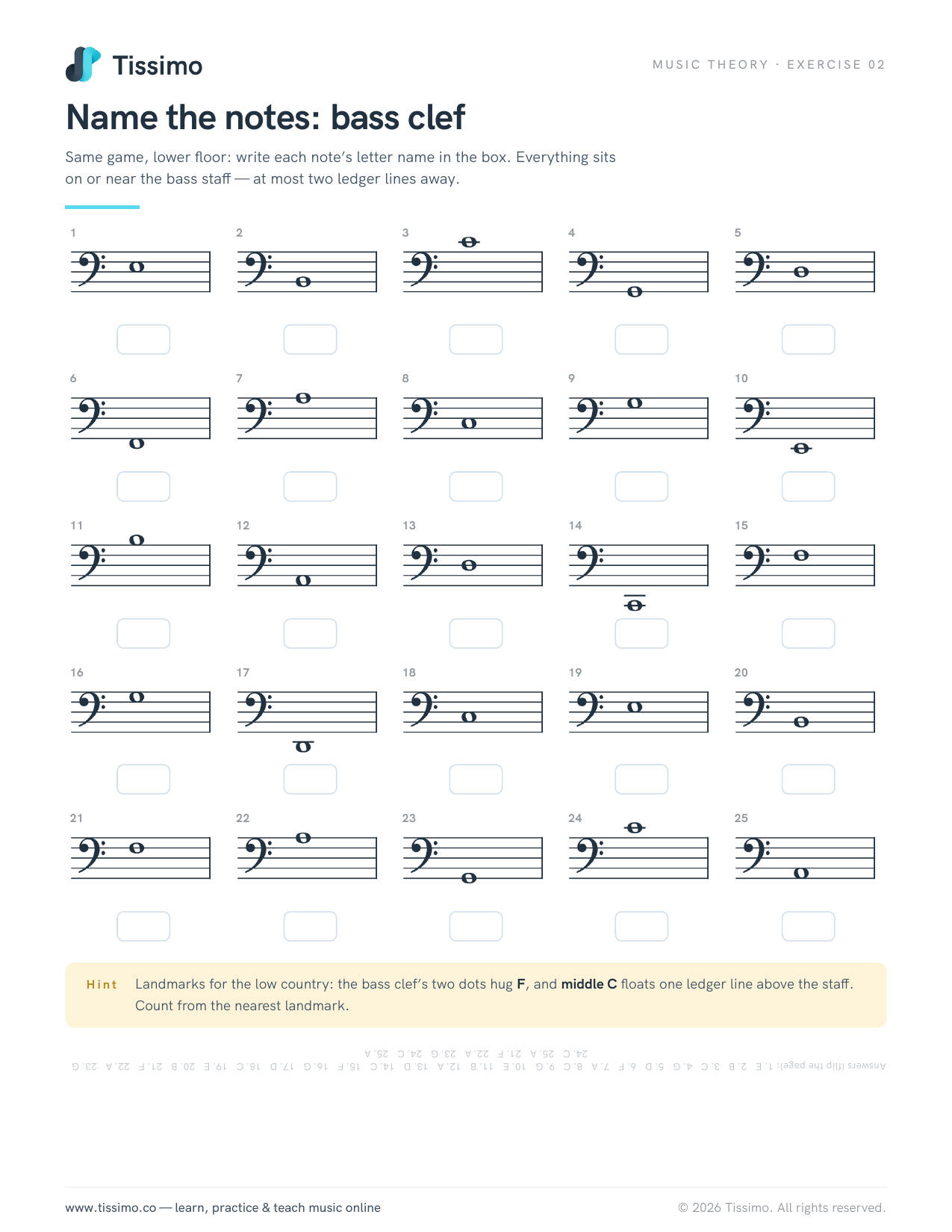 Name the notes: bass clefSame game, lower floor: write each note’s letter name in the box. Everything sits on or near the bass staff — at most two ledger lines away.