Instruments & Voices
Electric Guitar
The electric guitar is a guitar whose magnetic pickups turn string vibrations into an electrical signal for an amplifier. It is tuned and written like the acoustic guitar and leads much rock, blues and pop.
The electric guitar uses the same six strings, tuning and fretboard as the acoustic guitar, but it does not rely on a hollow body to be heard. Pickups under the strings turn their vibration into an electrical signal, and an amplifier and speaker make it loud. That electrical step gives the instrument its huge range of sounds, from clean and glassy to heavily distorted.
How it makes its sound
A pickup is a magnet wrapped in thousands of turns of fine wire. When a steel string vibrates above it, the string disturbs the magnetic field and induces a small electrical current with the same pattern as the vibration. The signal runs through the guitar's volume and tone controls, out through a cable and into an amplifier (amp).
Most electric guitars have two or three pickups and a switch to choose between them: the pickup near the neck sounds warmer, the one near the bridge brighter. Single-coil pickups have a clear, bright sound; humbuckers use two coils wired to cancel electrical hum and sound thicker. Many electric guitars have a solid wooden body, which resists the howling feedback a hollow body can produce at high volume; hollow and semi-hollow models remain popular in jazz and blues.
Effects and amplifiers
Between the guitar and the amp, players often add effects pedals: distortion and overdrive (the gritty sound of rock), reverb and delay (space and echoes), chorus, wah and many more. The amplifier is part of the instrument too: the same guitar sounds very different through different amps.
Range and notation
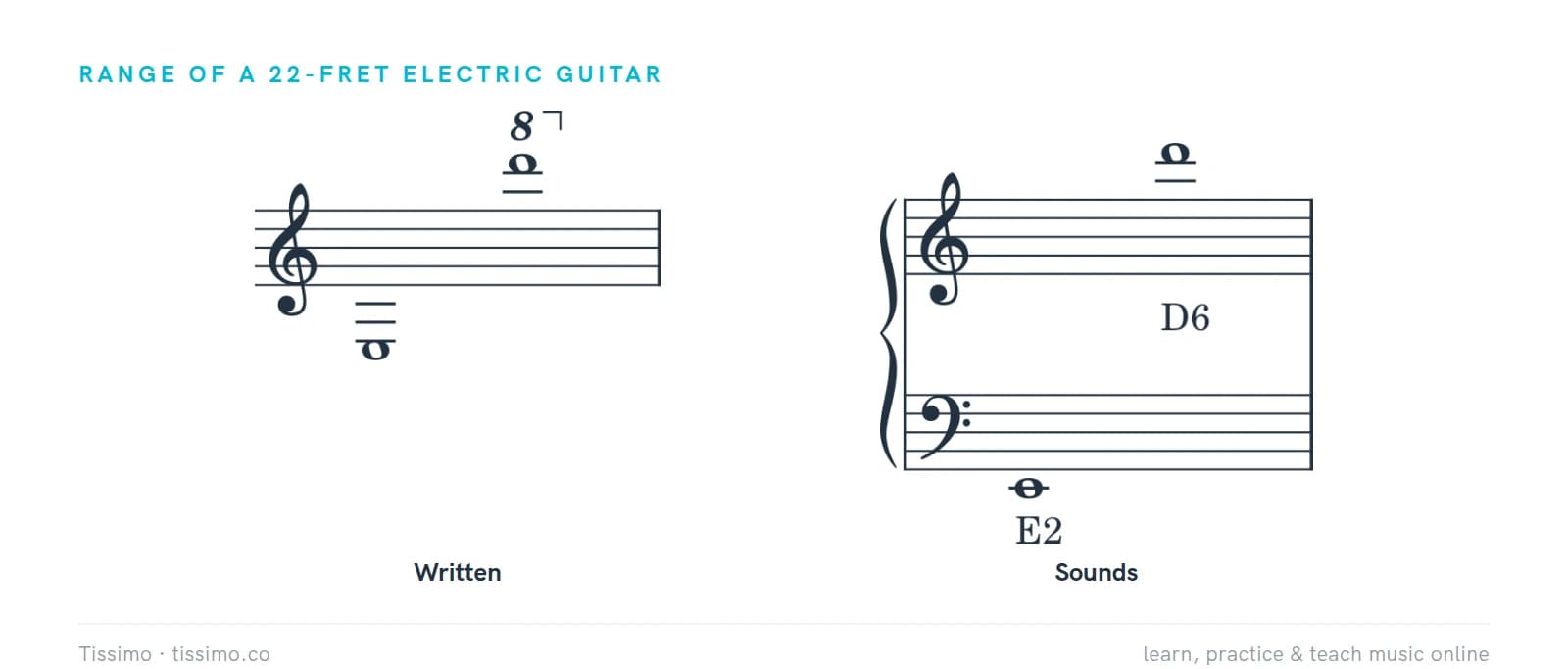
The strings are tuned E2, A2, D3, G3, B3 and E4, and the music is written in treble clef an octave higher than it sounds, as for acoustic guitar. With 22 frets the highest note is D6; a 24-fret guitar reaches E6. Electric guitarists read tablature at least as often as standard notation, and TAB adds symbols for bends, slides, hammer-ons and pull-offs.
Its role
The electric guitar spread quickly in the mid-twentieth century and has been central to blues, rock, jazz, funk, country and pop music ever since. In a band one guitarist may play rhythm parts (riffs, power chords and chord patterns) while another plays lead lines and solos, and often one player does both.
Tips for beginners
- The light strings on most electric guitars make chords and bends easier on the fingertips than a steel-string acoustic.
- Practice with a clean amp sound some of the time: distortion hides mistakes that a clean tone reveals.
- Mute the strings you are not playing, with the palm of your picking hand or the fingers of your fretting hand.
- Keep the volume at a safe level, and use headphones for long practice sessions.
Common questions
Can you play an electric guitar without an amp?
Yes, but unplugged it is very quiet and you won't hear its real sound. For quiet practice, plug into a headphone amp, a modeling amp with a headphone jack, or an audio interface on a computer.
Is the electric guitar easier than the acoustic guitar?
In some ways. Electric guitars usually have lighter strings and a slimmer neck, so chords and bends take less finger strength. The notes, chords and tuning are the same, so skills carry over in both directions.
Practice it: free worksheets
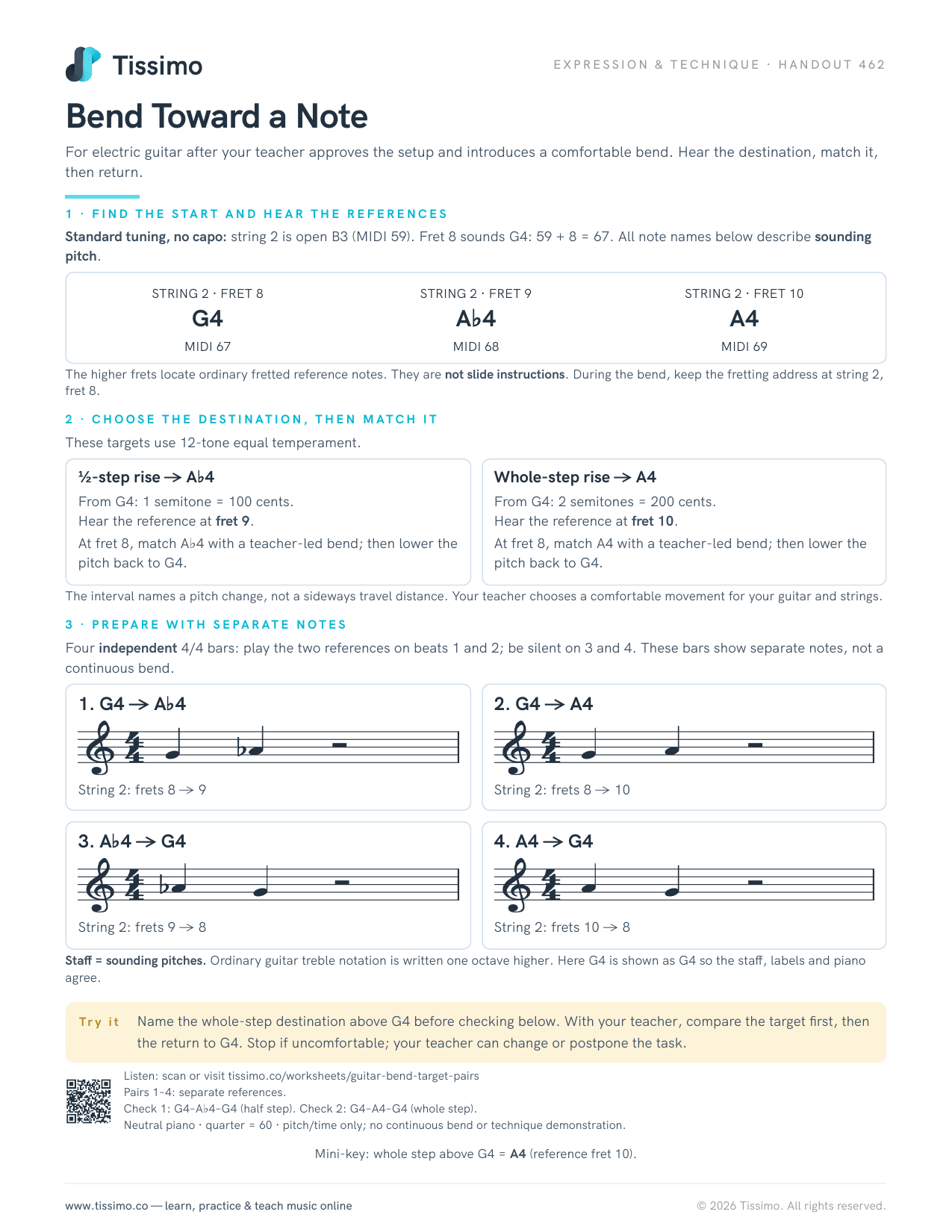 Bend Toward a NoteFor electric guitar after your teacher approves the setup and introduces a comfortable bend. Hear the destination, match it, then return.
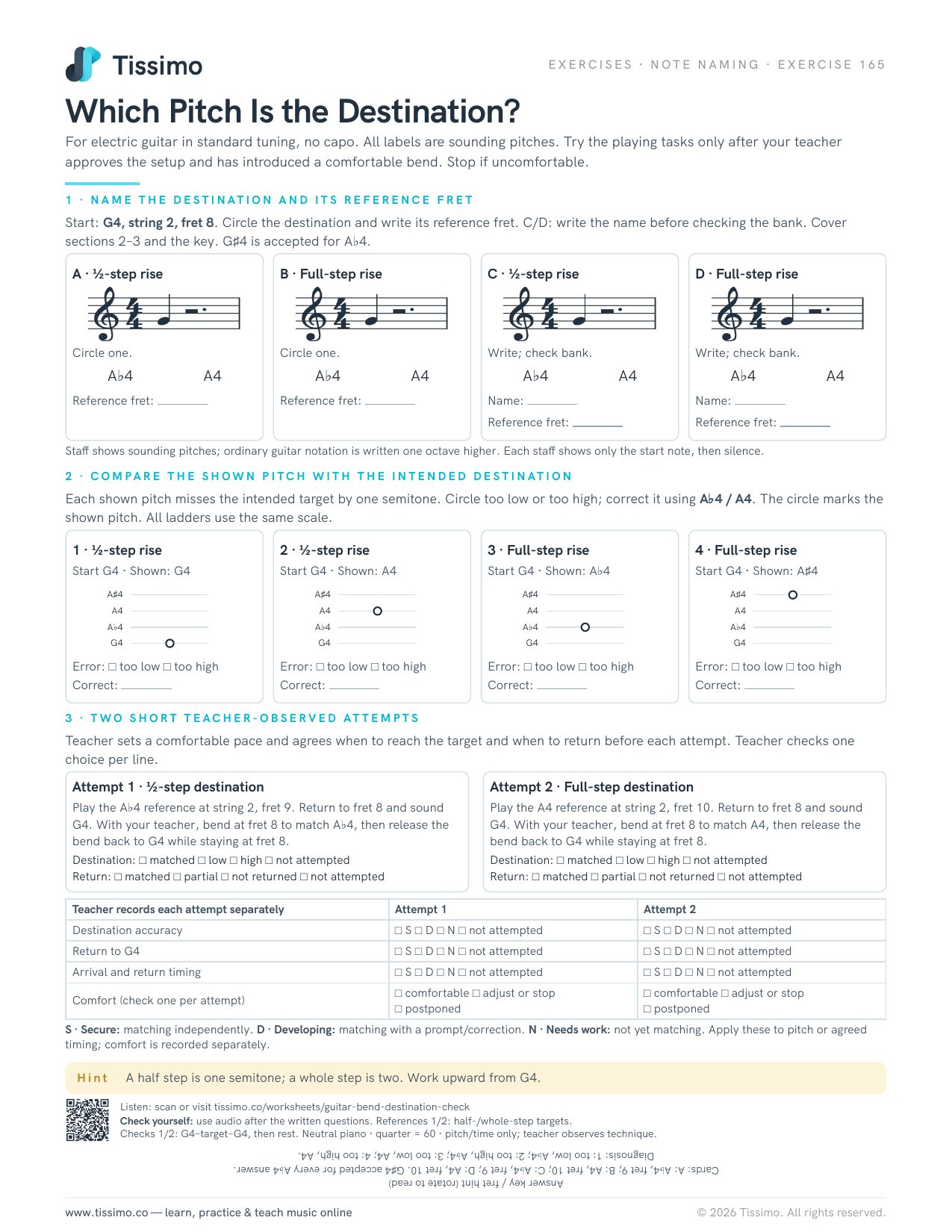 Which Pitch Is the Destination?For electric guitar in standard tuning, no capo. All labels are sounding pitches. Try the playing tasks only after your teacher approves the setup and has introduced a comfortable bend. Stop if uncomfortable.
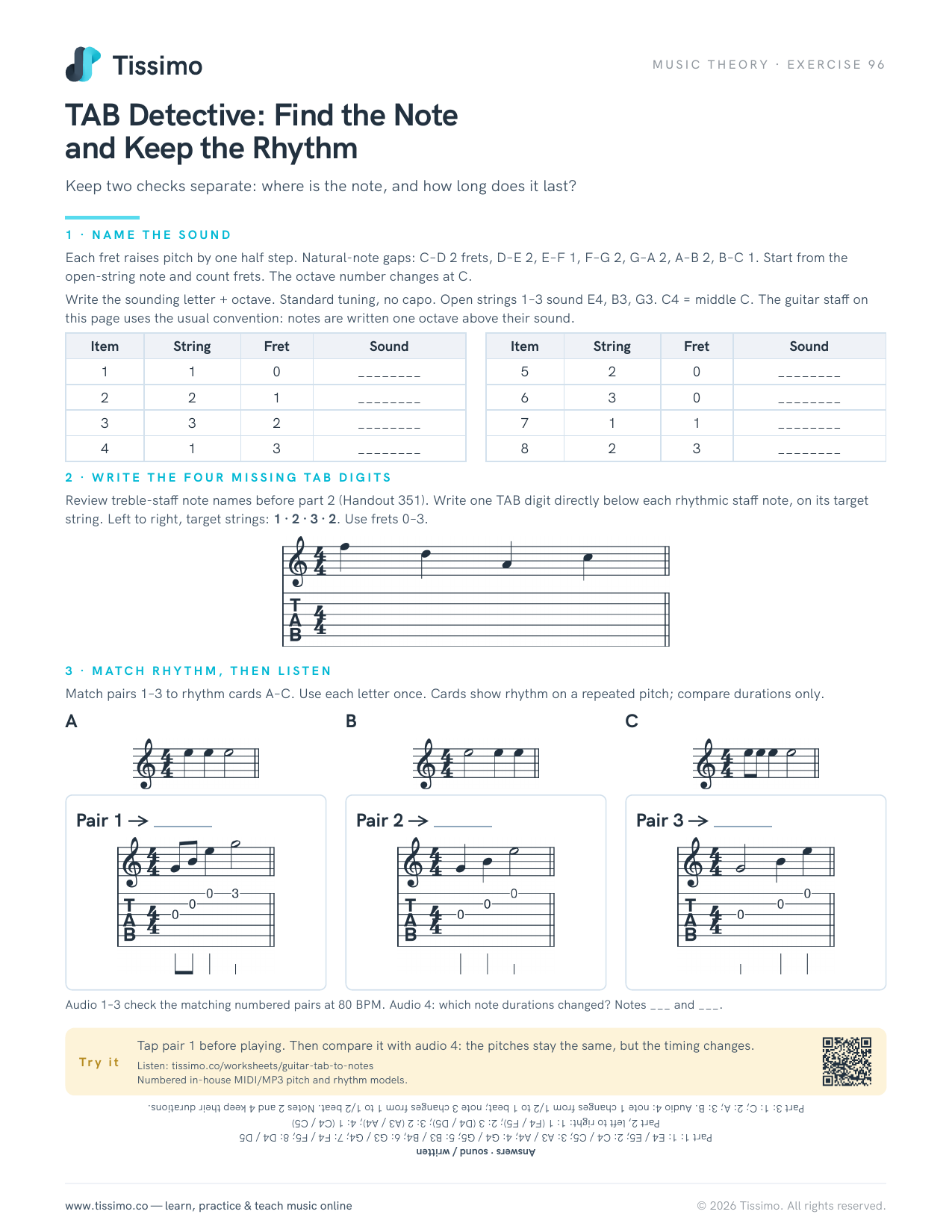 TAB Detective: Find the Note and Keep the RhythmKeep two checks separate: where is the note, and how long does it last?
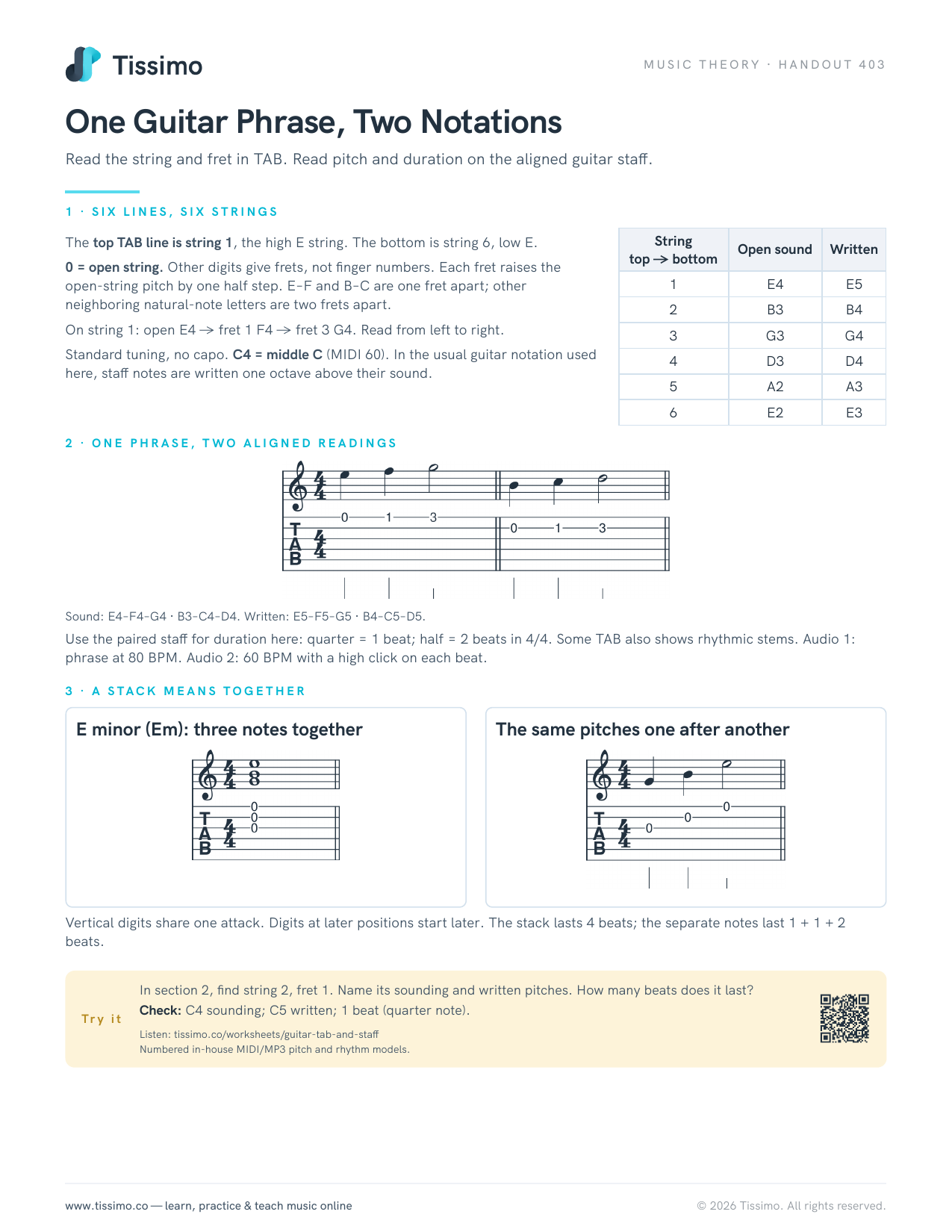 One Guitar Phrase, Two NotationsRead the string and fret in TAB. Read pitch and duration on the aligned guitar staff.
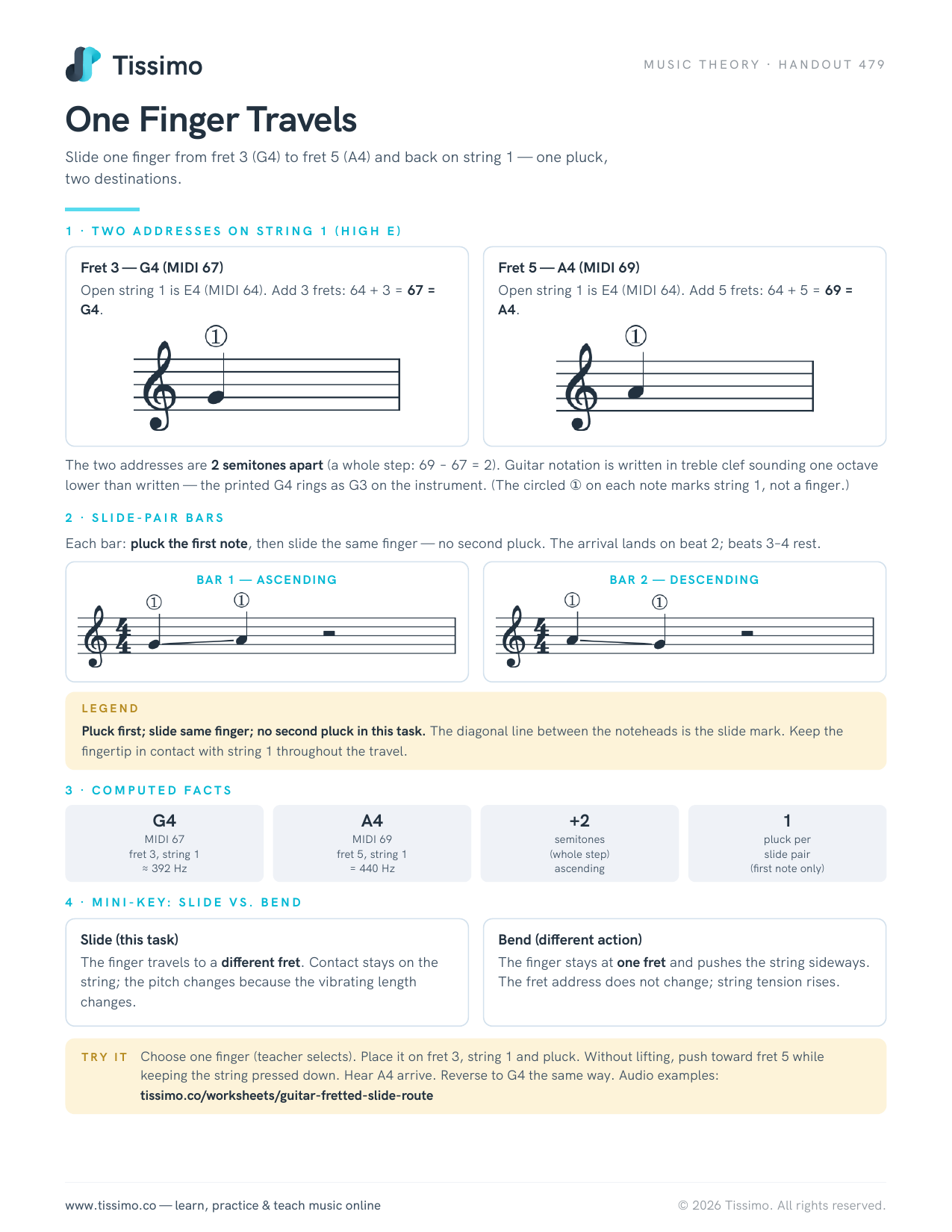 One Finger TravelsSlide one finger from fret 3 (G4) to fret 5 (A4) and back on string 1 — one pluck, two destinations.
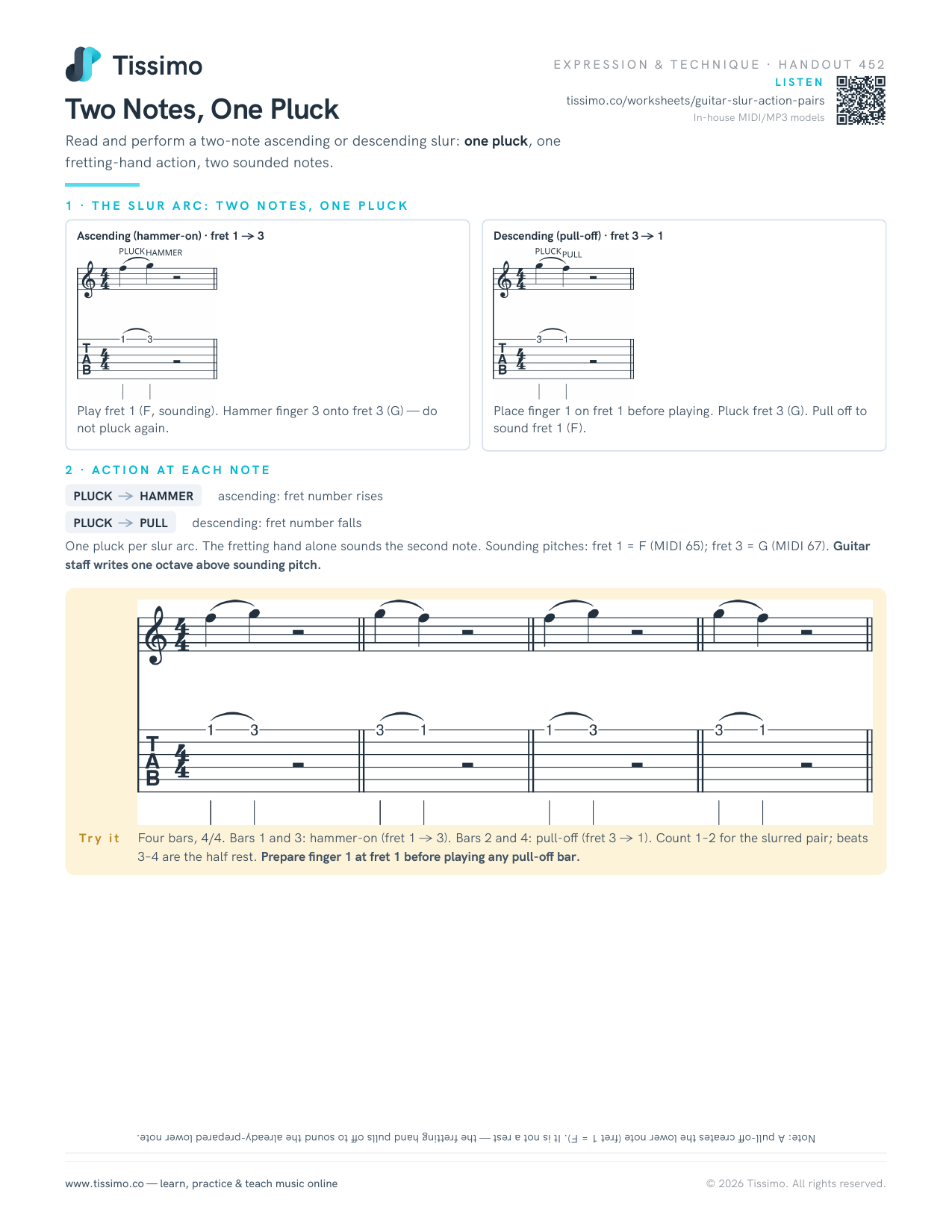 Two Notes, One PluckRead and perform a two-note ascending or descending slur: one pluck, one fretting-hand action, two sounded notes.