Instruments & Voices
Drum Kit
A drum kit is a set of drums and cymbals arranged so one seated player can play them all: usually a bass drum worked by a foot pedal, a snare drum, tom-toms, a hi-hat and one or more cymbals.
A drum kit (or drum set) puts several drums and cymbals within reach of one player, who sits on a stool and uses both hands and both feet. It is the timekeeping heart of rock, pop, jazz, funk, R&B and much more: the drummer sets the tempo, shapes the groove and marks the sections of a song.
What is in a drum kit
A typical "five-piece" kit counts its drums: one bass drum, one snare drum and three toms. The cymbals are extra.
- Bass drum (kick drum): the large drum on the floor, played with a beater on a foot pedal, usually by the right foot.
- Snare drum: a shallow drum between the knees. Wires (the snares) stretched across the bottom head give it a crisp, cracking sound.
- Toms: one or two rack toms mounted above the bass drum and a larger floor tom standing on legs. They are tuned from high to low and are often used for fills.
- Hi-hat: two cymbals on a stand, opened and closed with a foot pedal, usually the left foot. You can play it closed (a tight "tick"), open (a sizzle) or with the foot alone.
- Ride cymbal: a large cymbal for steady patterns, especially in jazz.
- Crash cymbal: a cymbal for accents, often at the start of a new section.
Drummers play with sticks most of the time, and switch to brushes, mallets or bundled rods for softer sounds. Electronic drum kits replace the drums with rubber or mesh pads that trigger recorded sounds, which makes quiet practice with headphones possible.
How drum music is written
Drum parts use a five-line staff with a percussion clef (two thick vertical bars). The lines and spaces stand for instruments, not pitches. The most common layout puts the bass drum in the bottom space, the snare drum in the third space and the toms in between and above, and writes cymbals with x noteheads: the hi-hat just above the staff, the ride on the top line and the crash on a ledger line above. Layouts vary between publishers, so drum books usually begin with a key that shows which line is which.
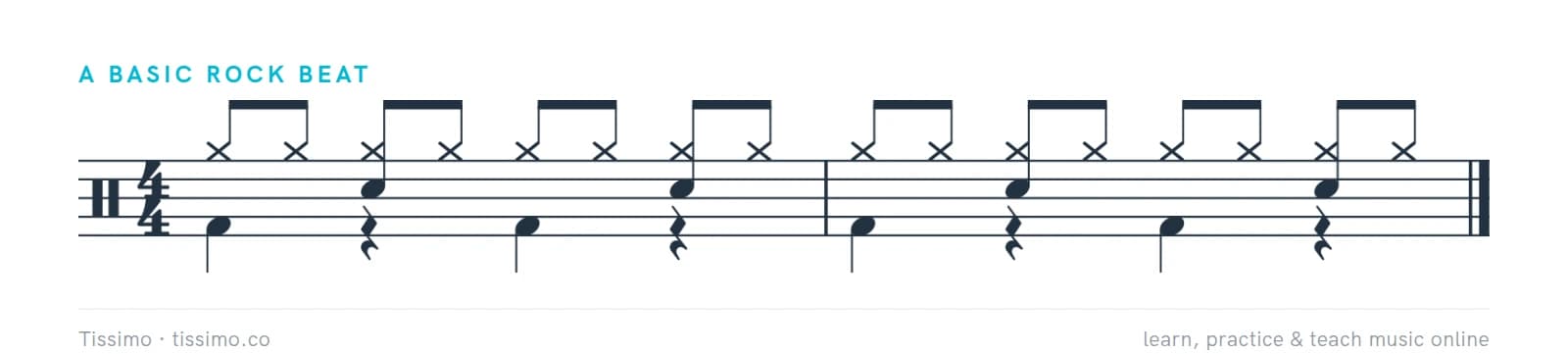
Hands and feet are often split into two voices: stems up for the hands and stems down for the feet. Many drum charts also use repeat signs, simile marks and multimeasure rests, because grooves repeat for many bars.
Its role in a band
The drummer locks in with the bass player to form the rhythm section. In much popular music the snare drum plays the backbeat on beats 2 and 4 while the bass drum anchors beats 1 and 3, and the hi-hat or ride keeps a steady subdivision on top. In jazz the ride cymbal carries the swing feel and the bass drum is often played very lightly.
Tips for beginners
- Practice with a metronome or click track from the first day; steady time matters more than speed.
- Learn the basic rudiments on a practice pad: single strokes (RLRL), double strokes (RRLL) and the paradiddle (RLRR LRLL).
- Set the kit up to fit you: stool height so your thighs are about level, and every drum and cymbal reachable without stretching.
- Wear ear protection. An acoustic kit is loud enough to damage hearing over time.
Common questions
How many pieces are in a standard drum kit?
The usual count is five: a bass drum, a snare drum and three toms. Cymbals (hi-hat, ride, crash) are not counted. Jazz drummers often use a smaller four-piece kit, and rock drummers sometimes add more toms and cymbals.
What do the x noteheads mean in drum music?
An x notehead usually means a cymbal: the hi-hat above the staff, the ride on the top line and the crash on a ledger line above. Normal noteheads are the drums. Check the key at the start of your drum book, because layouts vary.
Is it called a drum kit or a drum set?
Both are correct and mean the same thing. "Drum kit" is more common in British English and "drum set" in American English; most drummers simply say "the drums."
Practice it: free worksheets
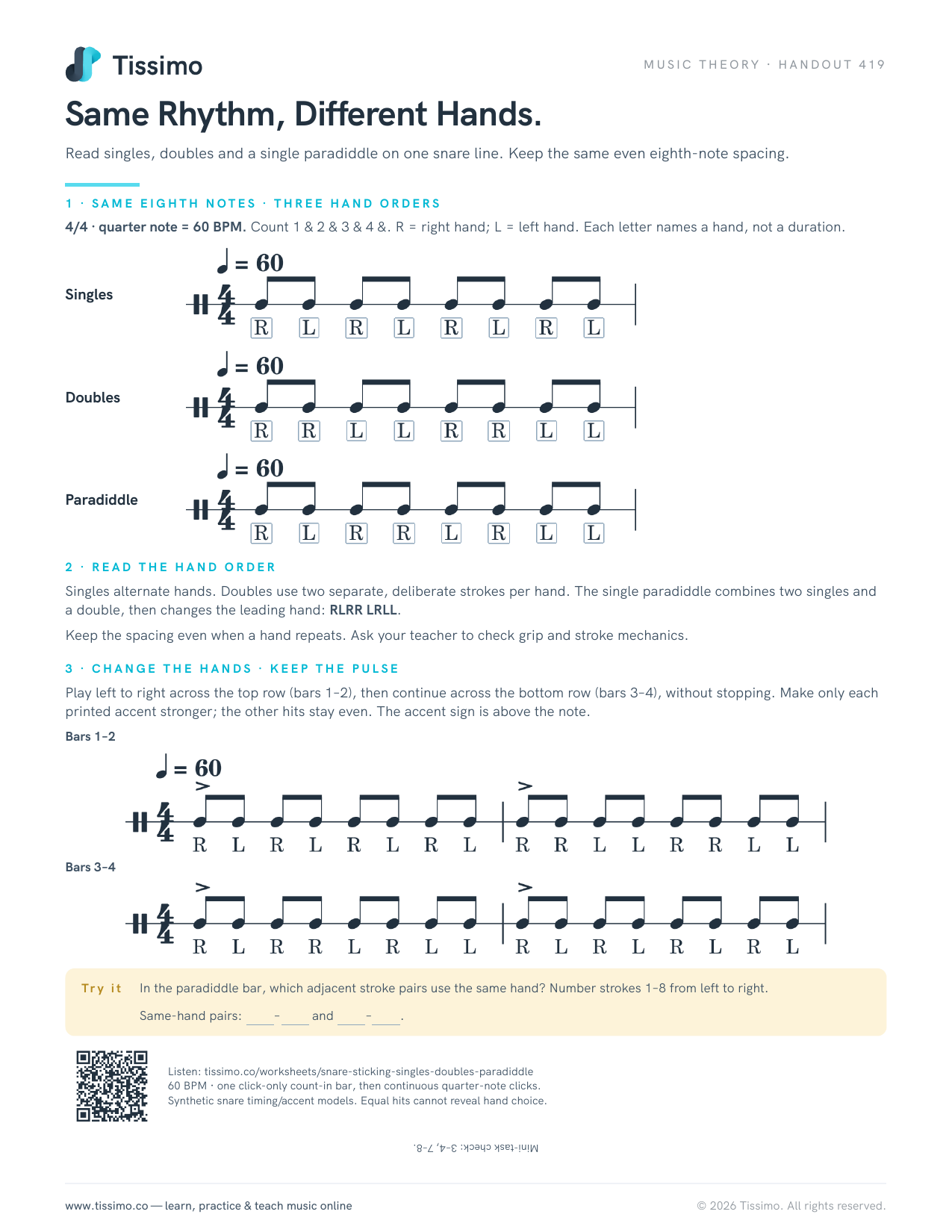 Same Rhythm, Different Hands.Read singles, doubles and a single paradiddle on one snare line. Keep the same even eighth-note spacing.
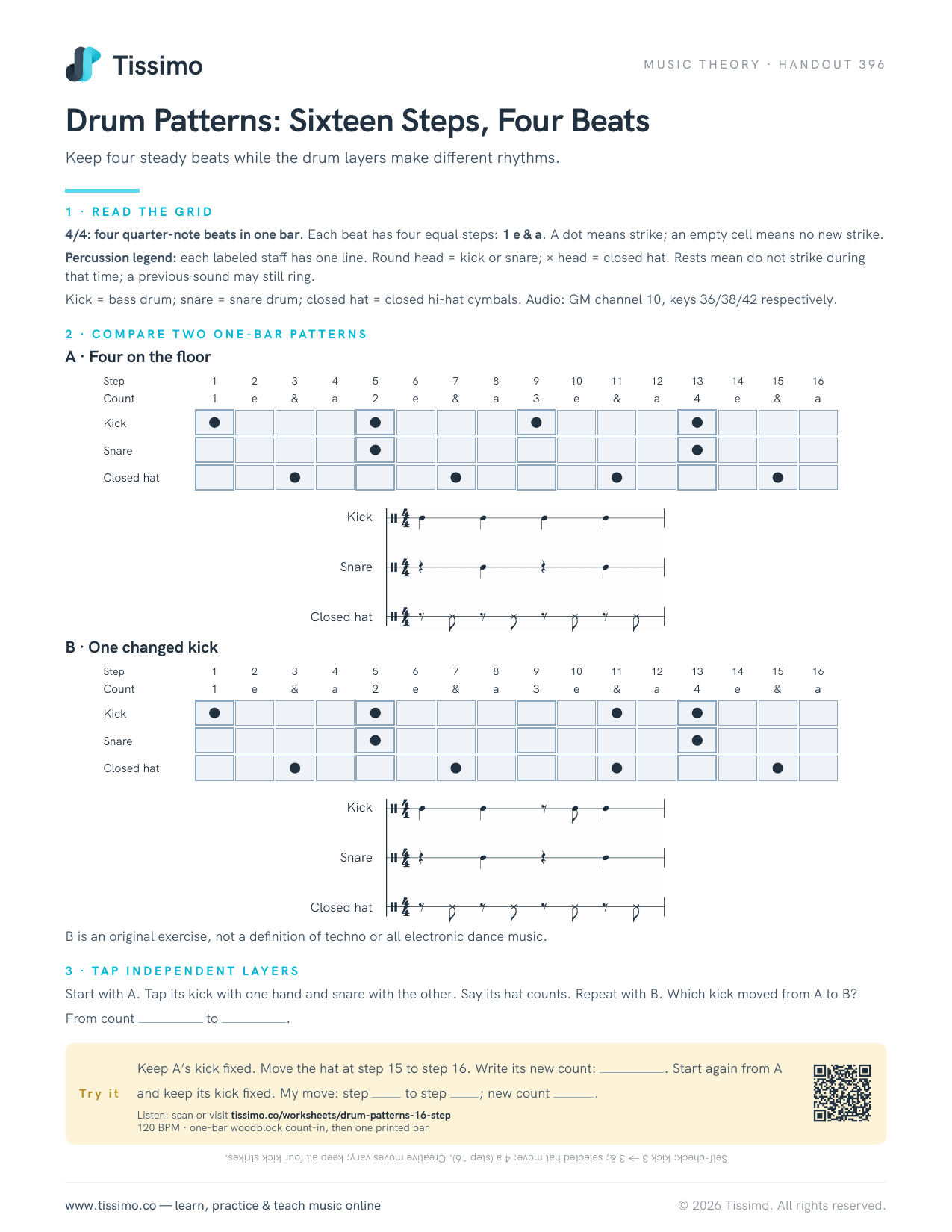 Drum Patterns: Sixteen Steps, Four BeatsKeep four steady beats while the drum layers make different rhythms.
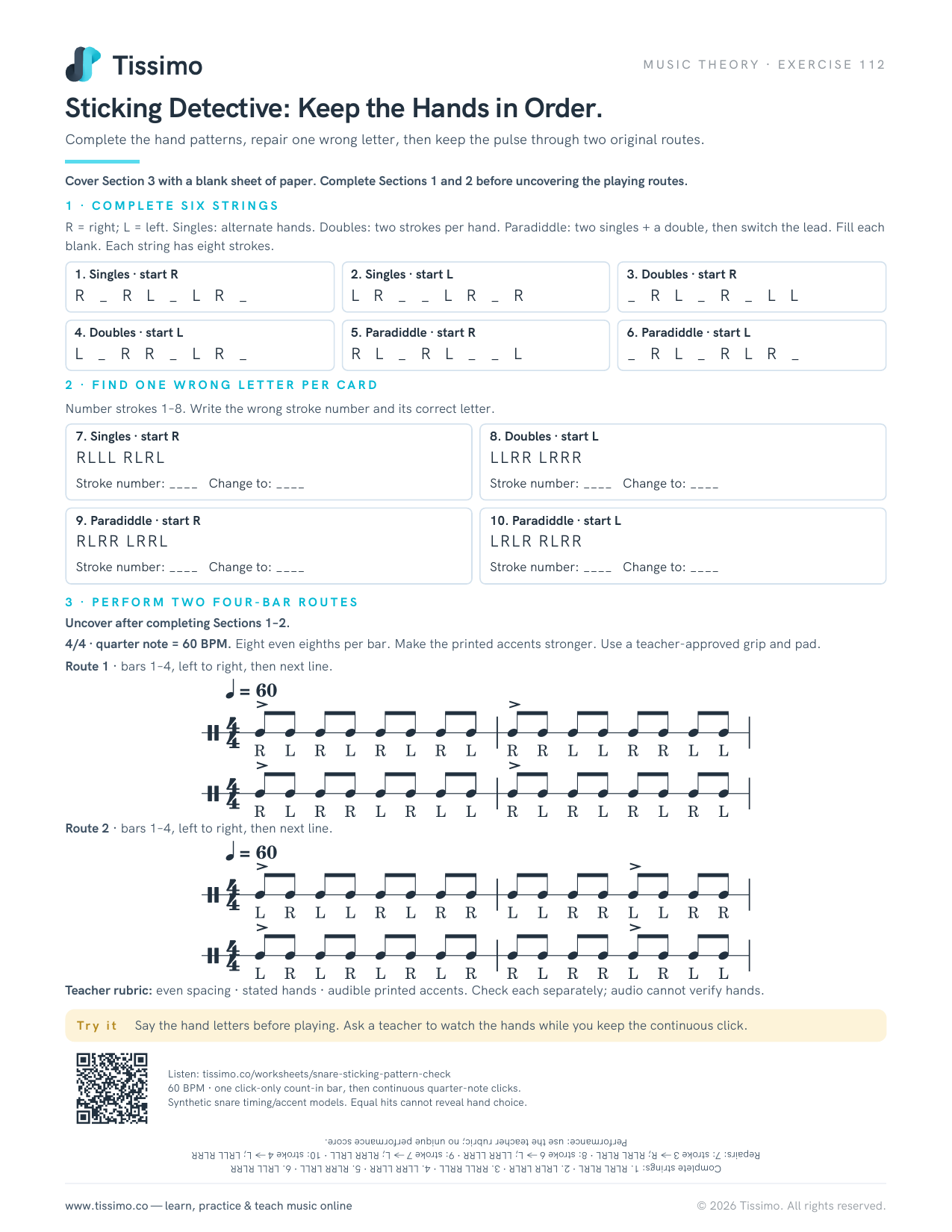 Sticking Detective: Keep the Hands in Order.Complete the hand patterns, repair one wrong letter, then keep the pulse through two original routes.
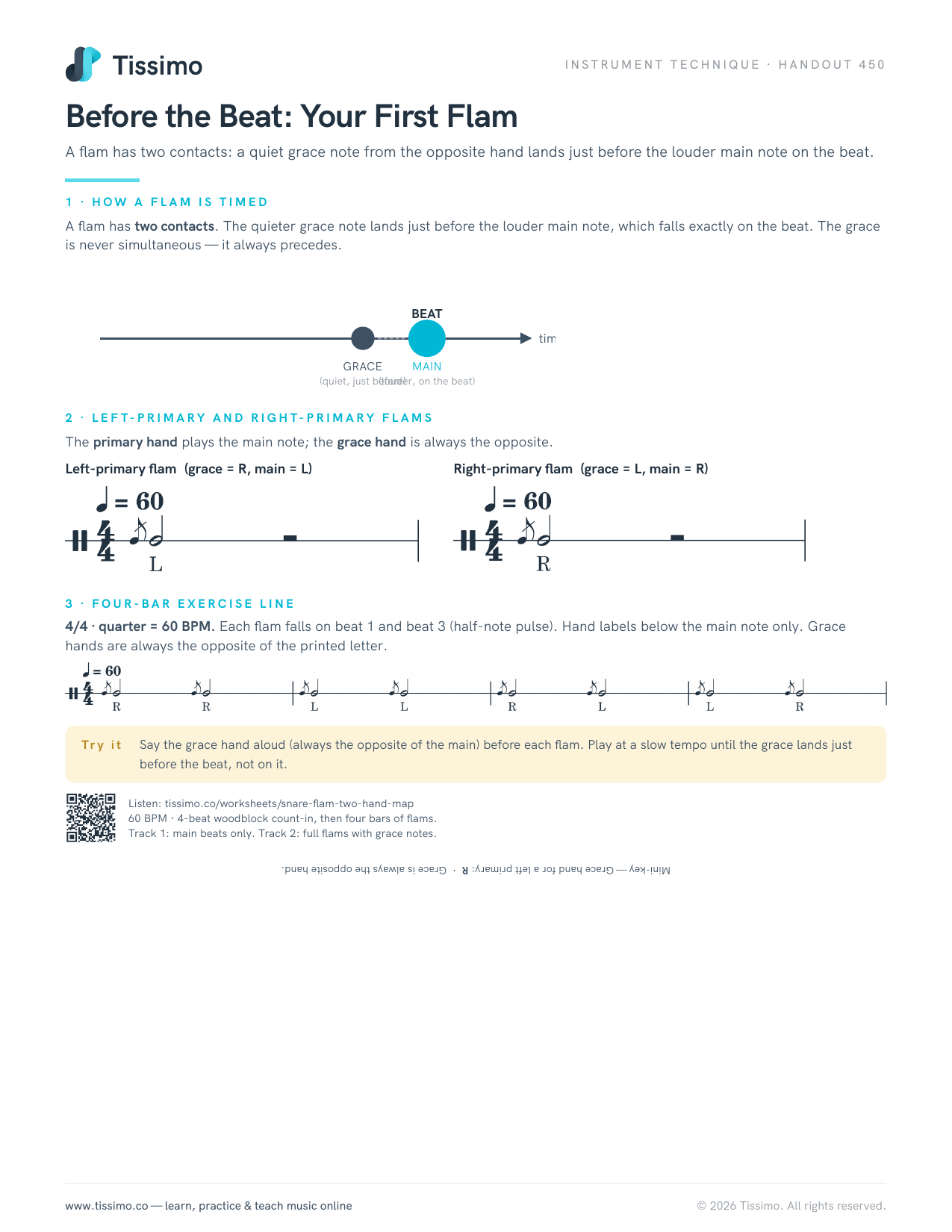 Before the Beat: Your First FlamA flam has two contacts: a quiet grace note from the opposite hand lands just before the louder main note on the beat.
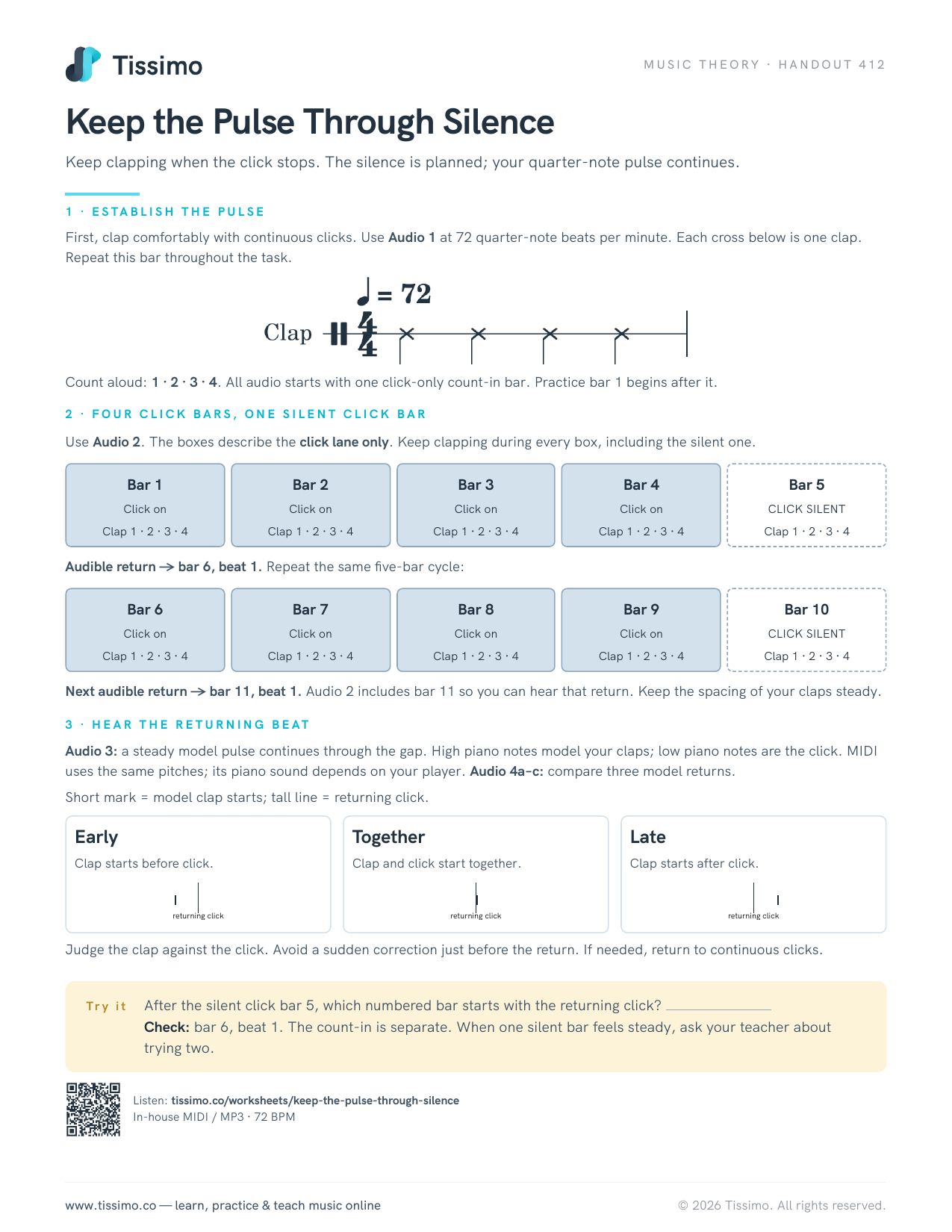 Keep the Pulse Through SilenceKeep clapping when the click stops. The silence is planned; your quarter-note pulse continues.