Notation & Symbols
Multimeasure Rest
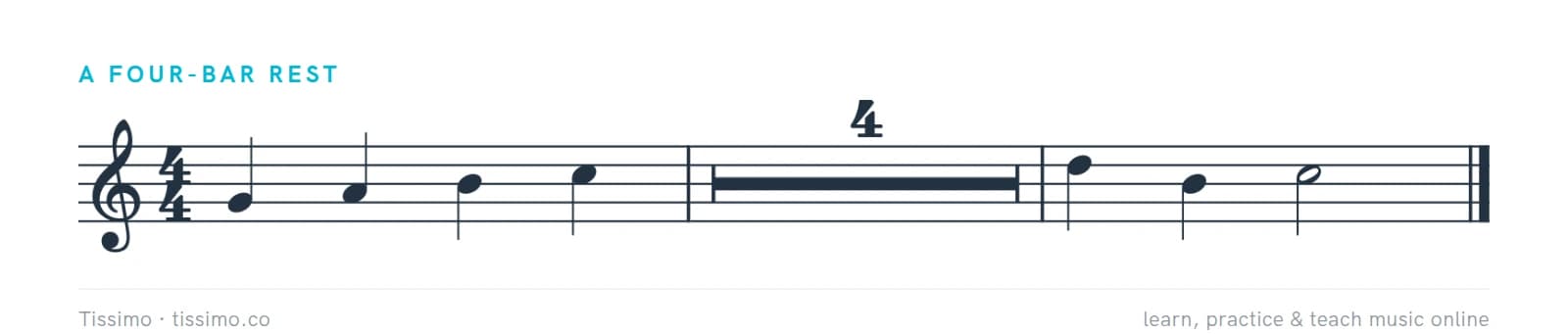
A multimeasure rest is one symbol for several bars of silence: a thick horizontal bar across the middle of the staff with a number above it that says how many bars to rest. It appears mostly in instrumental parts.
In an ensemble, one player often rests while the others play. Instead of printing a whole-bar rest in every empty measure, an instrumental part combines them into a single multimeasure rest: a thick horizontal bar across the middle of the staff, with short vertical strokes at each end (which is why it is sometimes called an H-bar), and a number above it giving the count of measures.
How to count it
Keep the beat going and count bars as well as beats. A common method is to say the bar number in place of beat 1. In 4/4: "1-2-3-4, 2-2-3-4, 3-2-3-4, 4-2-3-4", then come in on the next downbeat. Tapping a finger for each bar helps during long rests.
Listen while you count. Many parts print small cue notes, another instrument's line, near the end of a long rest, so you can check that you are in the right place before you play again.
Where you will see it
- Instrumental parts: band, orchestra and chamber-music parts use multimeasure rests all the time.
- Usually in parts rather than full scores: a conductor's score normally shows each bar separately because, while one player rests, someone else is playing. A full score can use a multimeasure rest when all its parts are silent together.
- Split rests: a multimeasure rest is broken wherever something new is printed, such as a double bar line, a rehearsal letter, or a change of key or time signature. A long silence can therefore appear as several shorter multimeasure rests in a row.
Some older editions write short multibar rests differently: thick vertical blocks between the staff lines, one shape for two bars and a longer one for four, combined as needed.
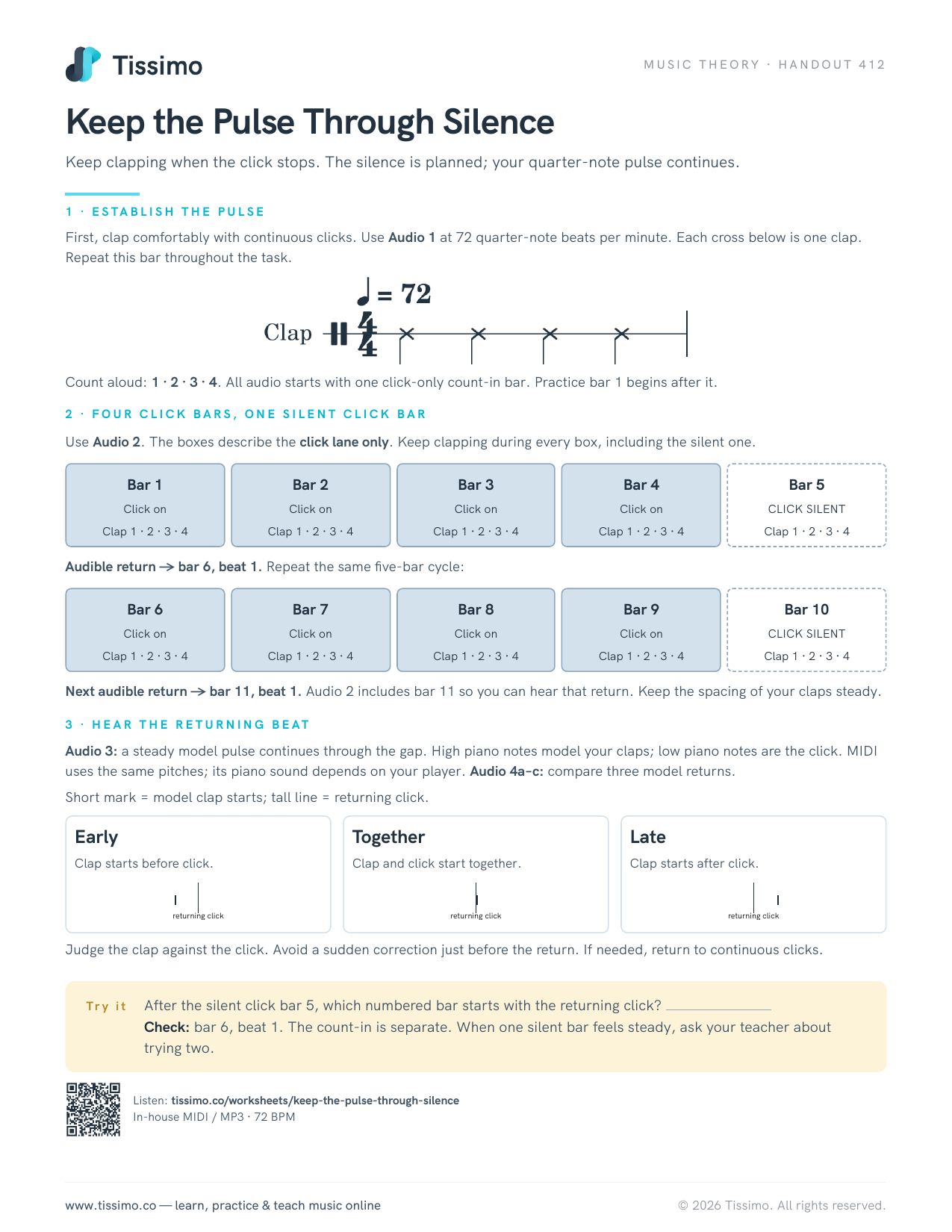
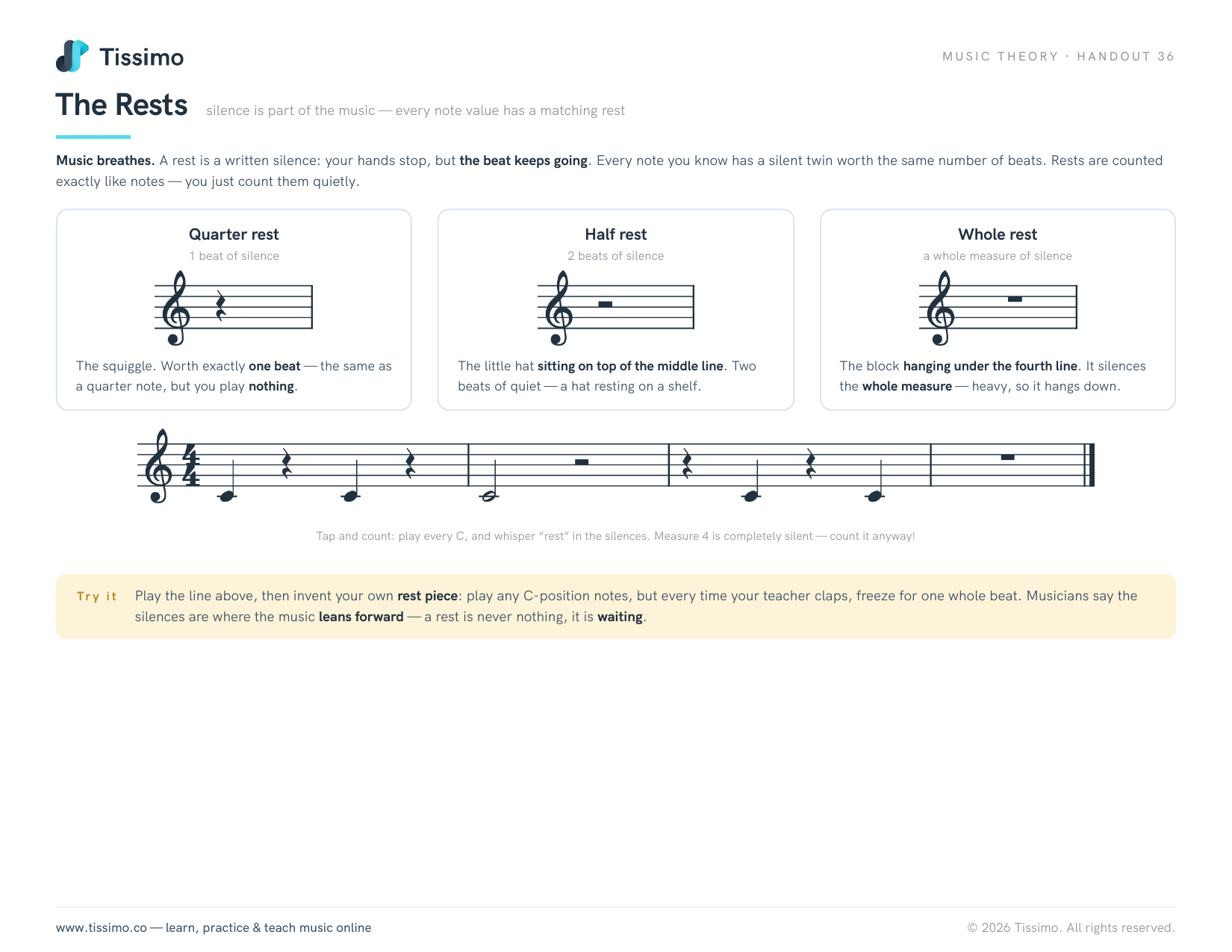
Practice keeping the beat through silence with Keep the Pulse Through Silence, and review the single rests in The Rest Family.
Common questions
How do you count a multimeasure rest?
Count every beat, but say the bar number in place of beat 1 (1-2-3-4, 2-2-3-4, 3-2-3-4 …), so you always know how many bars have gone by.
Why are multimeasure rests less common in full scores?
While one player rests, others are usually playing, so the conductor needs to see each bar. Multimeasure rests are most common in individual parts, but can also appear in a full score when all its parts are silent together.