Notation & Symbols
Score
A score shows the parts of a piece together, lined up so that notes played at the same moment sit one above another. Parts may have separate staves or share them. Conductors read from the full score.
A score shows the parts of a piece together. Instruments or voices can have separate staves or share a staff, as two flute parts often do in an orchestral score. The staves are stacked from top to bottom and the music is lined up vertically, so everything that happens at the same moment sits in one column. One line of all those staves together is a system.
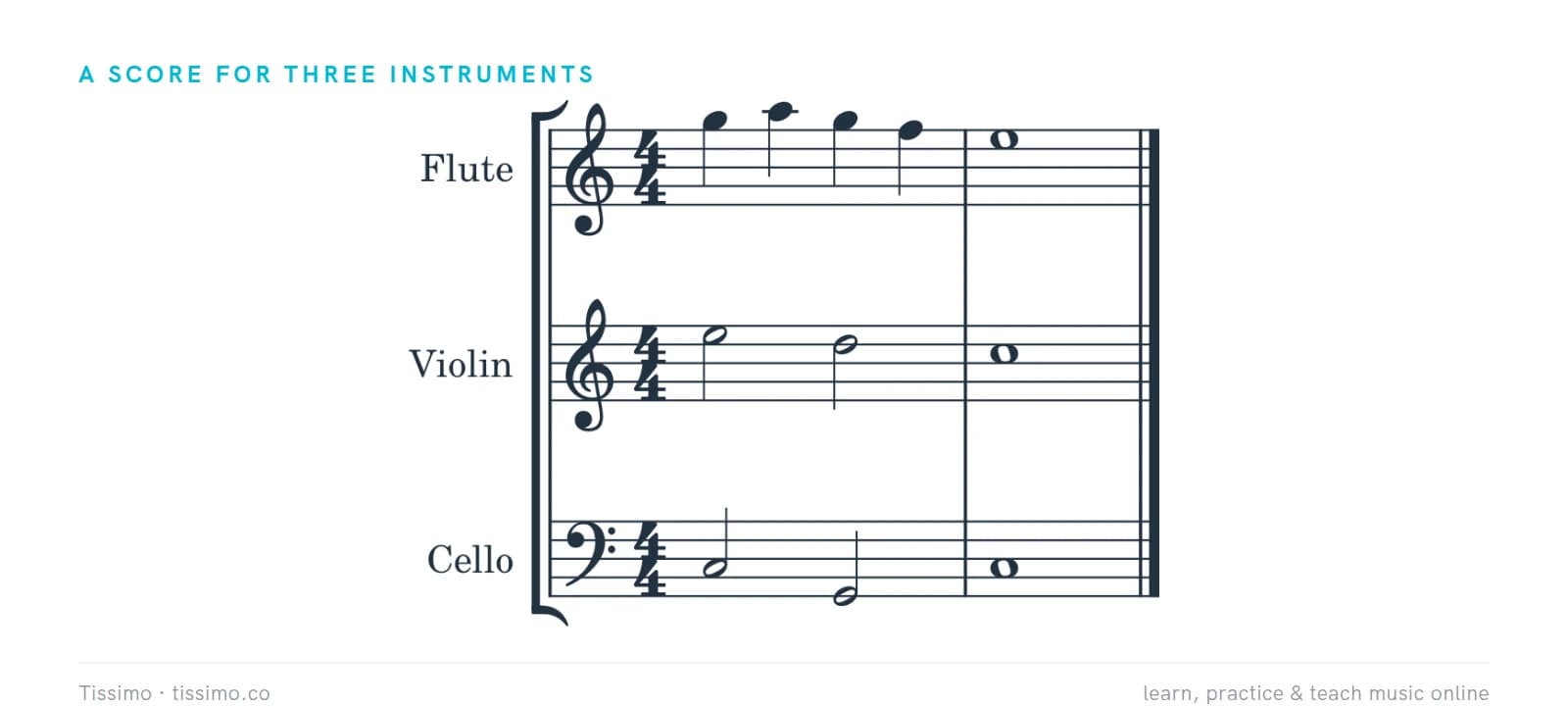
Score and parts
Players in an ensemble usually don't read the score. Each reads a part: only their own line, with rests (often multimeasure rests) where others play, and sometimes small cue notes from other instruments to help them come in. The conductor reads the full score, and so do composers, arrangers, students analyzing a piece and chamber musicians in rehearsal.
Kinds of score
- Full score: all the instrumental or vocal parts, sometimes with related parts sharing a staff. A large orchestral score can have dozens of staves in each system.
- Condensed (short) score: several parts combined on fewer staves, common for concert band conductors.
- Vocal score: the voice parts with the orchestra reduced to a piano part, used to rehearse operas, oratorios and musicals.
- Piano reduction: an ensemble work arranged so one pianist can play it.
- Study (miniature) score: a full score printed small, for reading and study.
- A lead sheet is a minimal score: the melody, the chord symbols and the words.
The order of an orchestral score
Orchestral full scores follow a standard order from top to bottom: woodwinds, then brass, then percussion (with harp and keyboards), then any soloists or choir, and the strings at the bottom. Within each family, the higher instruments usually come first.
Many orchestral scores print transposing instruments at their written pitch, so a clarinet part can look a step away from the flute above it. Some modern scores are printed at concert pitch ("in C") instead.
Other meanings
"Score" also names the music written for a film, show or game, as in a film score. As a verb, to score a piece means to orchestrate or arrange it for particular instruments.
Practice finding your way around a score with Score and Part Detective. and One Moment, Three Staves.
Common questions
What is the difference between a score and a part?
A score shows every instrument's music together, lined up bar by bar. A part shows only one player's music, with rests where the others play.
In what order are instruments listed in an orchestral score?
From the top: woodwinds, brass, percussion (with harp and keyboards), soloists or choir if any, then strings at the bottom. Higher instruments usually come first within each family.
Practice it: free worksheets
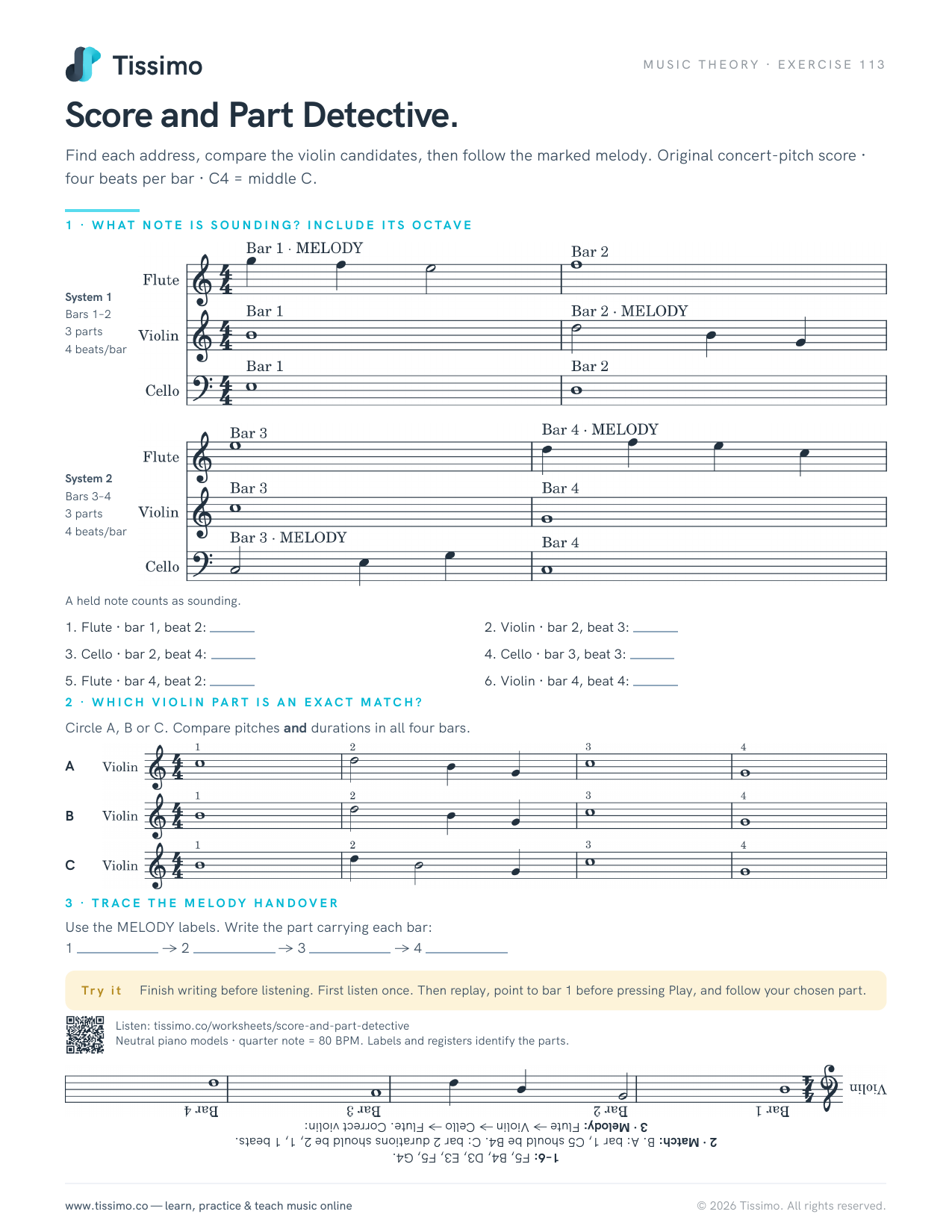 Score and Part Detective.Find each address, compare the violin candidates, then follow the marked melody. Original concert-pitch score · four beats per bar · C4 = middle C.
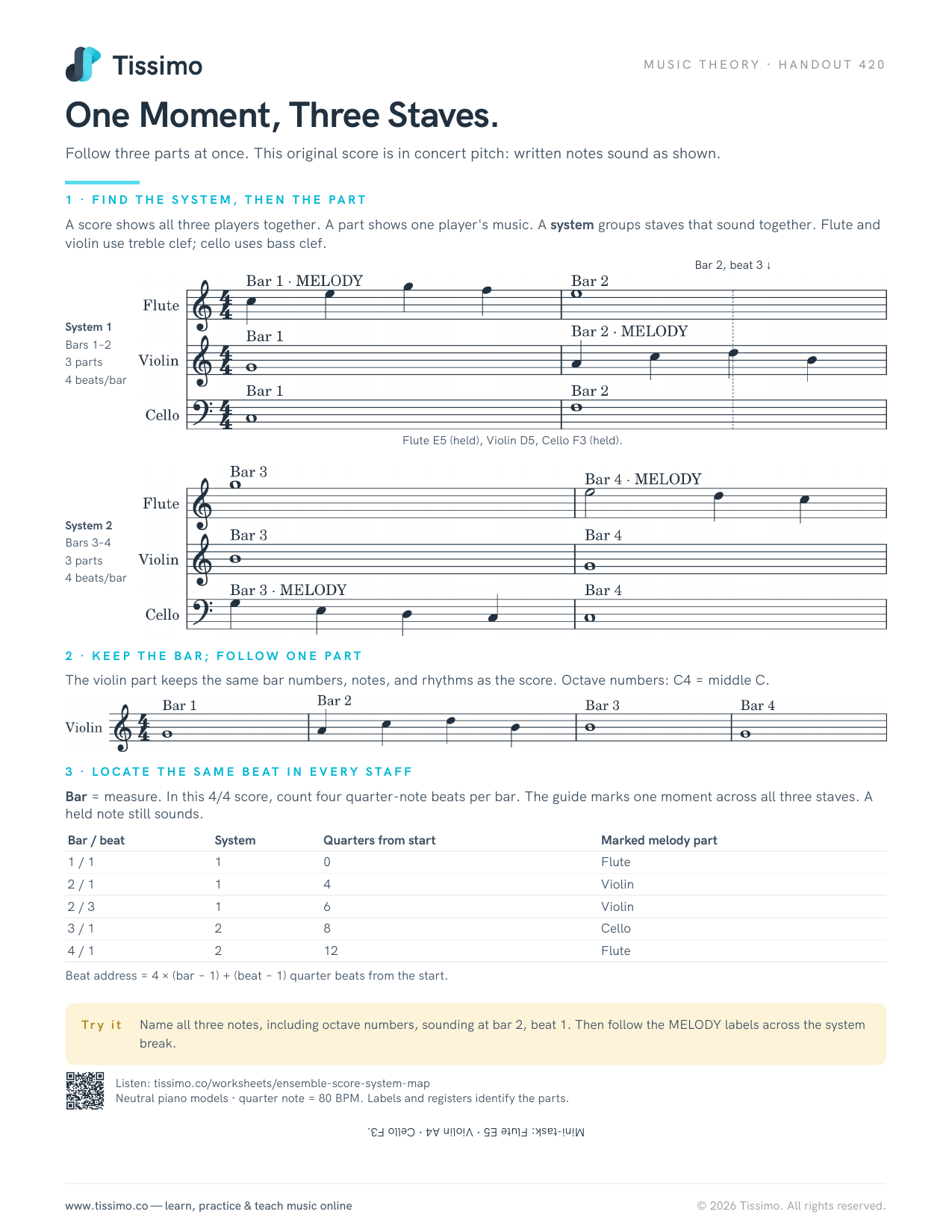 One Moment, Three Staves.Follow three parts at once. This original score is in concert pitch: written notes sound as shown.
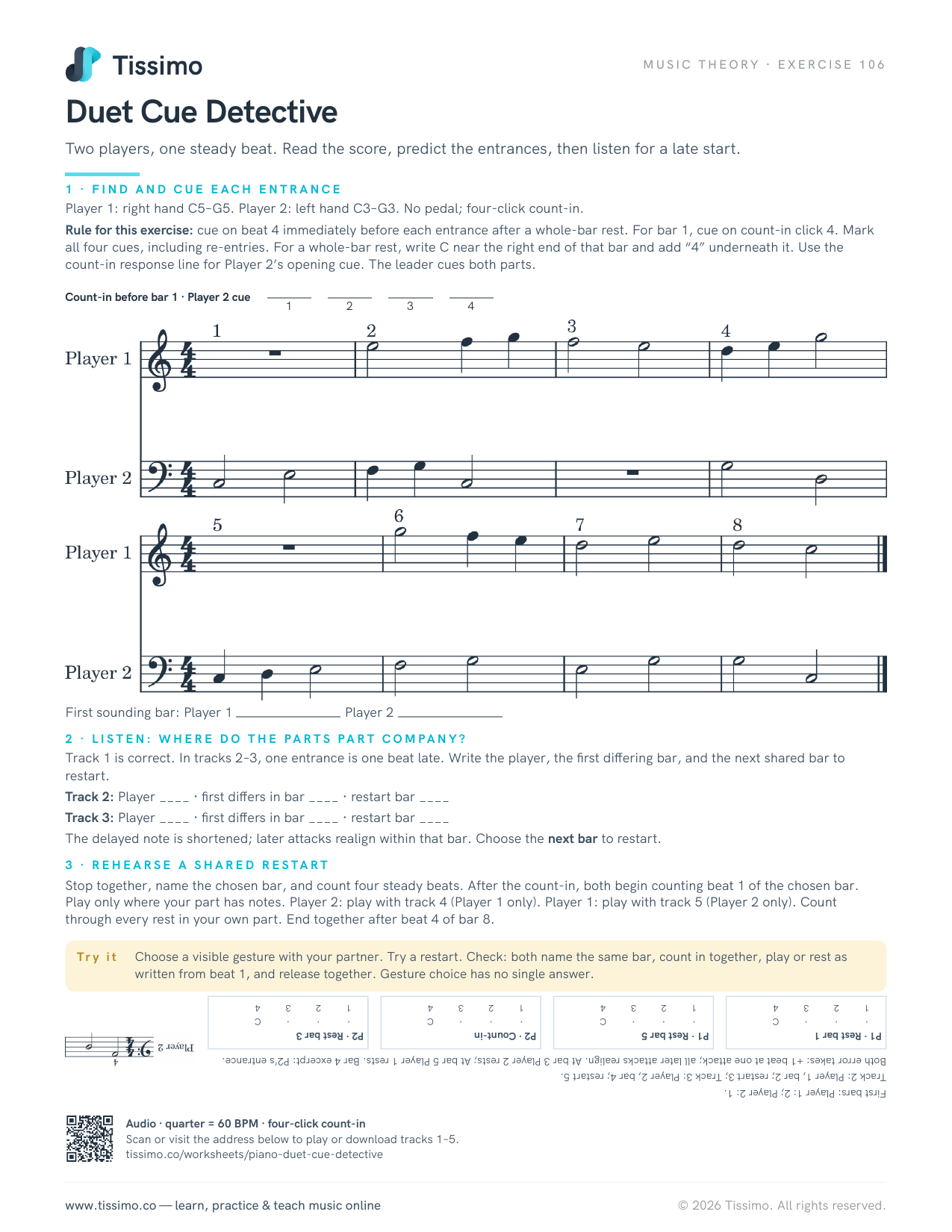 Duet Cue DetectiveTwo players, one steady beat. Read the score, predict the entrances, then listen for a late start.