Notation & Symbols
Lead Sheet
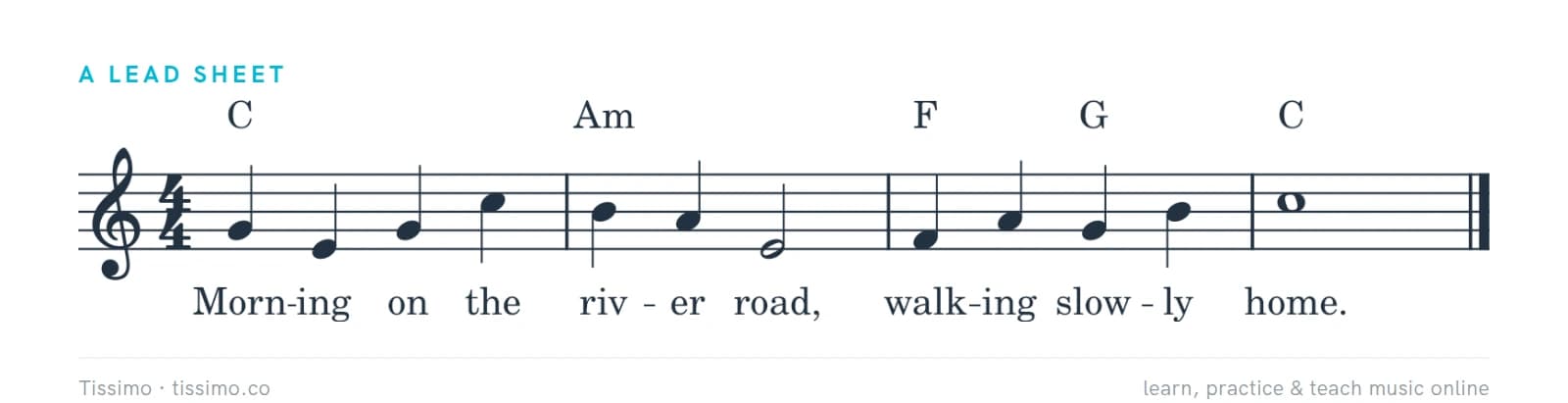
A lead sheet is a compact way to write down a song: the melody on one staff, chord symbols above it and usually the lyrics below. Players make up their own accompaniment from the chord symbols.
A lead sheet gives you the essentials of a song and leaves the rest to you. It has three layers:
- The melody, written on a single treble-clef staff.
- Chord symbols above the staff, showing the harmony and where it changes.
- The lyrics, if the song has words, under the notes.
Who uses lead sheets?
Lead sheets are the everyday notation of jazz, pop, rock, worship and wedding bands, and songwriters. A jazz group can play a tune together from one page: the singer or horn player reads the melody, and the pianist, guitarist and bassist build their parts from the chord symbols. Books of lead sheets are called fake books, because players "fake", or make up, the accompaniment instead of reading it note for note.
Playing from a lead sheet
The lead sheet tells you what to play, not exactly how. Turning it into music is called realizing it:
- Pianists often play the melody in the right hand with chords or a bass line in the left, or play chords under a singer (see voicing and comping).
- Guitarists strum or pick the chords in a style that suits the song.
- Bass players build a bass line from the roots of the chords.
- Singers and soloists shape the melody and may improvise on the chords.
A good first step at the piano: play the melody in the right hand and only the root of each chord in the left. Then fill in the rest of each chord.
Lead sheet, chord chart and score
A chord chart leaves out the melody and gives only the chord symbols, often with slashes for the beats. A full score writes out every part exactly. The lead sheet sits between them: an exact melody with a flexible accompaniment.
Start with Reading a lead sheet, then try Realize a lead sheet.
Common questions
What is on a lead sheet?
The melody on one staff, chord symbols above it and, for songs, the lyrics below. The accompaniment is left for the players to make up.
What is a fake book?
A collection of lead sheets. The name comes from the way players "fake", or make up, the accompaniment from the chord symbols.
Practice it: free worksheets
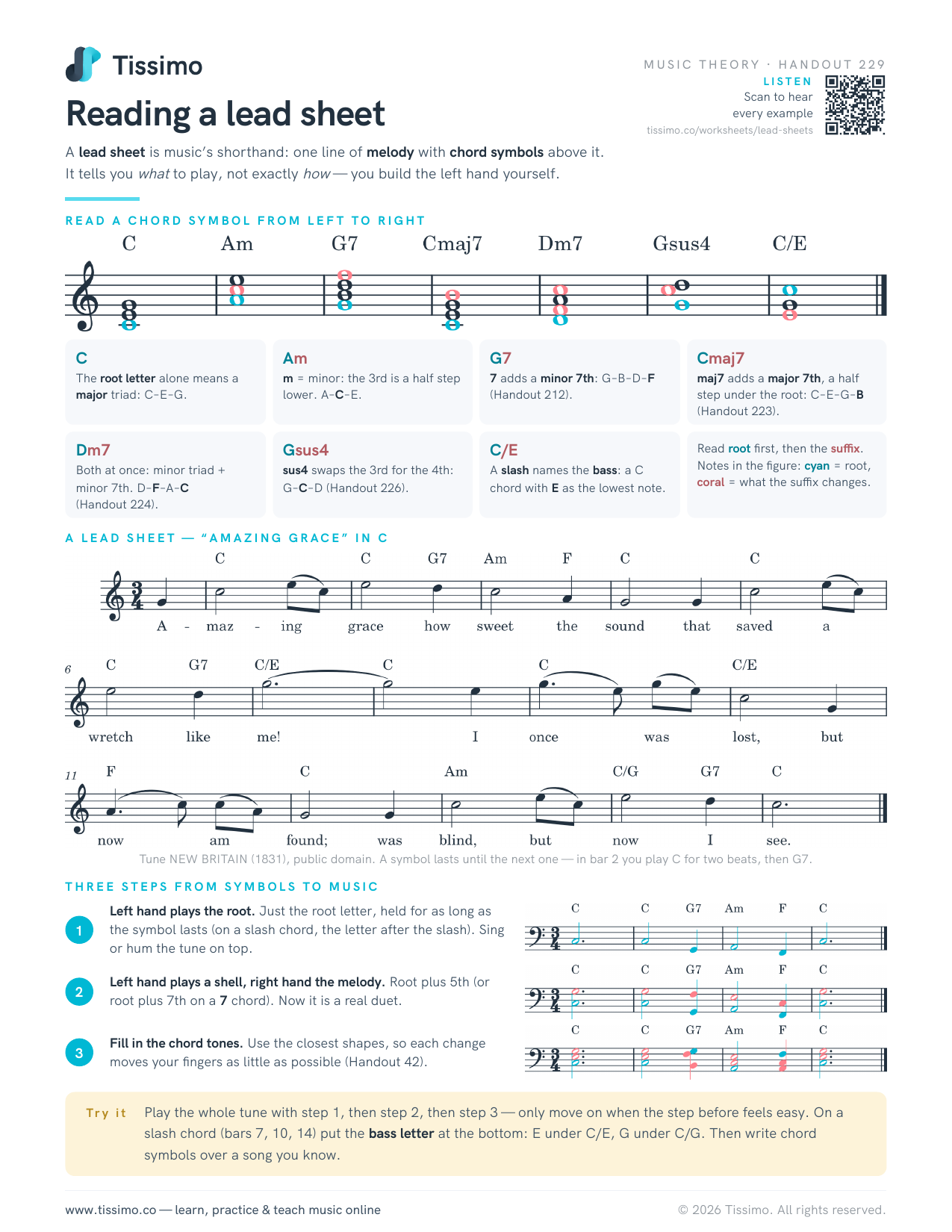 Reading a lead sheetA lead sheet is music’s shorthand: one line of melody with chord symbols above it. It tells you what to play, not exactly how — you build the left hand yourself.
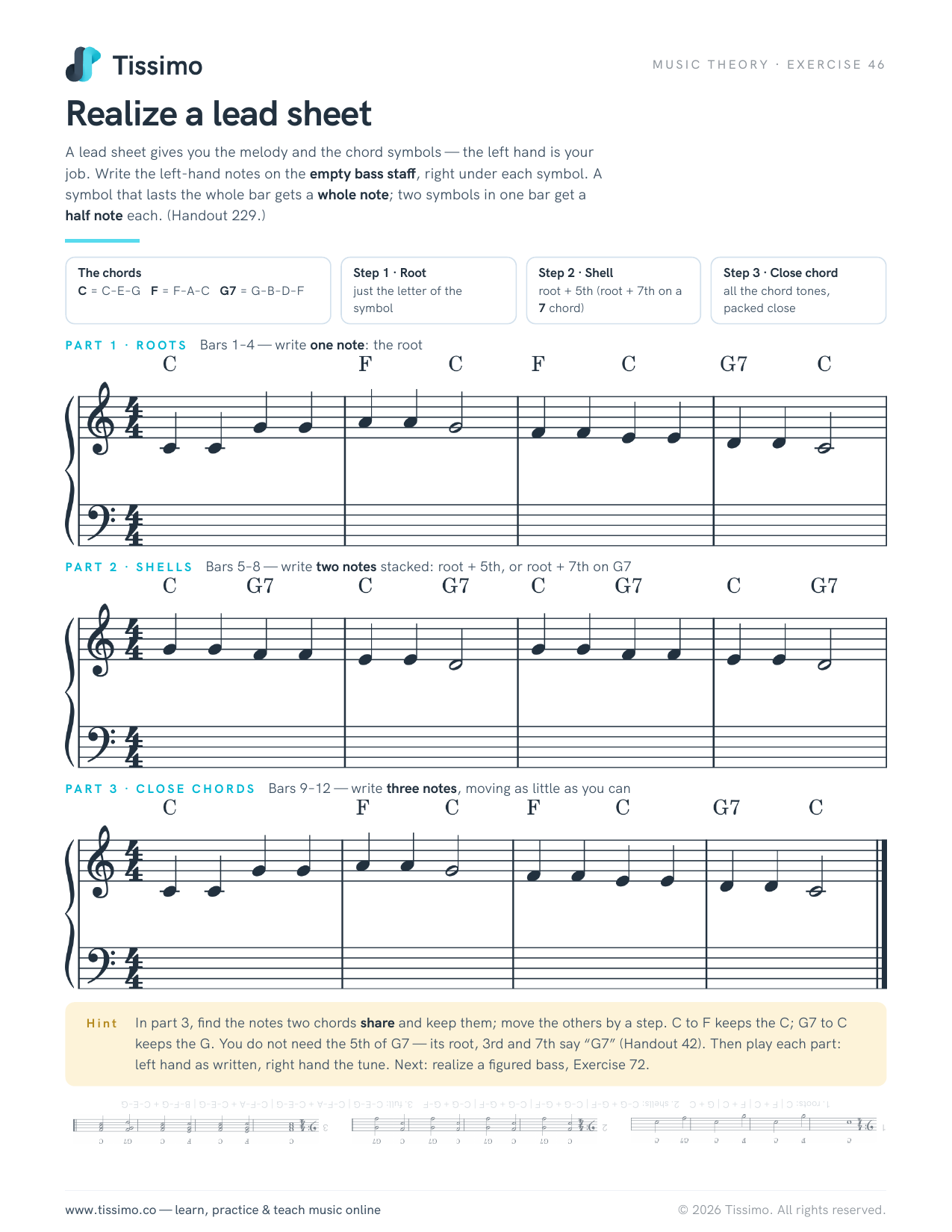 Realize a lead sheetA lead sheet gives you the melody and the chord symbols — the left hand is your job. Write the left-hand notes on the empty bass staff, right under each symbol. A symbol that lasts the whole bar gets a whole note; two symbols in one bar get a half note each. (Handout 229.)
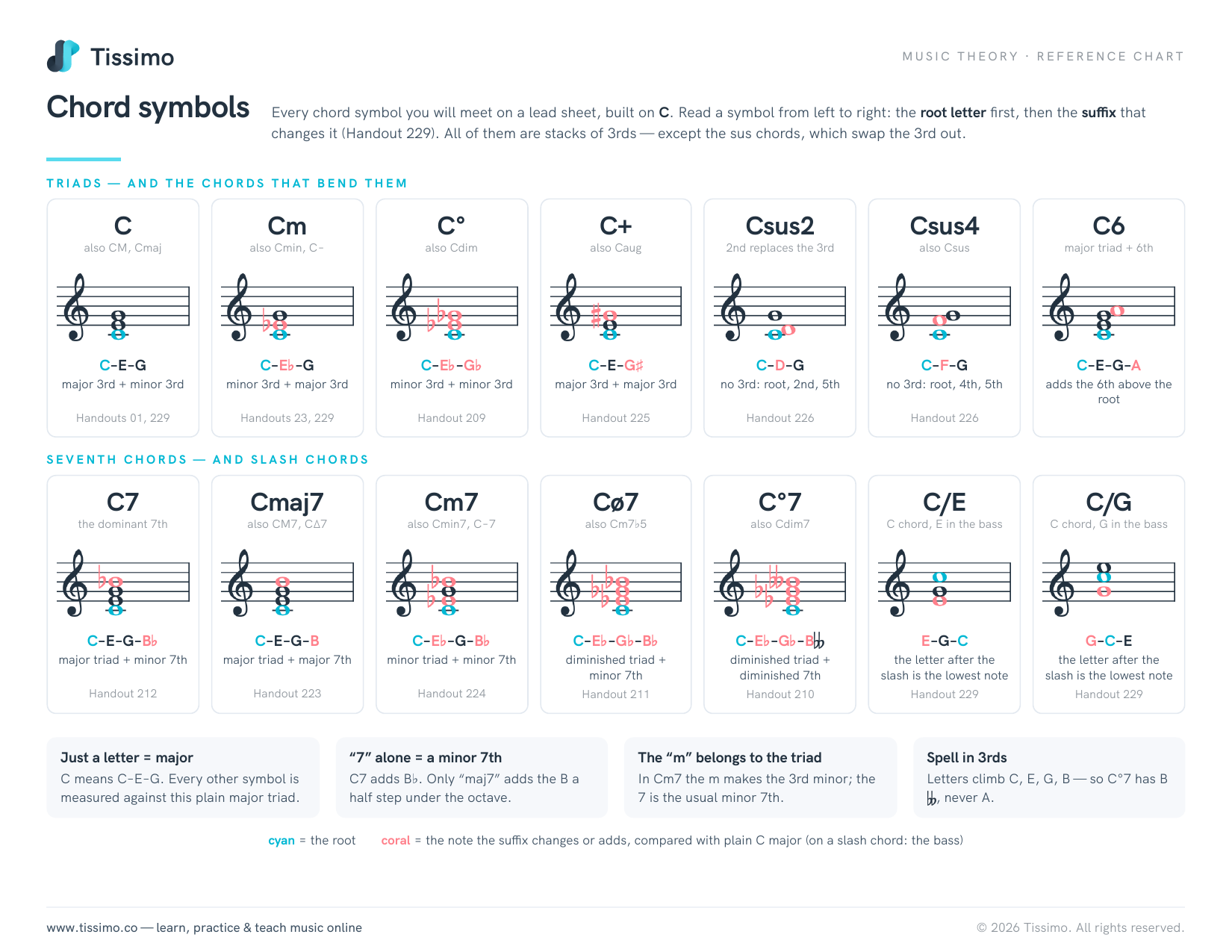 Chord symbolsEvery chord symbol you will meet on a lead sheet, built on C. Read a symbol from left to right: the root letter first, then the suffix that changes it (Handout 229). All of them are stacks of 3rds — except the sus chords, which swap the 3rd out.
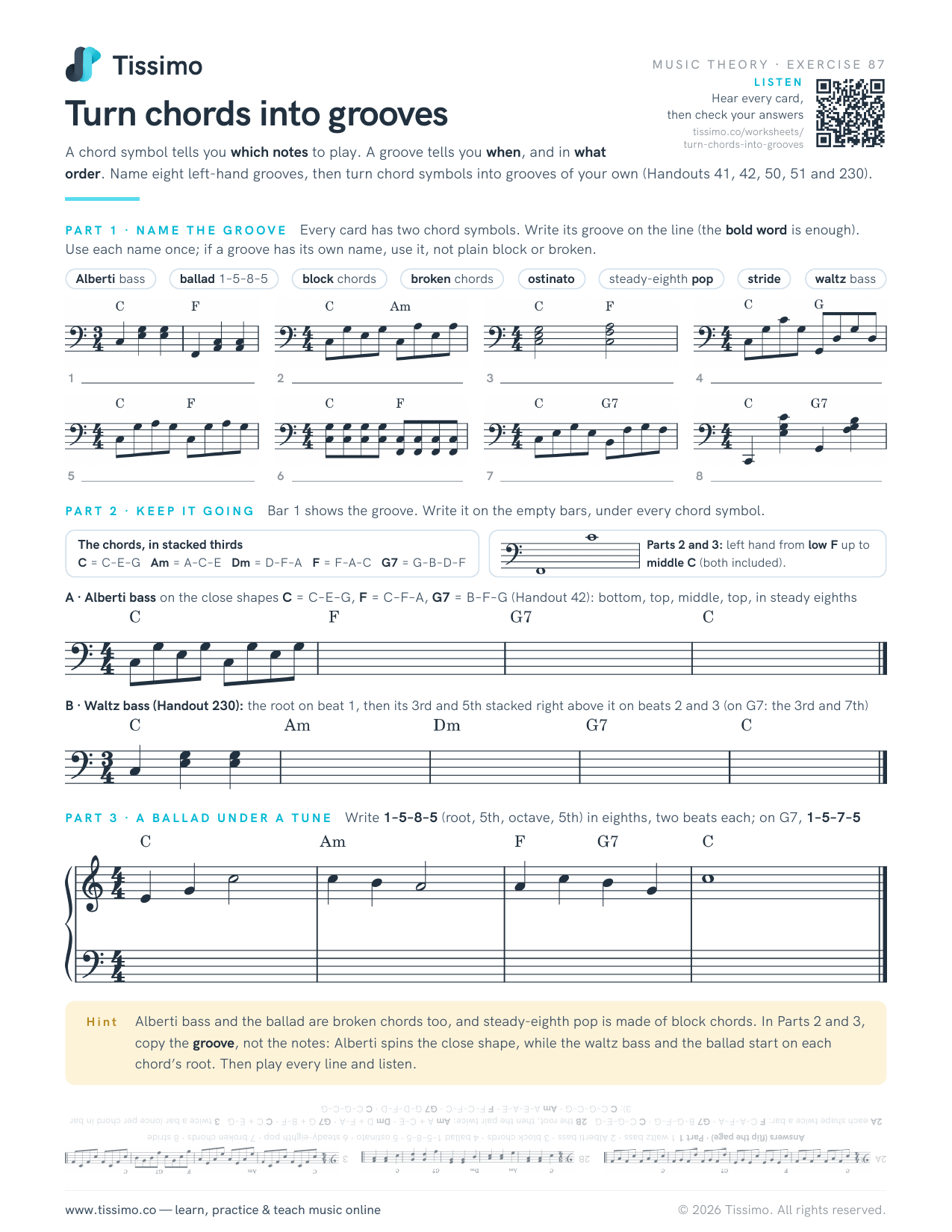 Turn chords into groovesA chord symbol tells you which notes to play. A groove tells you when, and in what order. Name eight left-hand grooves, then turn chord symbols into grooves of your own (Handouts 41, 42, 50, 51 and 230).