Melody, Texture & Counterpoint
Improvisation
Improvisation is creating music on the spot while performing it, inventing melodies, rhythms or harmonies in the moment, usually within a framework such as a chord progression, scale or groove.
Improvisation is making up music on the spot, while you perform it. An improviser invents melodies, rhythms or harmonies in the moment, usually inside a framework: a chord progression, a scale, a groove, or the conventions of a style. It is less like reading a speech and more like having a conversation: you choose your words as you go, but you already know the language.
Improvisation in many traditions
- Jazz: soloists improvise over the chords of a tune, and the rhythm section improvises its accompaniment.
- Blues and rock: guitar solos, piano fills and vocal ad-libs.
- Indian classical music: performers improvise at length within a raga, a melodic framework, and a tala, a rhythmic cycle.
- Baroque music: keyboard players improvised their accompaniments from figured bass, soloists added their own ornaments, and cadenzas in concertos were at first often improvised.
- Church music: organists still improvise preludes and hymn introductions.
- Folk music of many kinds, and call and response singing.
Improvising is not random
Improvisers prepare a great deal. They learn scales, chords and patterns, listen to and copy other players, and practice turning a short idea into a longer one. In performance they combine and vary what they know. The surprise comes from the choices made in the moment, not from playing just anything.
How to start
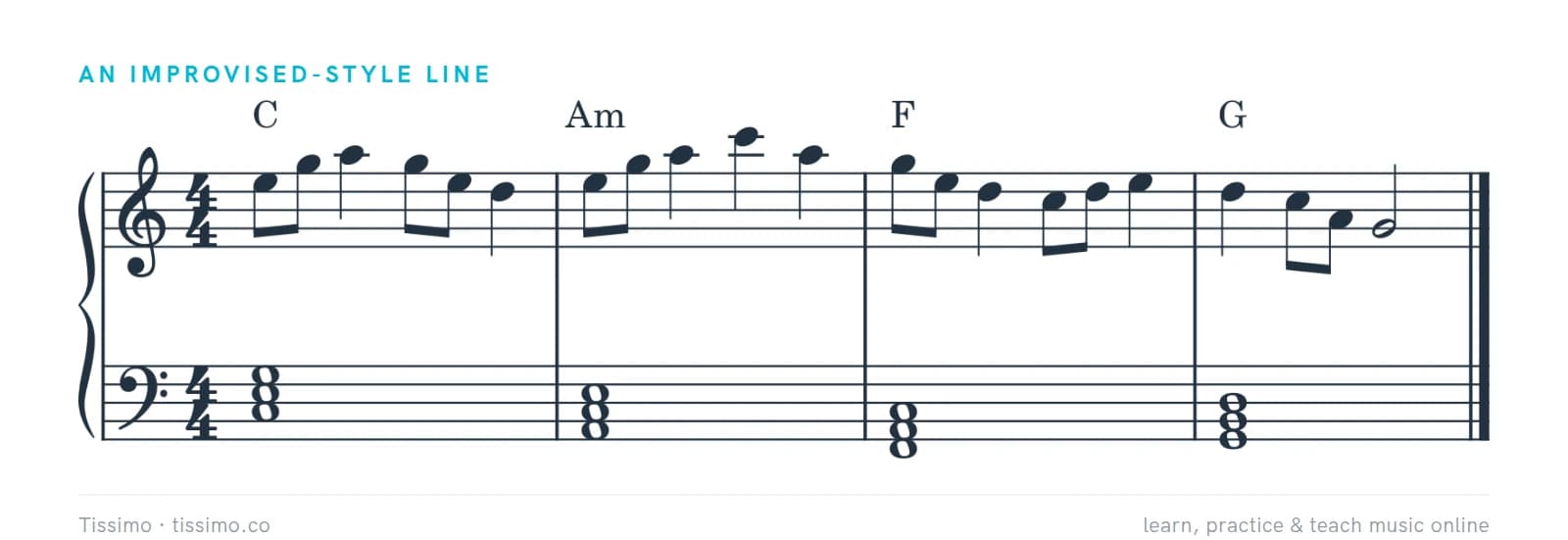
- Limit your notes. The five notes of the major pentatonic scale (C D E G A in C) sound good over many simple progressions, as in the example.
- Keep something steady underneath: a backing track, a drone, a loop or a simple left hand.
- Make a short idea and develop it. Repeat a motif higher, lower or with a new rhythm, as bars 1 and 2 of the example do.
- Leave space. Play a phrase, rest, and answer it, like a call and response.
- Record yourself and listen back to keep the ideas you like.
Tissimo's Improvising with the Pentatonic gives you a ready-made recipe, and The 12-Bar Blues gives you a progression to play over.
Common questions
Can beginners learn to improvise?
Yes. Start with a few notes, such as a pentatonic scale, over a steady accompaniment, and make short ideas you repeat and vary. Improvising with limits is easier, and sounds better, than trying to use every note at once.
What scale is best for improvising?
For beginners, the major pentatonic or minor pentatonic scale, because it has no notes that clash strongly with the common chords of the key. The blues scale adds one extra note for a bluesy color.
Practice it: free worksheets
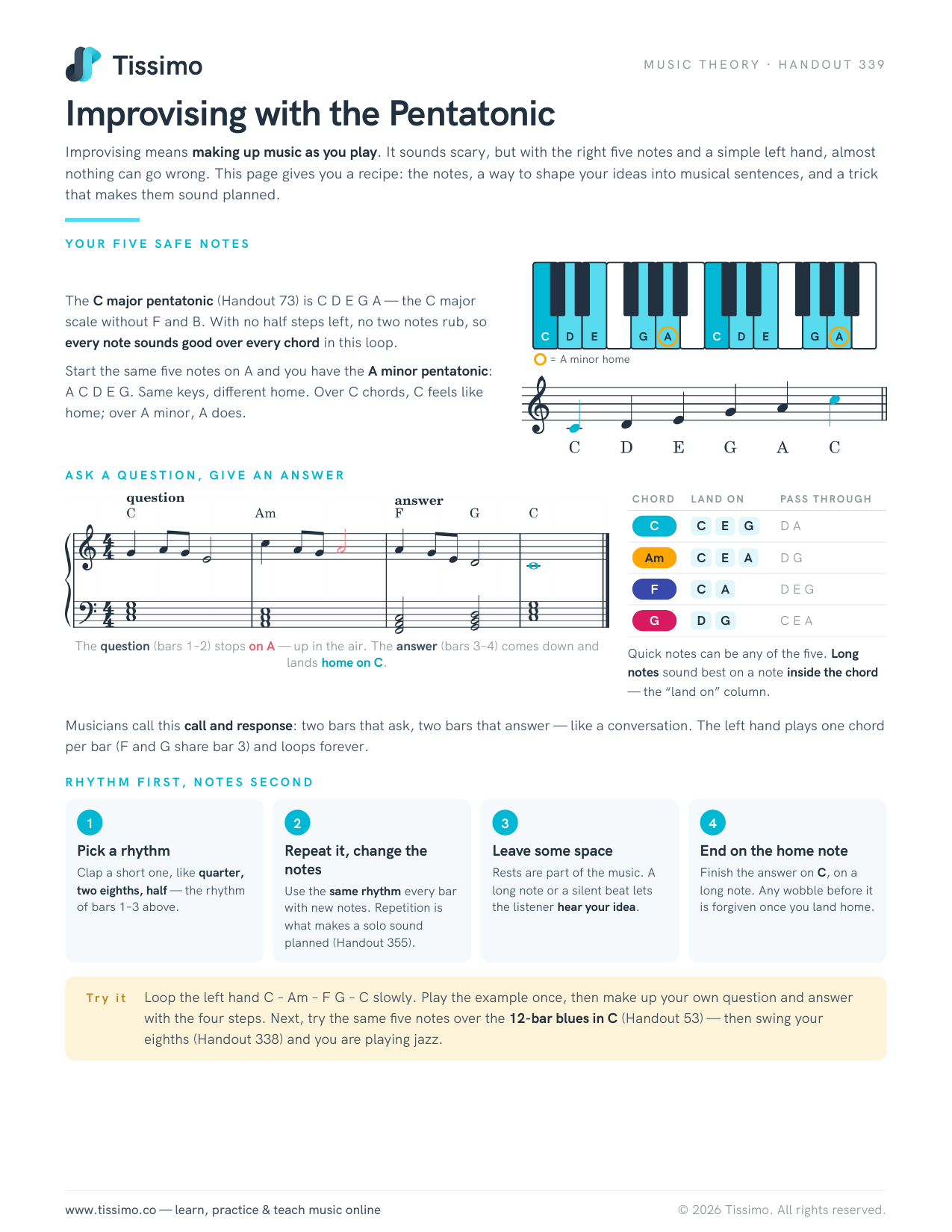 Improvising with the PentatonicImprovising means making up music as you play. It sounds scary, but with the right five notes and a simple left hand, almost nothing can go wrong. This page gives you a recipe: the notes, a way to shape your ideas into musical sentences, and a trick that makes them sound planned.
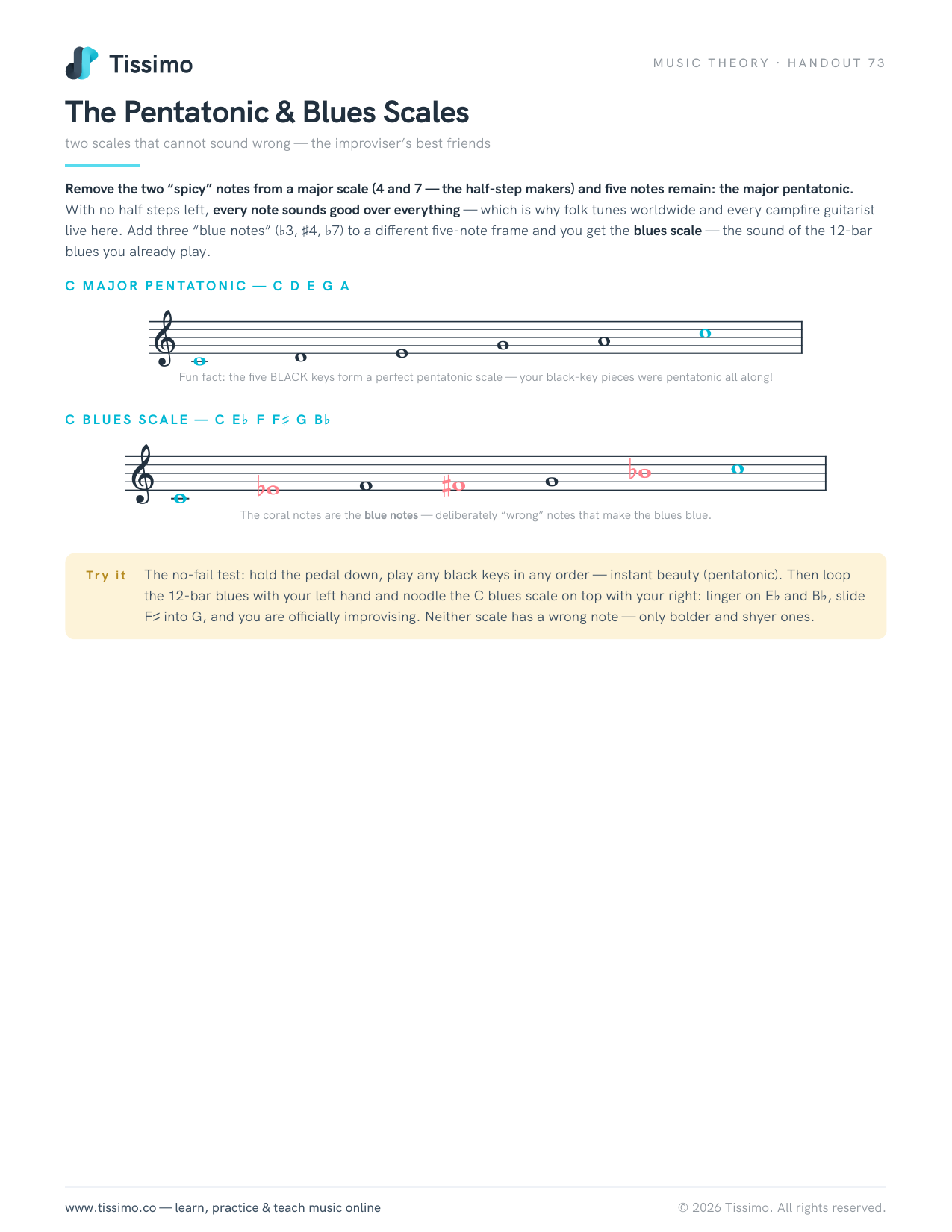 The Pentatonic & Blues Scalestwo scales that cannot sound wrong — the improviser’s best friends
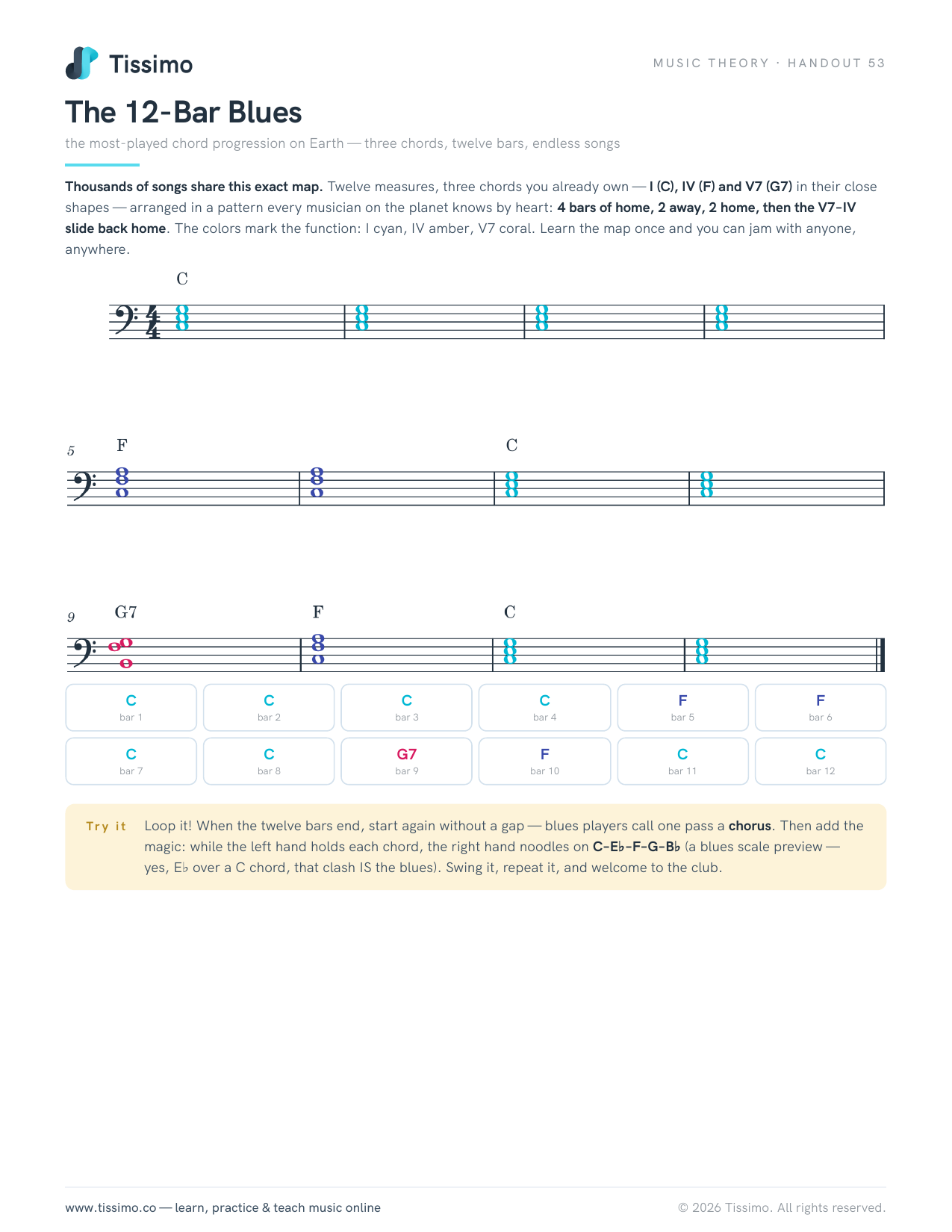 The 12-Bar Bluesone of the best-known chord progressions — three chords, twelve bars, endless songs
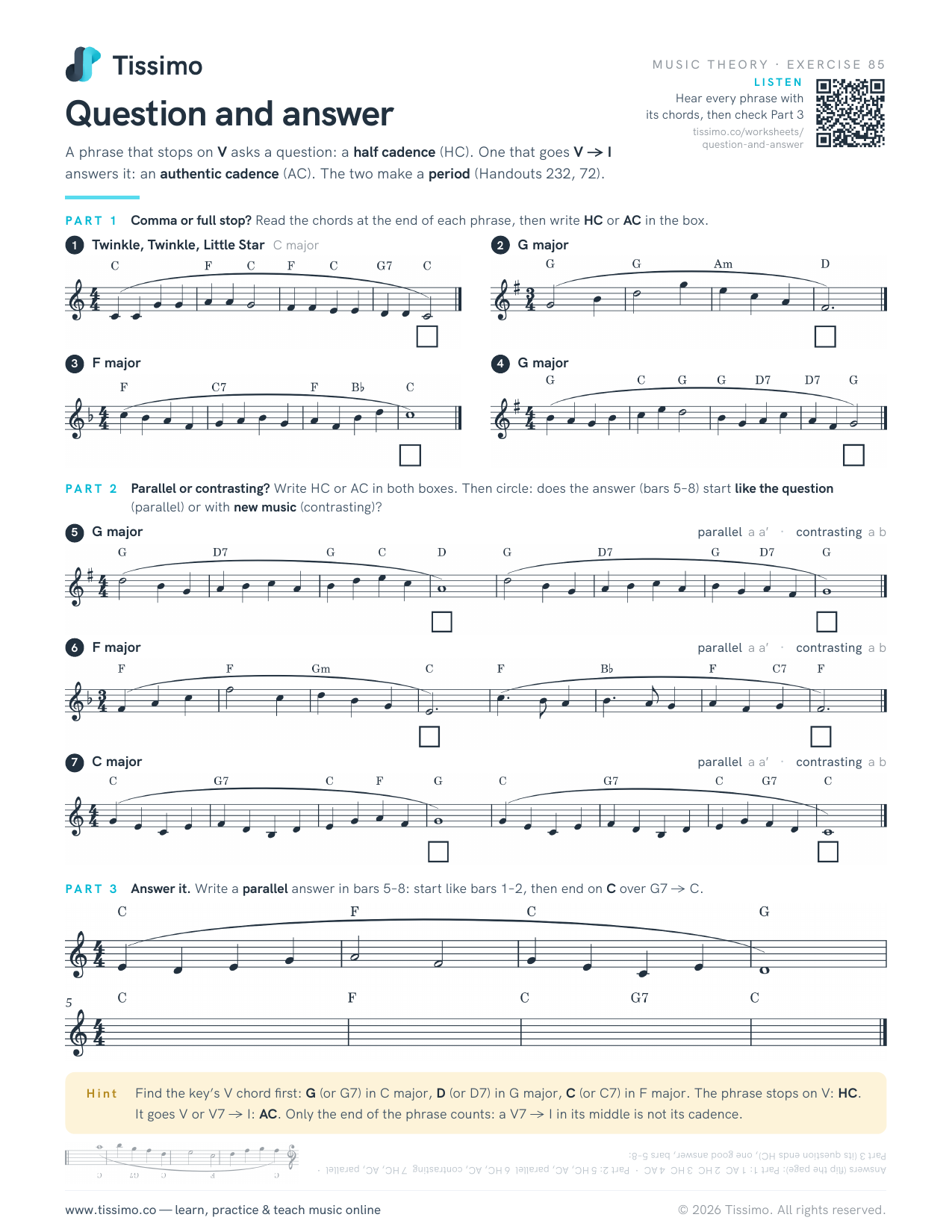 Question and answerA phrase that stops on V asks a question: a half cadence (HC). One that goes V → I answers it: an authentic cadence (AC). The two make a period (Handouts 232, 72).