Scales, Keys & Modes
Blues Scale
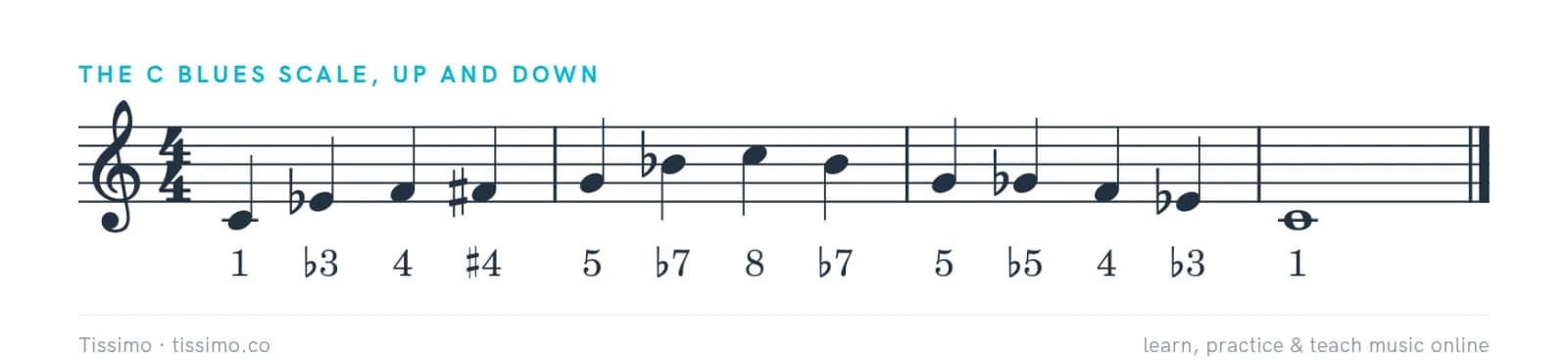
The blues scale is a six-note scale: the minor pentatonic plus a flat 5, the blue note. In C it is C E♭ F F♯ G B♭. It is widely used for improvising in blues, rock and jazz.
The blues scale is the minor pentatonic scale with one extra note squeezed in between its 4th and 5th degrees. In C it is C E♭ F F♯ G B♭, and then C again an octave up.
Measured against the major scale, that is 1, ♭3, 4, ♯4 (or ♭5), 5 and ♭7. The added note, F♯ or G♭ in C, is the one usually called the blue note.
The blue note
The ♭5 sits a half step between two strong notes, the 4th and the 5th, and a tritone above the tonic. Held on its own it sounds tense; slid through on the way between F and G, it gives a line its gritty, unmistakably bluesy color. That is how it is usually used: as a passing note, not a place to stop.
With the blue note in place, the scale has two half steps in a row, from the 4th to the 5th:
(W+H) – W – H – H – (W+H) – W
Blue notes beyond the scale
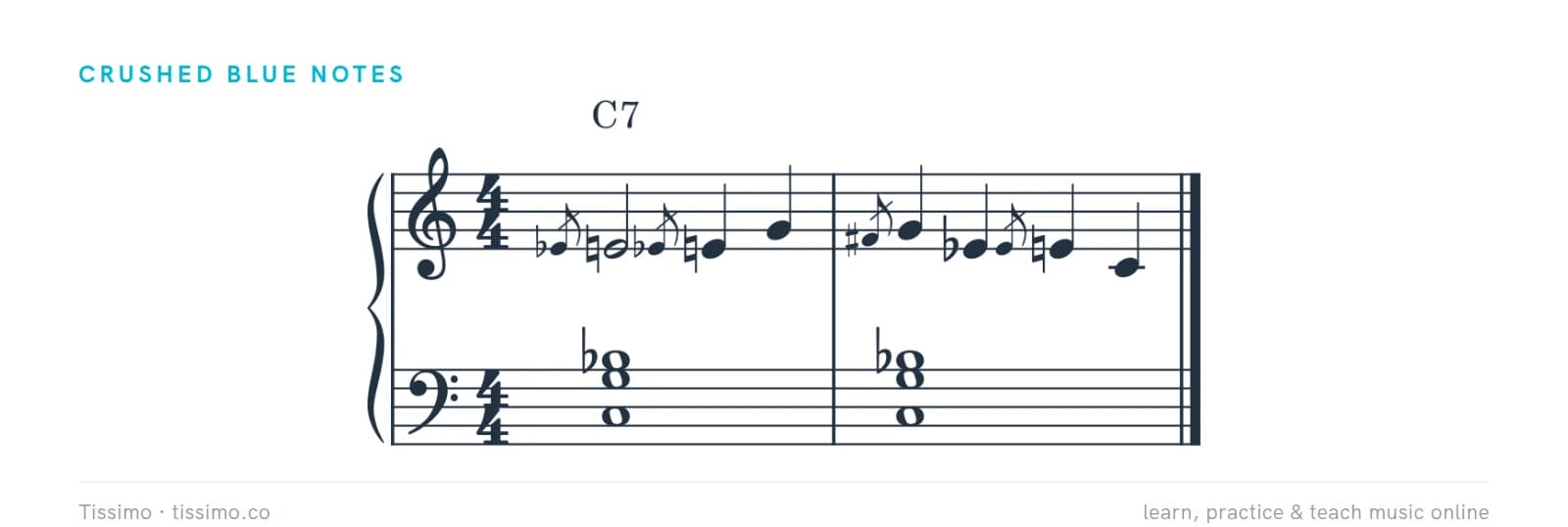
In blues singing, the blue notes are less a fixed set of keys than an area of pitch. Singers and guitarists inflect the 3rd, 5th and 7th rather than treating them as fixed piano keys. The 3rd and 7th may lie between their minor and major forms; the 5th may be lowered or bent toward the perfect fifth. Fifths are called perfect, diminished or augmented, not major or minor. A piano cannot bend a note, so pianists imitate the effect by crushing two neighboring keys together, for example a quick E♭ slipping into E over a C chord. The written blues scale is a practical summary of those sounds, not the whole story.
Spelling it
The blue note has two names. Going up, many players write it as a sharp 4 (F♯ in C), which leads up into G; coming down, as a flat 5 (G♭), which leads down into F. Both are correct, and you will see both in published music.
Using it
The blues scale is often played over all three chords of a twelve-bar blues in its key, which is one reason it is the first scale many improvisers learn. Over a blues in C, phrases that move 4–♭5–5 or 5–♭5–4 bring out its color, and phrases that end on C or G sound settled. The Pentatonic & Blues Scales and The 12-Bar Blues are good next steps.
There is also a major blues scale, 1 2 ♭3 3 5 6 (C D E♭ E G A in C), which adds a ♭3 to the major pentatonic scale. When people say "the blues scale" with no qualifier, they almost always mean the six-note minor version.
Common questions
What is the blue note in the blues scale?
The ♭5, also spelled ♯4: G♭ or F♯ in the C blues scale. It sits between the 4th and 5th degrees and is usually played in passing. In a wider sense, the bent 3rd and 7th of blues singing are called blue notes too.
How many notes are in the blues scale?
Six: the five notes of the minor pentatonic plus the ♭5. In C they are C, E♭, F, F♯ (or G♭), G and B♭.
Practice it: free worksheets
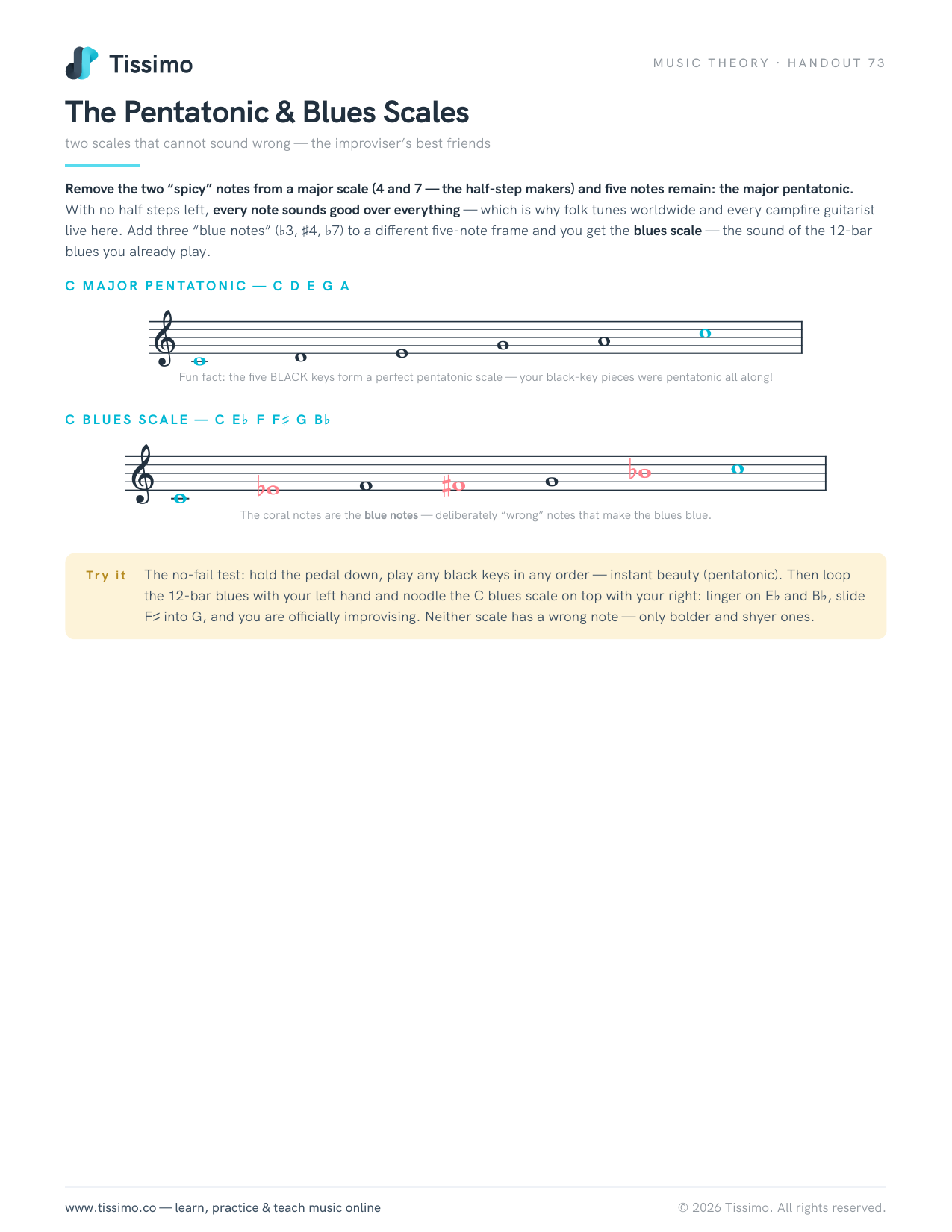 The Pentatonic & Blues Scalestwo scales that cannot sound wrong — the improviser’s best friends
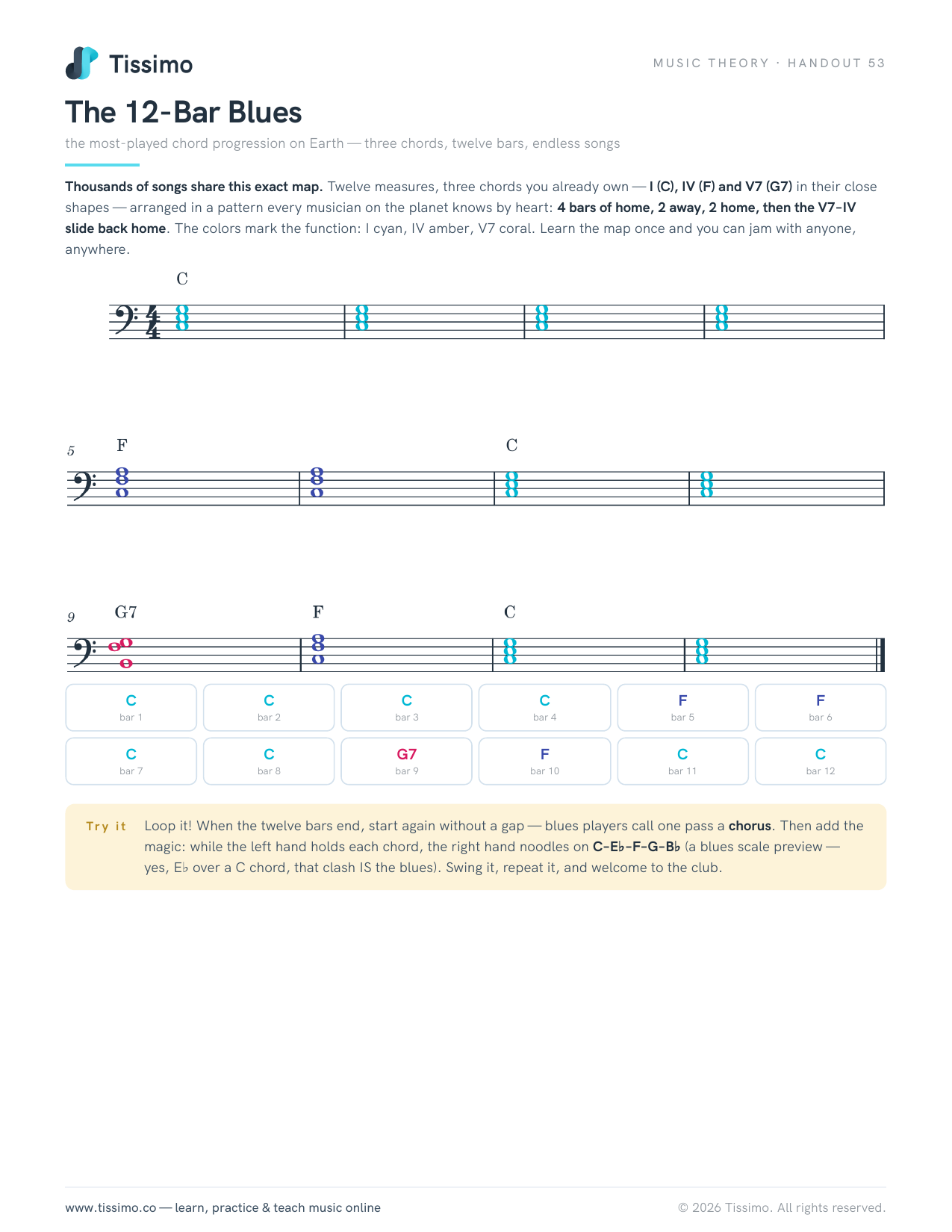 The 12-Bar Bluesone of the best-known chord progressions — three chords, twelve bars, endless songs
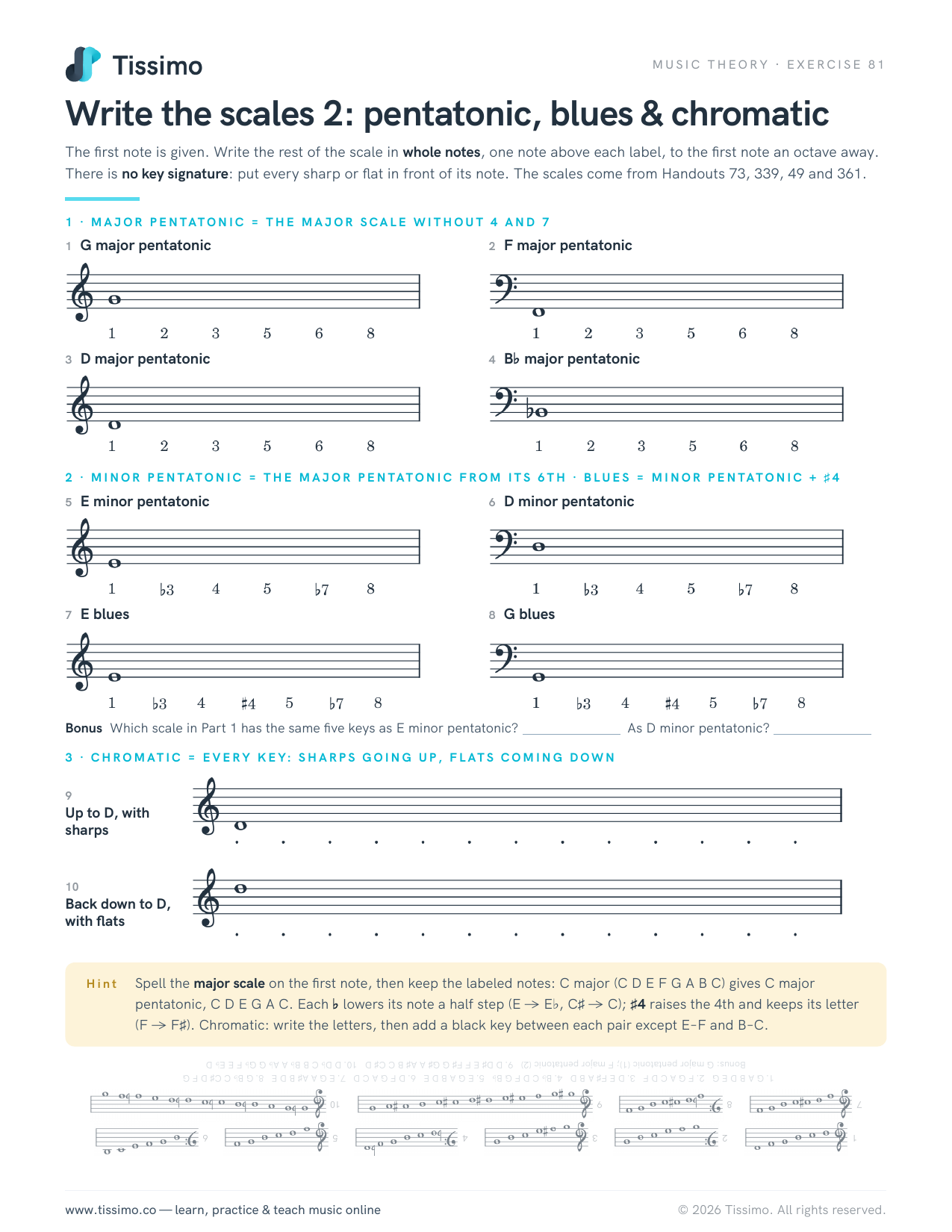 Write the scales 2: pentatonic, blues & chromaticThe first note is given. Write the rest of the scale in whole notes, one note above each label, to the first note an octave away. There is no key signature: put every sharp or flat in front of its note. The scales come from Handouts 73, 339, 49 and 361.
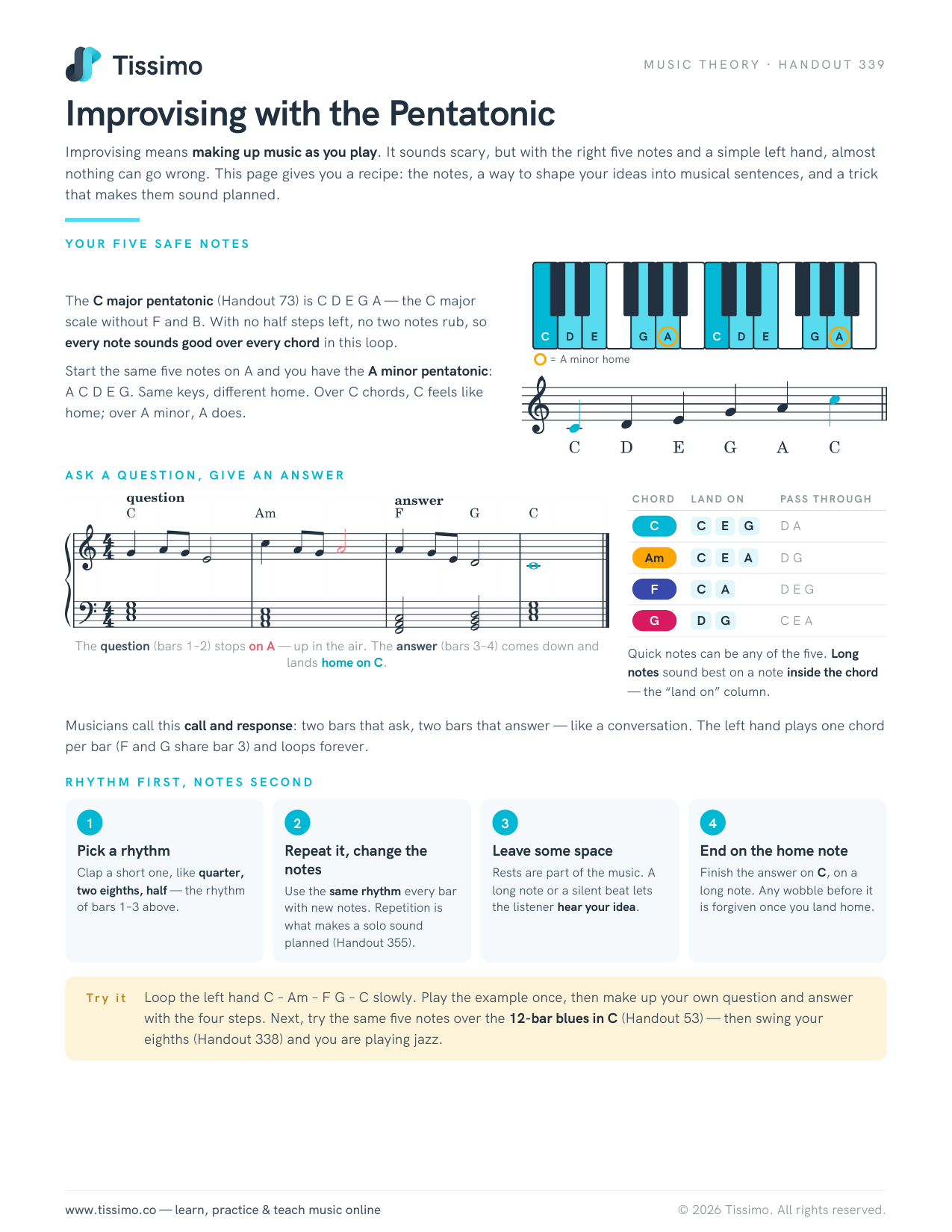 Improvising with the PentatonicImprovising means making up music as you play. It sounds scary, but with the right five notes and a simple left hand, almost nothing can go wrong. This page gives you a recipe: the notes, a way to shape your ideas into musical sentences, and a trick that makes them sound planned.