Scales, Keys & Modes
Scale
A scale is a set of notes arranged in order of pitch, climbing or falling step by step from a home note called the tonic. Major, minor and pentatonic scales are the most common.
A scale is a collection of notes laid out in order of pitch, from a starting note up to the same letter an octave higher, and usually back down again. The starting note is the tonic, the note the scale feels at home on. Play C D E F G A B C on the piano and you have played a scale: the C major scale.
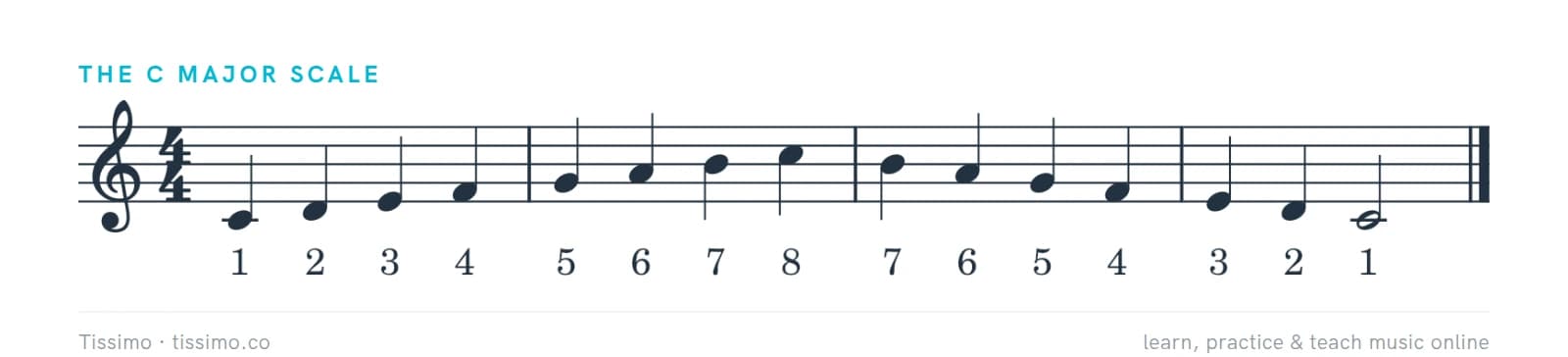
What makes one scale different from another
The notes alone are not the whole story. What gives a scale its character is the pattern of steps between neighboring notes: which ones are half steps (one key to the very next, black or white) and which are whole steps (two half steps). The major scale uses the pattern whole, whole, half, whole, whole, whole, half. Start that pattern on any of the twelve notes and you get a major scale; change the pattern and you get a different kind of scale.
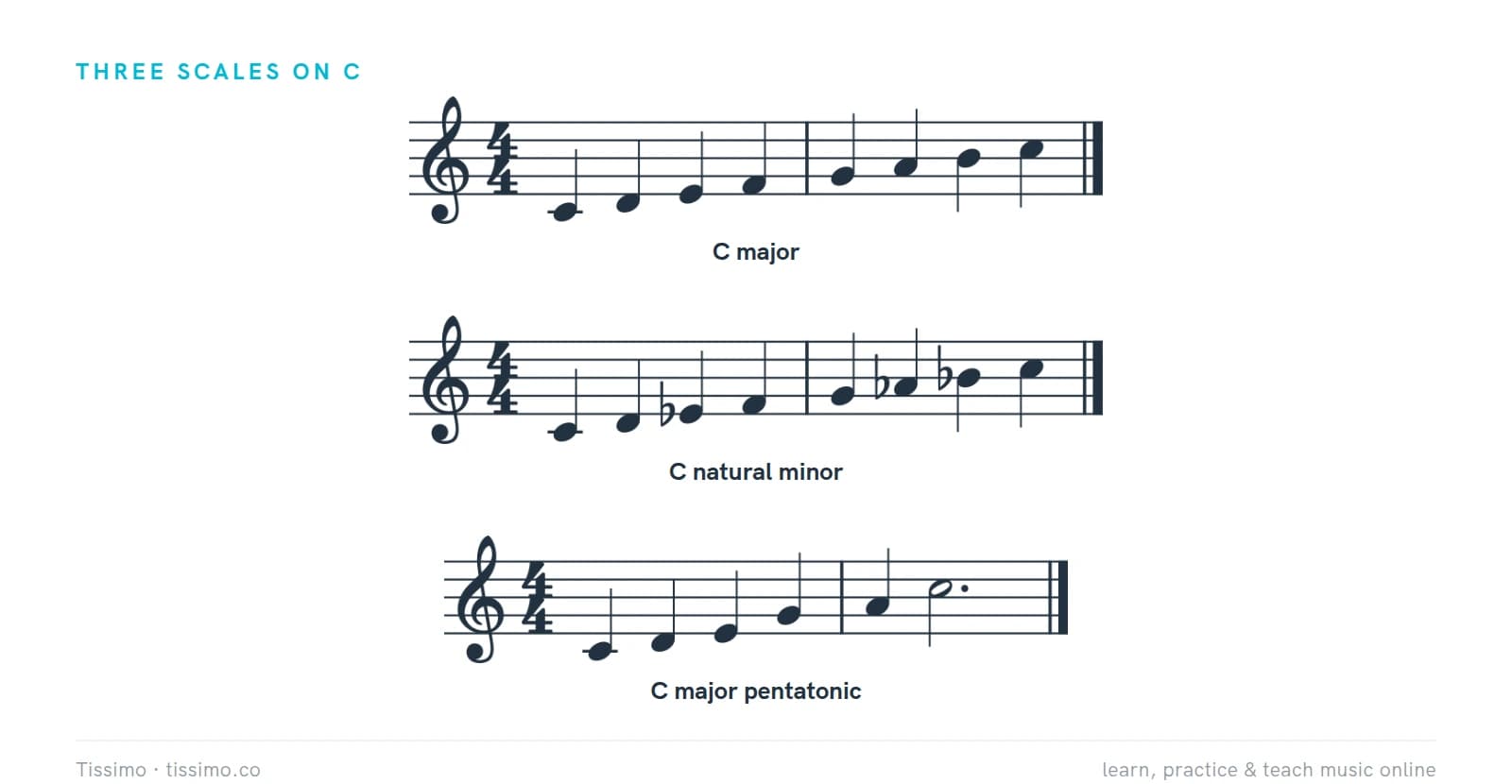
The main families of scales
- Major and minor. The major scale and the three forms of minor (natural, harmonic and melodic) are the seven-note scales most Western music is built from. They are diatonic scales.
- Pentatonic. Five-note scales such as the major pentatonic scale and minor pentatonic scale, heard in folk music in many parts of the world and in rock and blues solos. Add one note to the minor pentatonic and you get the blues scale.
- Modes. Seven-note scales such as Dorian and Mixolydian that use the major scale's notes with a different home note. See mode.
- Symmetrical scales. The chromatic scale (all twelve notes), the whole-tone scale and the octatonic scale repeat one step pattern all the way up, so no note stands out as a natural home.
Scales and keys
A scale and a key are close relatives but not the same thing. The scale is the notes in order; the key is the whole musical world built around its tonic, including its chords and its key signature. A piece in G major uses mostly the notes of the G major scale, but it can borrow other notes too, and it rarely plays them straight up and down.
Why musicians practice scales
Scales are the raw material of melodies and chords, so practicing them trains your fingers and your ear at the same time. On the piano they teach the thumb under move and a fingering pattern for each key; on any instrument they make the notes of a key automatic, so sight-reading and improvising get easier. Start with the C five-finger scale, then the full major scale, and when you are ready, work through Scales in Every Key.
The word comes from the Latin scala, a ladder or staircase: each note is one rung up from the last.
Common questions
What is the difference between a scale and a key?
A scale is a set of notes in order of pitch. A key is the tonal home a piece is built around: its tonic, the scale it mostly draws on, its chords and its key signature. Music in a key uses the scale's notes freely, in any order, and may add others.
How many notes are in a scale?
It depends on the scale. Major and minor scales have seven different notes (eight if you count the tonic again at the top), pentatonic scales have five, the blues scale six, and the chromatic scale all twelve.
Practice it: free worksheets
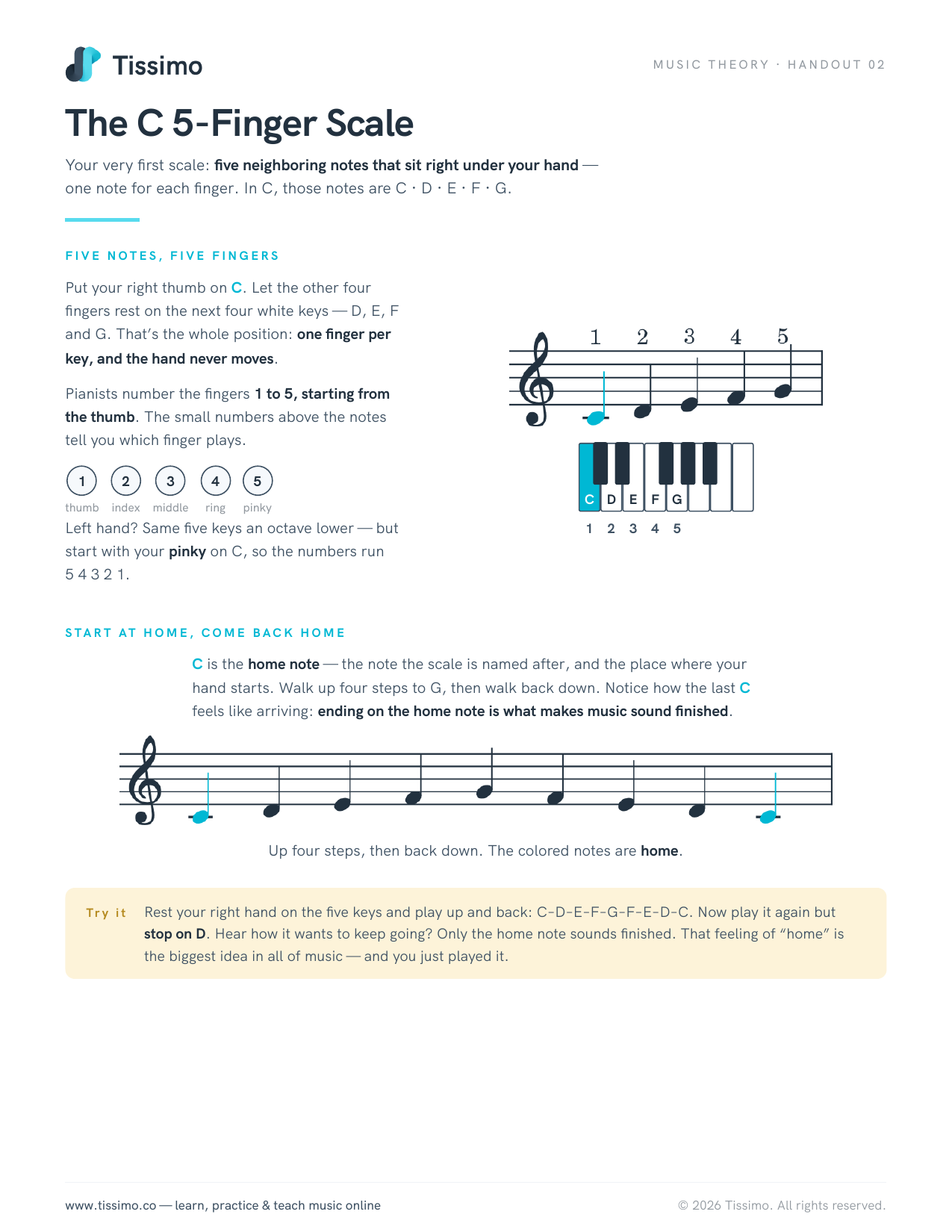 The C 5-Finger ScaleYour very first scale: five neighboring notes that sit right under your hand — one note for each finger. In C, those notes are C · D · E · F · G.
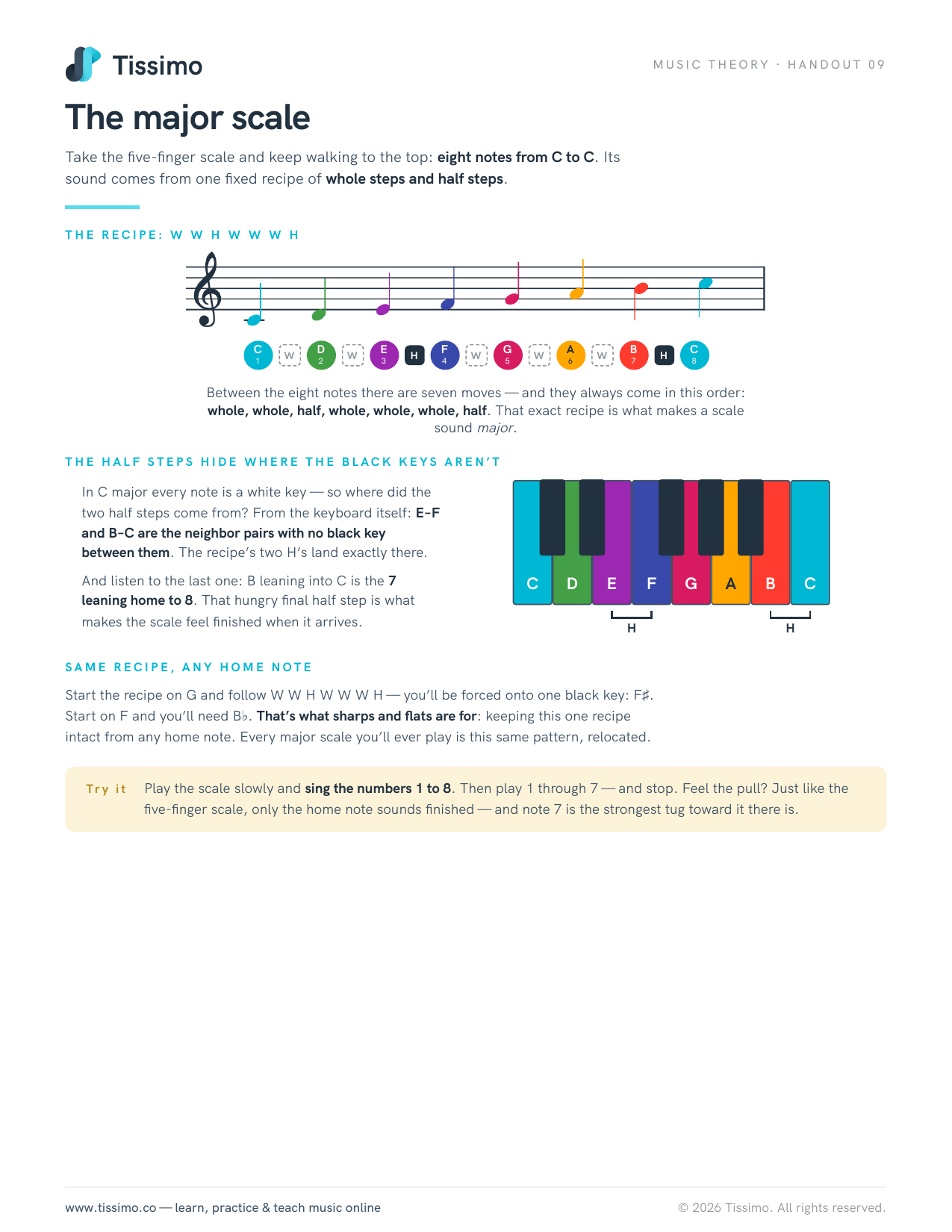 The major scaleTake the five-finger scale and keep walking to the top: eight notes from C to C. Its sound comes from one fixed recipe of whole steps and half steps.
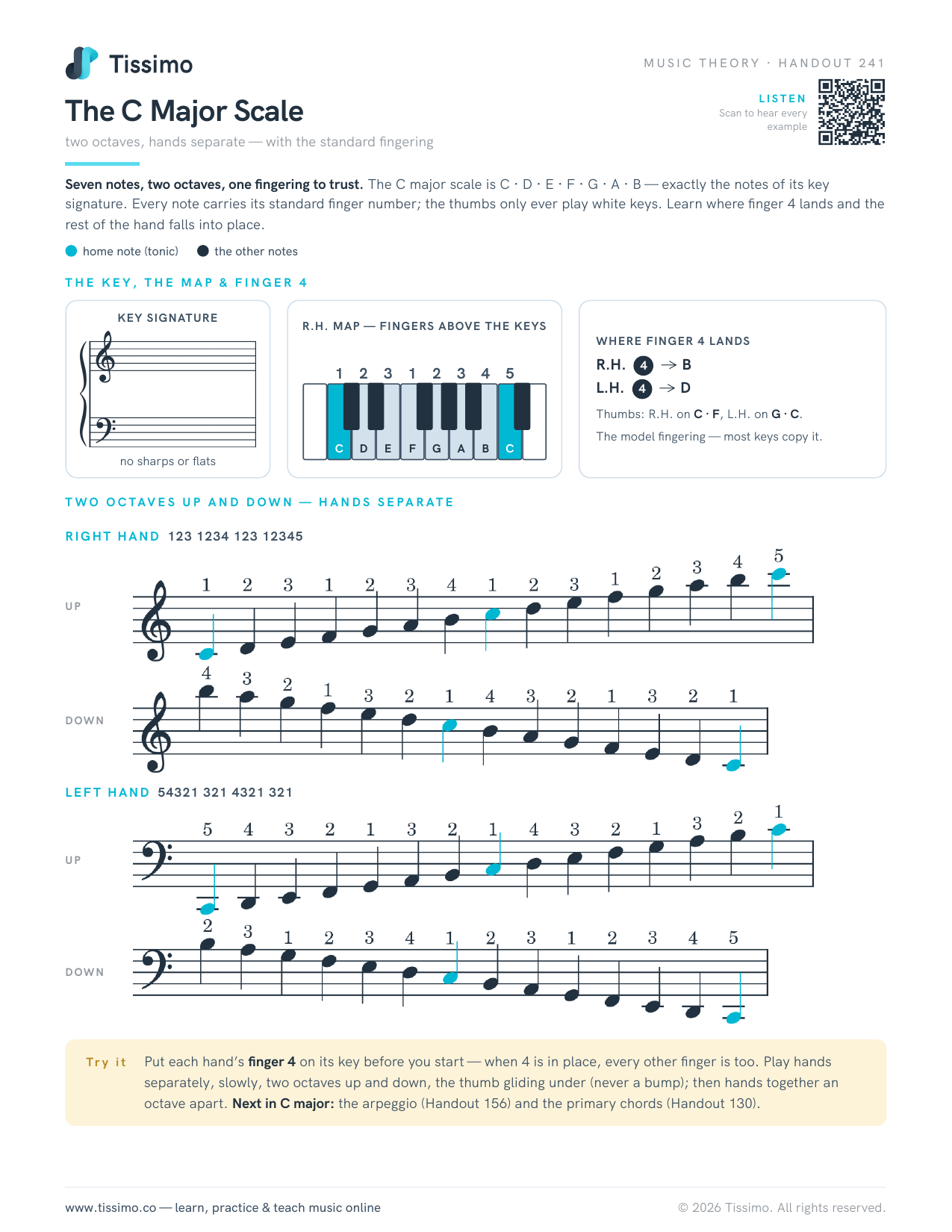 Scales in Every KeyTwo octaves up and down with the standard fingering on every note, in all 24 keys.
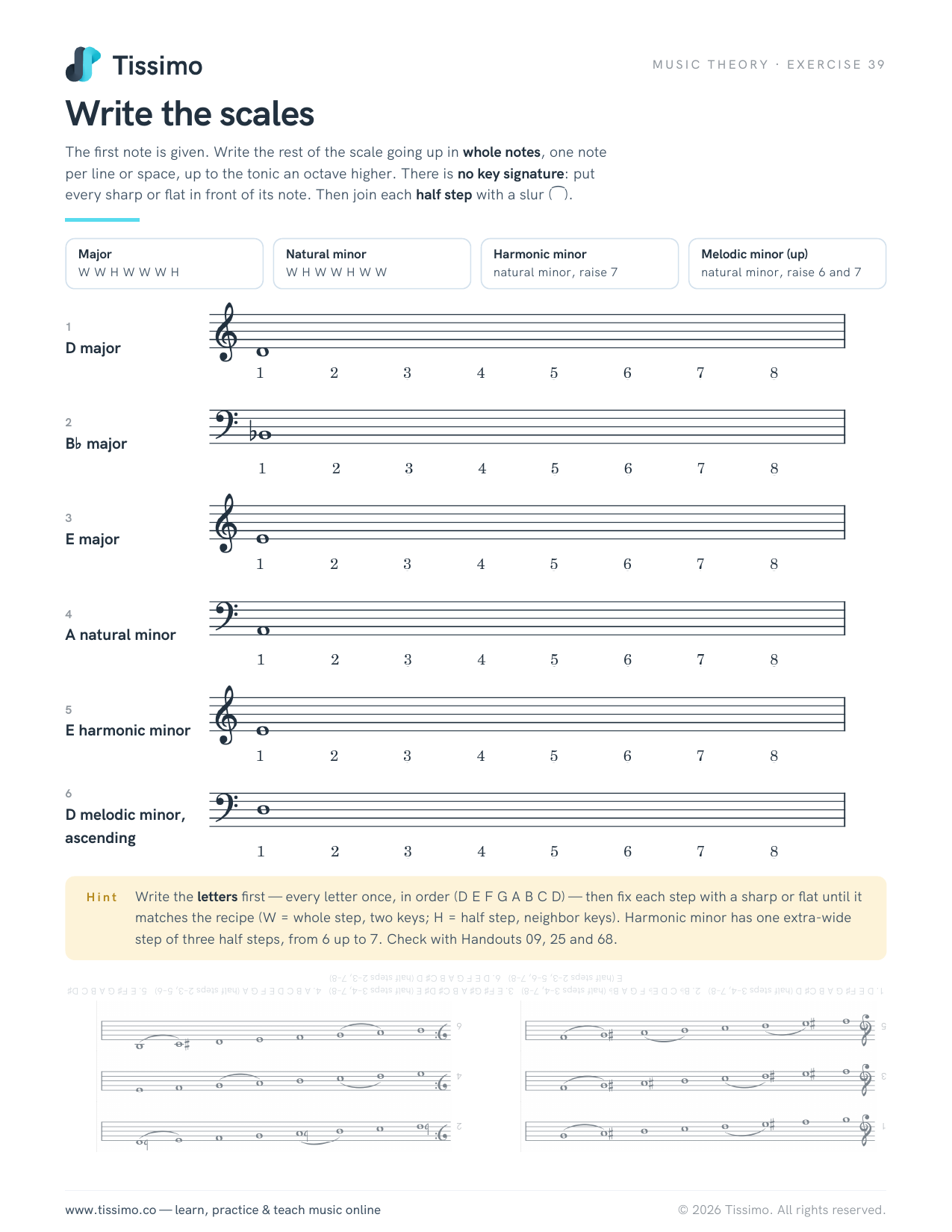 Write the scalesThe first note is given. Write the rest of the scale going up in whole notes, one note per line or space, up to the tonic an octave higher. There is no key signature: put every sharp or flat in front of its note. Then join each half step with a slur (⁀).
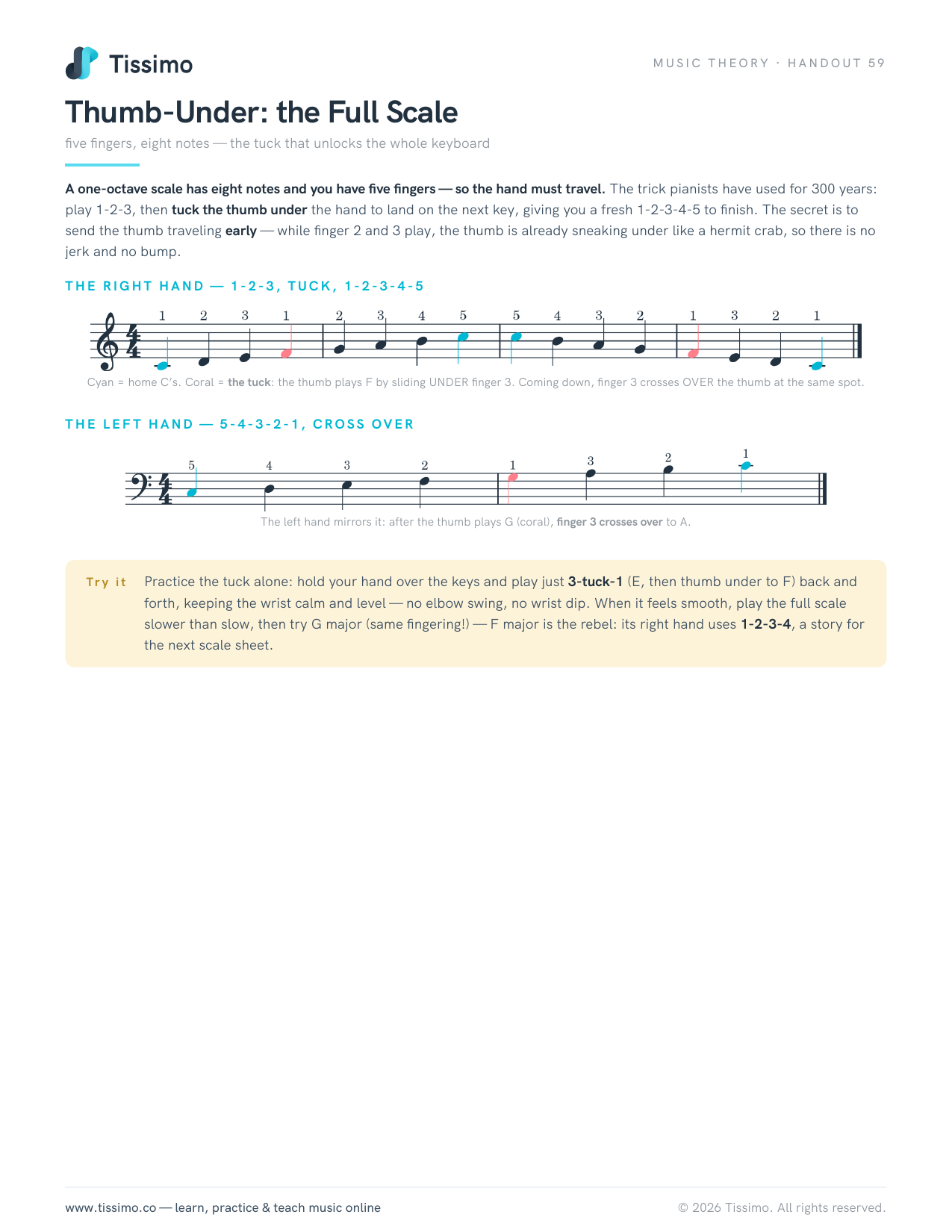 Thumb-Under: the Full Scalefive fingers, eight notes — the tuck that unlocks the whole keyboard
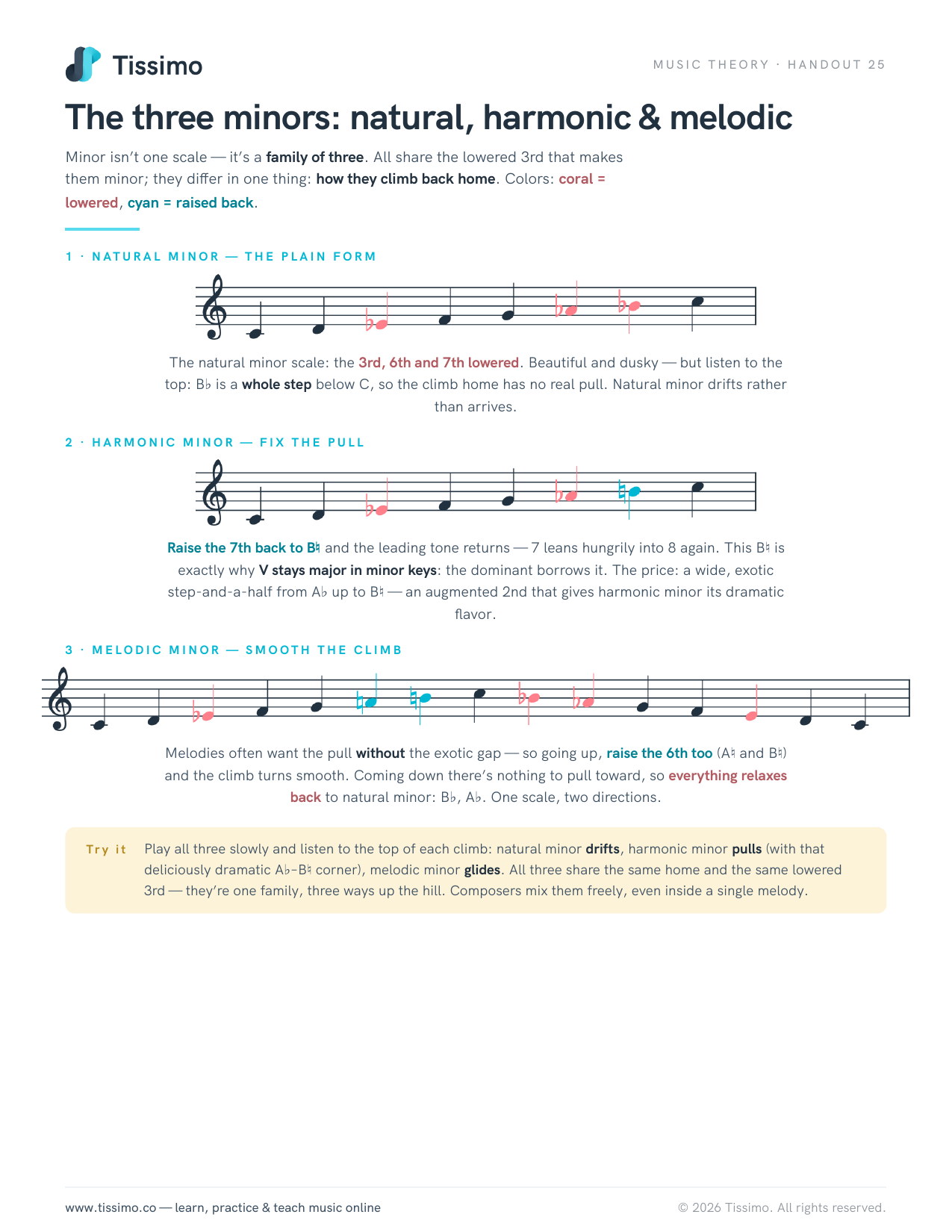 The three minors: natural, harmonic & melodicMinor isn’t one scale — it’s a family of three. All share the lowered 3rd that makes them minor; they differ in one thing: how they climb back home. Colors: coral = lowered, cyan = raised back.