Scales, Keys & Modes
Ionian Mode
Pronounced eye-OH-nee-un
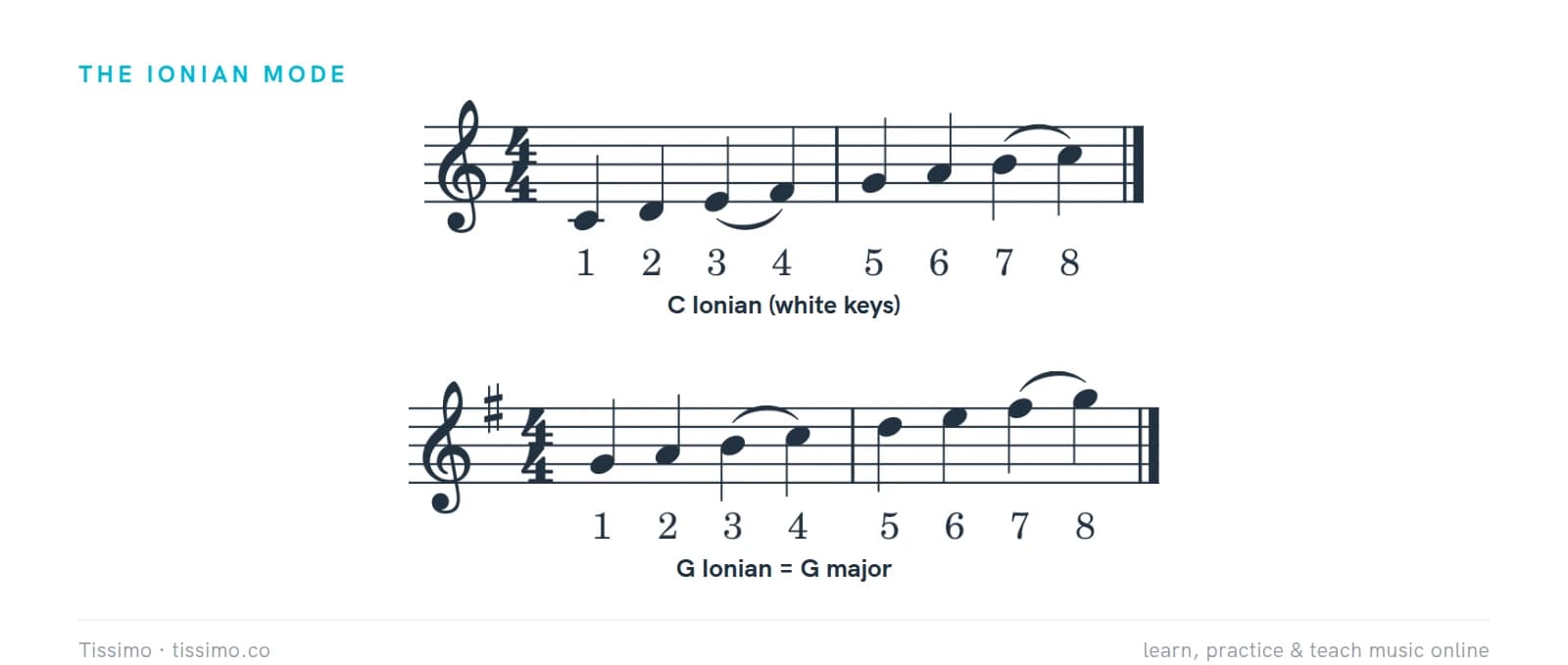
The Ionian mode is the first of the seven church modes: the white keys from C to C. It has exactly the same notes and step pattern as the major scale.
The Ionian mode is the major scale under its modal name. On the white keys it runs from C to C: C D E F G A B C. Its step pattern is the familiar one:
W – W – H – W – W – W – H
Why two names for one scale?
You will hear "Ionian" mostly when musicians talk about the modes as a family. Listing the seven side by side (Ionian, Dorian, Phrygian, Lydian, Mixolydian, Aeolian, Locrian) shows that each one is a rotation of the same pattern, and Ionian is the starting point: Dorian begins on its 2nd degree, Phrygian on its 3rd, and so on. In everyday playing and writing, "major scale" is by far the more common name.
In jazz theory, Ionian names the chord-scale for a major chord on the tonic, usually a major seventh chord (Cmaj7 in C). Jazz players often treat the 4th degree, F over Cmaj7, as an "avoid note" to pass through rather than hold, because it clashes a half step above the chord's 3rd.
Its place among the major modes
Of the three major-sounding modes, Ionian sits in the middle. Lydian raises its 4th (F♯ in C) and sounds brighter; Mixolydian lowers its 7th (B♭ in C) and sounds earthier. Ionian is the only one of the three with both a perfect 4th and a leading tone a half step below the tonic, and that gives it the strongest pull toward home: the dominant chord (G or G7) resolving to the tonic C is the sound of a major key.
A bit of history
Ionian was not among the eight modes of medieval chant theory. The Swiss theorist Heinrich Glarean added it, together with the Aeolian, in his treatise Dodecachordon of 1547. Over the following century and more, music in this mode developed into what we now call the major key.
Finding Ionian in any key
There is nothing to work out: E♭ Ionian is E♭ major, F♯ Ionian is F♯ major, and the key signature is the same. Use the major-scale step pattern, or Scales in Every Key, and you have it. The modes shows how the other six modes grow out of it.
Common questions
Is Ionian the same as major?
Yes. The Ionian mode and the major scale have the same notes and the same step pattern. Ionian is the name used when the major scale is discussed as one of the seven modes.
Practice it: free worksheets
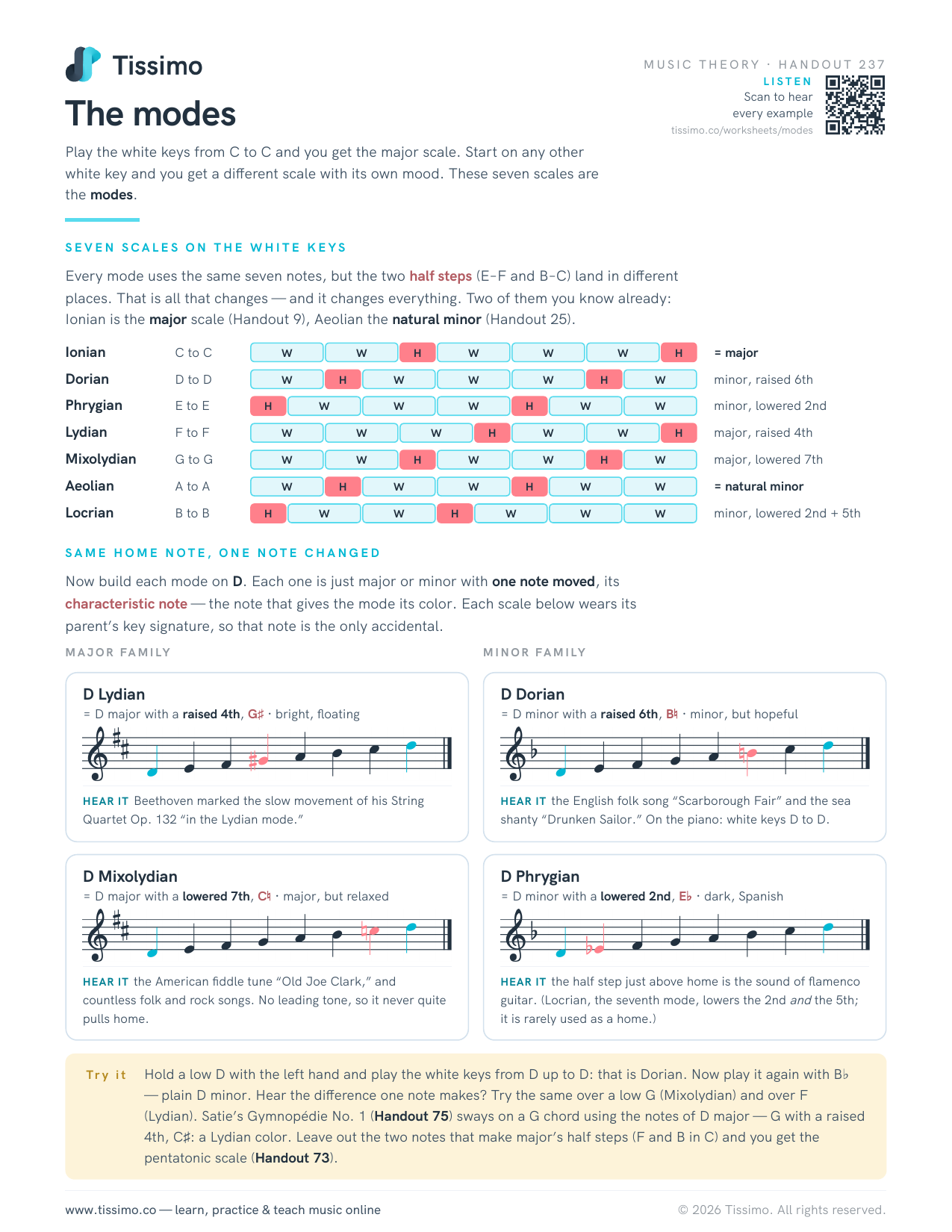 The modesPlay the white keys from C to C and you get the major scale. Start on any other white key and you get a different scale with its own mood. These seven scales are the modes.
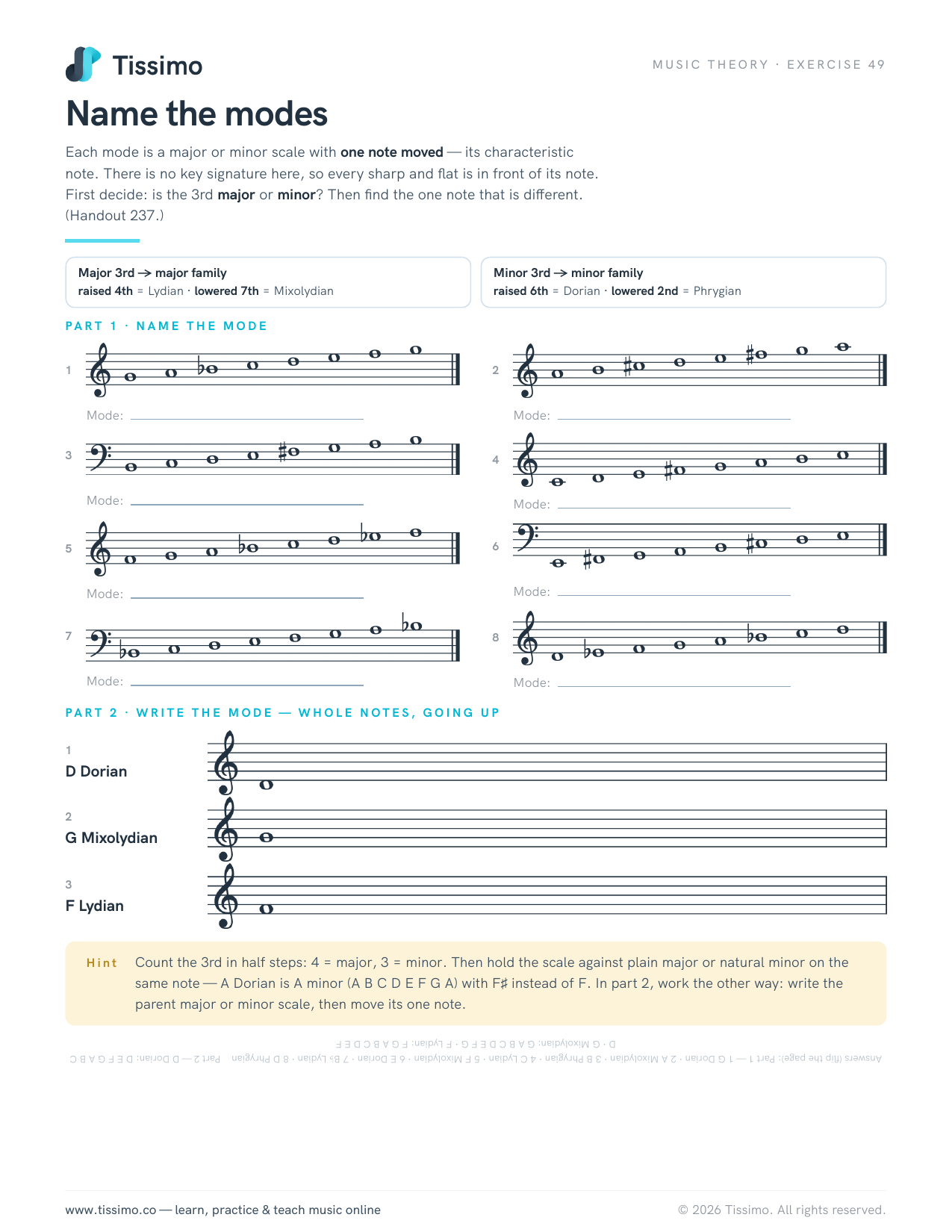 Name the modesEach mode is a major or minor scale with one note moved — its characteristic note. There is no key signature here, so every sharp and flat is in front of its note. First decide: is the 3rd major or minor? Then find the one note that is different. (Handout 237.)
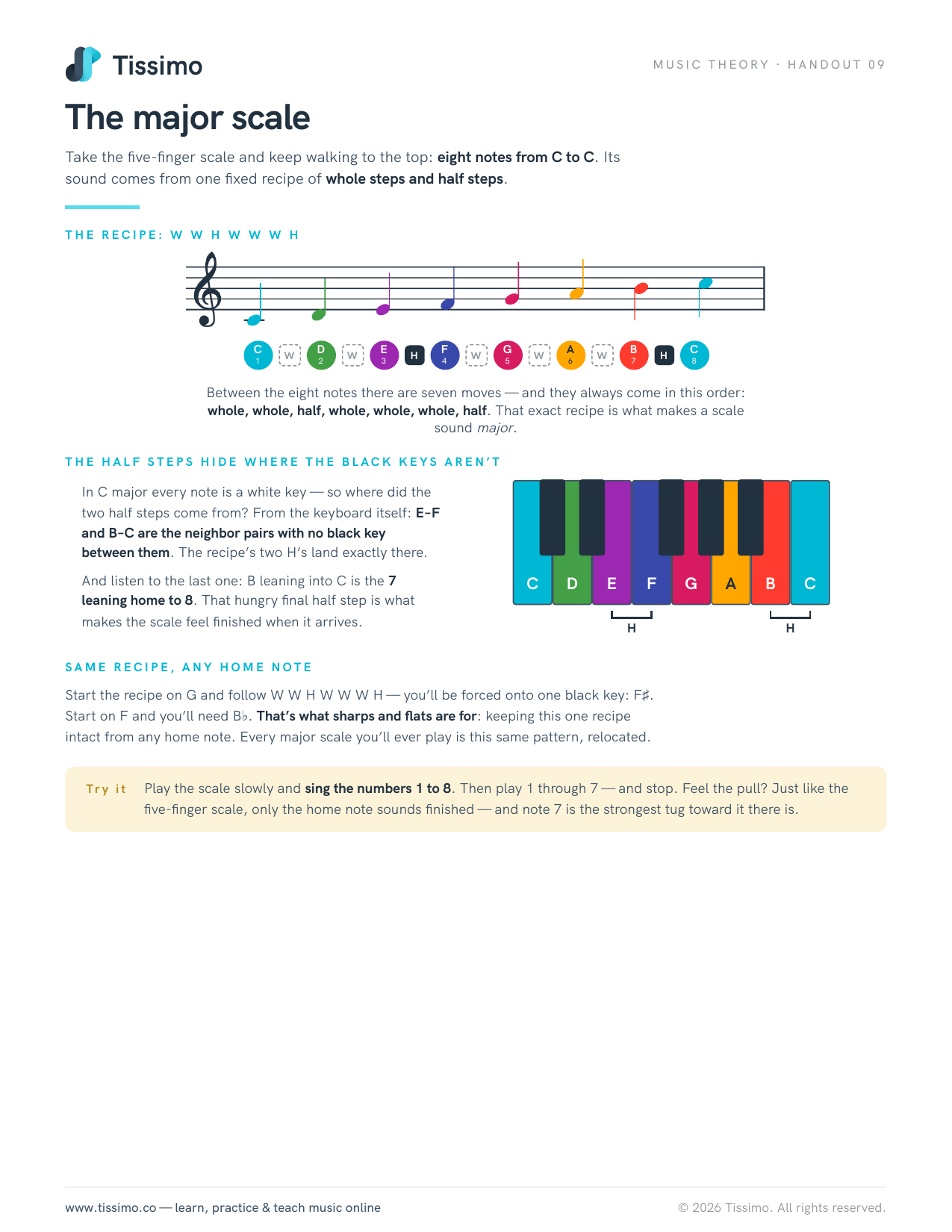 The major scaleTake the five-finger scale and keep walking to the top: eight notes from C to C. Its sound comes from one fixed recipe of whole steps and half steps.
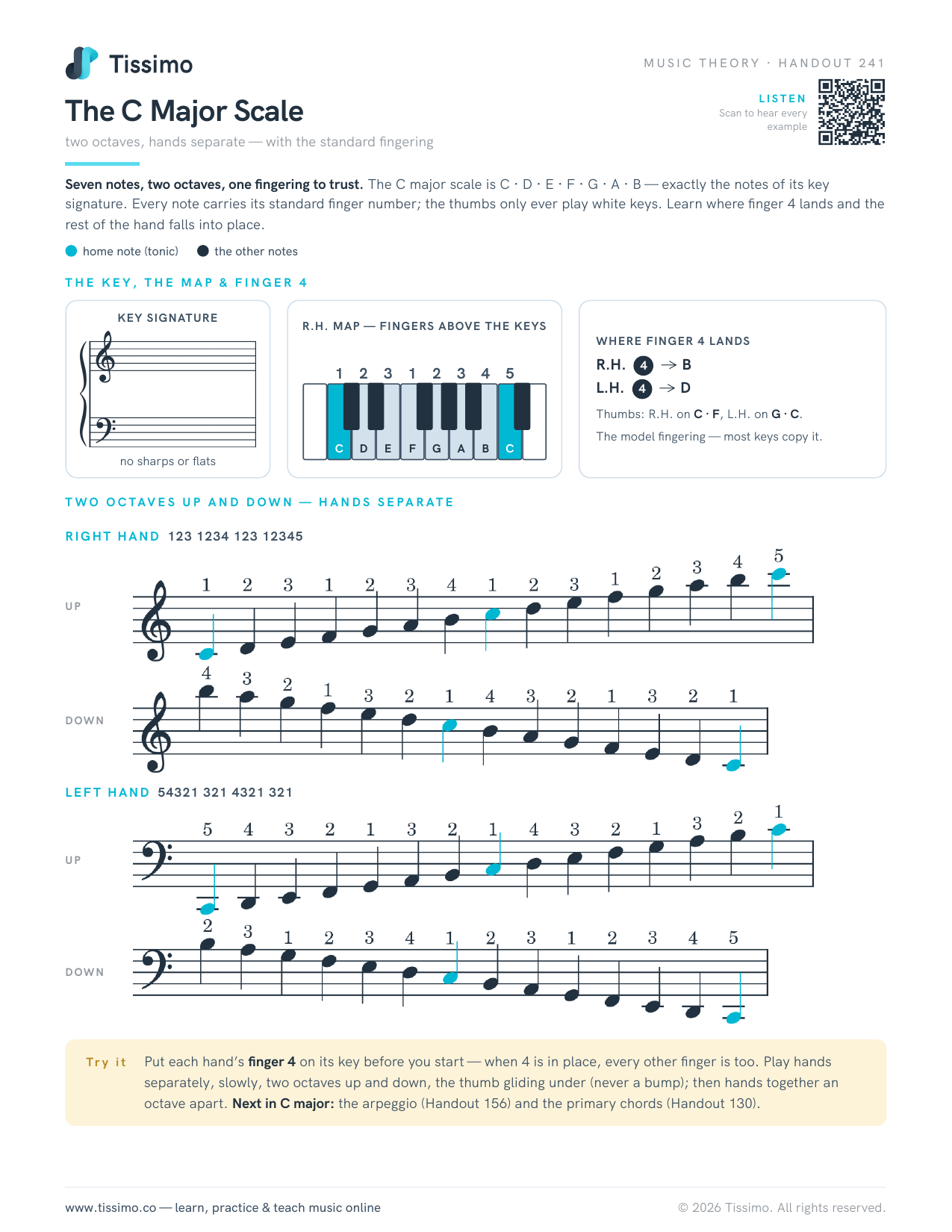 Scales in Every KeyTwo octaves up and down with the standard fingering on every note, in all 24 keys.