Articulation & Ornaments
Inverted Mordent
An inverted mordent, or short trill, is a quick ornament of the written note, the note above it, and the written note again. Its sign is a short wavy line without a vertical stroke.
An inverted mordent is a quick ornament that flicks up to the note above and back: the written note, the note above, the written note again. Its sign is a short wavy line, like a mordent without the vertical stroke. Because it sounds like a tiny trill, it is also called a short trill, an upper mordent, or by its German name, Pralltriller.
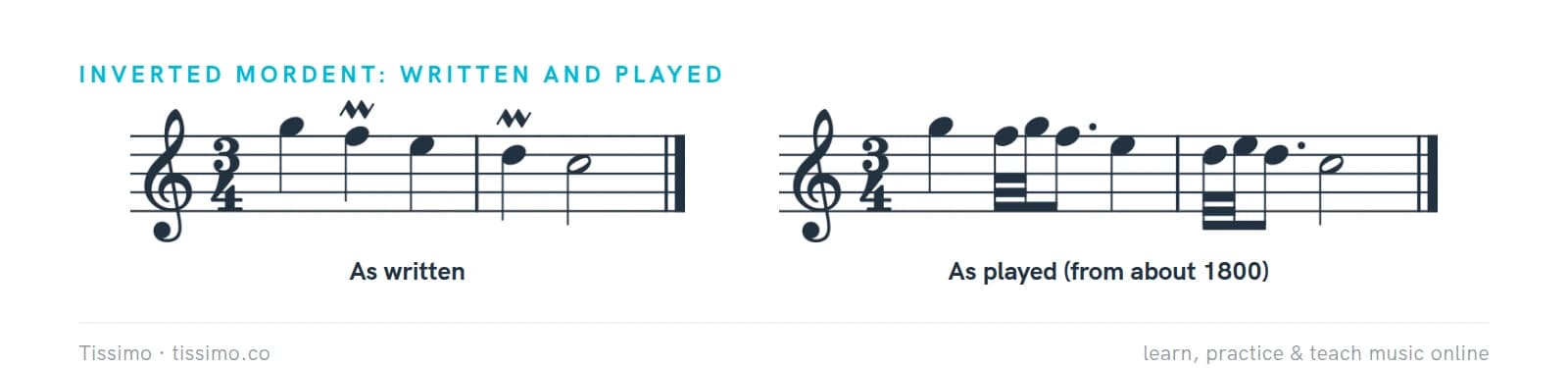
How to play it today
In music from about Beethoven's time to the present, the inverted mordent is played like this:
- The written note on the beat.
- A quick flick to the note above and back.
- The written note held for the rest of its value.
The upper note follows the key signature unless a small accidental is printed above the sign. Keep the two quick notes light and the main note clear: the ornament adds sparkle to the note, it does not replace it.
In older music
Before about 1800 the same sign was usually read from the note above. J. S. Bach's own table of ornaments calls it a trill, starting on the upper note on the beat. In the later 18th century, C. P. E. Bach described a shorter, "snapped" version: when the note before is already the upper note, it is held over into the beat and then the quick written–upper–written figure follows. Tissimo's Ornaments through the eras shows these readings side by side, and you can try both on the short trill in bar 9 of the Minuet in G minor.
Why "inverted"?
It is the mordent turned upside down: the mordent goes down to the note below, the inverted mordent goes up to the note above. The signs differ only by the vertical stroke through the mordent's wavy line. Names are not used consistently in every book, so read the sign, not the label.
Inverted mordent or trill?
A trill keeps alternating for the whole length of the note and may start on the upper note. An inverted mordent is just one quick up-and-back at the start of the note. If a passage is fast, a written trill on a short note may come out as no more than an inverted mordent.
Common questions
Is an inverted mordent the same as a short trill?
Yes, they are two names for the same sign, the short wavy line without a stroke. In later music both mean a quick written–upper–written figure on the beat.
Does an inverted mordent start on the upper note?
In music from about 1800 on, no: it starts on the written note. In Baroque music the same sign was usually read as a short trill from the upper note.
Practice it: free worksheets
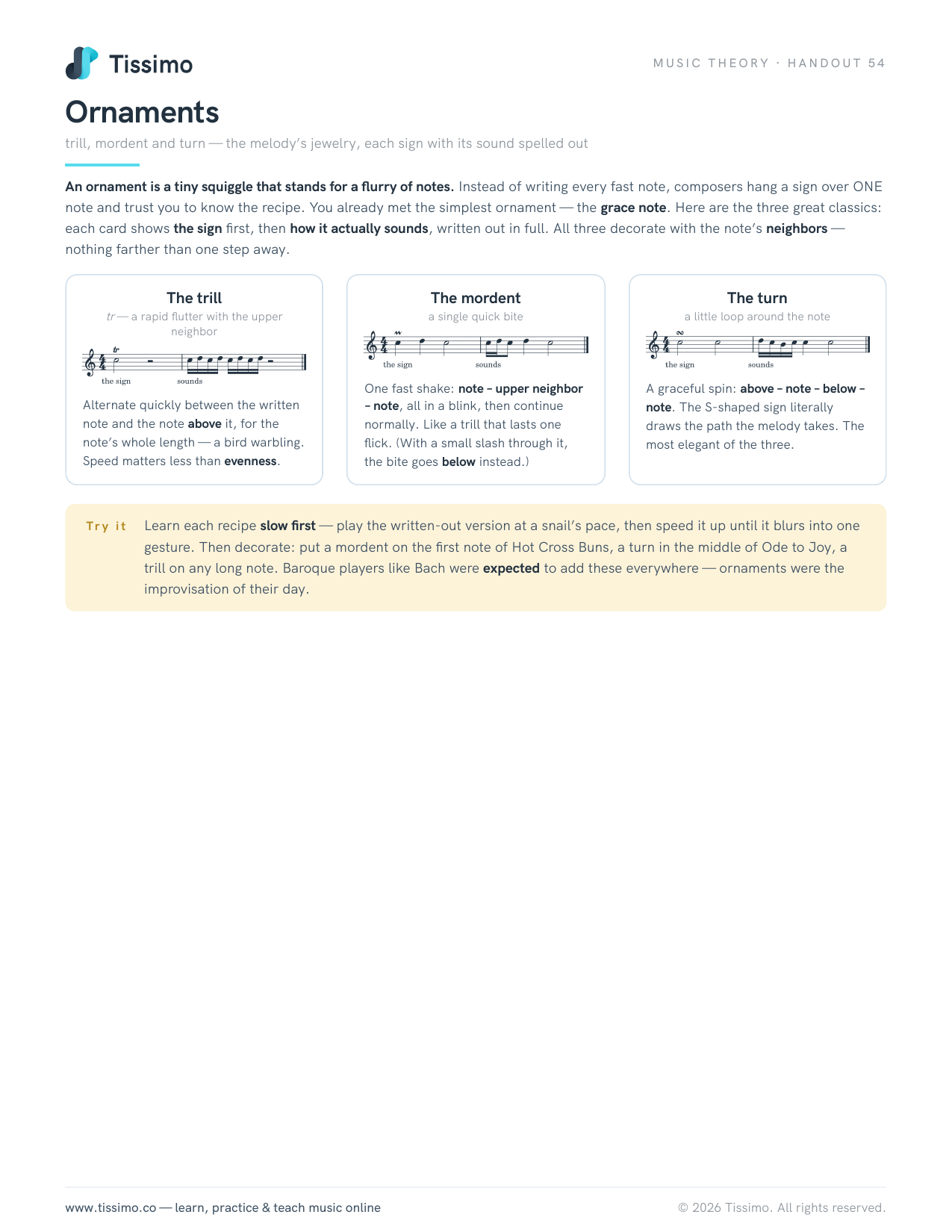 Ornamentstrill, short trill and turn — the melody’s jewelry, each sign with its sound spelled out
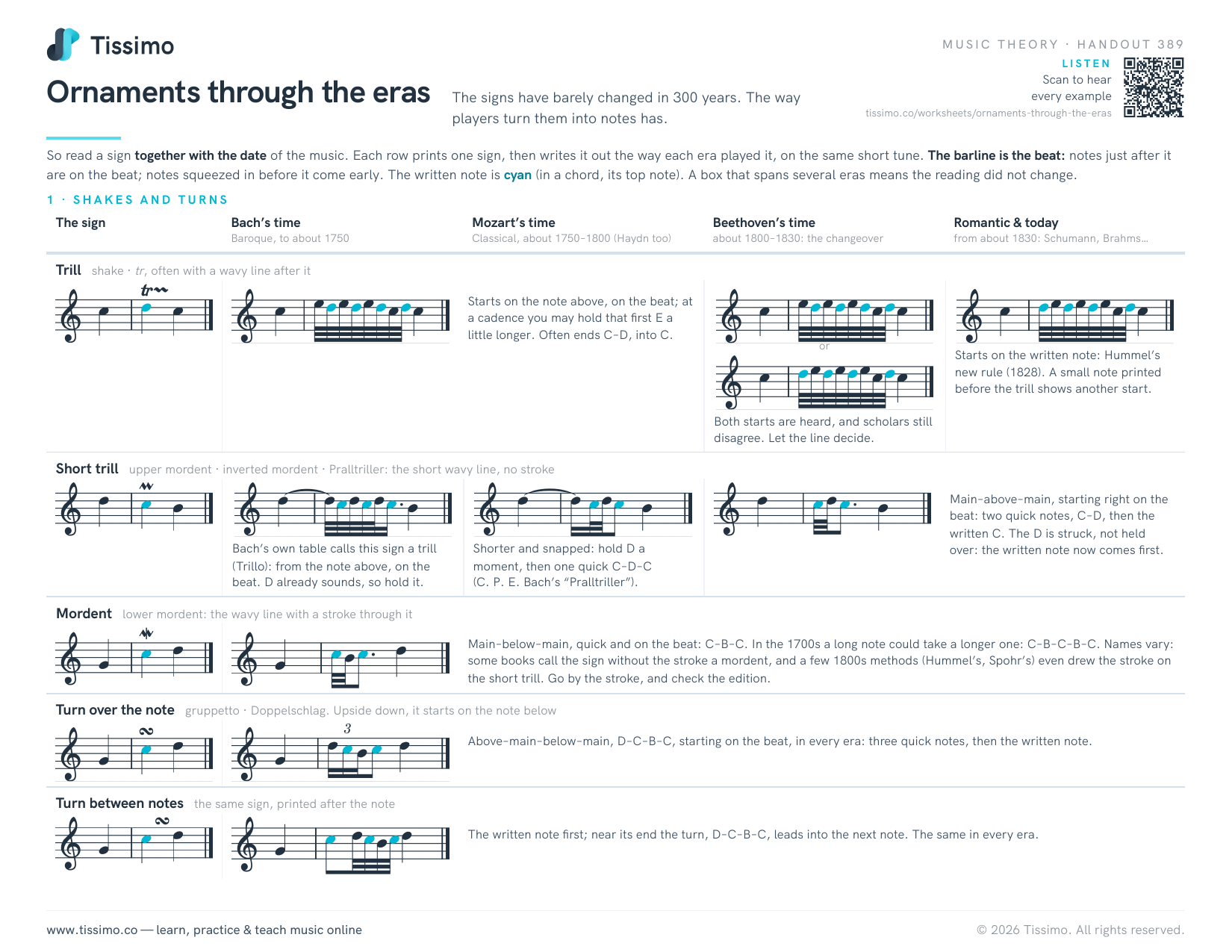 Ornaments through the erasThe signs have barely changed in 300 years. The way players turn them into notes has.
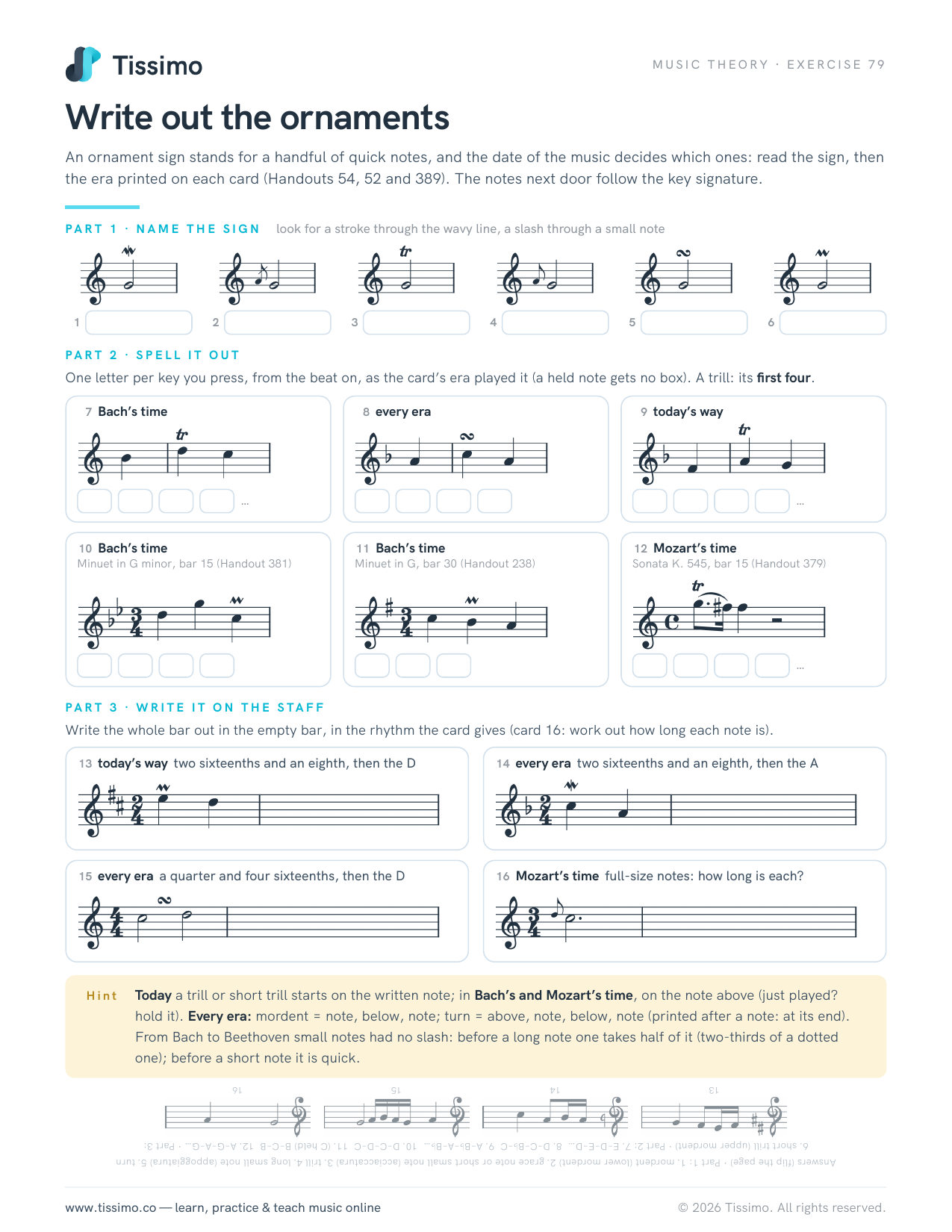 Write out the ornamentsAn ornament sign stands for a handful of quick notes, and the date of the music decides which ones: read the sign, then the era printed on each card (Handouts 54, 52 and 389). The notes next door follow the key signature.
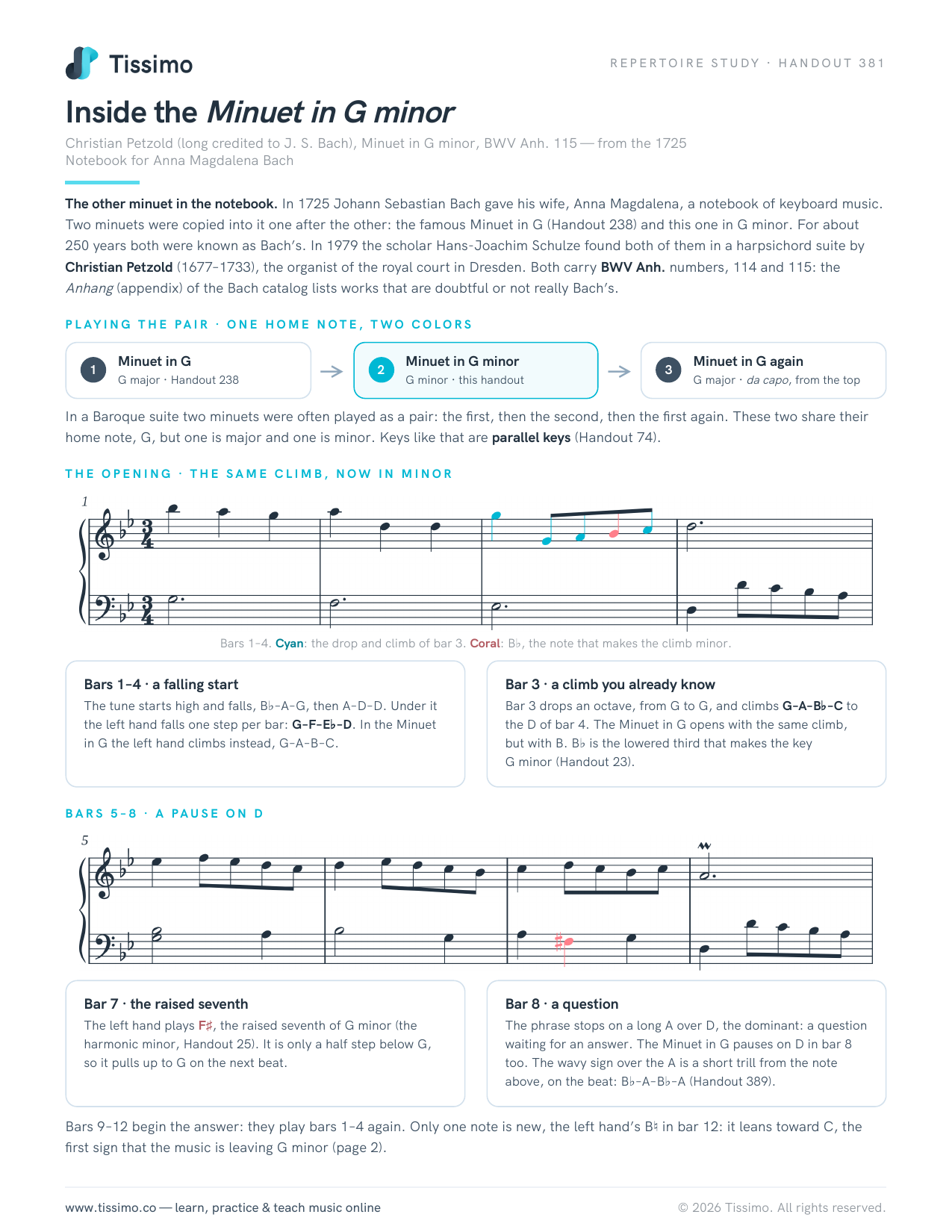 Inside the Minuet in G minorChristian Petzold (long credited to J. S. Bach), Minuet in G minor, BWV Anh. 115 — from the 1725 Notebook for Anna Magdalena Bach