Articulation & Ornaments
Ornament
An ornament is a decoration added to a melody note, usually a few quick extra notes around it. Most are written as small signs or small notes, such as the trill, mordent, turn and grace note.
An ornament is a decoration added to a melody: a few quick notes wrapped around a main note, a small note leaning into it, or a chord spread out instead of struck at once. The tune underneath stays the same; the ornament gives it sparkle, tension or a singing, speaking quality.
Most ornaments are written as shorthand. Instead of printing every quick note, the composer writes one sign over the main note, or one small note in front of it, and the player turns it into notes.
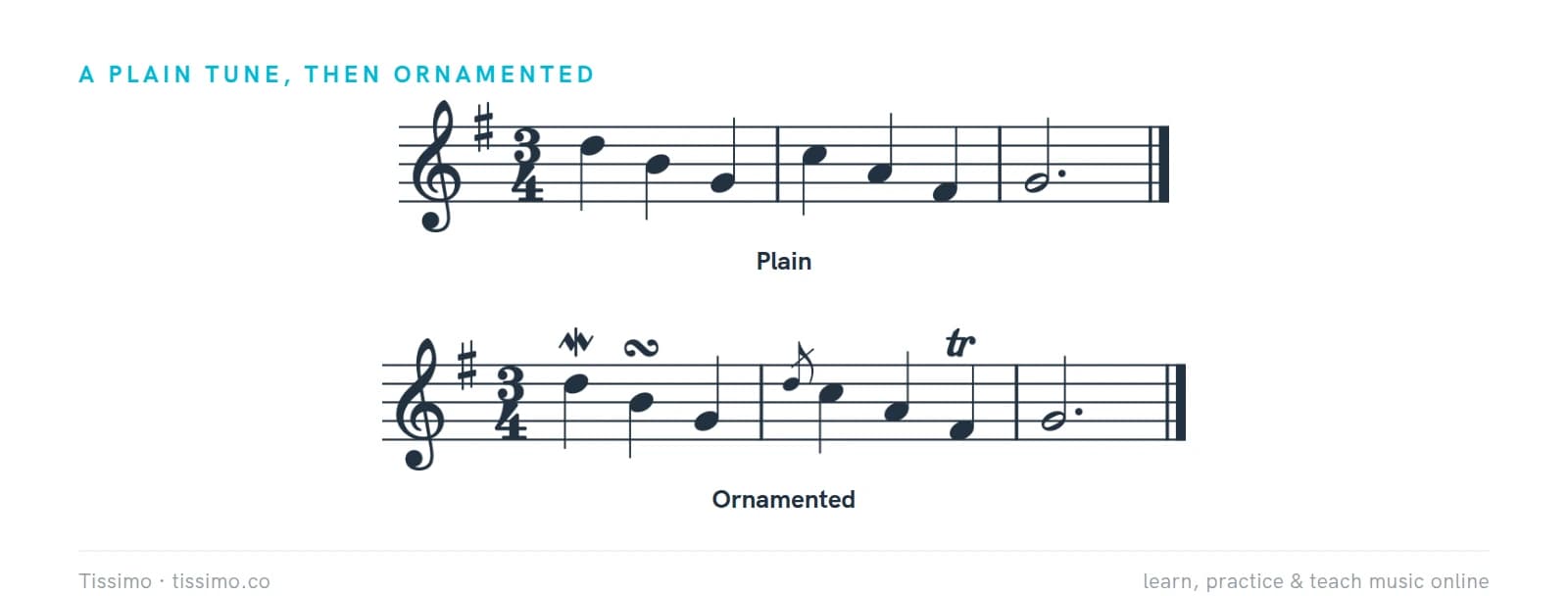
The common ornaments
- Trill (tr): a rapid alternation of the main note and the note above.
- Mordent (a short wavy line with a stroke through it): main note, the note below, main note.
- Inverted mordent or short trill (the short wavy line alone): main note, the note above, main note.
- Turn (a sideways S): the note above, the main note, the note below, the main note.
- Appoggiatura (a small note without a slash): a leaning note that takes time from the main note.
- Acciaccatura (a small note with a slash): a quick "crushed" note, also called a grace note.
- Arpeggiando (a wavy vertical line before a chord): roll the chord from the bottom up.
Read the sign with the date
The signs have barely changed in 300 years, but the way players turn them into notes has. A trill in Bach usually starts on the note above; a trill in Brahms usually starts on the main note. Composers and teachers often published tables explaining their signs: J. S. Bach wrote one out in 1720 in a keyboard book for his son Wilhelm Friedemann. Tissimo's Ornaments through the eras sets the readings of each period side by side.
Ornaments nobody wrote down
In the Baroque period performers were also expected to add ornaments of their own, especially in slow movements and when a section repeated. Singers decorated the returning first section of an aria. Many traditions have their own ornaments as well: the cuts and rolls of Irish fiddle and flute playing, the bends and slides of the blues, the melismas of gospel and R&B singers.
How to practice ornaments
Learn the melody plain first, so you know where every main note falls. Then add each ornament slowly, written out in exact rhythm, and speed it up only once it is even. The ornament fits in around the beat; the beat should not wait for the ornament. An even, relaxed trill always sounds better than a fast, lumpy one.
Write the signs out yourself in Write out the ornaments, and see the trill, short trill and turn written out in Ornaments.
Common questions
Do I have to play the ornaments in a piece?
Printed ornament signs are part of the music, so play them if you can. If one is still too hard, many teachers let you leave it out at first and add it once the melody is secure, rather than let it break the beat.
What are the most common ornaments in music?
The trill, the mordent and inverted mordent, the turn, and the small notes: the appoggiatura and the acciaccatura. The rolled chord (arpeggiando) is often counted with them.
Practice it: free worksheets
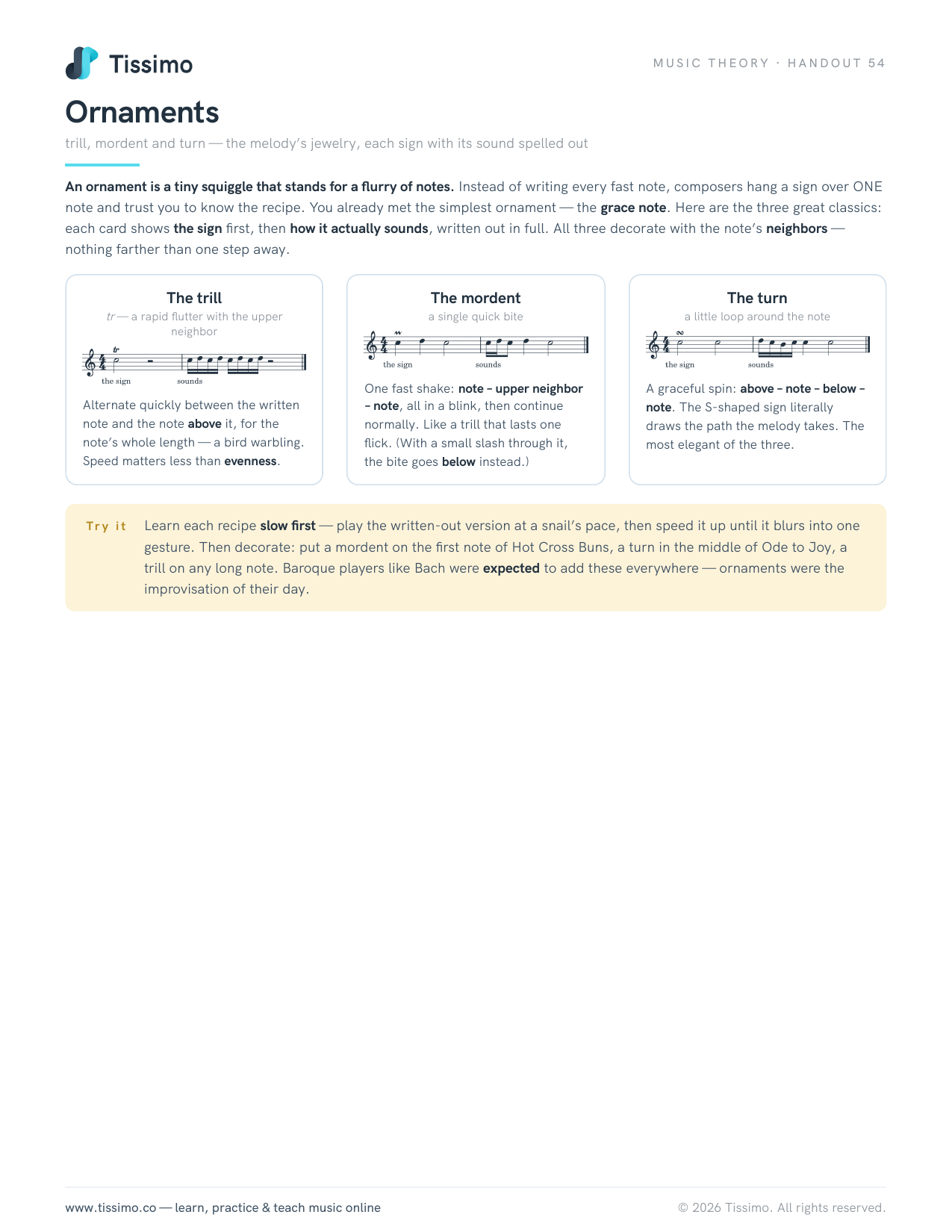 Ornamentstrill, short trill and turn — the melody’s jewelry, each sign with its sound spelled out
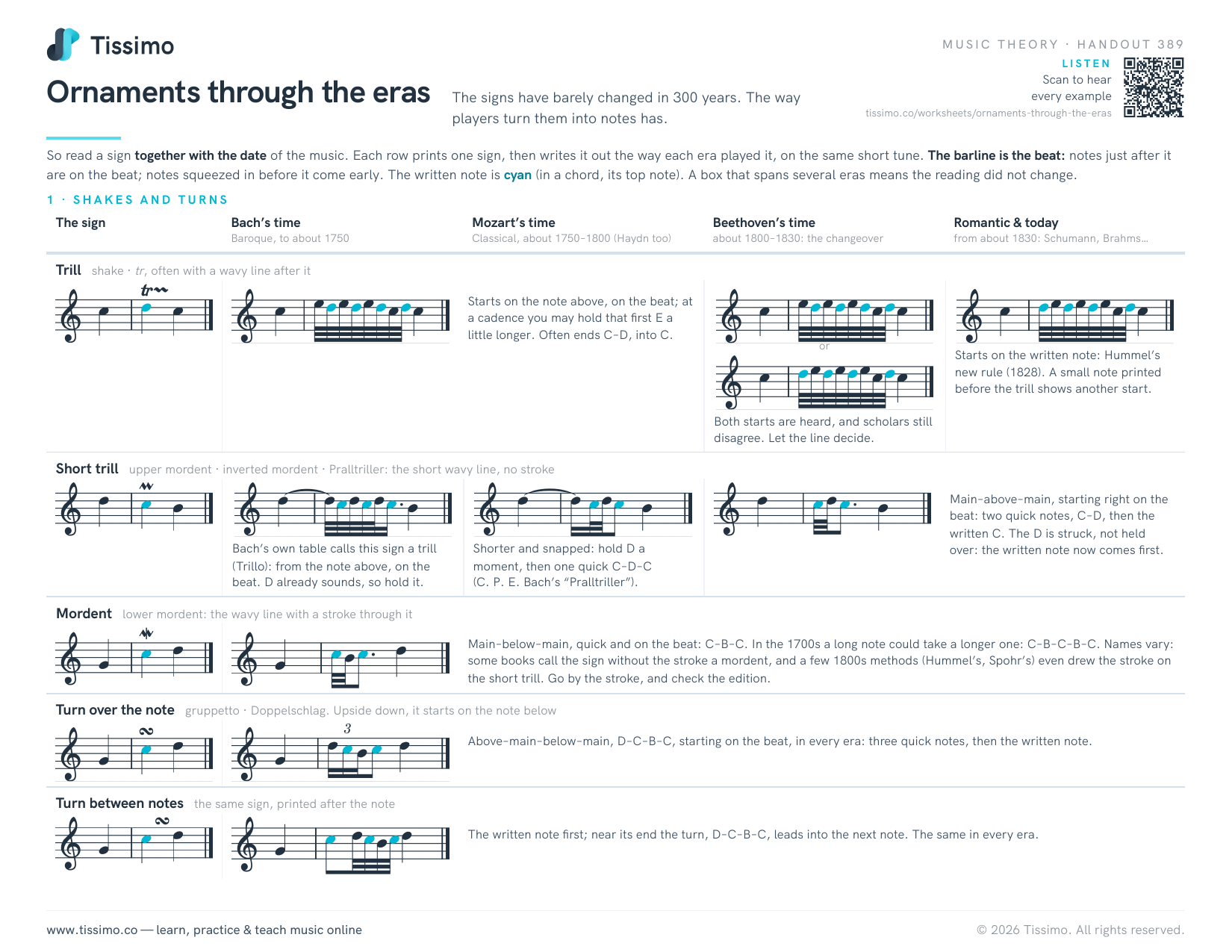 Ornaments through the erasThe signs have barely changed in 300 years. The way players turn them into notes has.
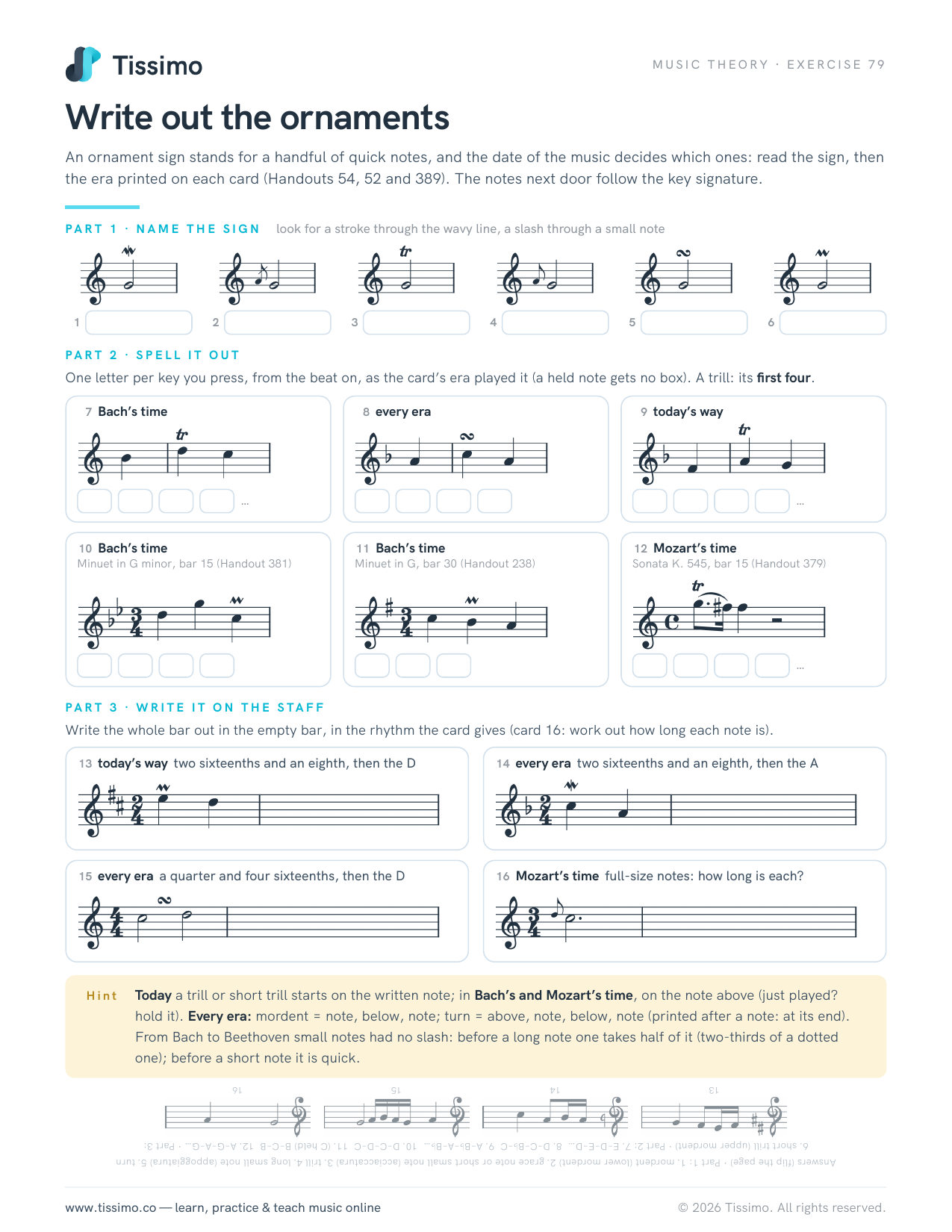 Write out the ornamentsAn ornament sign stands for a handful of quick notes, and the date of the music decides which ones: read the sign, then the era printed on each card (Handouts 54, 52 and 389). The notes next door follow the key signature.
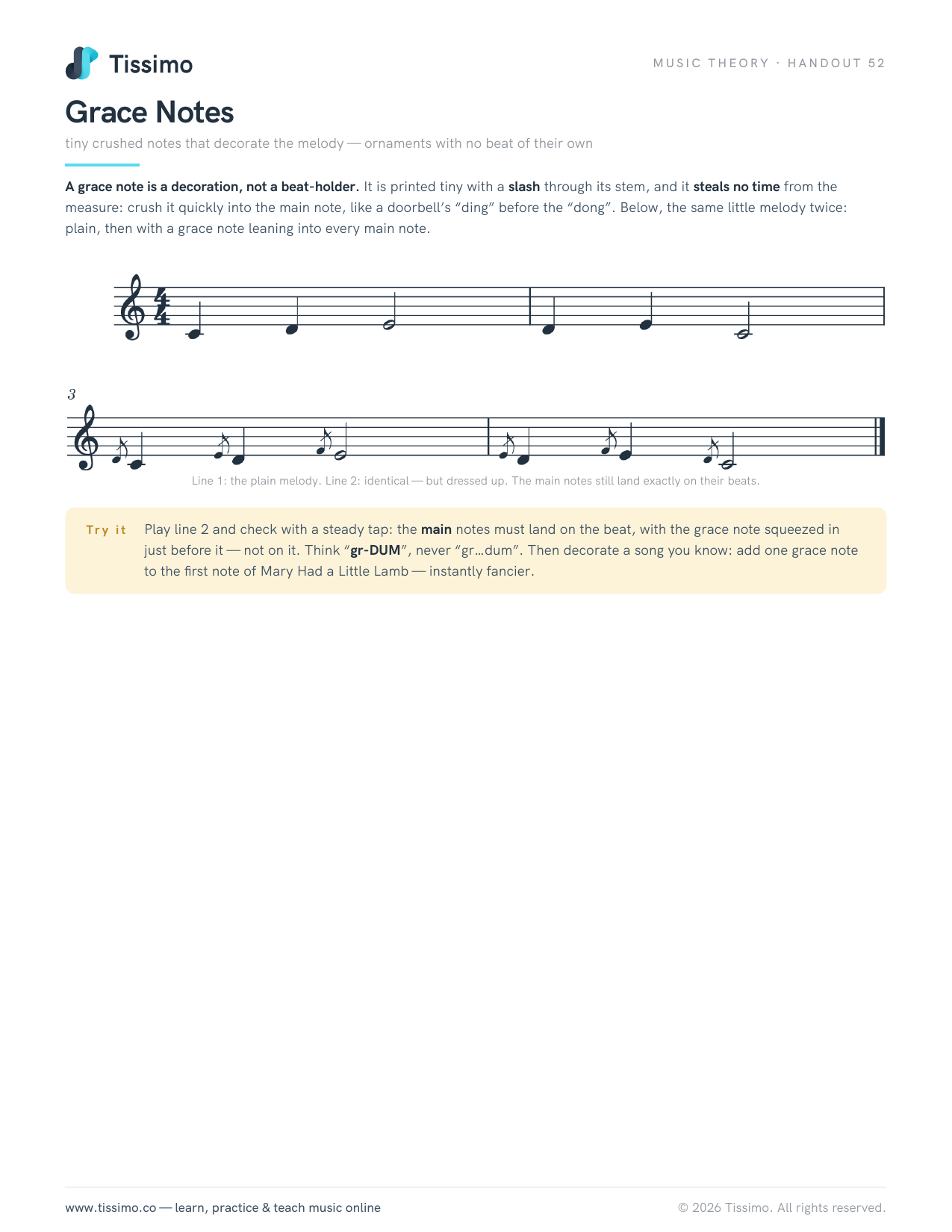 Grace Notestiny crushed notes that decorate the melody — ornaments with no beat of their own