Articulation & Ornaments
Arpeggiando (Rolled Chord)
Pronounced ar-peh-JAHN-doh
Arpeggiando means rolling a chord: its notes are played quickly one after another, usually from the bottom up, and held so the whole chord still sounds. It is shown by a vertical wavy line before the chord.
Arpeggiando is Italian for "playing like a harp" (arpa means harp). A chord marked arpeggiando is not struck all at once. Its notes are spread quickly from the bottom up, one after another, and each note is held as the next one comes in, so the whole chord is still sounding at the end. The sign is a vertical wavy line just to the left of the chord. In English the result is usually called a rolled chord or a spread chord.
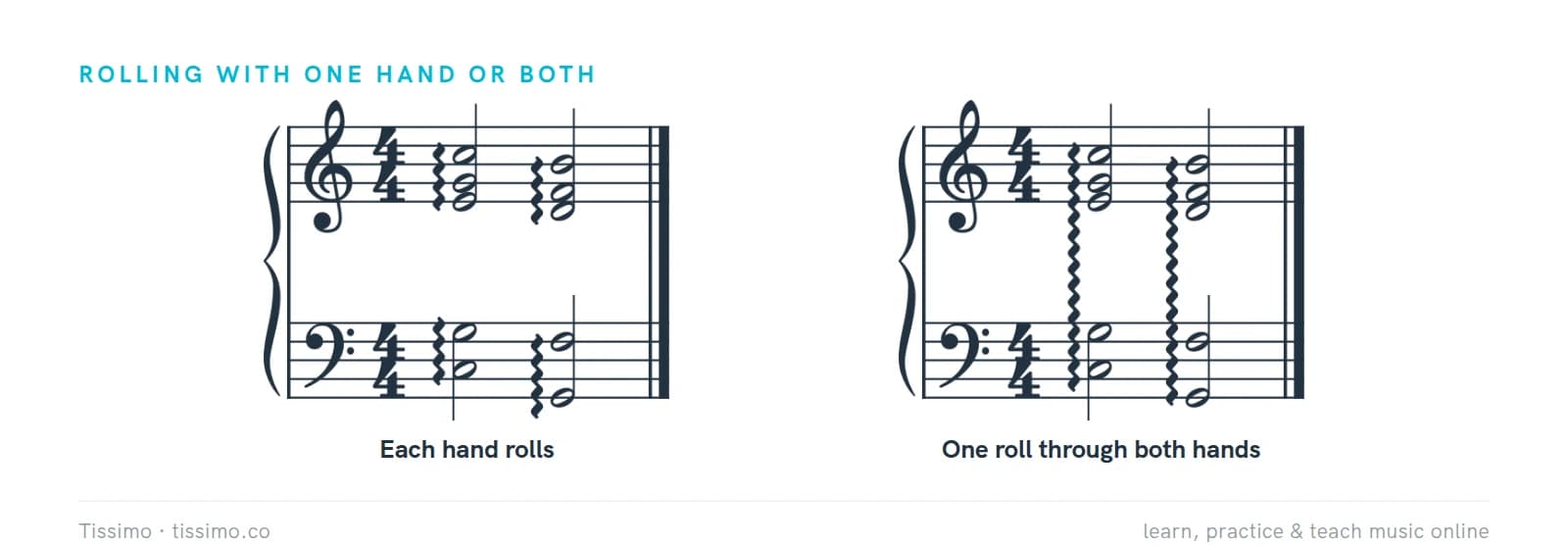
One hand or both?
- If each staff has its own wavy line, roll both hands at the same time: the two rolls start together.
- If one unbroken wavy line runs through both staves, make one long roll, from the lowest note of the left hand up to the top note of the right hand.
Which way, and when?
A plain wavy line means bottom to top. An arrowhead pointing down at the bottom of the line asks for the less common roll from the top down.
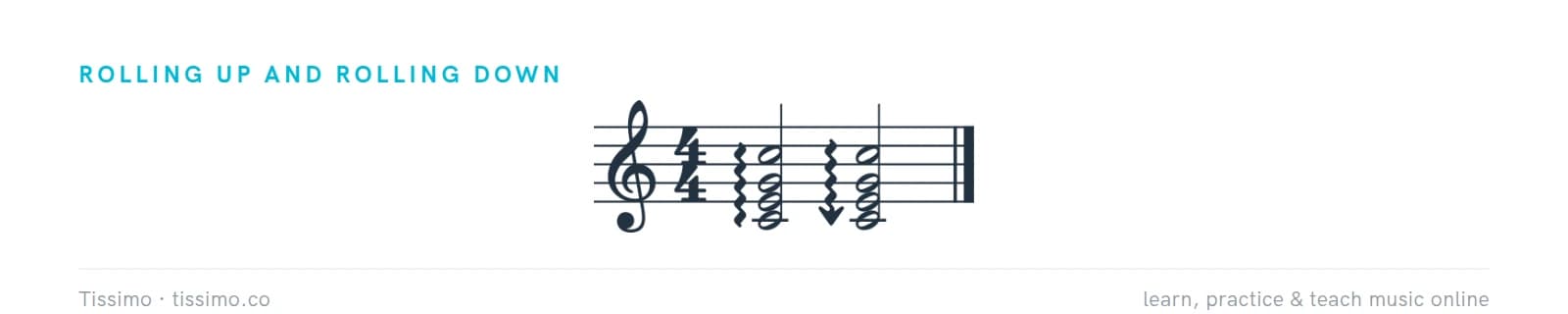
When the roll starts depends on the style. In Baroque and Classical music it usually begins on the beat, with the bottom note. In Romantic and later music players differ: some start on the beat, others begin a fraction early so that the top note, often the melody, lands right on the beat. The speed is part of the character, too: a quick, crisp roll in a lively piece, a slower, harp-like spread in a dreamy one. Harpsichordists often spread chords a little even without a sign.
Why composers ask for it
- To make a chord too wide for the hand playable: many pianists roll a chord that is too wide for them, even when no sign is printed.
- For color: a softer, harp-like or guitar-like sound.
- To let the top note sing out above the rest of the chord.
Rolled chord or arpeggio?
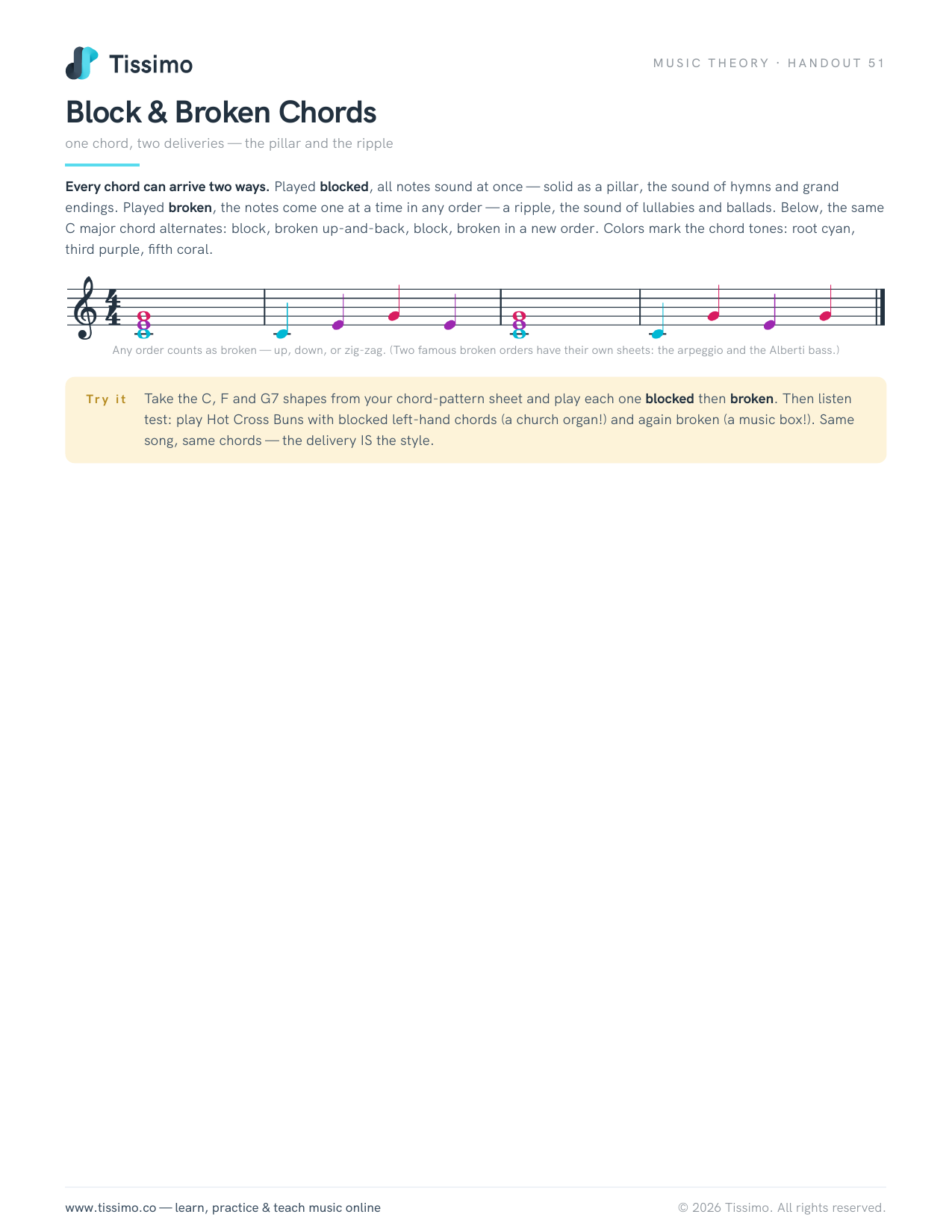
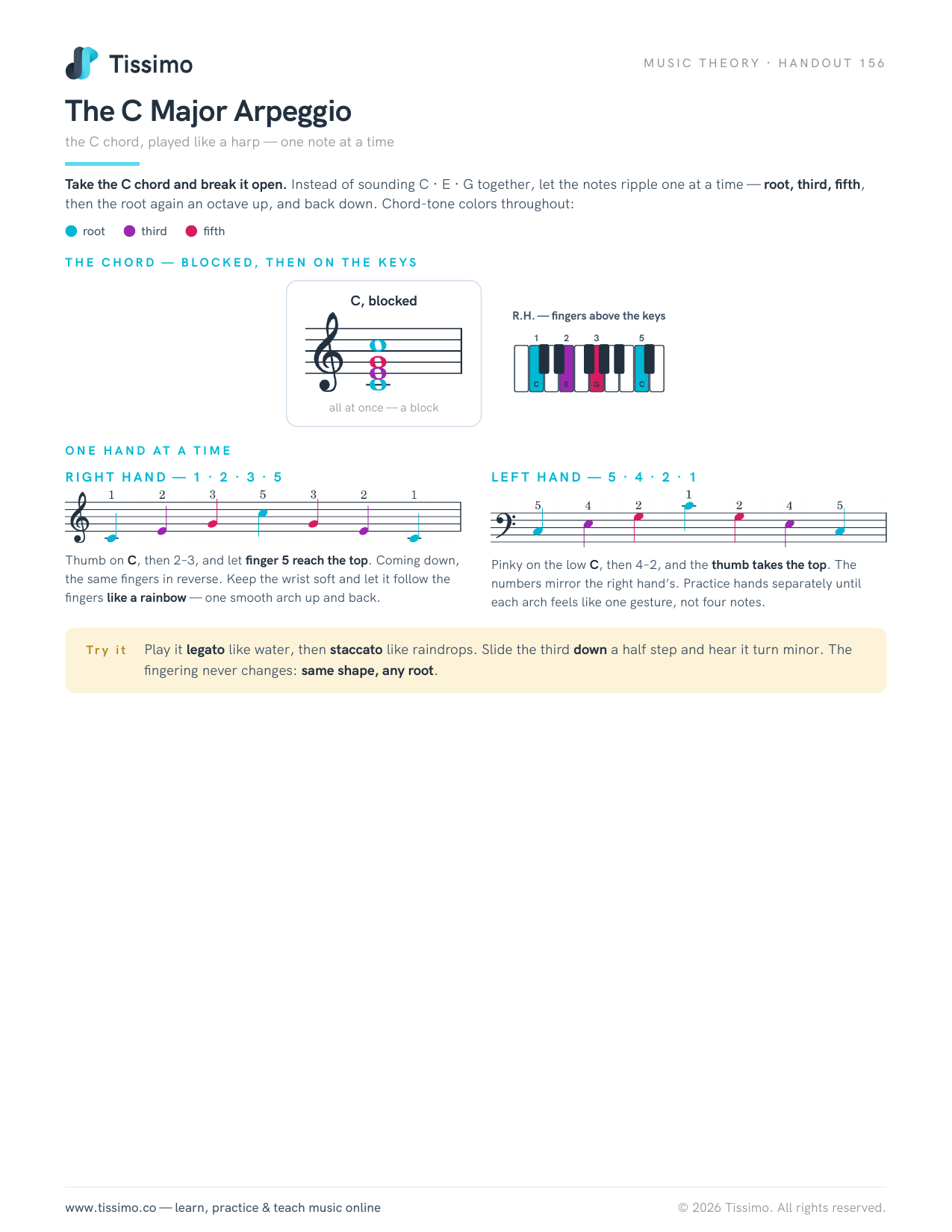
An arpeggio usually means the notes of a chord played one at a time in a written rhythm, as a pattern you can count. An arpeggiando is a single chord spread in a moment. Both are relatives of the broken chord, the opposite of the block chord.
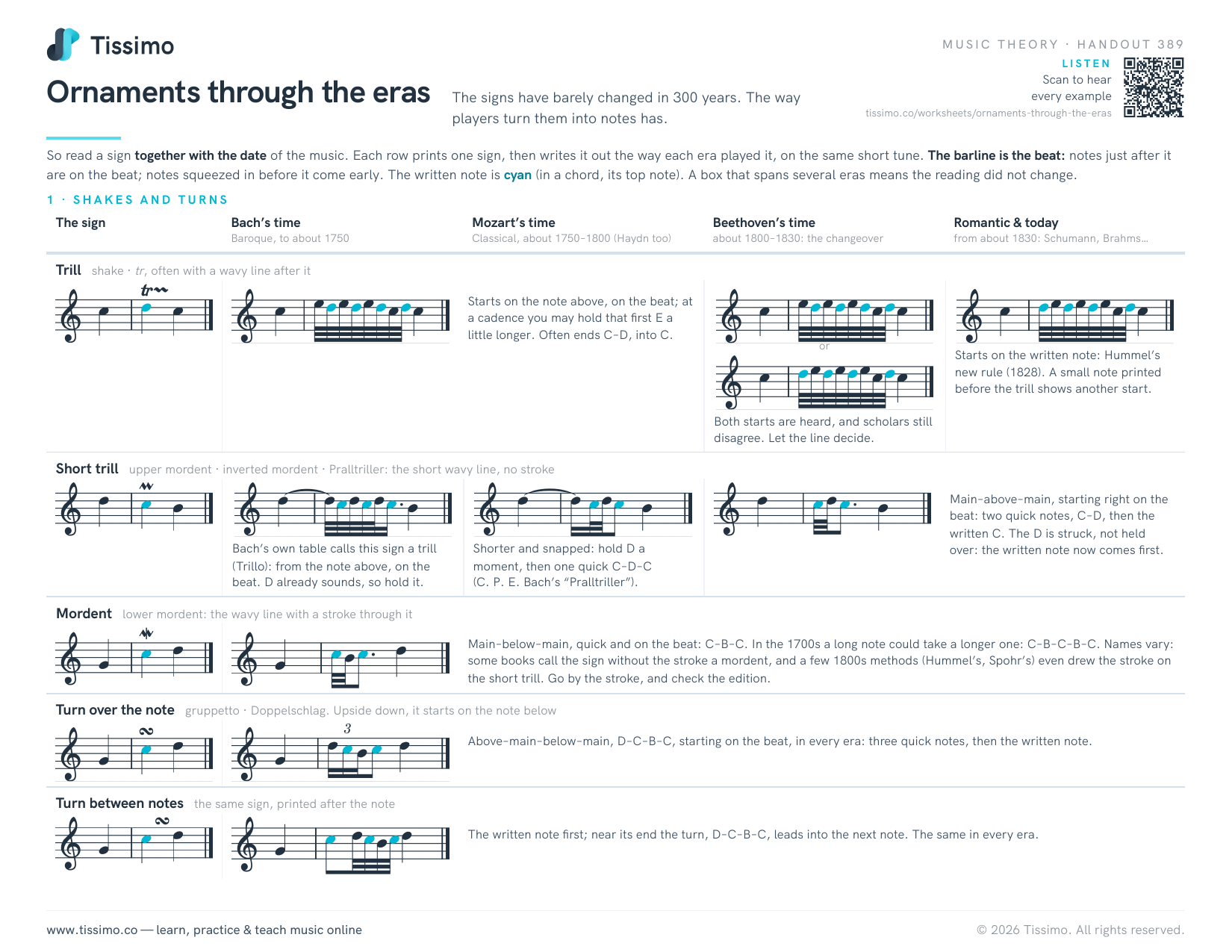
Hear rolled chords from different periods in Ornaments through the eras.
Common questions
What does a wavy line before a chord mean?
It is an arpeggiando sign: roll the chord, playing its notes quickly one after another from the bottom up and holding each one, instead of striking them all together.
Is a rolled chord the same as an arpeggio?
They are related. A rolled chord is one chord spread in an instant. An arpeggio usually means the chord's notes played one at a time in a written, countable rhythm.