Music Production
Arpeggiator
An arpeggiator is a feature of a synthesizer, keyboard or DAW that turns a held chord into a rhythmic pattern, playing the chord's notes one at a time in a chosen order, speed and octave range, in time with the tempo.
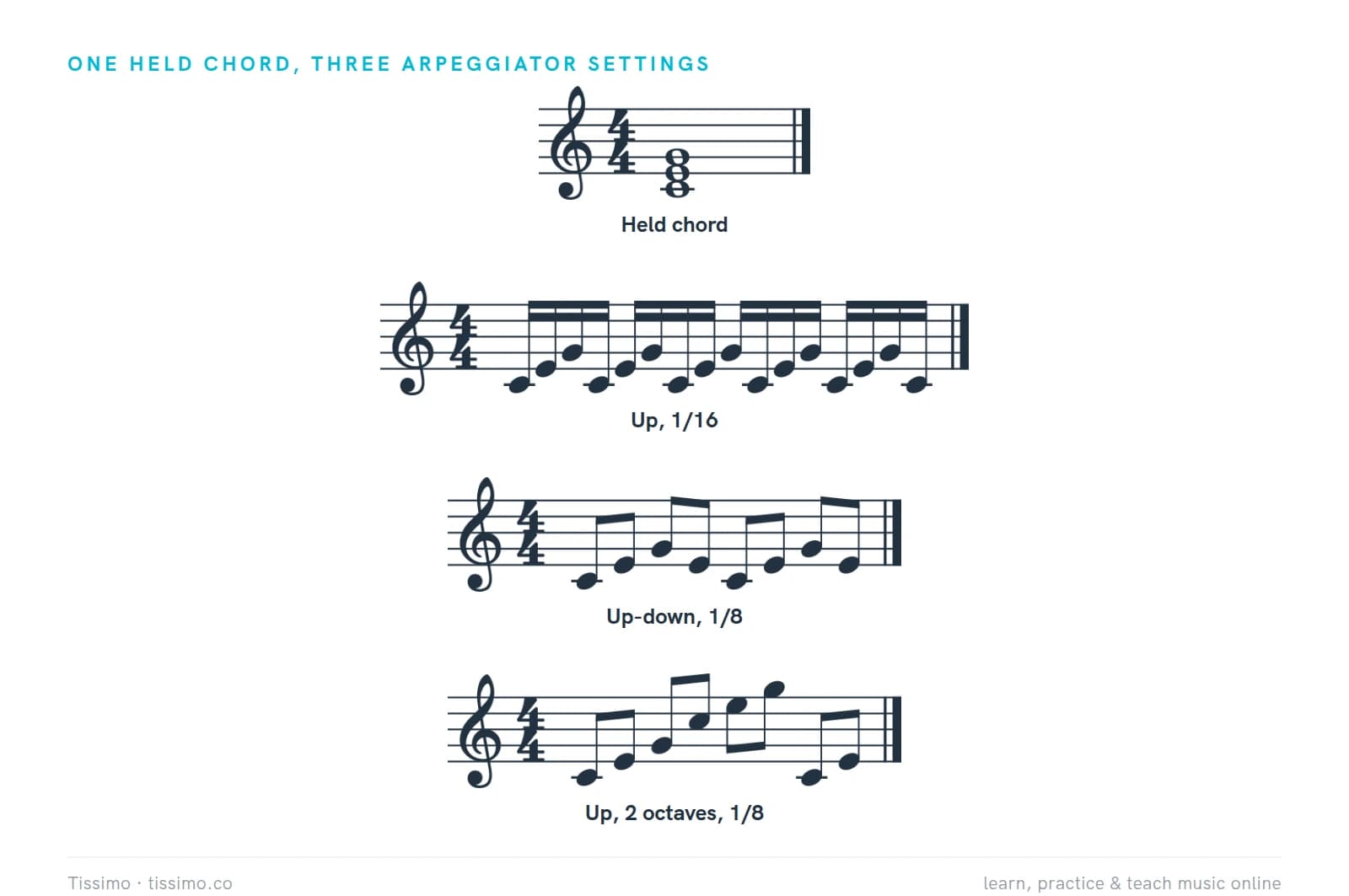
Hold down C, E and G with an arpeggiator switched on and, instead of a block chord, you hear a steady stream of single notes, C E G C E G, ticking along with the tempo. Change the chord and the pattern follows. It is a quick way to turn simple chords into moving, rhythmic parts, and a familiar sound in synth-pop, trance and many other kinds of electronic dance music. The name comes from arpeggio, a chord played one note at a time.
The main settings
- Mode (order): up, down, up-down, random, or "as played" (the order in which you pressed the keys).
- Rate: the note value of each step, such as eighth notes, sixteenth notes or triplets, synced to the project tempo.
- Octave range: repeat the pattern over one, two or more octaves before starting again.
- Gate: how long each note sounds within its step. A short gate gives a crisp, staccato pattern; a long one is smooth and connected.
- Swing: delays every second step for a swing or shuffle feel.
- Latch (hold): keeps the pattern running after you let go of the keys.
How it fits in production
Most arpeggiators produce MIDI notes, so in a DAW you can often record the result, or convert it into ordinary notes, and edit them in the piano roll: change a note, add a rest, accent a beat with a higher velocity. Many producers start with an arpeggiator and then rewrite the pattern to make it their own.
Try it
- Choose a soft synth sound and switch on the arpeggiator at a moderate tempo, such as 100 BPM.
- Hold a C major triad with the mode set to up and the rate to sixteenth notes.
- Change to up-down, then try a two-octave range.
- Play a slow chord progression, changing chord each bar, and let the arpeggiator supply the rhythm.
- Shorten the gate for a plucky sound, then lengthen it for a flowing one.
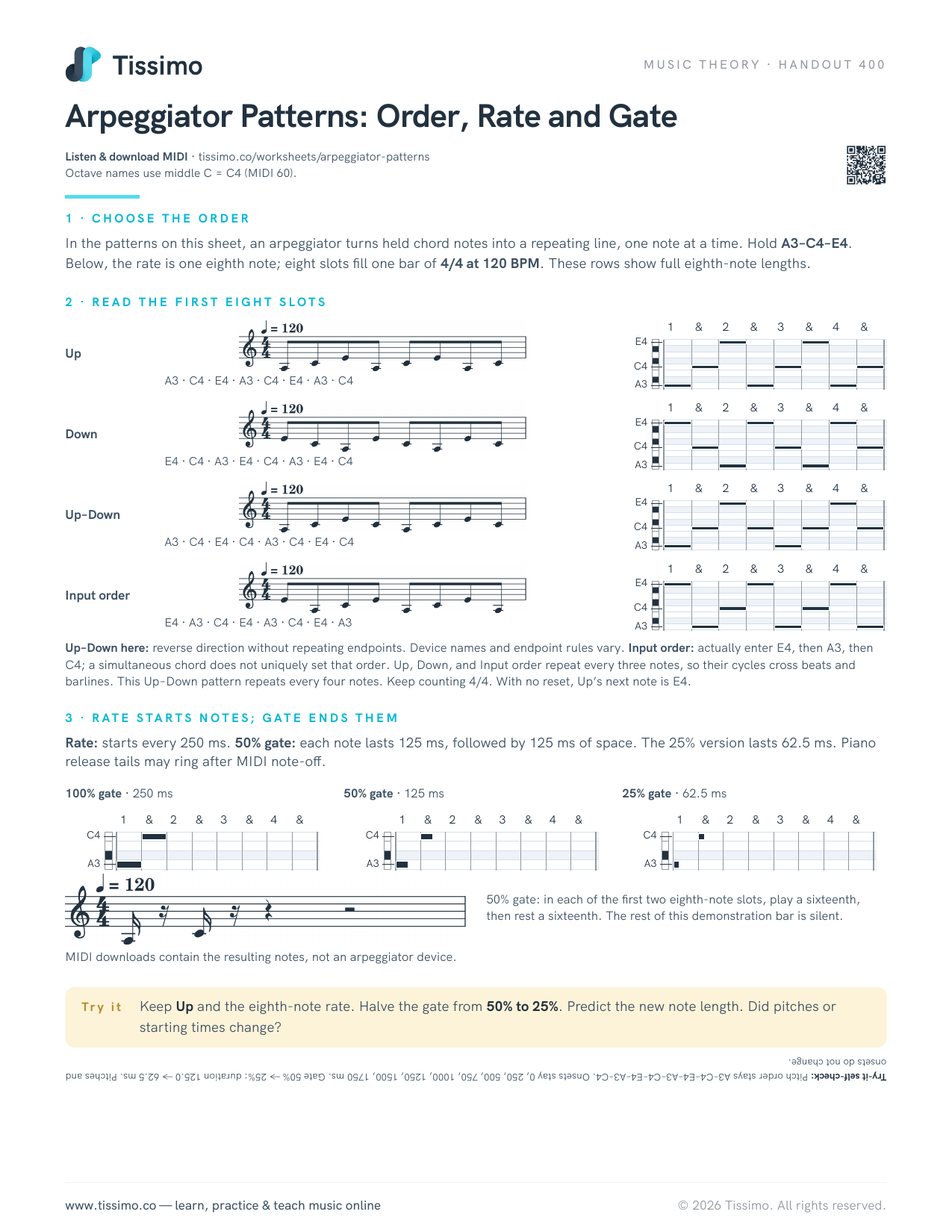
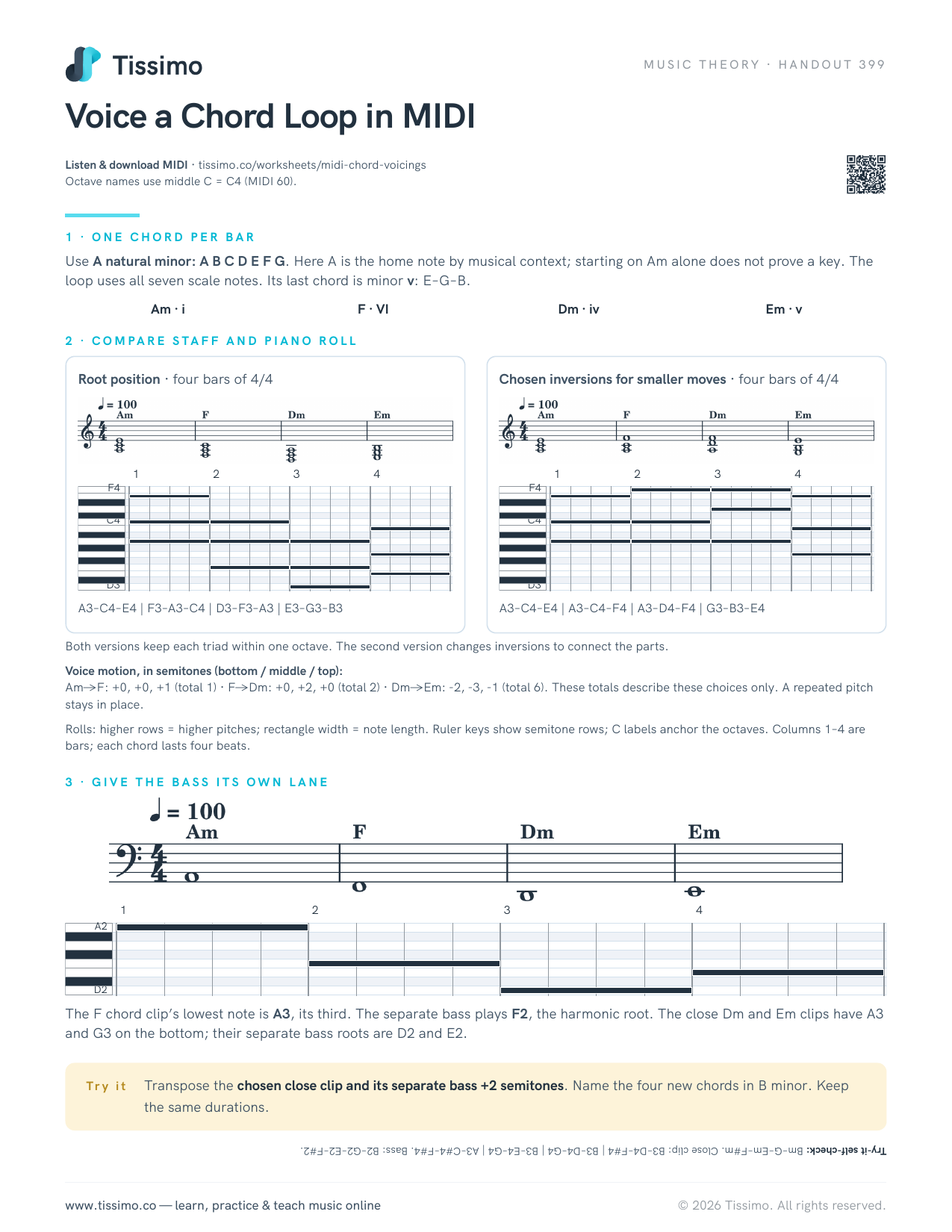
Arpeggiator Patterns: Order, Rate and Gate works through these settings on paper, and Voice a Chord Loop in MIDI gives you chords to feed it.
Common questions
What does an arpeggiator do?
It takes the notes of the chord you are holding and plays them one at a time in a repeating pattern, in a chosen order, speed and octave range, in time with the tempo.
What is the difference between an arpeggiator and a sequencer?
An arpeggiator builds its pattern from whatever chord you are holding at the moment. A sequencer plays back a pattern of notes that was entered or recorded in advance.