Music Production
Quantization
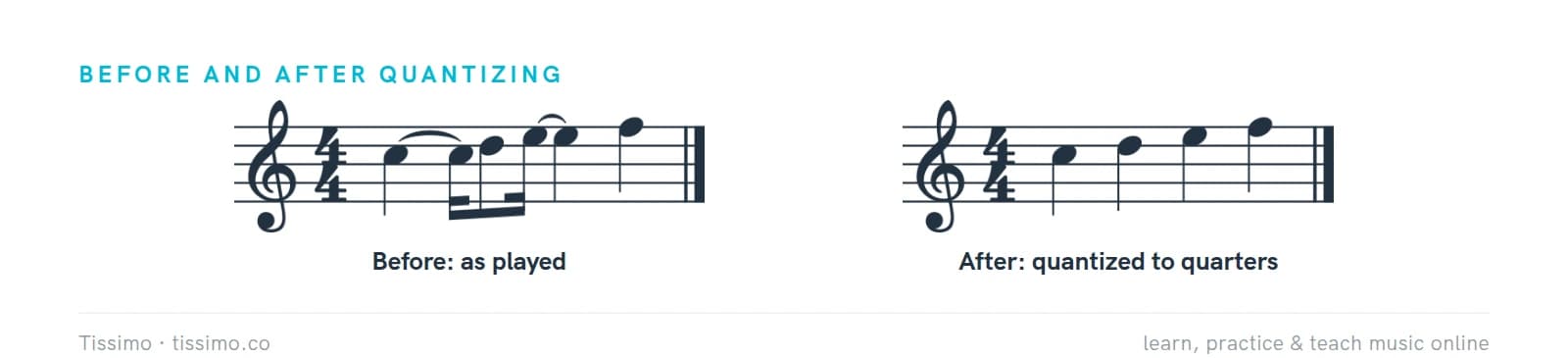
Quantization moves recorded MIDI notes, or audio hits, onto the nearest point of a rhythmic grid, such as every eighth or sixteenth note, to tighten timing that was played slightly early or late.
Nobody plays perfectly in time, and in most music that is part of the feel. But when a recorded part sounds loose, quantization offers a fix: the DAW looks at when each note started and moves it to the nearest line of a grid you choose.
Choosing the grid
The grid must match the smallest rhythm in the part. Quantizing a line of eighth notes to quarter notes would pull half of them onto the wrong beat. Common grids:
- 1/8 or 1/16 for most pop, rock and electronic parts.
- Triplet grids (often labeled 1/8T or 1/16T) for triplet rhythms and shuffle feels.
- Swing, which moves every second grid point later, turning straight subdivisions into a swing feel.
Settings that keep the feel
- Strength (or amount): moves notes only part of the way toward the grid, for example halfway. The timing tightens but keeps some of the player's push and pull.
- Range or window: selects which notes are eligible. Depending on the DAW and setting, it can protect notes already close to the grid or catch only notes within a chosen distance. Check the program's definition.
- Starts and lengths: most quantizing moves only where each note starts; some options also correct note lengths and ends.
- Humanize: the opposite, adding small random variations to timing or velocity for parts entered by hand that sound too stiff.
When to quantize
- Play the part as well as you can first, to a click track. Quantizing works best on parts that are already close.
- Quantize a copy, or one section, and compare it with the original by ear.
- Listen for notes that were deliberately off the grid, such as a laid-back snare or an anticipation of the next bar, and put them back.
Many DAWs can also quantize recorded audio by detecting where each hit starts and stretching the audio slightly, which is common on drum recordings. It works best on clear, separate hits. Quantizing is usually done in the piano roll or with a function on the whole track.
Common questions
What does quantize mean in music?
To move recorded notes onto the nearest point of a rhythmic grid, so their timing lines up exactly with the beat.
Should I quantize everything?
Not necessarily. Full quantizing suits many electronic styles, but it can make played parts sound stiff. Try a lower strength, quantize only some parts, or fix just the notes that bother you.
Practice it: free worksheets
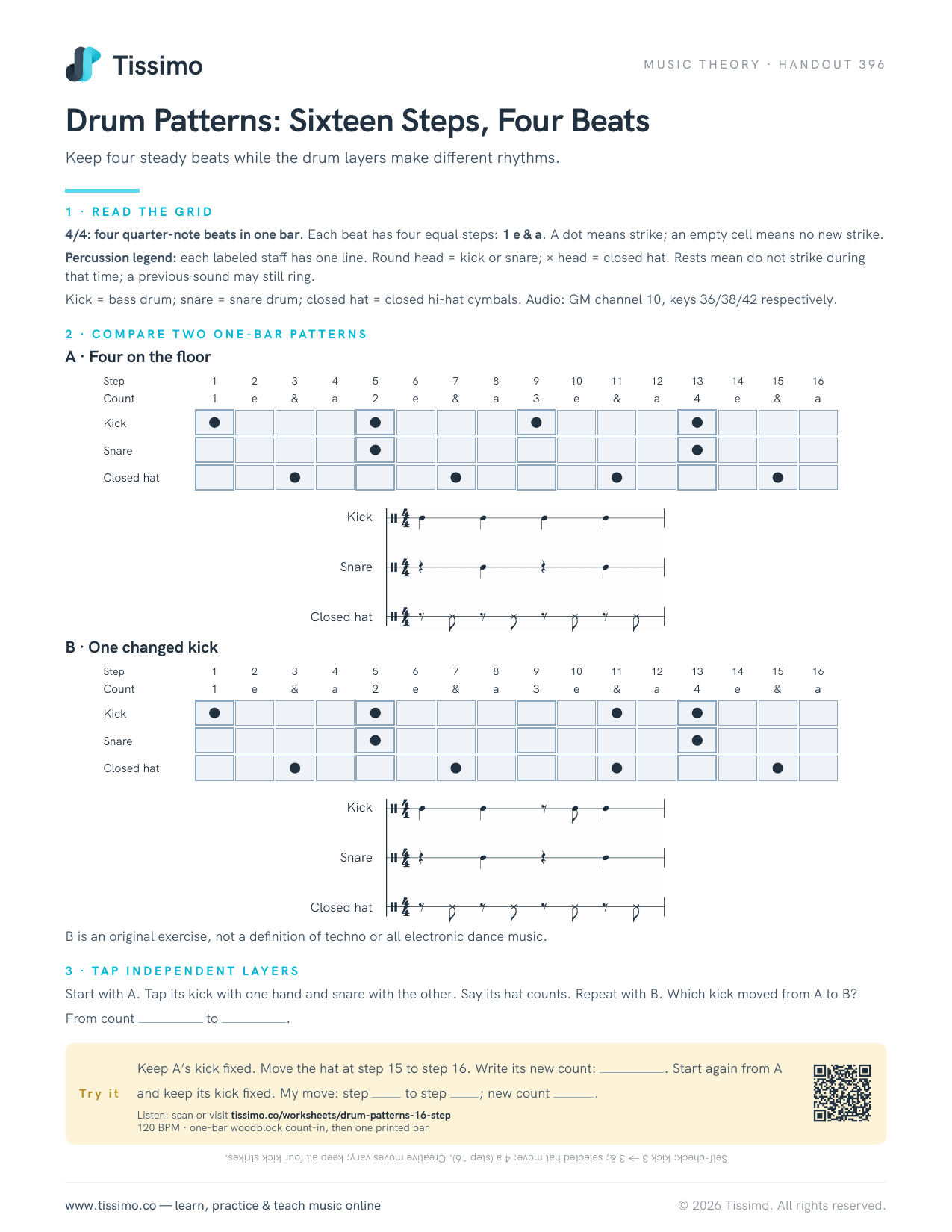 Drum Patterns: Sixteen Steps, Four BeatsKeep four steady beats while the drum layers make different rhythms.
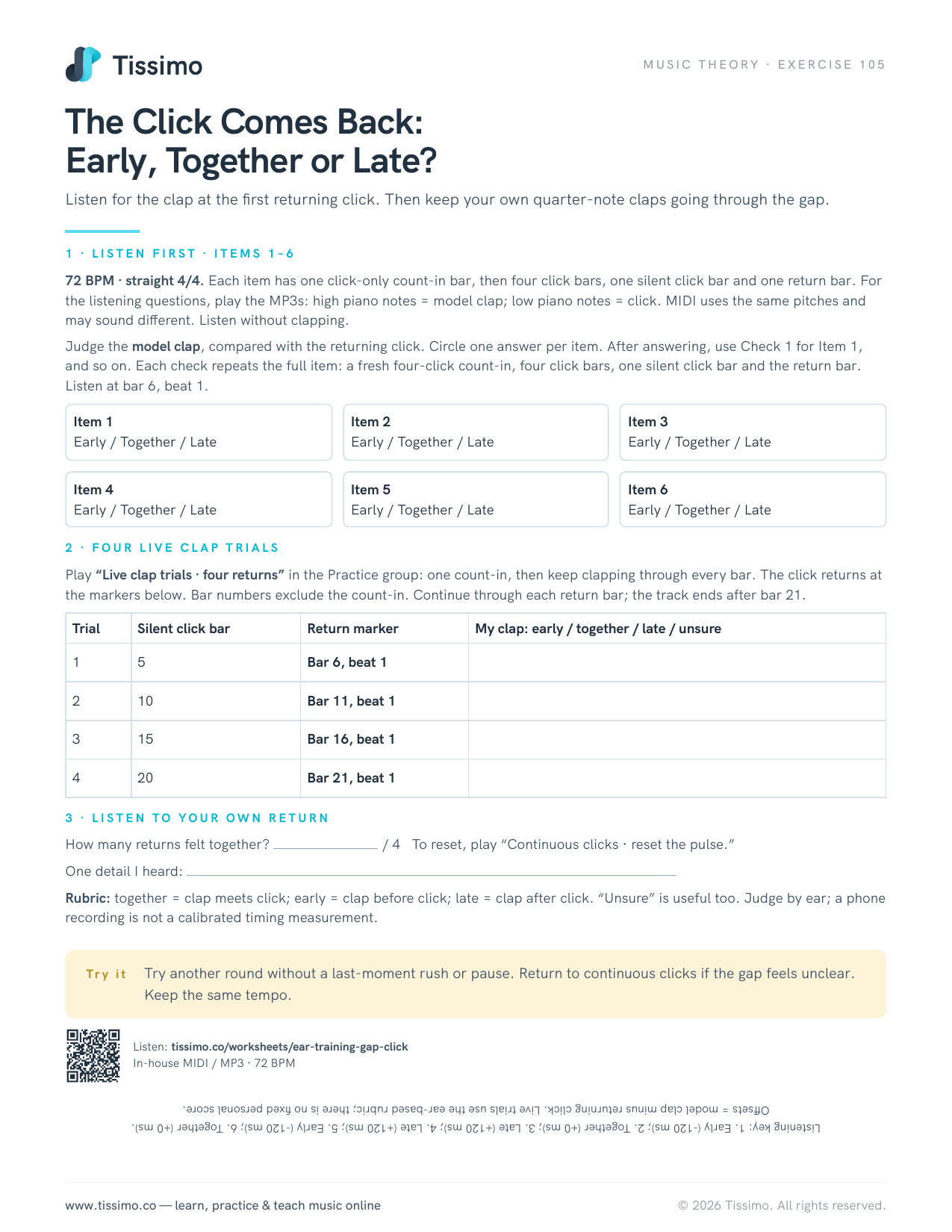 The Click Comes Back: Early, Together or Late?Listen for the clap at the first returning click. Then keep your own quarter-note claps going through the gap.
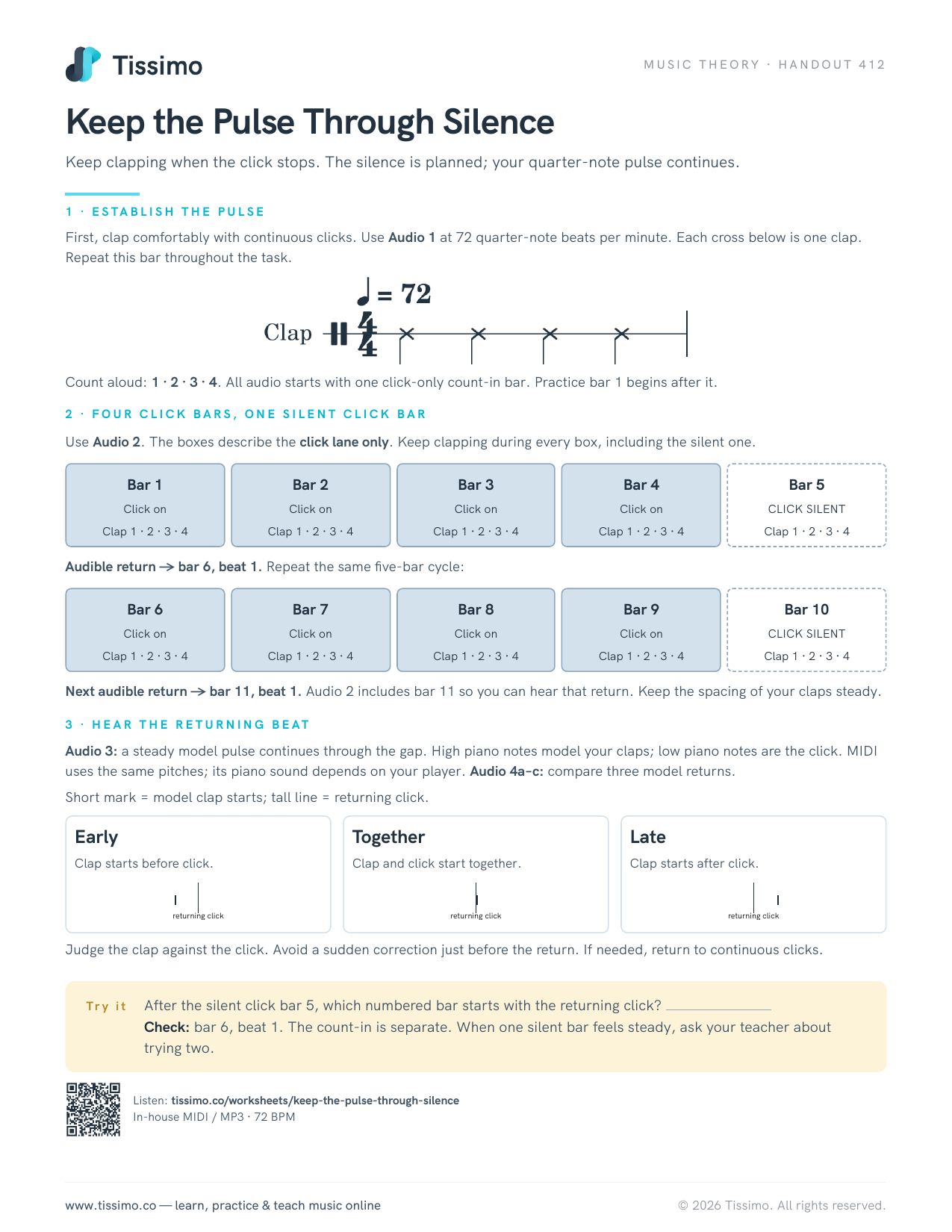 Keep the Pulse Through SilenceKeep clapping when the click stops. The silence is planned; your quarter-note pulse continues.