Rhythm & Meter
Subdivision
Subdivision is splitting each beat into smaller equal parts, usually two, three or four, and feeling those parts while you play. It keeps rhythms even and makes tricky patterns easier to place.
Subdivision means dividing the beat into smaller, equal pieces in your head, or out loud, while you play. Instead of feeling only "1, 2, 3, 4", you feel "1 & 2 & 3 & 4 &" or "1 e & a 2 e & a". The beat stays the same speed; you simply notice more points inside it.
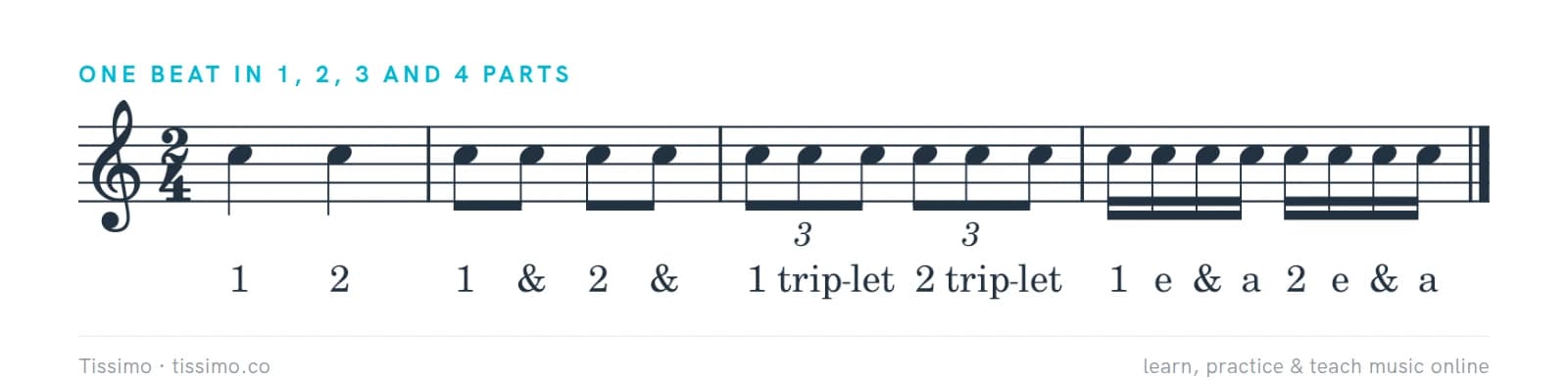
The usual subdivisions
- Two per beat (eighth notes in 4/4): "1 & 2 &".
- Three per beat (triplets, or the eighth notes of 6/8): "1-trip-let" or "1 & a".
- Four per beat (sixteenth notes in 4/4): "1 e & a".
- Six per beat: sixteenth-note triplets, or sixteenth notes in 6/8.
In theory books, the first split of the beat is sometimes called the division and the next level down the subdivision: in 4/4 the eighth note is the division and the sixteenth note the subdivision. In everyday practice, musicians use "subdivision" for any of these levels.
Why subdivide?
- Steadier time. Long notes and rests are where most people rush or drag. Counting "1 & 2 &" through a half note keeps it exactly two beats long.
- Accurate rhythms. Dotted rhythms, syncopation and rests on the beat are easier to place when you can feel the grid underneath them.
- Slow tempos. At a very slow tempo, the gap between beats is long. Feeling the eighths or sixteenths fills it in.
- Playing together. An ensemble that shares the same subdivision sounds tight, even at a quiet dynamic.
How to practice it
Set a metronome to the beat and count the subdivision aloud while you play a scale or a passage. Then set the metronome to click the subdivision itself, and gradually take the extra clicks away. Switching between two, three and four notes per beat over the same click is excellent training.
Write the counts under rhythms with Write the Counts, Write the Counts 2 and Write the Counts 3: Triplets & Ties, and keep the pulse through five notes per beat in Five Fit in One Beat.
Common questions
Why is subdivision important?
Feeling the smaller parts of each beat keeps your timing steady, especially through long notes, rests and slow tempos, and it makes syncopated and dotted rhythms much easier to place.
What is the difference between division and subdivision?
Strictly, the division is the first split of the beat (eighth notes in 4/4) and the subdivision is the next split (sixteenth notes). In everyday use, "subdivision" covers both.
Practice it: free worksheets
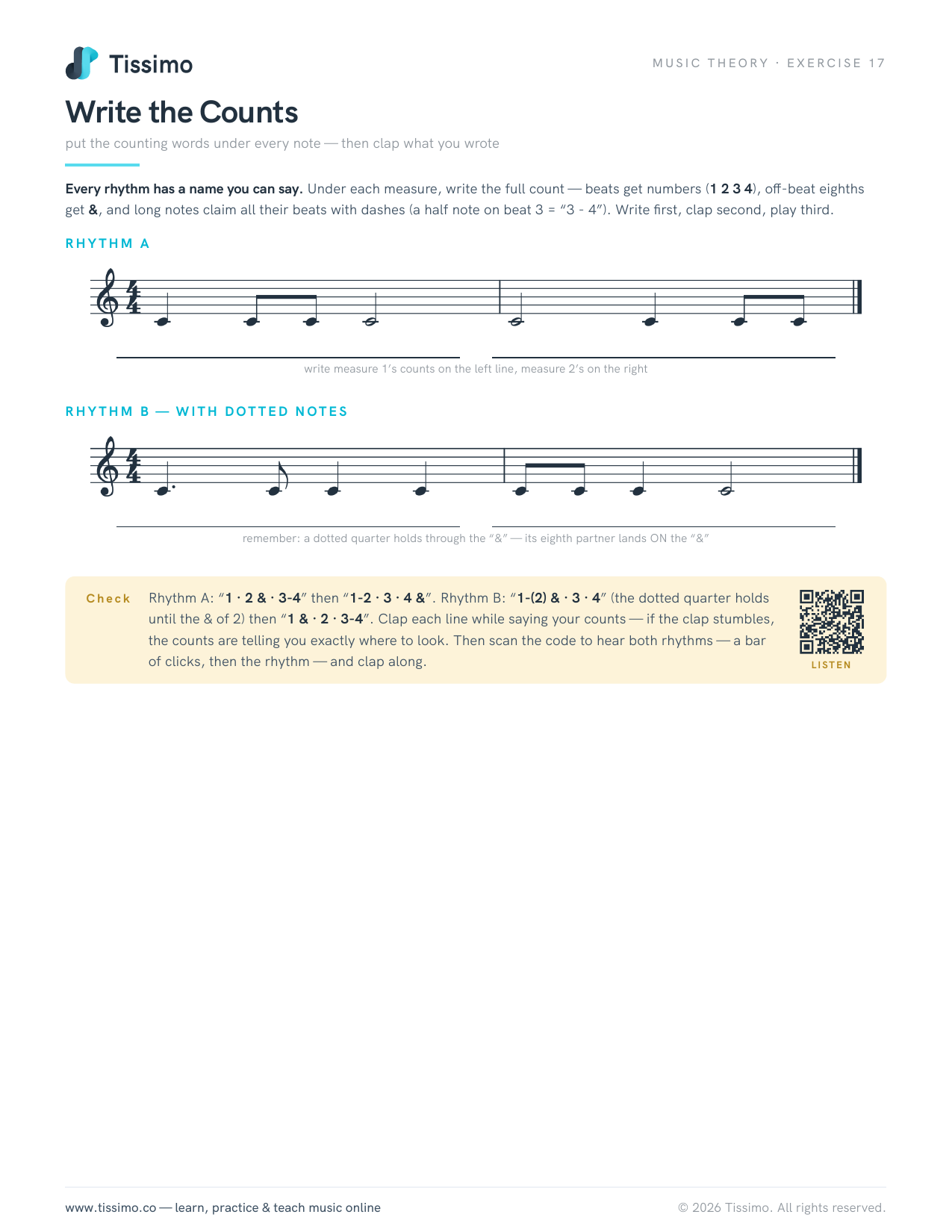 Write the Countsput the counting words under every note — then clap what you wrote
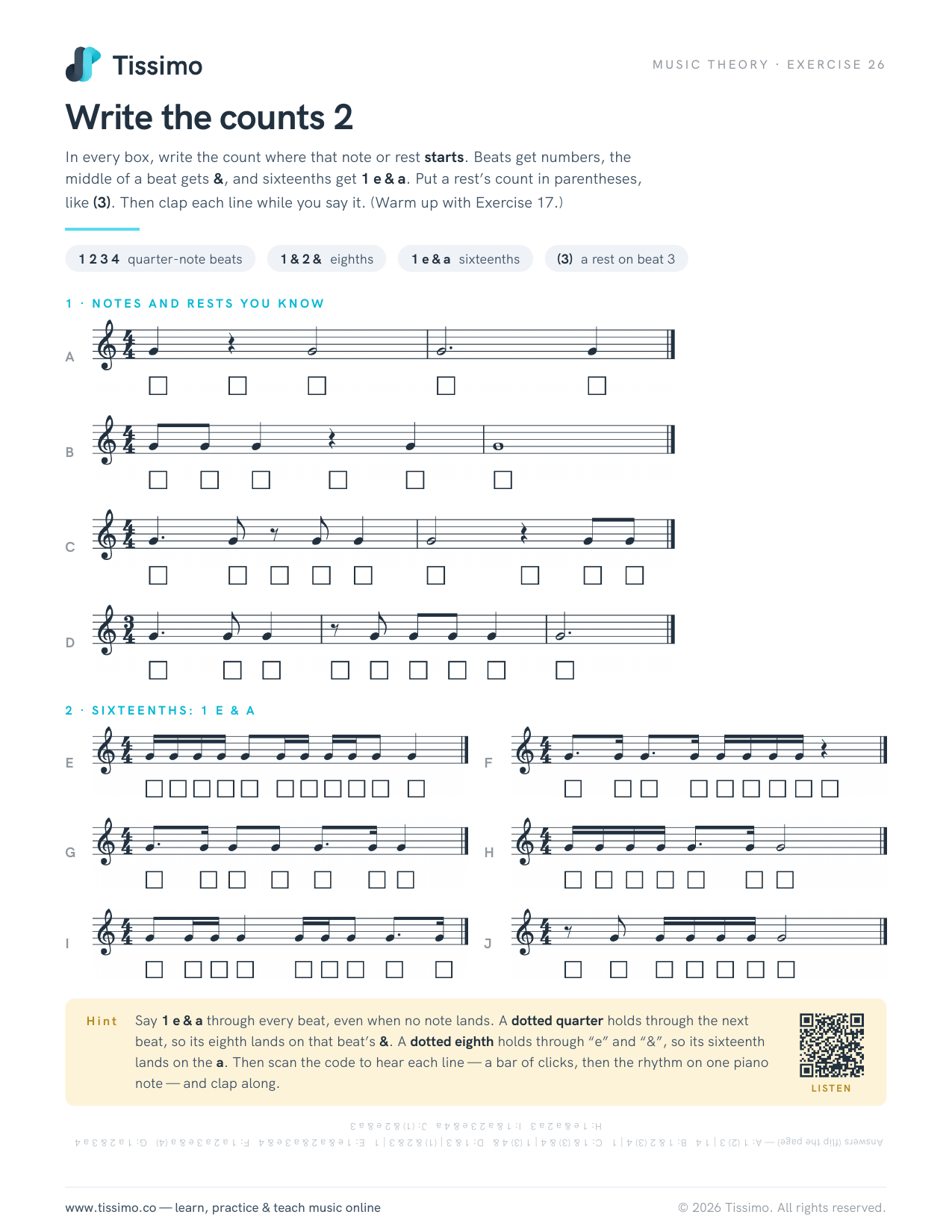 Write the counts 2In every box, write the count where that note or rest starts. Beats get numbers, the middle of a beat gets &, and sixteenths get 1 e & a. Put a rest’s count in parentheses, like (3). Then clap each line while you say it. (Warm up with Exercise 17.)
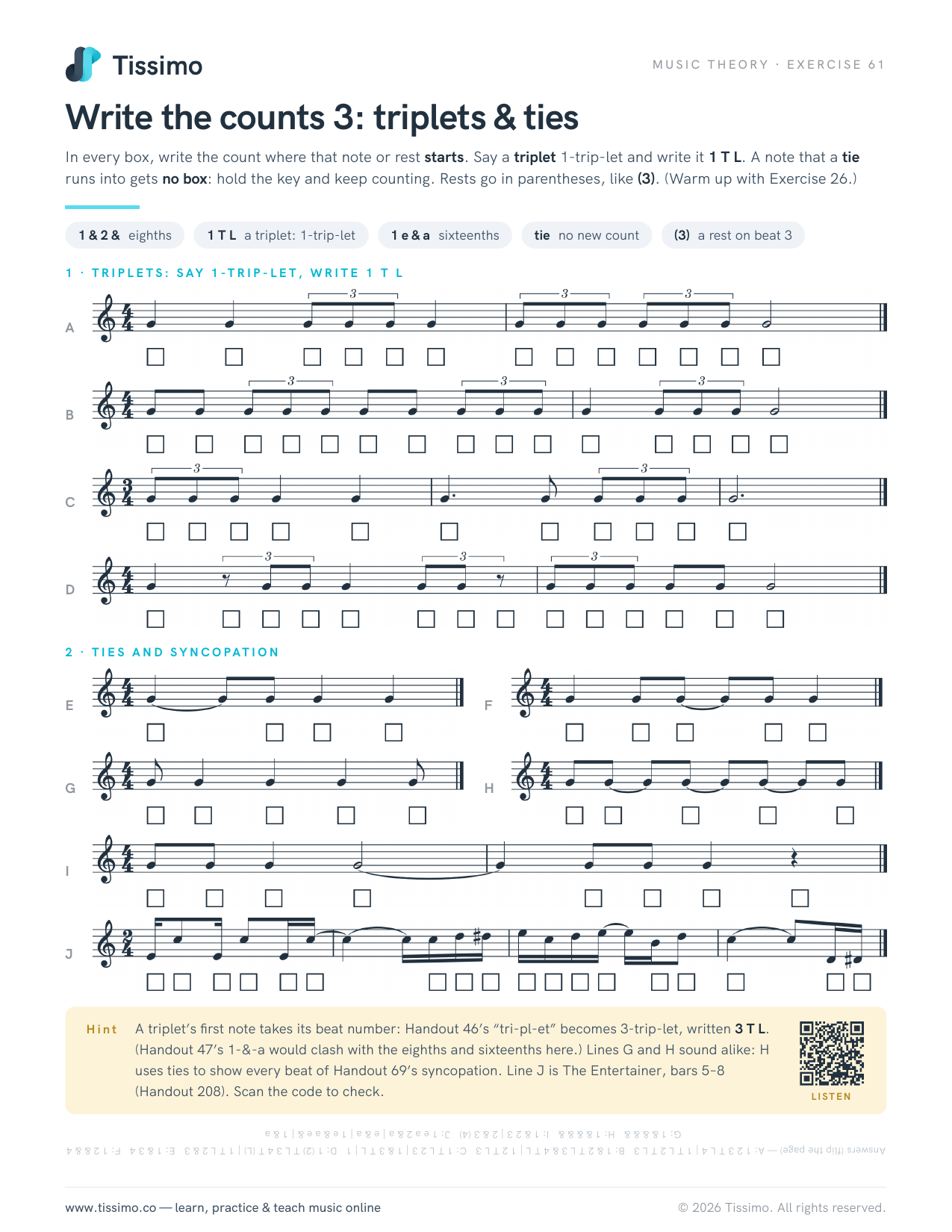 Write the counts 3: triplets & tiesIn every box, write the count where that note or rest starts. Say a triplet 1-trip-let and write it 1 T L. A note that a tie runs into gets no box: hold the key and keep counting. Rests go in parentheses, like (3). (Warm up with Exercise 26.)
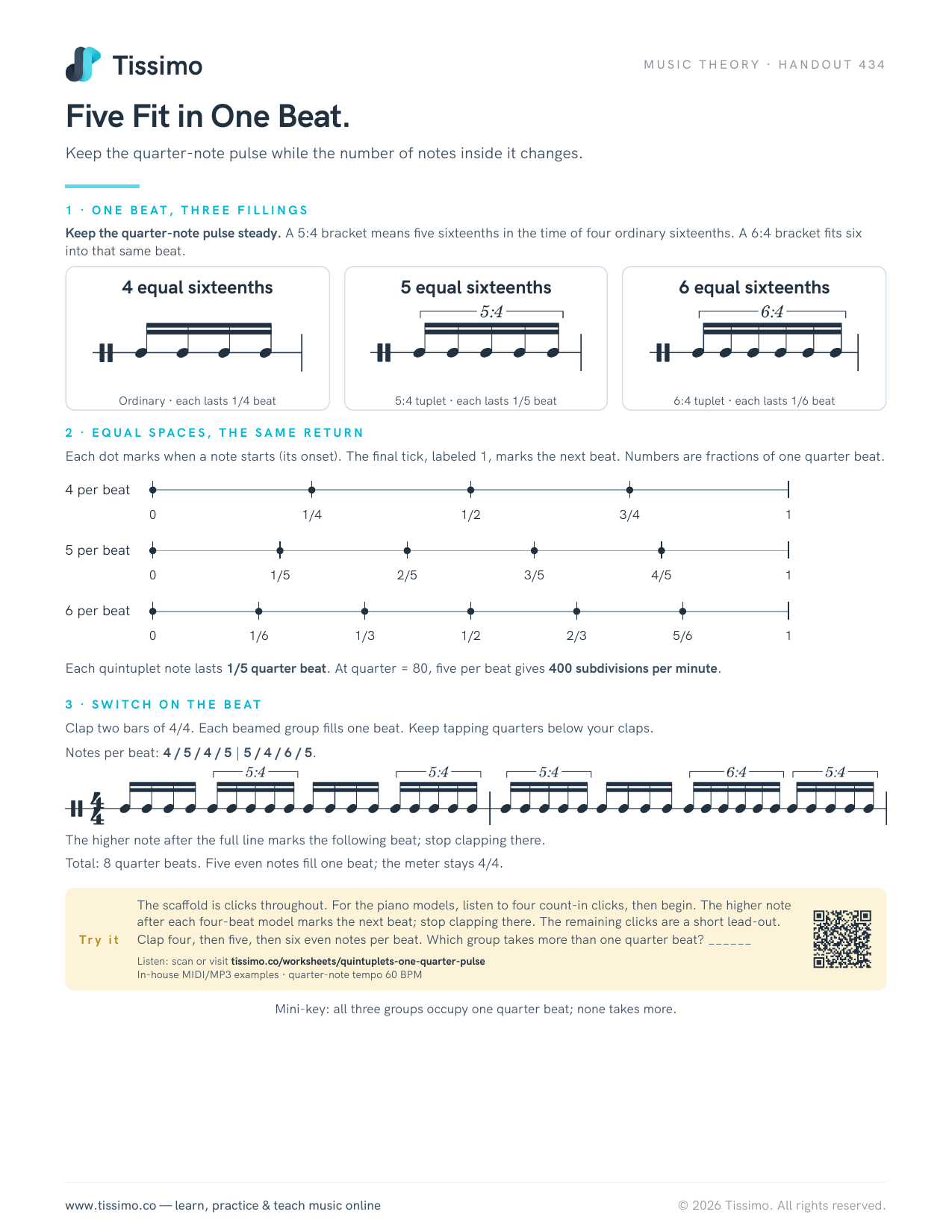 Five Fit in One Beat.Keep the quarter-note pulse while the number of notes inside it changes.