Rhythm & Meter
Tuplet
A tuplet is a group of notes that divides a beat or bar into a number of equal parts the meter does not normally allow, such as three in the time of two (a triplet) or five in the time of four (a quintuplet).
Every meter has a normal way of dividing its beats: into twos and fours in a simple meter, into threes in a compound meter. A tuplet breaks that habit for a moment by fitting a different number of equal rhythmic units into a span. A ratio such as 5:4 means "five in the time of four". The simplest version uses equal notes, but those units can also be combined into longer notes, subdivided, or replaced by rests.
The tuplet family
- Duplet: two notes in the time of three, used in compound meters such as 6/8.
- Triplet: three notes in the time of two. By far the most common.
- Quadruplet: four notes in the time of three, also mostly in compound meters.
- Quintuplet: five notes, usually in the time of four.
- Sextuplet: six notes in the time of four.
- Septuplet: seven notes, usually in the time of four or eight.
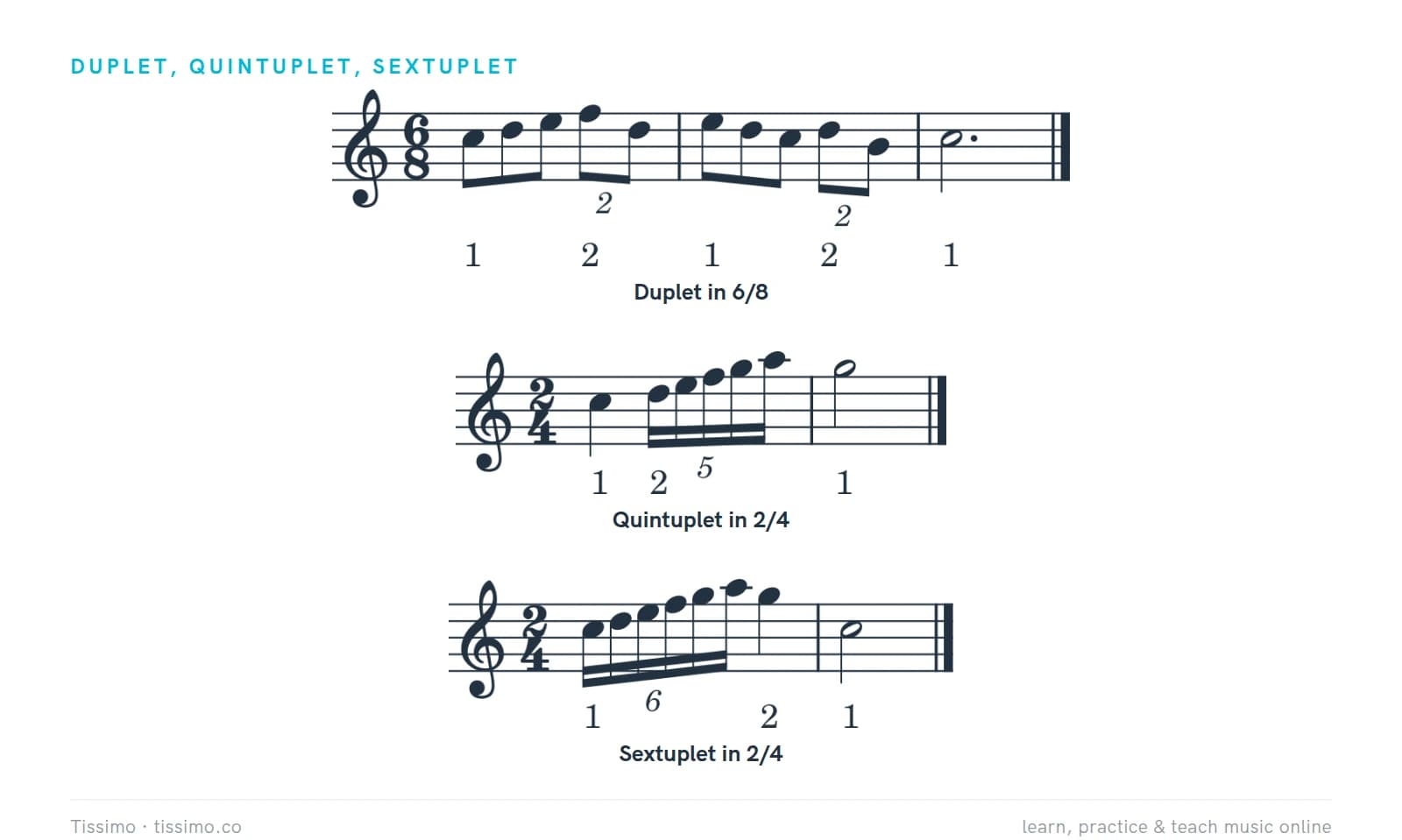
Reading a tuplet
Ask two questions: how long does the whole group last, and how many notes share that time? A quintuplet of sixteenth notes in 2/4 or 4/4 replaces four ordinary sixteenths, so its five notes fill exactly one beat. A duplet in 6/8 replaces three eighth notes, so its two notes split one dotted-quarter beat in half. The notes inside the group are written with the value of the notes they replace, which is why a duplet in 6/8 is written with eighth notes. Some composers write a 6/8 duplet as two dotted eighth notes instead, which gives the same rhythm without a tuplet sign.
Playing tuplets evenly
- Find the beat where the group starts and the beat where the next group starts. Those two points do not move.
- For a quintuplet of five equal notes, spread them evenly between the endpoints. It is not four notes plus an extra one; all five are the same length. Mixed-value tuplets still follow that underlying division.
- Practice with a metronome, saying a word with the right number of syllables: "u-ni-ver-si-ty" for five, for example.
When one part plays a tuplet against another part's ordinary division, the result is a polyrhythm.
Start with Triplets, then keep a steady quarter-note pulse through fives in Five Fit in One Beat and Keep the Beat Through Five.
Common questions
What is the difference between a triplet and a tuplet?
A triplet is one kind of tuplet: three notes in the time of two. "Tuplet" is the general word for any such group, including duplets, quintuplets and sextuplets.
How do you play a quintuplet?
Find the beat where it starts and the beat where it ends, and spread five equal notes between them. Saying a five-syllable word such as "u-ni-ver-si-ty" at the right speed helps keep them even.
Practice it: free worksheets
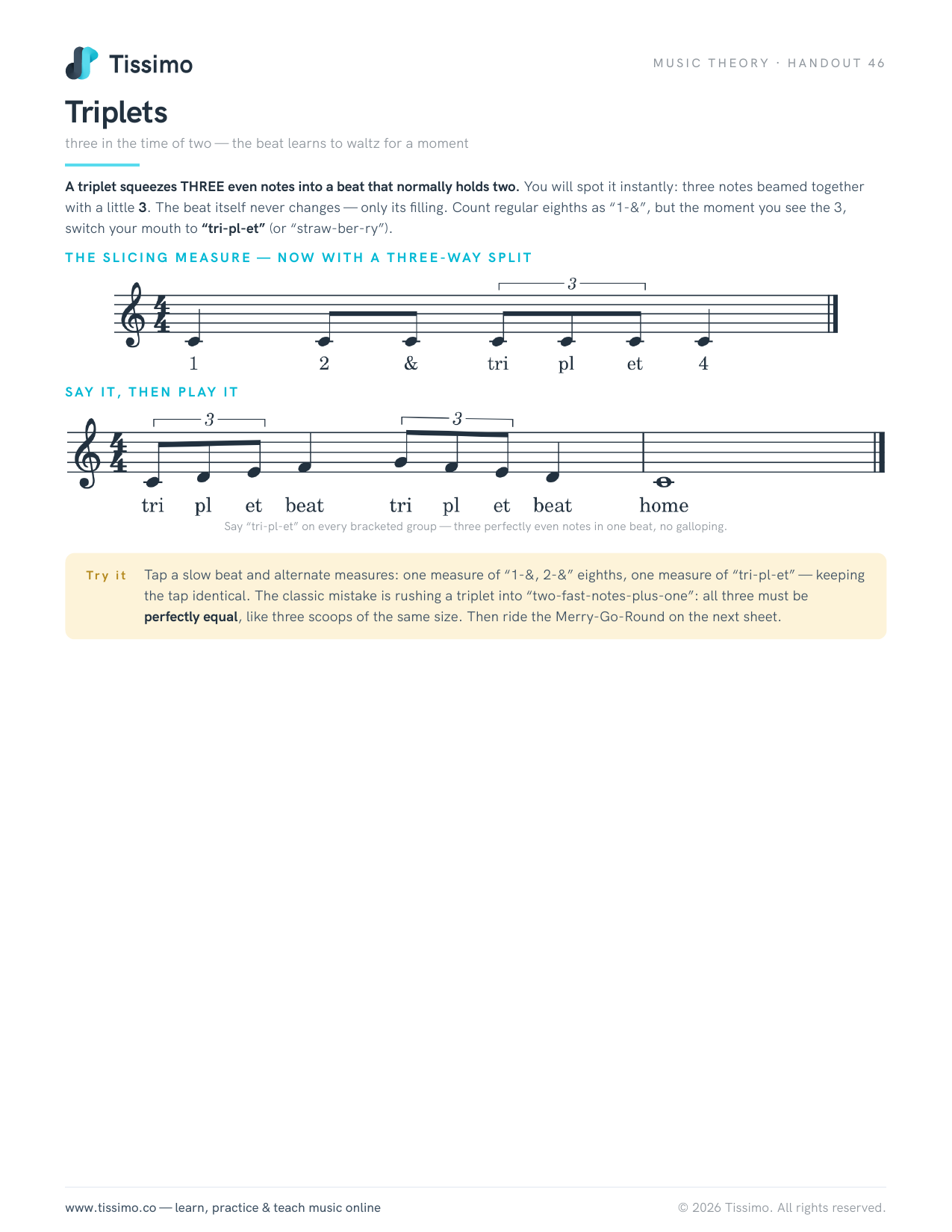 Tripletsthree in the time of two — the beat learns to waltz for a moment
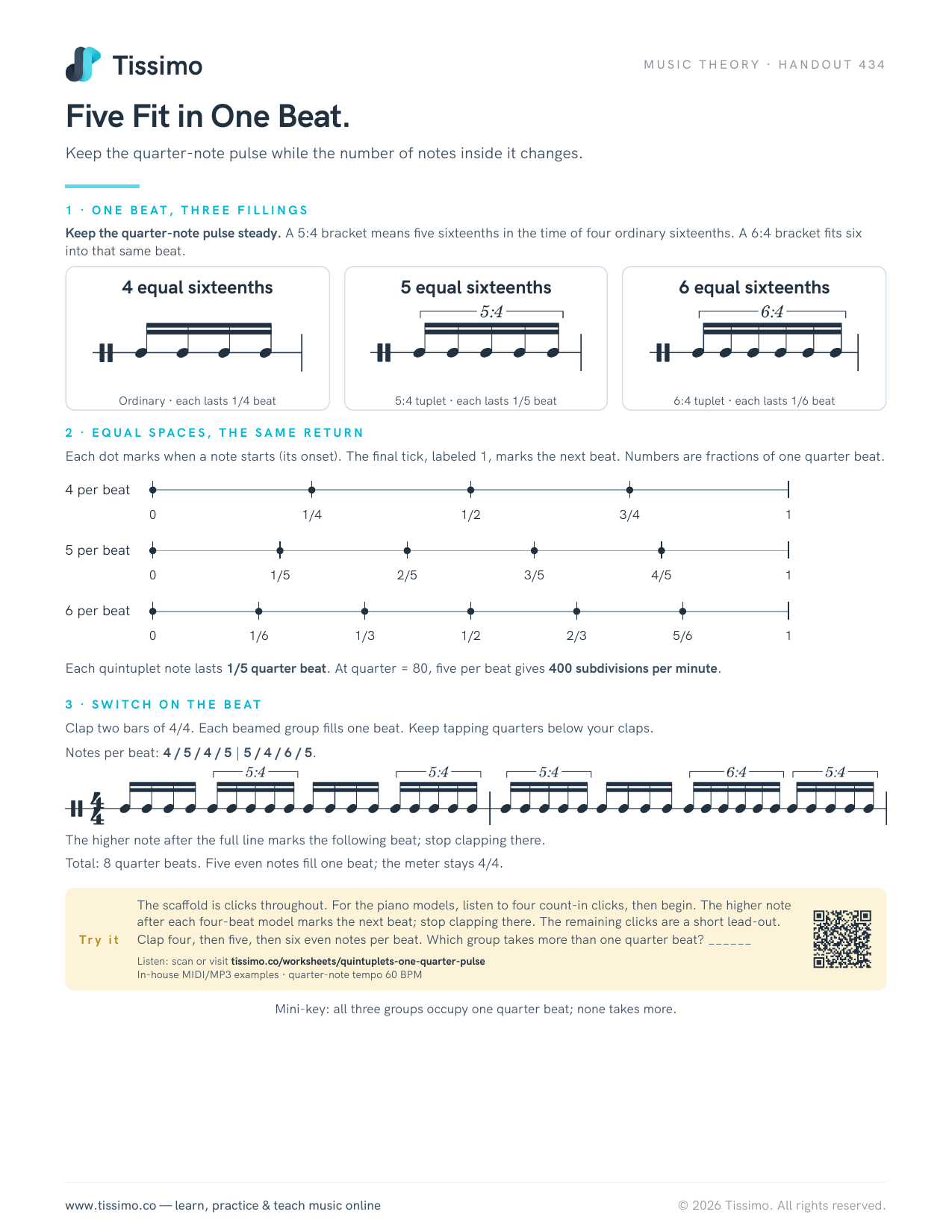 Five Fit in One Beat.Keep the quarter-note pulse while the number of notes inside it changes.
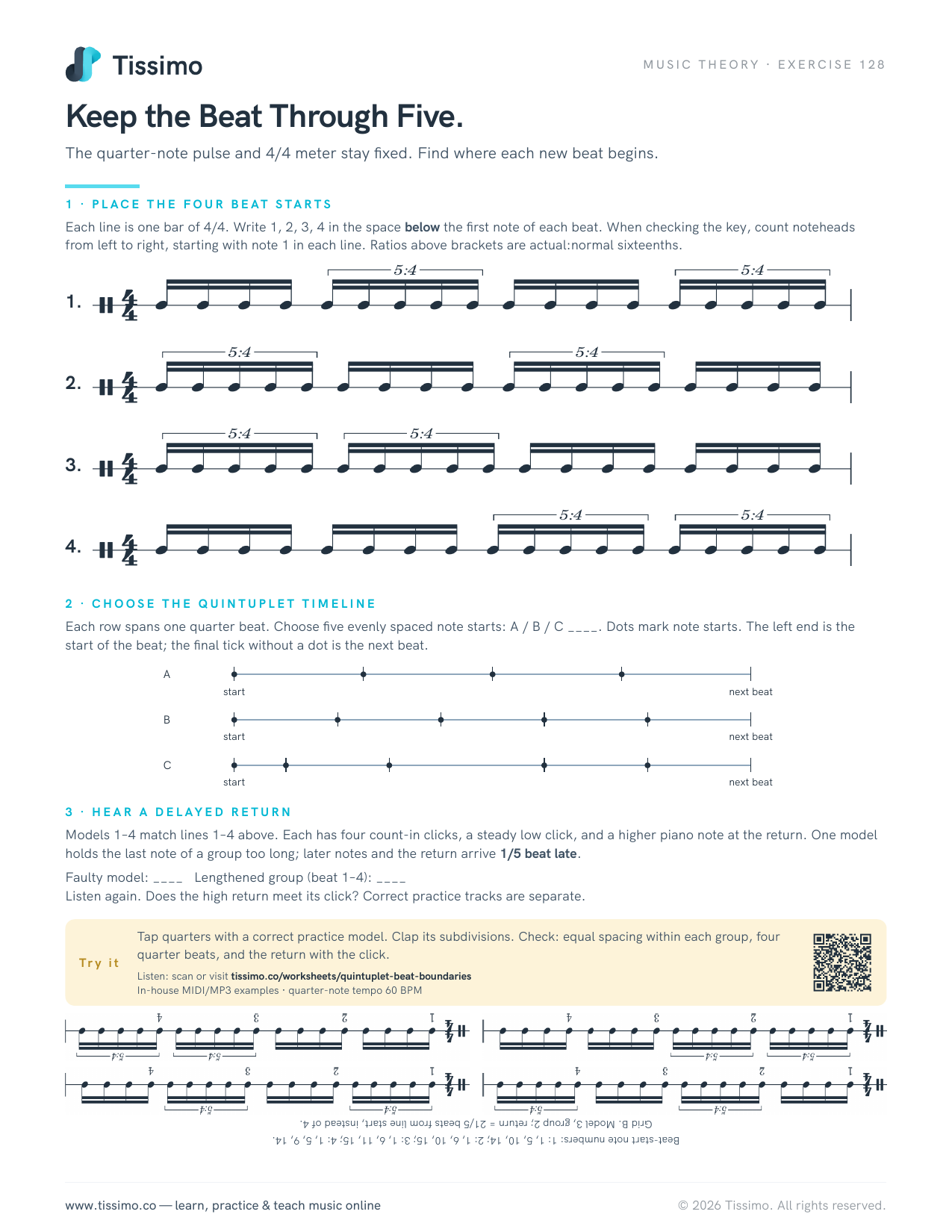 Keep the Beat Through Five.The quarter-note pulse and 4/4 meter stay fixed. Find where each new beat begins.
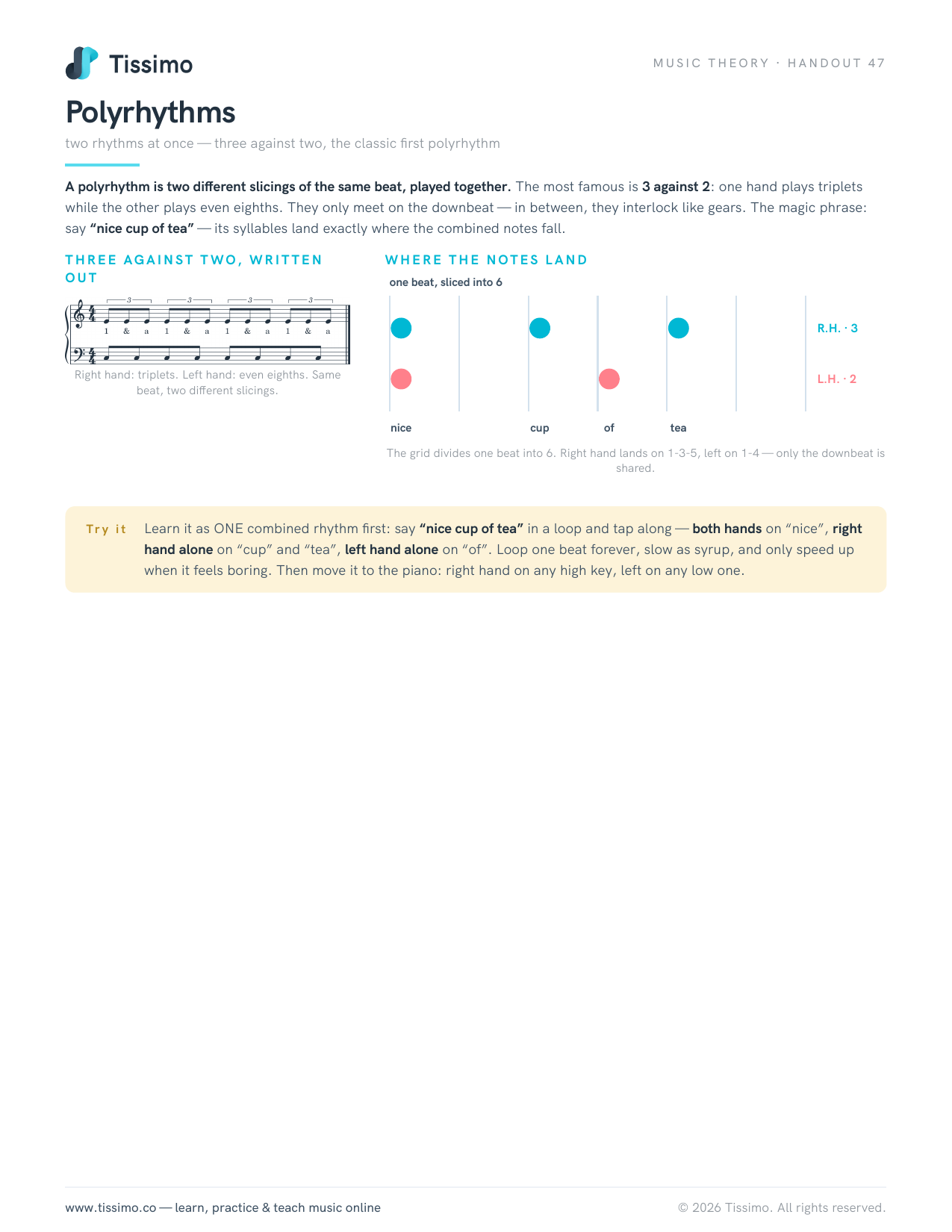 Polyrhythmstwo rhythms at once — three against two, the classic first polyrhythm