Technique & Performance
Tuning
Tuning means adjusting an instrument so its notes sound at the correct pitch, usually against a reference such as A = 440 Hz. The word also names the set of pitches an instrument's strings are tuned to.
Tuning your instrument
Most instruments drift out of tune with playing, temperature and humidity, so musicians tune before they play. The usual reference is the A above middle C at 440 hertz (A440), given by an electronic tuner, a tuning fork, a keyboard or, in an orchestra, the oboe.
- Guitar, violin and other string instruments are tuned by turning pegs or machine heads to tighten or loosen each string.
- Wind and brass instruments are tuned by sliding a joint, the mouthpiece or a tuning slide, making the tube slightly longer (lower) or shorter (higher).
- Pianos have more than two hundred strings and are tuned by a trained technician with special tools. Many technicians recommend tuning at least once a year.
Standard tunings
The word also means the set of notes the strings are tuned to:
- Guitar (standard tuning): E A D G B E, from the lowest string to the highest.
- Bass guitar (four strings): E A D G, an octave below the guitar's lowest four strings.
- Violin: G D A E. Viola: C G D A. Cello: C G D A, an octave below the viola.
- Ukulele (standard): G C E A, usually with the G tuned higher than the C, so the strings are not in order from low to high.
Guitarists also use alternate tunings, such as drop D (the lowest string lowered to D), to change the instrument's sound or make certain chords easier.
How to tune well
- Tune up to the note. If a string is sharp, go below the target and come back up; many players find the string holds its pitch better that way.
- Listen as well as look. Play your note together with the reference and listen for beating, the slow wobble you hear when two notes are close but not the same. When the wobble disappears, you are in tune.
- Check every string again. Tuning one string can pull the others slightly, especially with new strings.
- Tune where you will play, after the instrument has had time to adjust to the room's temperature.
Tuning Beats: Slower, Faster or the Same? trains the listening skill in step 2.
Tuning systems
"Tuning" also refers to a whole system for placing the notes of the octave, such as equal temperament, the modern standard on keyboards, or just intonation. These belong to the study of temperament.
Common questions
What are the notes of standard guitar tuning?
E A D G B E, from the thickest string to the thinnest. As pitches: E2, A2, D3, G3, B3 and E4.
How often should a piano be tuned?
Many technicians suggest at least once a year, and more often for a piano that is played a lot, has been moved, or lives through big seasonal changes in humidity.
Practice it: free worksheets
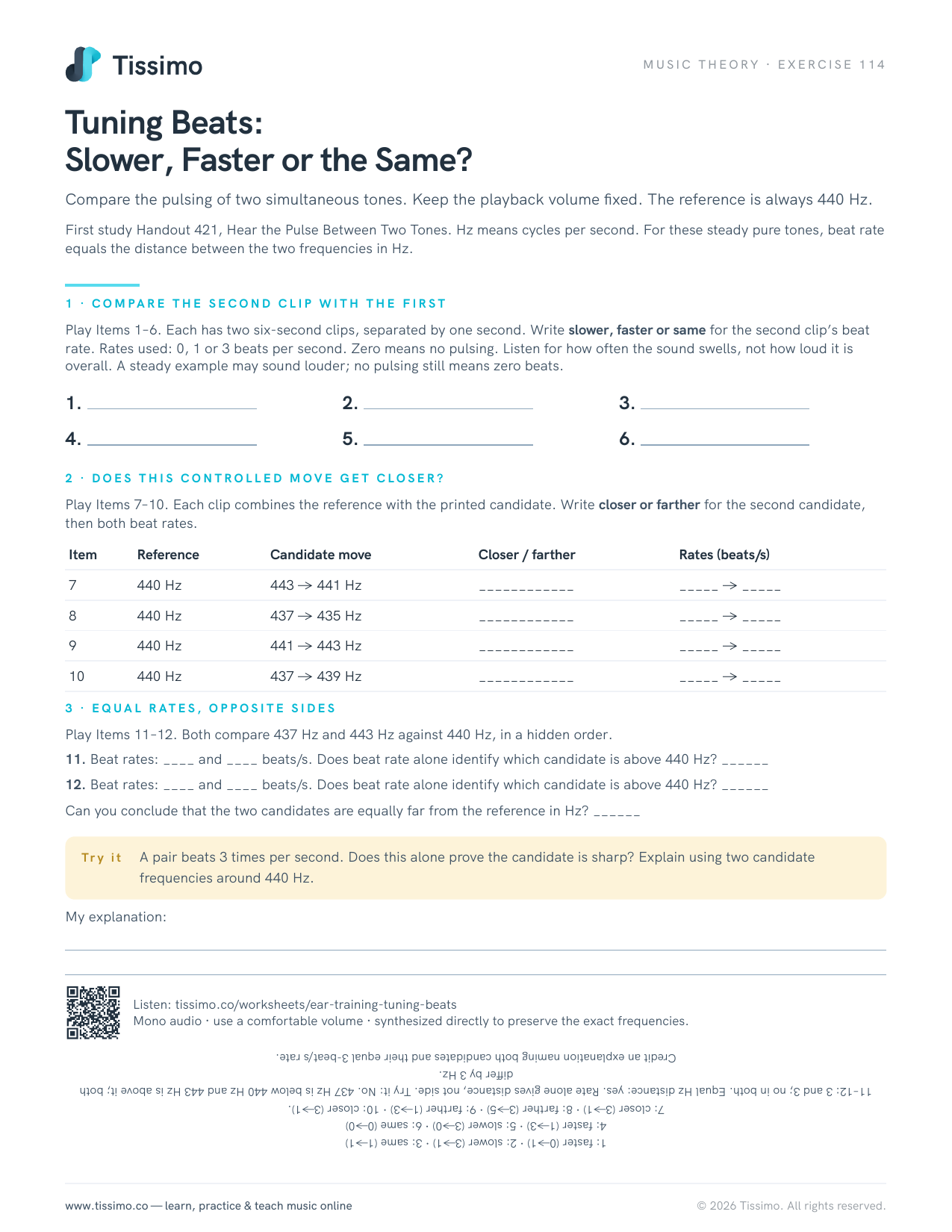 Tuning Beats: Slower, Faster or the Same?Compare the pulsing of two simultaneous tones. Keep the playback volume fixed. The reference is always 440 Hz.
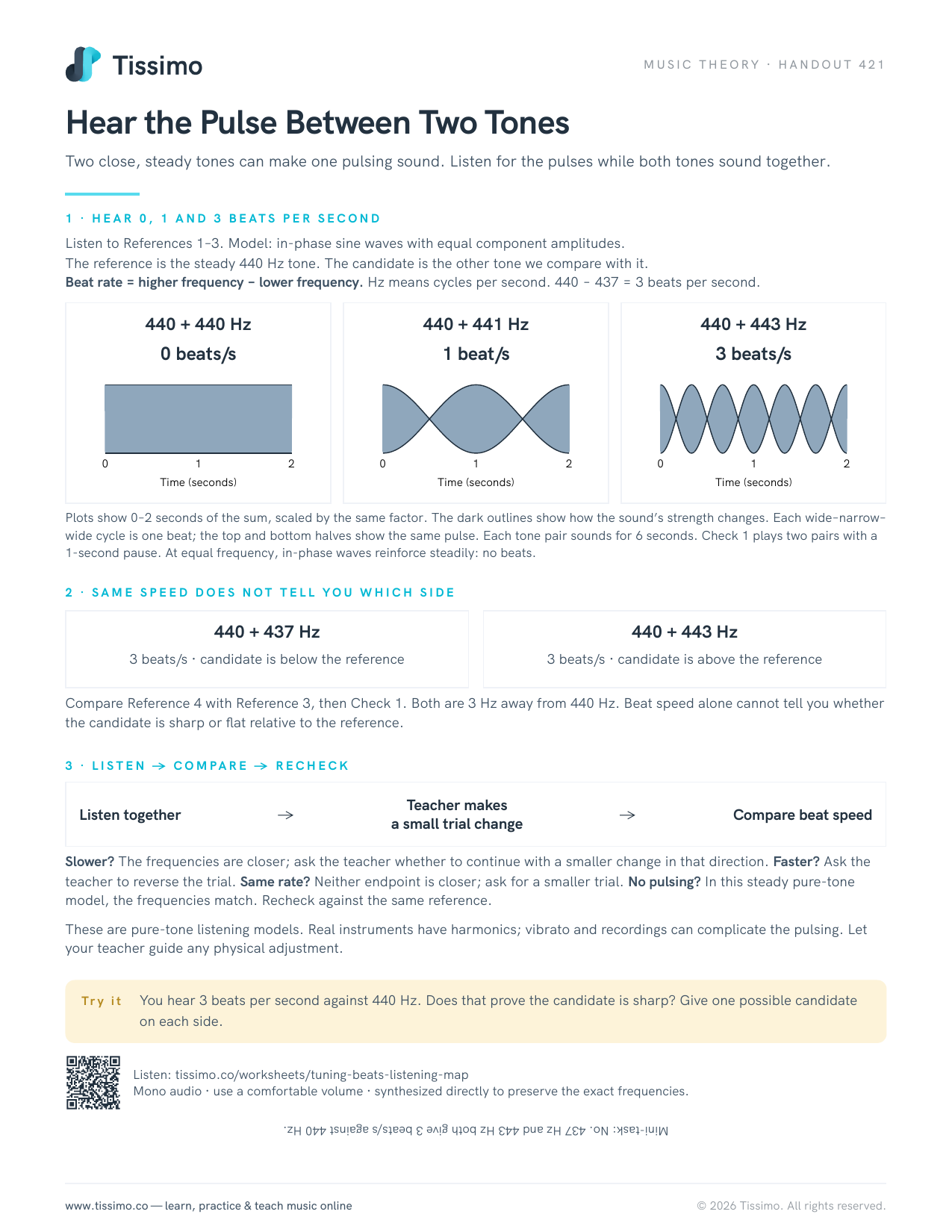 Hear the Pulse Between Two TonesTwo close, steady tones can make one pulsing sound. Listen for the pulses while both tones sound together.
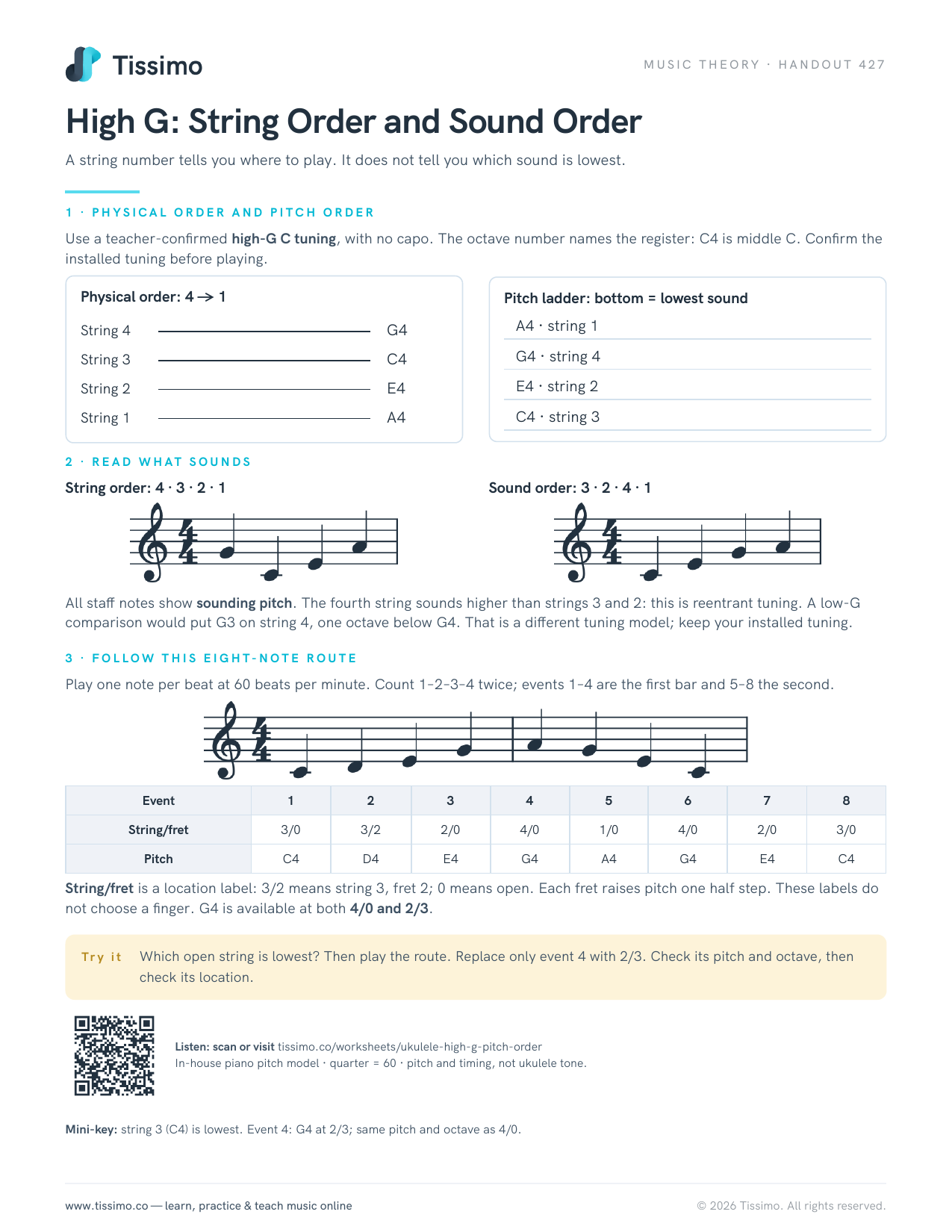 High G: String Order and Sound OrderA string number tells you where to play. It does not tell you which sound is lowest.