Instruments & Voices
Concert Pitch
Concert pitch is the actual sounding pitch of a note, as opposed to the written pitch a transposing instrument reads. The term also names the standard tuning reference, most often A4 = 440 Hz.
Concert pitch means the real sound of a note, the pitch a piano would play. Musicians need the term because transposing instruments read notes that differ from what they sound. When a band director says "concert B♭," they mean the sound B♭, whatever each player reads on their own part.
Written pitch and concert pitch
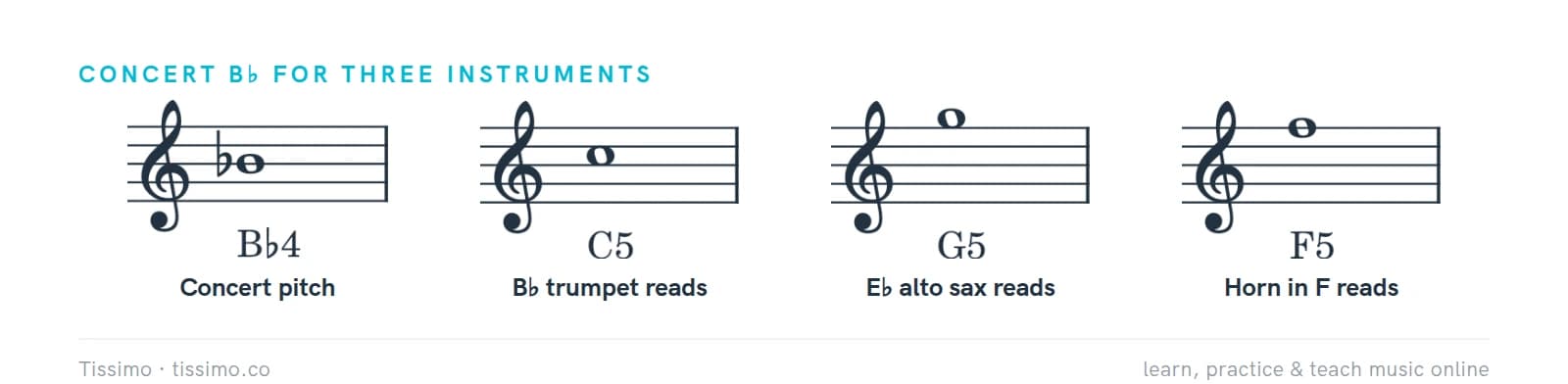
A B♭ trumpet player who reads C produces concert B♭. An E♭ alto saxophonist reads G for the same sound, and a horn player in F reads F. All three play the same concert pitch, from three different written notes.
Instruments that sound as written, such as piano, flute, oboe, violin, cello, trombone and tuba, are often called C instruments or concert-pitch instruments. Their parts already show concert pitch.
Concert scores and transposed scores
A transposed score shows each part exactly as the players read it. A concert score (or "score in C") writes every part at sounding pitch, which makes the harmony much easier to read. Many modern scores, especially for film and new music, are printed in concert pitch, while the players' individual parts are still transposed. Octave-transposing instruments such as the piccolo, guitar and double bass usually keep their octave transposition even in a concert score.
The second meaning: the tuning standard
"Concert pitch" also refers to the reference frequency ensembles tune to. Today this is most often A4 = 440 Hz (A440), although many orchestras tune slightly higher, and ensembles playing Baroque music on period instruments often tune lower, commonly to A = 415 Hz. Pitch standards have varied a great deal over history.
Tuning notes
Orchestras usually tune to an A from the oboe. Concert bands usually tune to concert B♭, which suits the many B♭ and E♭ instruments: trumpets and clarinets read it as C, alto saxophones as G.
Tips
- When talking about keys or notes with other players, say "concert" to avoid confusion: "the chorus is in concert E♭."
- If you play a transposing instrument, learn the concert names of your scales; it makes playing with pianists and guitarists much easier.
- Lead sheets and chord charts for mixed bands are usually written in concert pitch, so horn players often need a transposed copy.
Common questions
What does concert B♭ mean?
The actual sounding note B♭, as a piano would play it. Trumpet and clarinet players in B♭ read it as C, alto saxophonists as G and horn players in F as F. Concert bands often tune to it.
Is concert pitch always A = 440 Hz?
A = 440 Hz is the most common modern standard, but not the only one. Some orchestras tune a little higher, and Baroque ensembles on period instruments often use A = 415 Hz.
Practice it: free worksheets
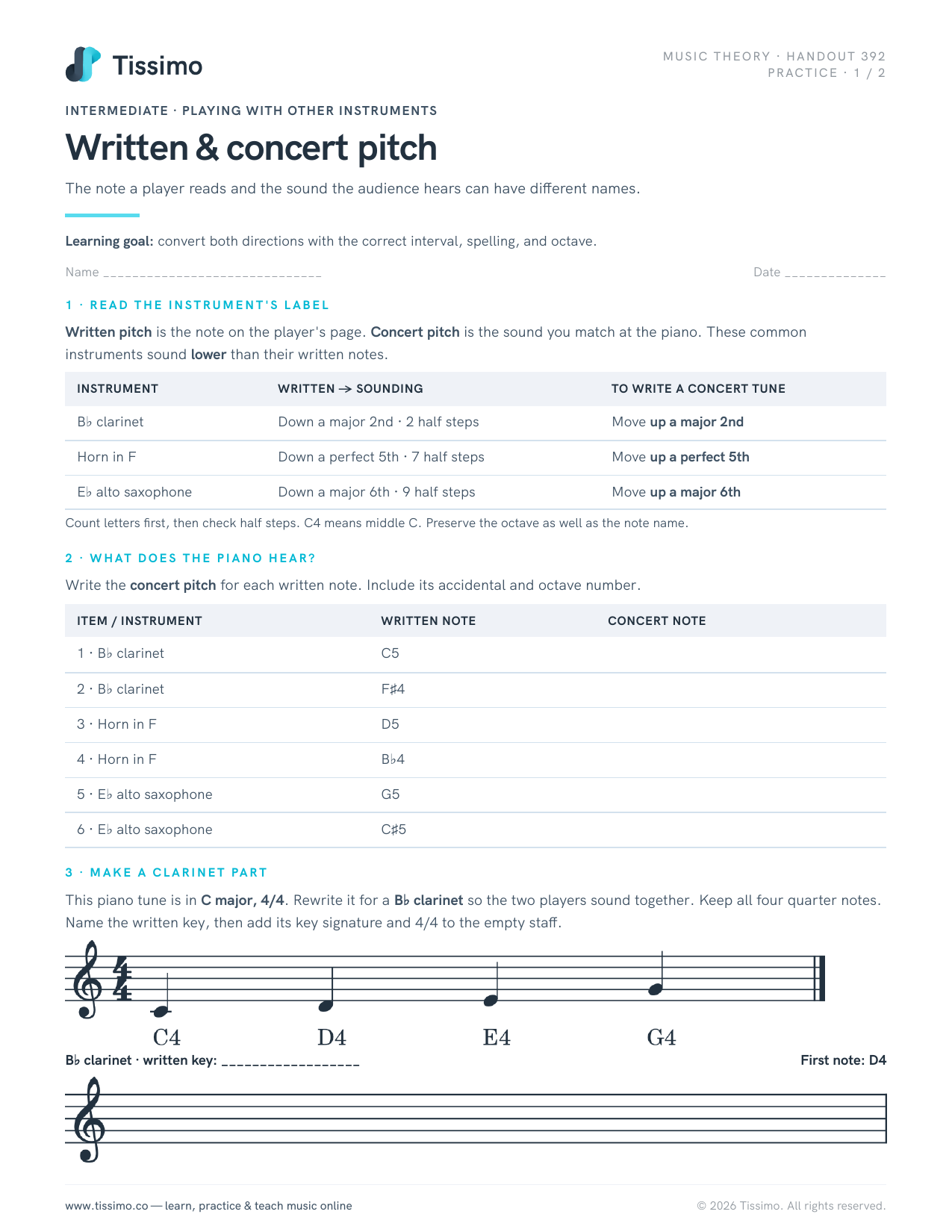 Written & concert pitchThe note a player reads and the sound the audience hears can have different names.
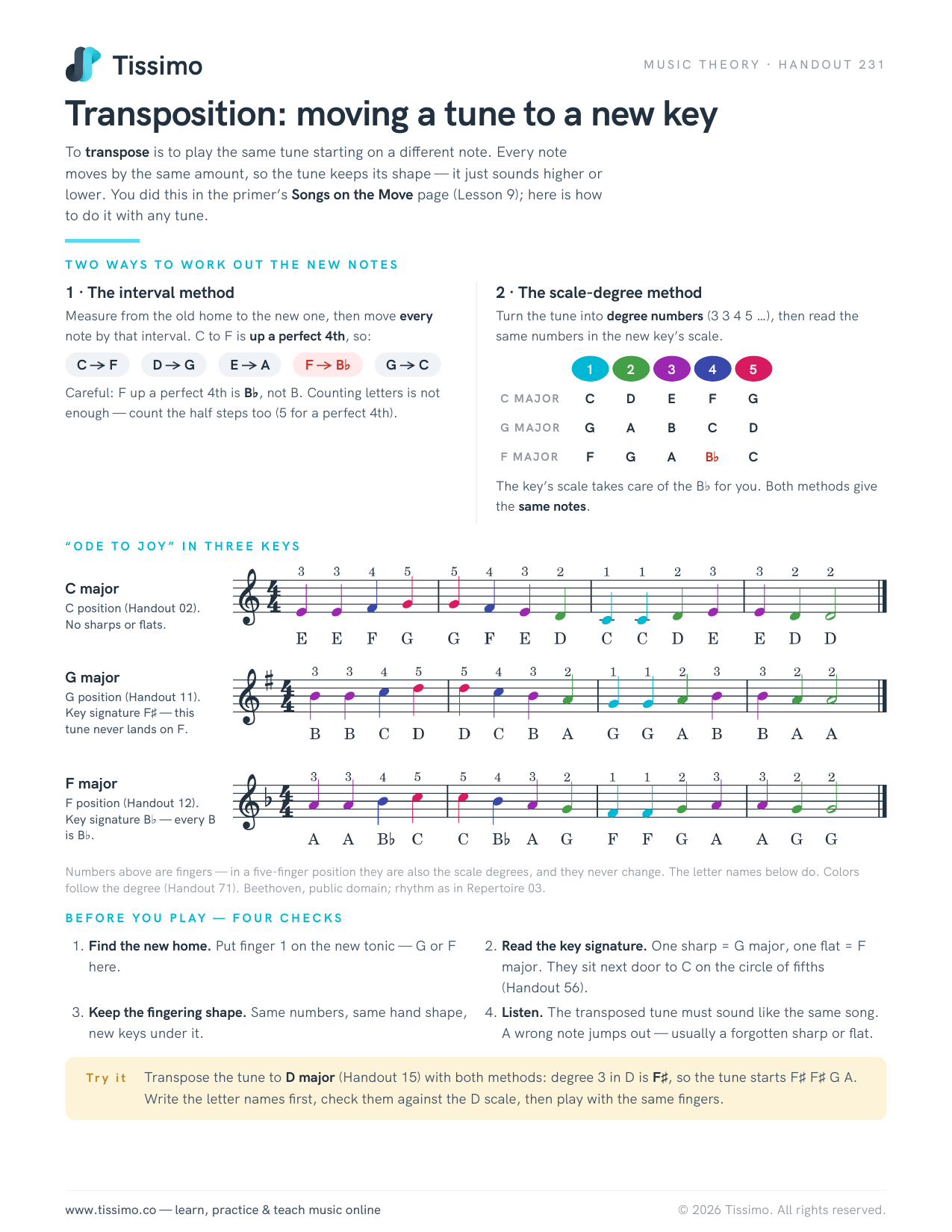 Transposition: moving a tune to a new keyTo transpose is to play the same tune starting on a different note. Every note moves by the same amount, so the tune keeps its shape — it just sounds higher or lower. Here is how to do it with any tune.
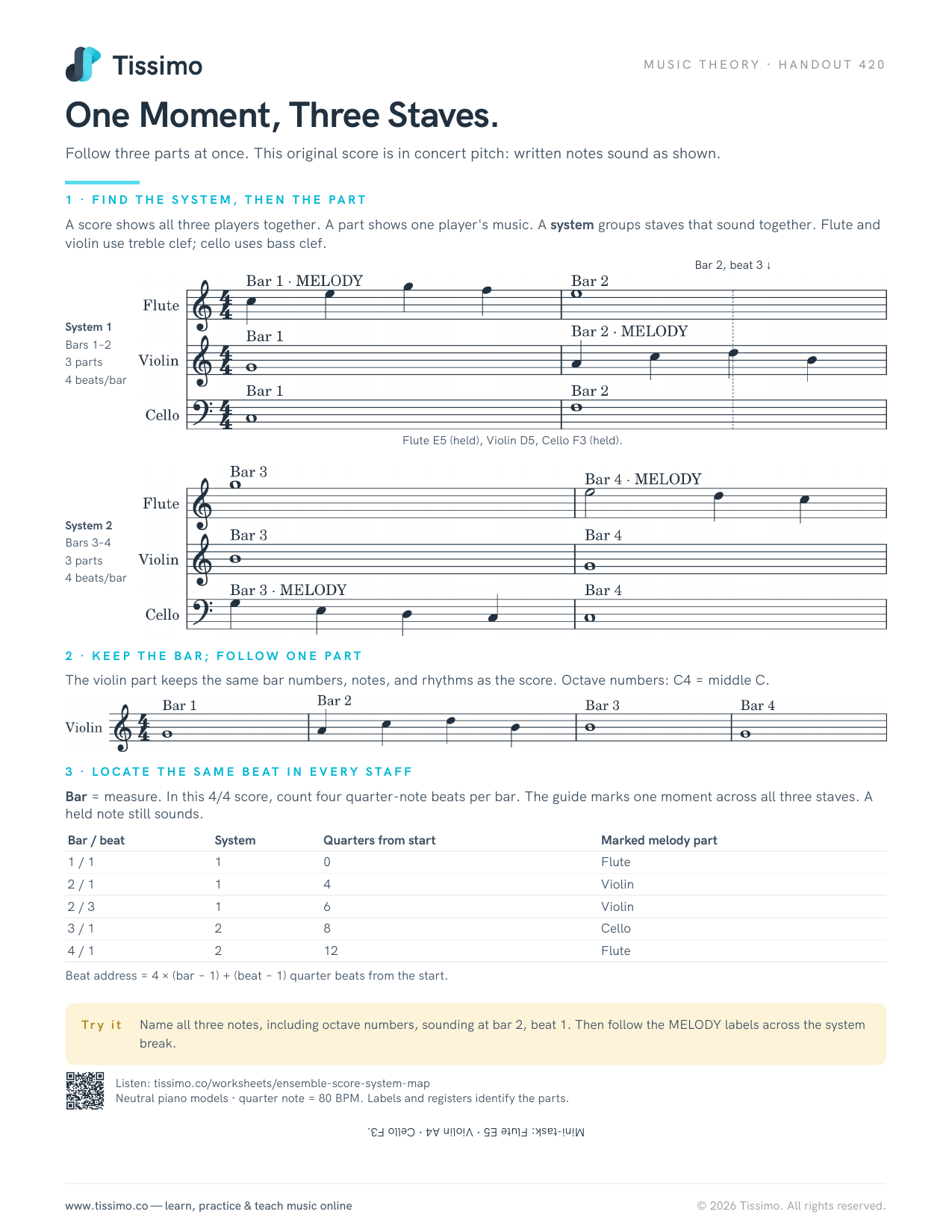 One Moment, Three Staves.Follow three parts at once. This original score is in concert pitch: written notes sound as shown.