Instruments & Voices
Trumpet
The trumpet is the highest common brass instrument: you buzz your lips into a cup-shaped mouthpiece and use three valves to change notes. The usual B♭ trumpet sounds a major second lower than written.
The trumpet is the soprano of the brass family, with a bright, ringing tone that can cut through a whole orchestra or play softly and sweetly. Its tubing, nearly 5 feet (about 1.5 meters) long on a B♭ trumpet, is wrapped into a compact loop ending in a flared bell.
How a trumpet makes its sound
You press your lips into a small, cup-shaped mouthpiece and buzz them. The buzz sets the air in the tube vibrating. Without touching the valves, you can play a whole series of notes, the harmonics of the tube (the harmonic series), just by changing the tension of your lips and the speed of your air. These open notes are the bugle-call notes.
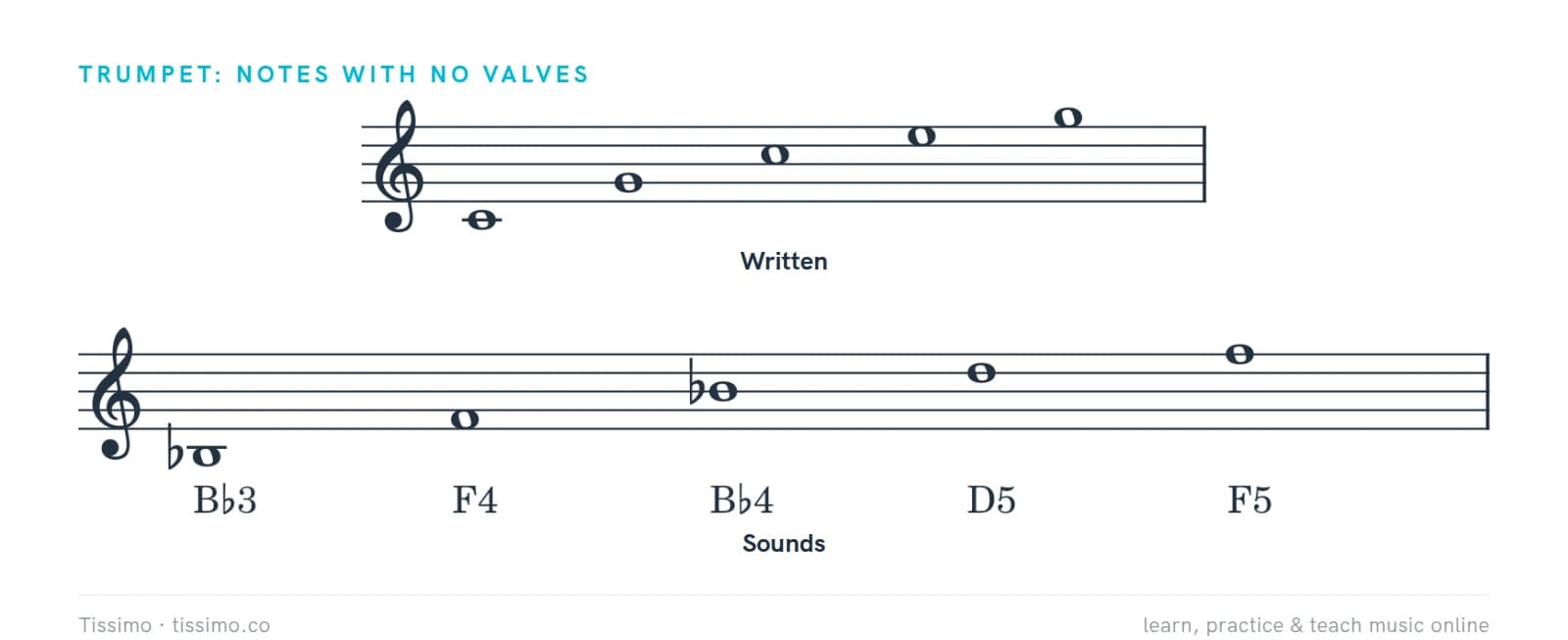
The three valves fill in the gaps by adding extra tubing. The first valve lowers the pitch by a whole step, the second by a half step and the third by a step and a half. Combining them gives every note in between. Finding a note on the trumpet is therefore a combination of the right valves and the right lip setting, which is why trumpeters spend so much time training their ears and their embouchure.
A transposing instrument
The most common trumpet is in B♭: a written C sounds as B♭, a major second lower. Trumpet parts are written a major second higher than they sound, in treble clef. Many orchestral trumpeters also play the C trumpet, which sounds as written, and the small piccolo trumpet, an octave higher, is used for Baroque music. The cornet and flugelhorn are close relatives with a mellower sound and the same fingerings.
Range
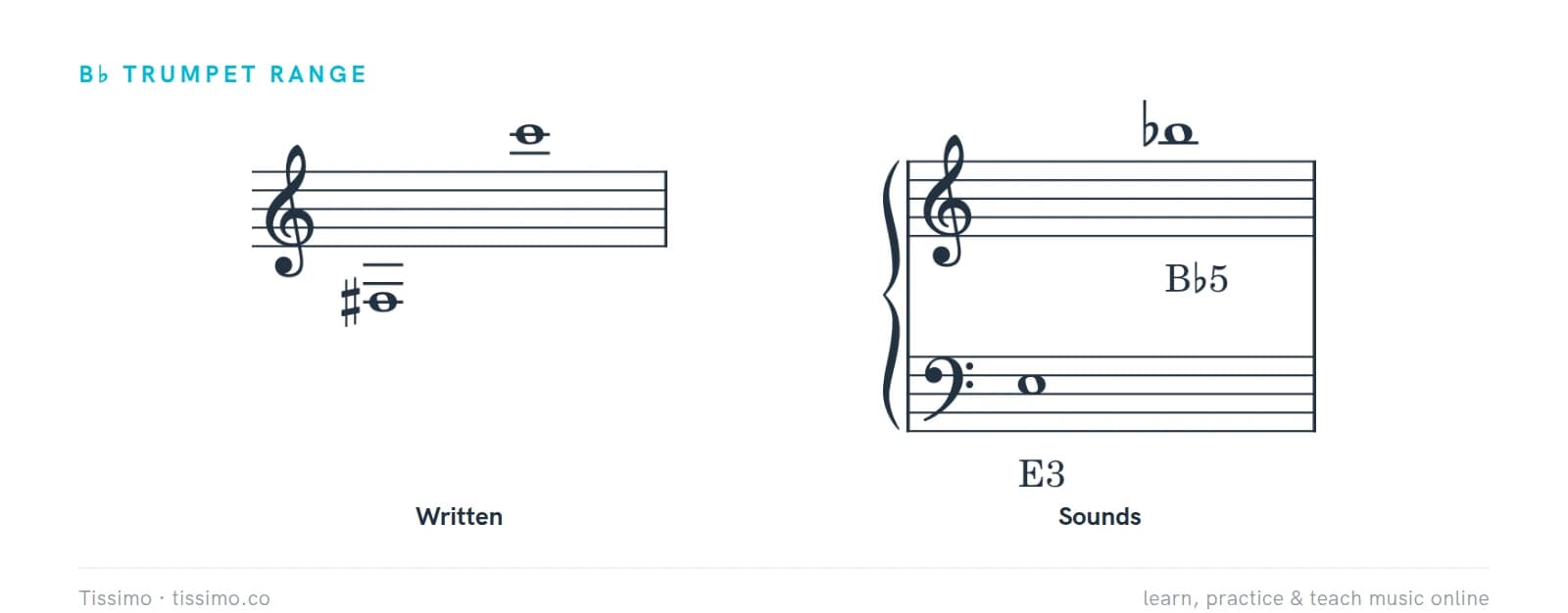
The B♭ trumpet's written range for most players runs from F♯3 to about C6, which sounds from E3 to about B♭5. Advanced and lead players go well above that.
Its role
Trumpets play fanfares and powerful climaxes in the orchestra, lead the brass section in concert and marching bands, take solos and section lines in jazz big bands, and add punch in Latin, ska, funk and pop horn sections. Mutes placed in the bell (straight, cup, harmon and others) change the sound.
Tips for beginners
- Start each practice with gentle buzzing on the mouthpiece alone.
- Use steady air from low in your body rather than pressing the mouthpiece harder against your lips.
- Rest often; tired lips stop responding, and short, frequent sessions build strength safely.
- Practice lip slurs between open notes to learn to move between harmonics without the valves.
Common questions
Why is trumpet music written a step higher than it sounds?
The common trumpet is pitched in B♭, and writing its part a major second higher lets trumpeters use the same fingerings on trumpets in different keys. A written C on a B♭ trumpet sounds as concert B♭. See transposing instrument.
How many valves does a trumpet have?
Three. Valve 1 lowers the pitch a whole step, valve 2 a half step and valve 3 a step and a half; together they cover every note between the open harmonics. Piccolo trumpets often add a fourth valve.
Practice it: free worksheets
 Two Notes, Same ValvesPrerequisite: B♭ trumpet student who can already produce written C4 and G4 comfortably with a teacher.
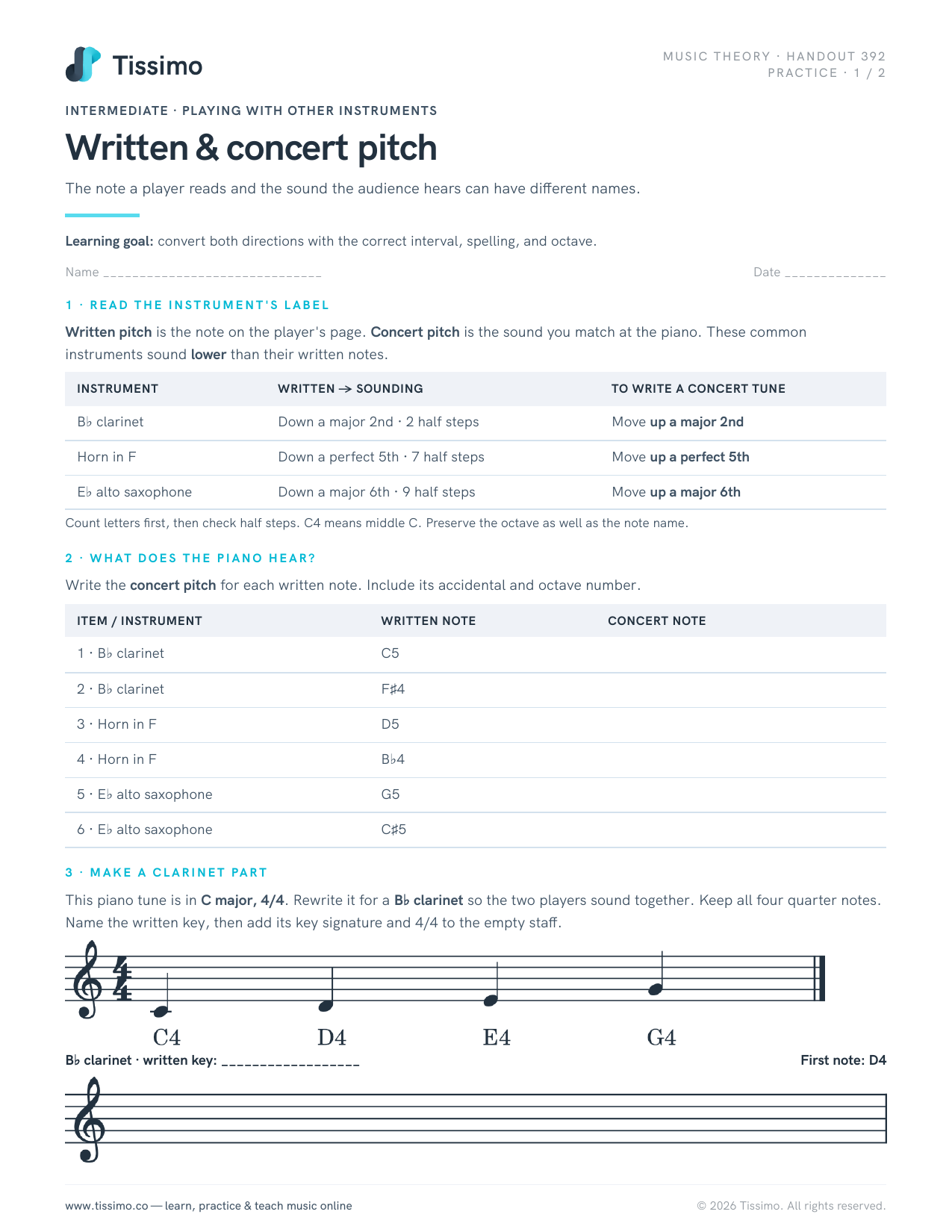 Written & concert pitchThe note a player reads and the sound the audience hears can have different names.
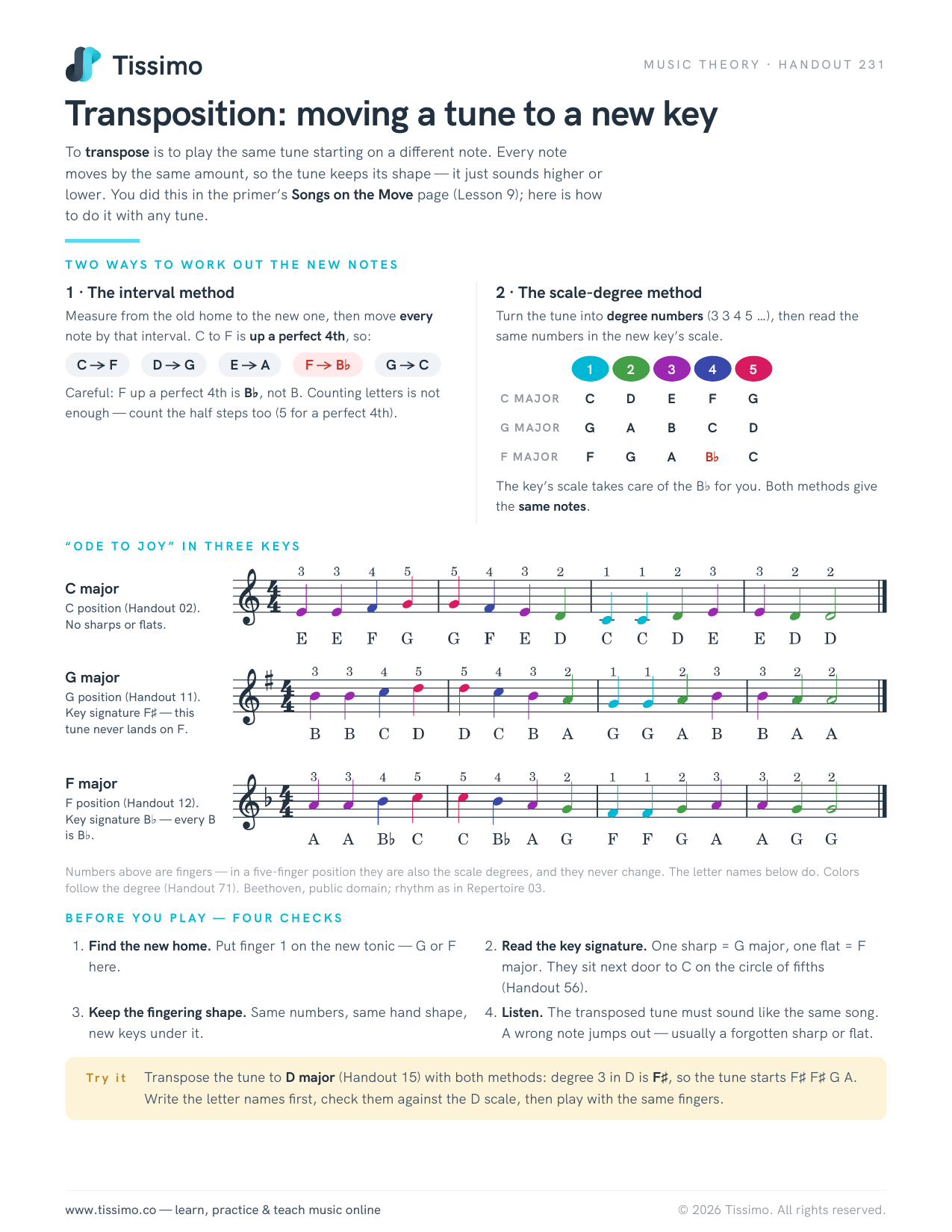 Transposition: moving a tune to a new keyTo transpose is to play the same tune starting on a different note. Every note moves by the same amount, so the tune keeps its shape — it just sounds higher or lower. Here is how to do it with any tune.
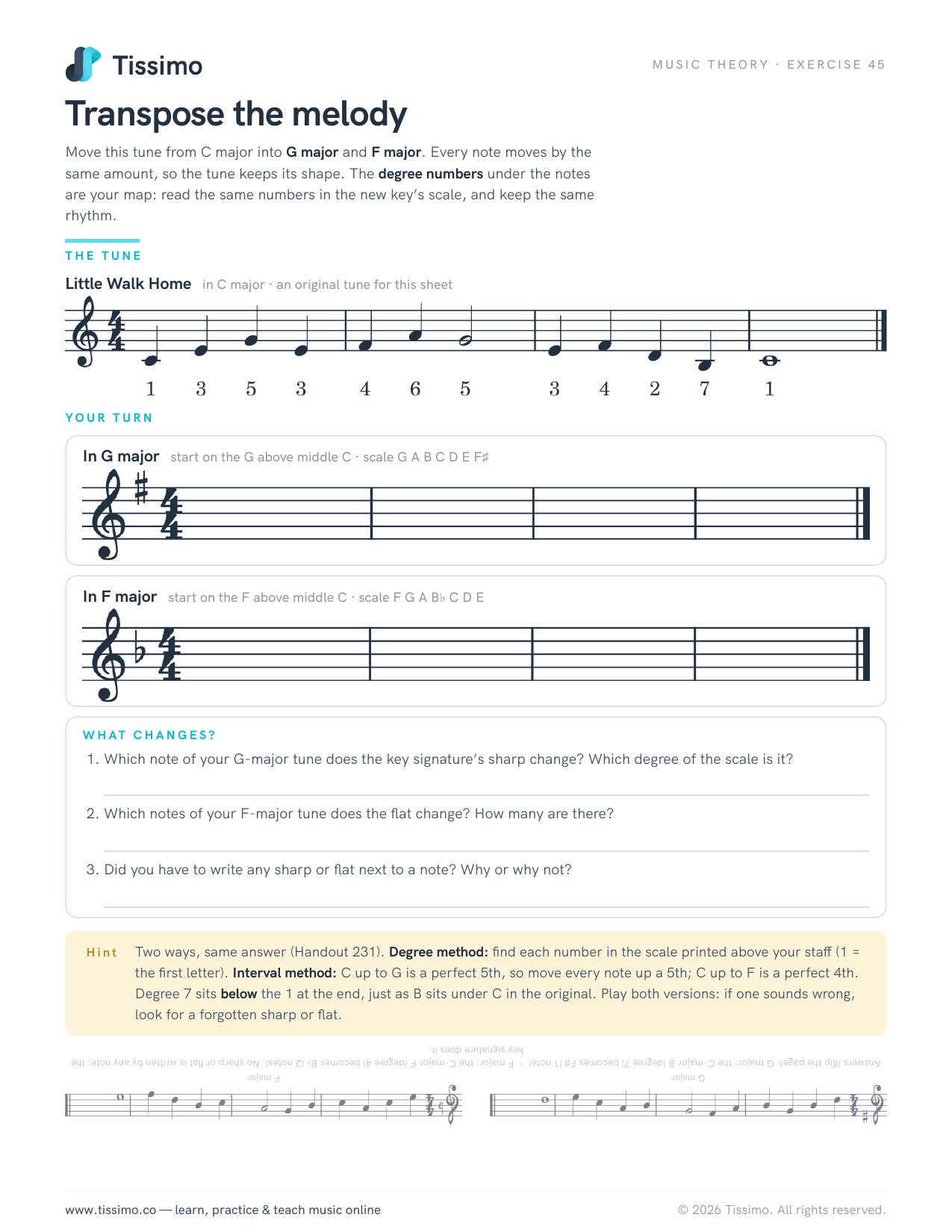 Transpose the melodyMove this tune from C major into G major and F major. Every note moves by the same amount, so the tune keeps its shape. The degree numbers under the notes are your map: read the same numbers in the new key’s scale, and keep the same rhythm.