Instruments & Voices
French Horn
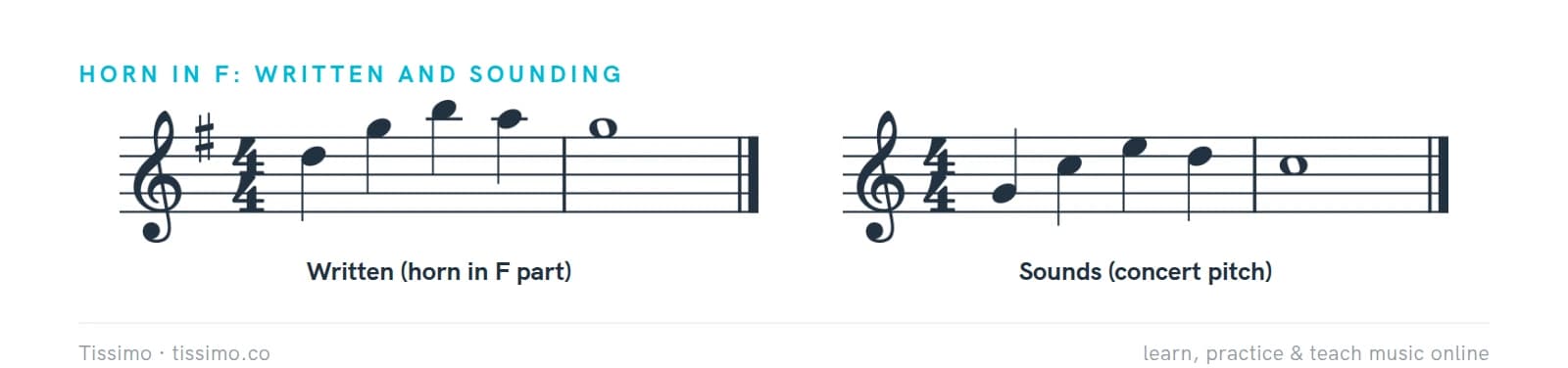
The French horn is a brass instrument with long, coiled tubing, rotary valves and a wide bell that the player's right hand rests inside. The horn in F sounds a perfect fifth lower than written.
The French horn, which players usually call simply the horn, has one of the most beautiful and versatile sounds in the orchestra: warm and round when soft, heroic when loud. Its long tubing is coiled into a circle that ends in a wide bell, which points backward, away from the audience. The player's right hand rests inside the bell.
How the horn makes its sound
As on other brass instruments, you buzz your lips into the mouthpiece, which on the horn is funnel-shaped rather than cup-shaped. The horn's tube is long and narrow, so its normal playing range sits high in its harmonic series, where the available notes lie close together. That is why the horn has a reputation for being hard to play accurately: a small change in the lips can land you on the neighboring harmonic.
The left hand works three or four rotary valves. Most players use a double horn, which combines a horn in F with a horn in B♭ in one instrument; a thumb valve switches between them, and players generally use the B♭ side for higher notes. The right hand in the bell adjusts the tone and the tuning: covering more of the bell changes the pitch, and closing it completely, a technique called stopping, produces a brassy, buzzing sound.
A transposing instrument
Horn parts are usually written for horn in F, which sounds a perfect fifth lower than written, so a written C5 sounds as F4. Parts are mostly in treble clef, with bass clef for low notes. In some older scores the bass-clef notes are written an octave lower than in modern notation, so check the edition or ask your teacher when a low passage looks odd.
Range
The horn's practical range sounds from about B1 to F5, written in F as roughly F♯2 to C6. Professional parts sometimes go further at both ends.
Its role
An orchestra usually has four horns, and they blend with both the brass and the woodwinds, so composers use them to hold harmonies, play big melodies and connect the two sections. The horn is the only brass instrument in the standard wind quintet, and it plays in brass quintets, concert bands and film scores, where horn melodies are a classic sound.
Tips for beginners
- Many players start on a single F horn or a double horn; your teacher will suggest which suits you.
- Sing or hum the note before you play it. Hearing the pitch in advance is the best way to hit the right harmonic.
- Keep the right hand cupped, fingers together, against the far side of the bell.
- Practice slow lip slurs between neighboring harmonics to build accuracy.
Common questions
Why is it called the French horn?
The name is mainly used in English-speaking countries; most players and orchestras simply say "horn." The history of the name is not clear-cut, and the instrument as we know it developed across several European countries.
Why does the horn player put a hand in the bell?
The right hand supports the instrument and shapes the sound: it softens and darkens the tone and fine-tunes the pitch. Moving it further in changes the pitch more and, fully closed, gives the buzzing "stopped" sound.
Practice it: free worksheets
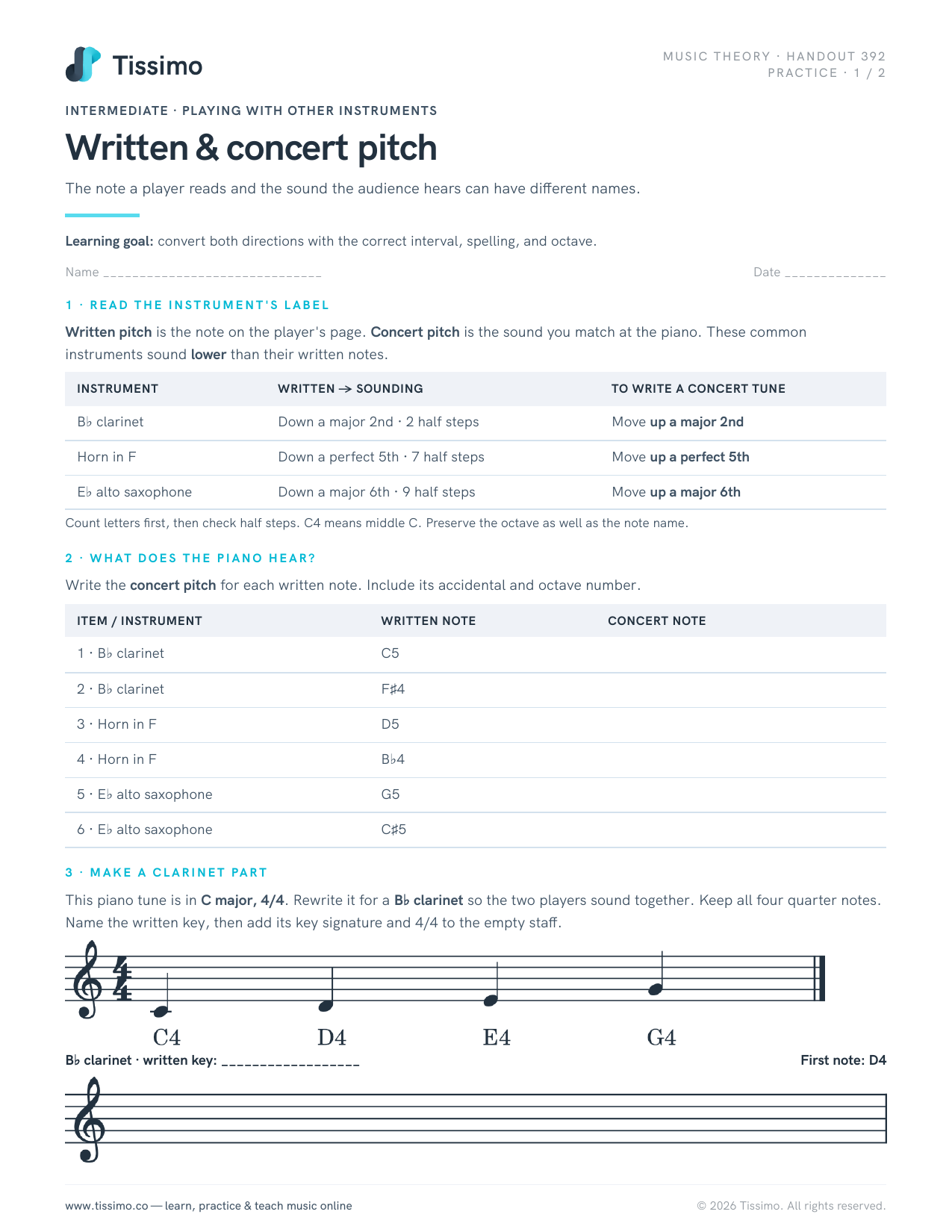 Written & concert pitchThe note a player reads and the sound the audience hears can have different names.
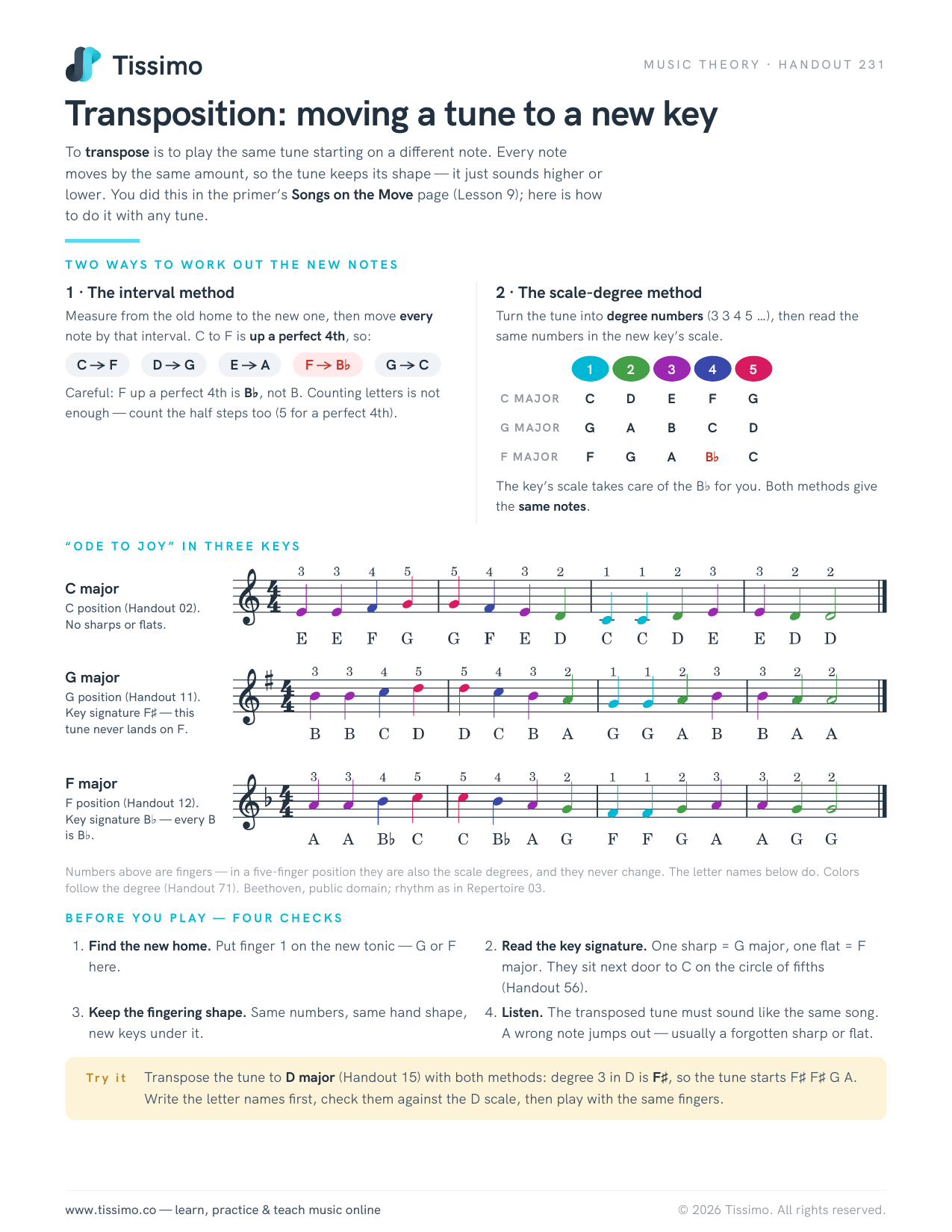 Transposition: moving a tune to a new keyTo transpose is to play the same tune starting on a different note. Every note moves by the same amount, so the tune keeps its shape — it just sounds higher or lower. Here is how to do it with any tune.
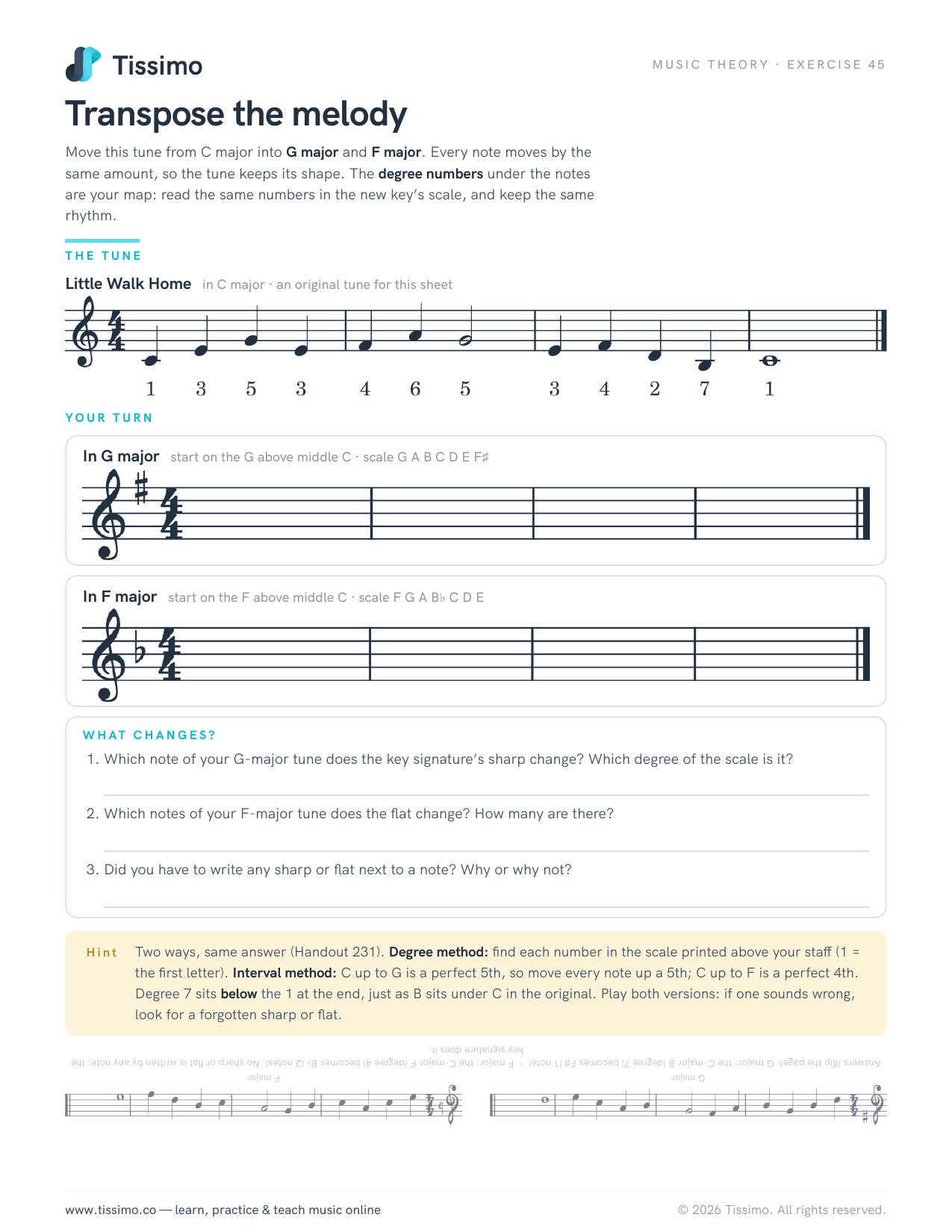 Transpose the melodyMove this tune from C major into G major and F major. Every note moves by the same amount, so the tune keeps its shape. The degree numbers under the notes are your map: read the same numbers in the new key’s scale, and keep the same rhythm.