Instruments & Voices
Transposing Instrument
A transposing instrument is one whose music is written at a different pitch from the one it sounds. A B♭ clarinet's written C sounds as B♭; a horn in F's written C sounds as the F below.
On a transposing instrument, the note you read and the note the audience hears are different. When a B♭ clarinetist plays a written C, the sound is the B♭ a major second lower. The written part is shifted by a fixed interval so that, with the shift, it sounds right. The sound itself is called concert pitch.
How the name works
A transposing instrument is named by the note it sounds when it plays a written C:
- A B♭ instrument sounds B♭ when it reads C.
- An E♭ instrument sounds E♭ when it reads C.
- An instrument in F sounds F when it reads C.
A B♭ clarinet or trumpet part is written a major second above concert pitch; tenor saxophone and modern treble-clef bass clarinet parts are written a major ninth above. Horn in F is written a perfect fifth above. The instrument's name identifies a pitch class, so you must also check the octave.
Common transposing instruments
- B♭ clarinet, B♭ trumpet, soprano saxophone: sound a major second lower than written.
- Tenor saxophone, bass clarinet (in treble clef): sound a major ninth lower.
- E♭ alto saxophone: sounds a major sixth lower.
- E♭ baritone saxophone: sounds an octave and a major sixth lower.
- Horn in F, English horn: sound a perfect fifth lower.
- A clarinet: sounds a minor third lower.
- Piccolo: sounds an octave higher. Glockenspiel: two octaves higher.
- Guitar, bass guitar, double bass: sound an octave lower.
The octave transpositions only keep the notes near the staff; the note names stay the same.
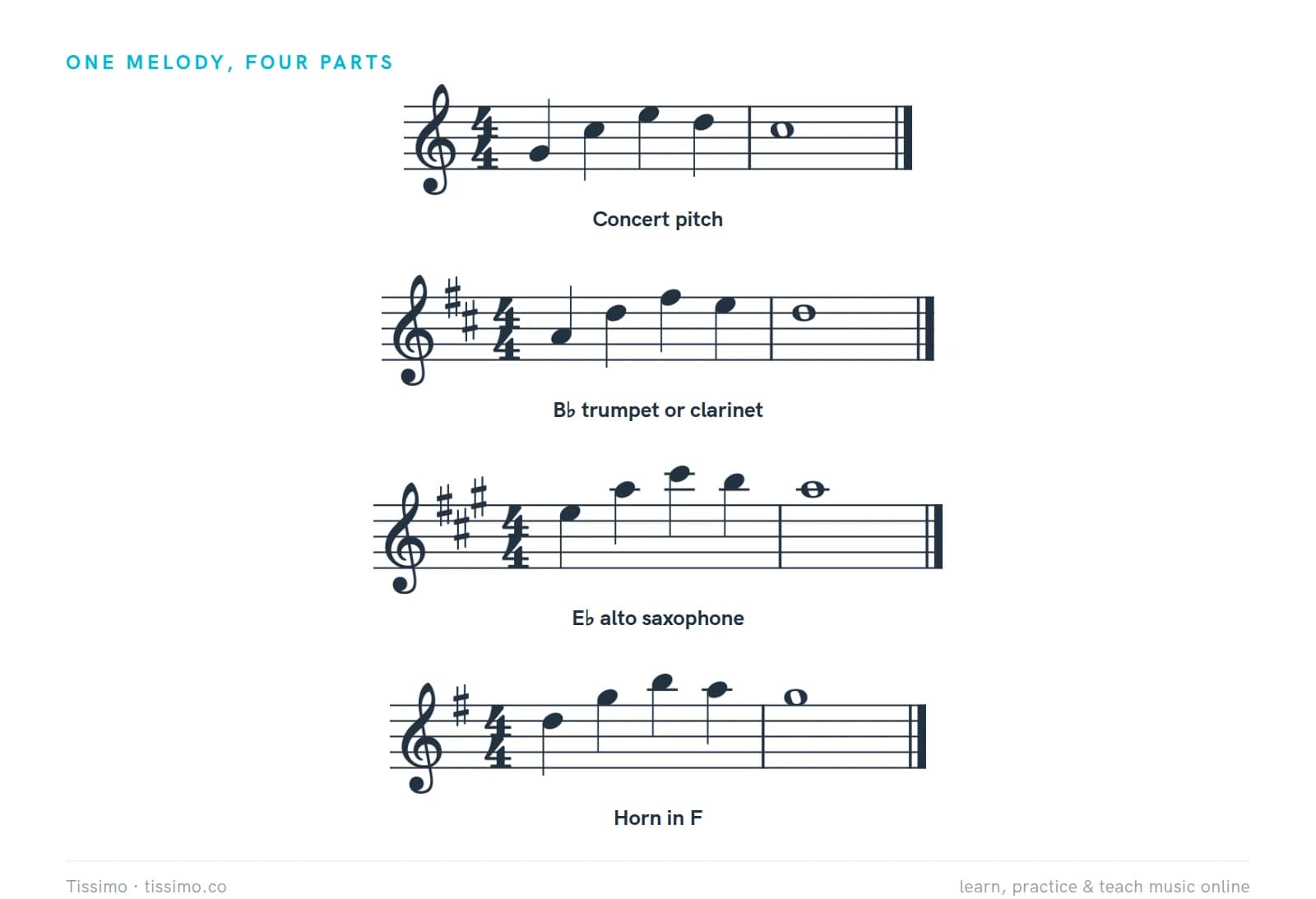
Why transpose?
The main reason is fingering. Clarinets and saxophones come in families of different sizes, and writing their parts in transposition lets a player use the same fingerings on all of them: a written G is fingered the same on every saxophone, whatever pitch it sounds. Historically, brass players changed the key of natural horns and trumpets with extra lengths of tubing (crooks) and read their parts the same way in any key. And octave transpositions keep very high or low instruments out of long rows of ledger lines.
Working with transposing instruments
- For B♭ clarinet or trumpet, move every note up a major second. For tenor saxophone or modern treble-clef bass clarinet, move it up a major ninth. Both use a key signature two steps farther clockwise around the circle of fifths.
- To find the sounding pitch, reverse the instrument's written transposition. Most listed instruments sound lower than written, but piccolo and glockenspiel sound higher.
- A transposed score shows each part as the players read it; a concert score shows everything at sounding pitch, which is easier for reading harmony.
Common questions
Why are some instruments transposing?
Mostly so players can switch between sizes of the same instrument with the same fingerings, as with clarinets and saxophones. For brass, the habit comes from natural horns and trumpets, which changed key with extra tubing. Octave transpositions simply keep the notes on the staff.
Is the piano a transposing instrument?
No. The piano sounds exactly as written, as do the violin, viola, cello, flute, oboe, bassoon, trombone and tuba in normal use. They read at concert pitch.
How do I transpose for a B♭ instrument?
For B♭ clarinet or trumpet, write a major second above concert pitch. For tenor saxophone or modern treble-clef bass clarinet, write a major ninth above. Both use the same key-signature change: concert C major becomes D major, and concert F major becomes G major.
Practice it: free worksheets
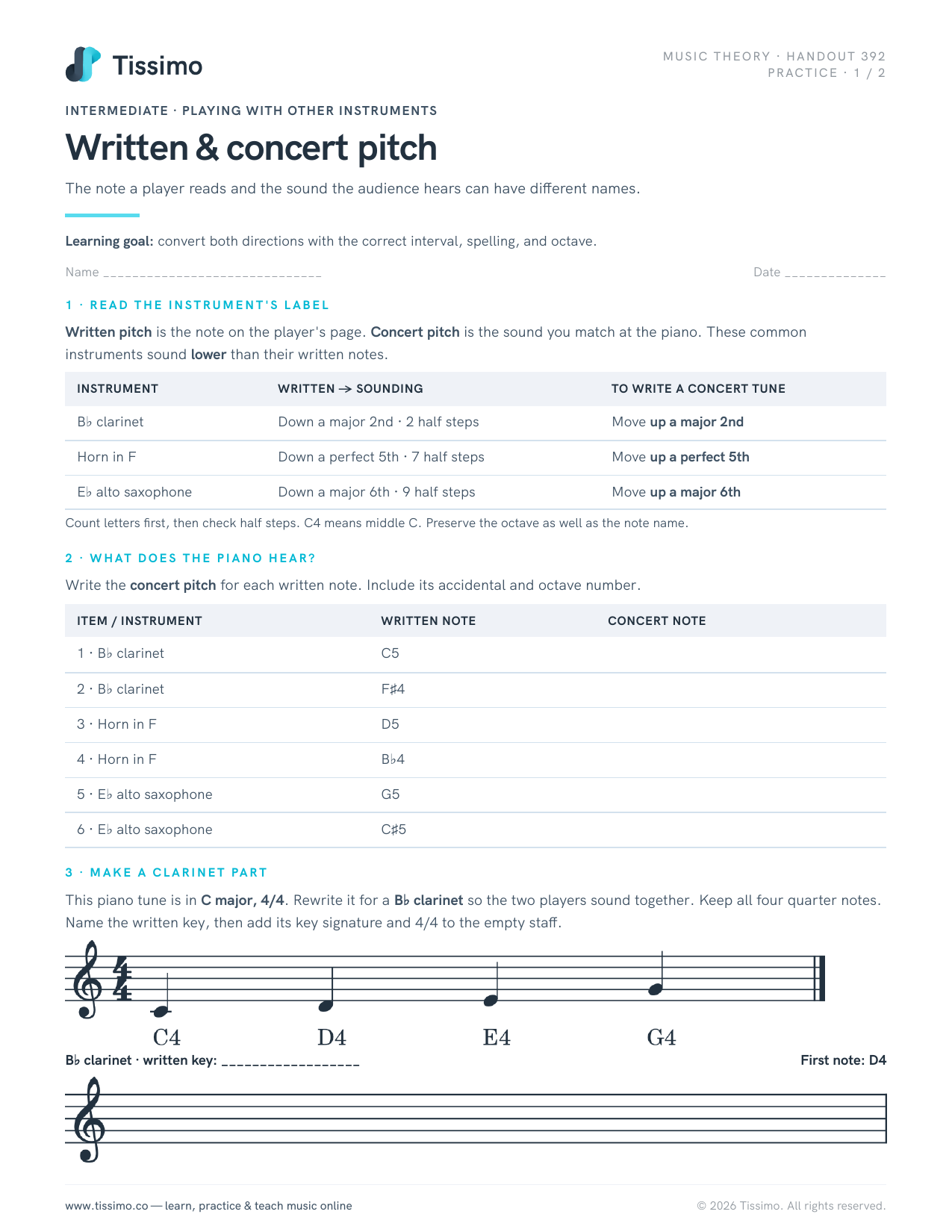 Written & concert pitchThe note a player reads and the sound the audience hears can have different names.
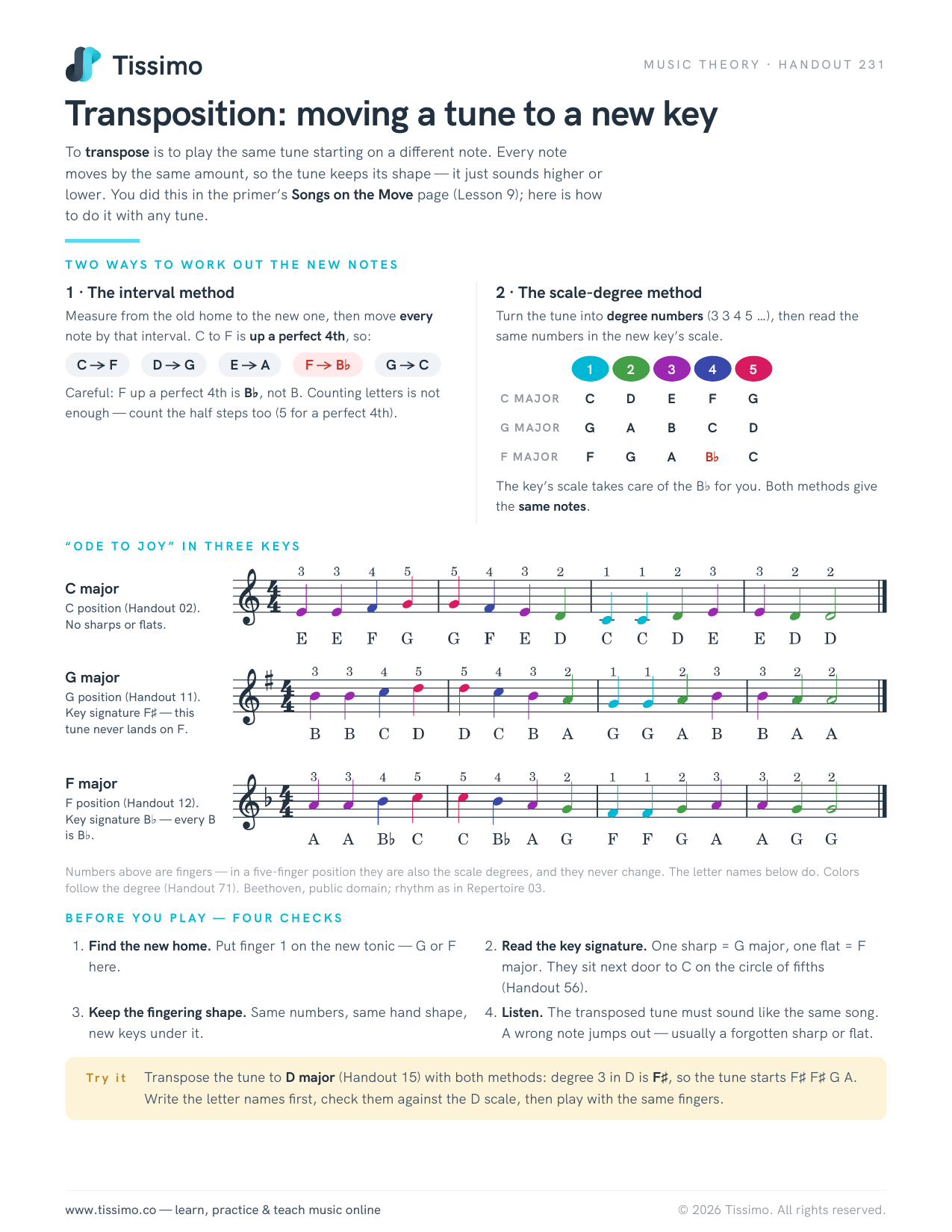 Transposition: moving a tune to a new keyTo transpose is to play the same tune starting on a different note. Every note moves by the same amount, so the tune keeps its shape — it just sounds higher or lower. Here is how to do it with any tune.
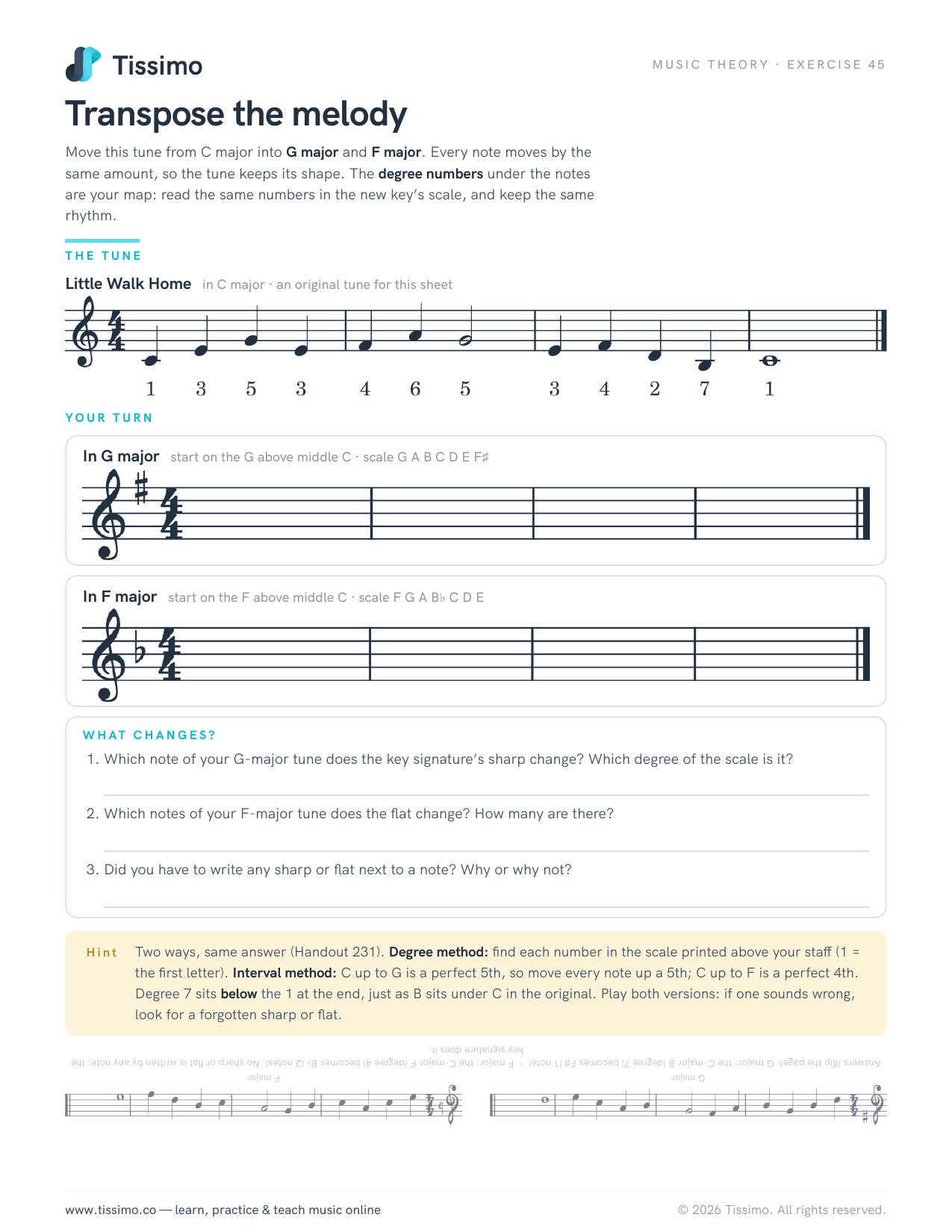 Transpose the melodyMove this tune from C major into G major and F major. Every note moves by the same amount, so the tune keeps its shape. The degree numbers under the notes are your map: read the same numbers in the new key’s scale, and keep the same rhythm.
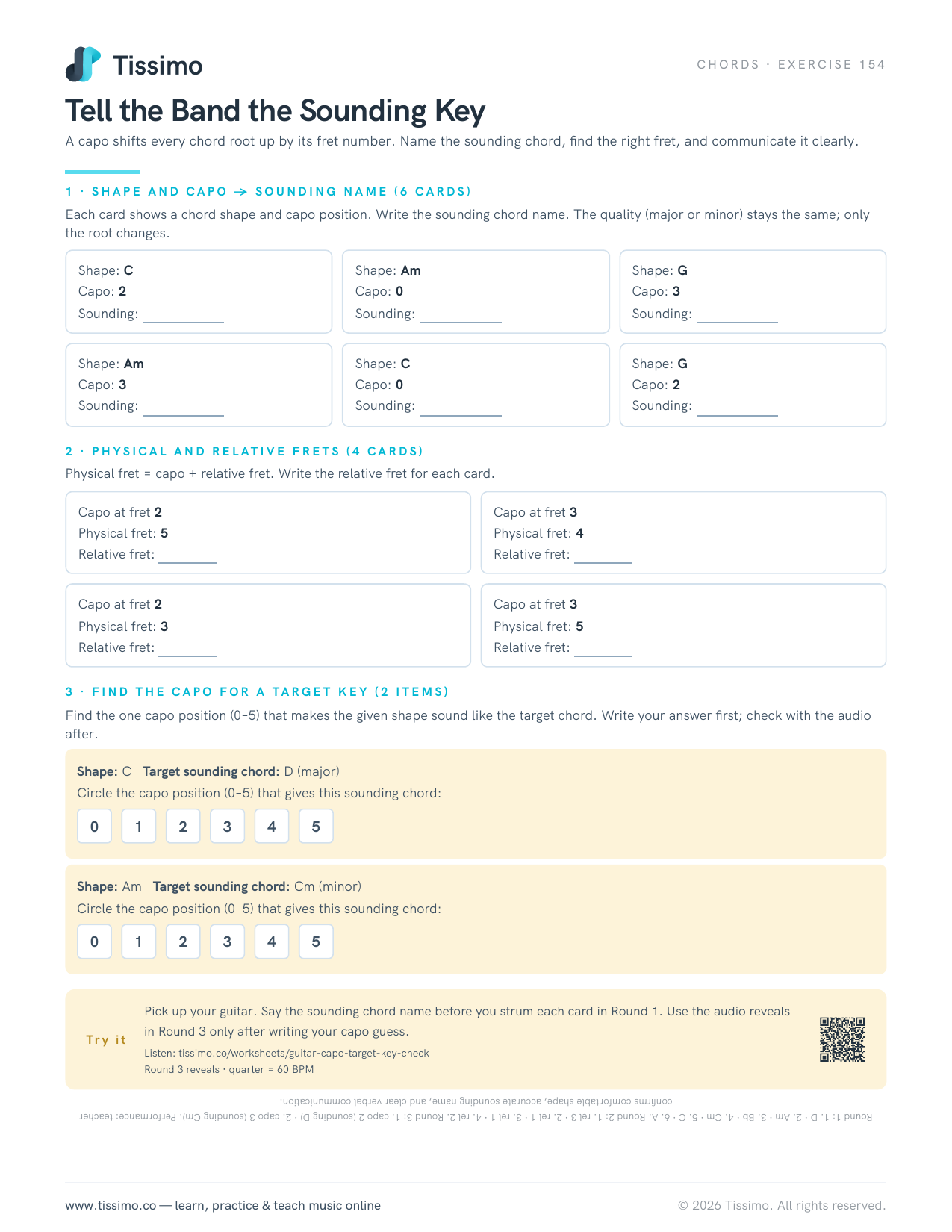 Tell the Band the Sounding KeyA capo shifts every chord root up by its fret number. Name the sounding chord, find the right fret, and communicate it clearly.