Scales, Keys & Modes
Transposition
Pronounced trans-puh-ZISH-un
Transposition is moving a piece of music, or part of it, higher or lower by a fixed interval. Every note moves by the same amount, so the melody and harmony keep their shape in a new key.
To transpose is to play or write the same music starting on a different note. Every note moves up or down by the same interval, so the melody keeps its shape, the chords keep their qualities and the rhythm stays the same; only the pitch level and the key change.
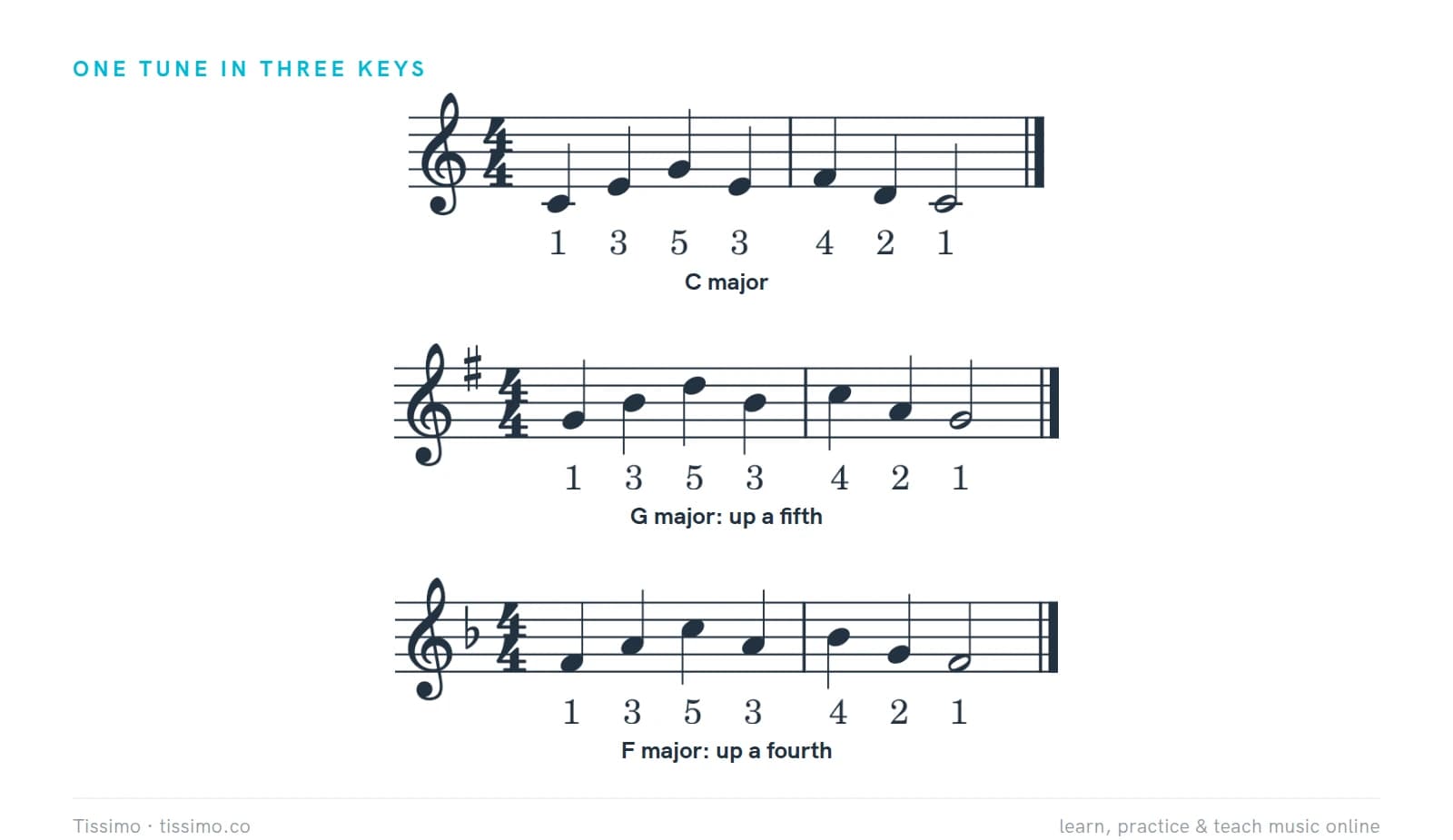
Why musicians transpose
- To fit a voice. A song that sits too high for a singer can be moved down a step or two.
- For transposing instruments. A B♭ clarinet or B♭ trumpet sounds a whole step lower than written, so its part is written a whole step higher than it sounds. See transposing instrument and concert pitch.
- On guitar. A capo raises every string by the same number of half steps, transposing familiar chord shapes into a new key.
- For practice. Playing a piece or exercise in several keys tests whether you understand it or have only memorized where your fingers go.
How to transpose by interval
- Decide the interval, for example up a major second (C to D).
- Write the new key signature: C major to D major means two sharps.
- Move every note by the same interval, counting letter names as well as half steps: C becomes D, E becomes F♯, G becomes A.
- Check accidentals outside the key: they move too, though the sign may change. A B♭ moved up a major second becomes C, and an F♯ becomes G♯.
How to transpose by scale degree
Often it is easier to think in scale degrees. Name each note by its number in the old key (C E G in C major is 1 3 5), then play the same numbers in the new key (1 3 5 in G major is G B D). Chord symbols work the same way: C–F–G (I–IV–V) in C becomes G–C–D in G. This is how most musicians transpose at sight, and it is the method Transpose the melody teaches.
Transposition or modulation?
Transposing moves the whole piece; modulation is a change of key inside a piece. A song transposed to E♭ is still the same song in another key; a song that modulates goes somewhere new partway through.
Common questions
What does it mean to transpose music?
To move it to a higher or lower pitch by a fixed interval, so every note shifts by the same amount. The music keeps its shape but ends up in a new key.
How do you transpose a song to another key?
Choose the new key and write its key signature, then move every note and chord by the same interval. Or rename each note by its scale degree and play the same degrees in the new key.
Practice it: free worksheets
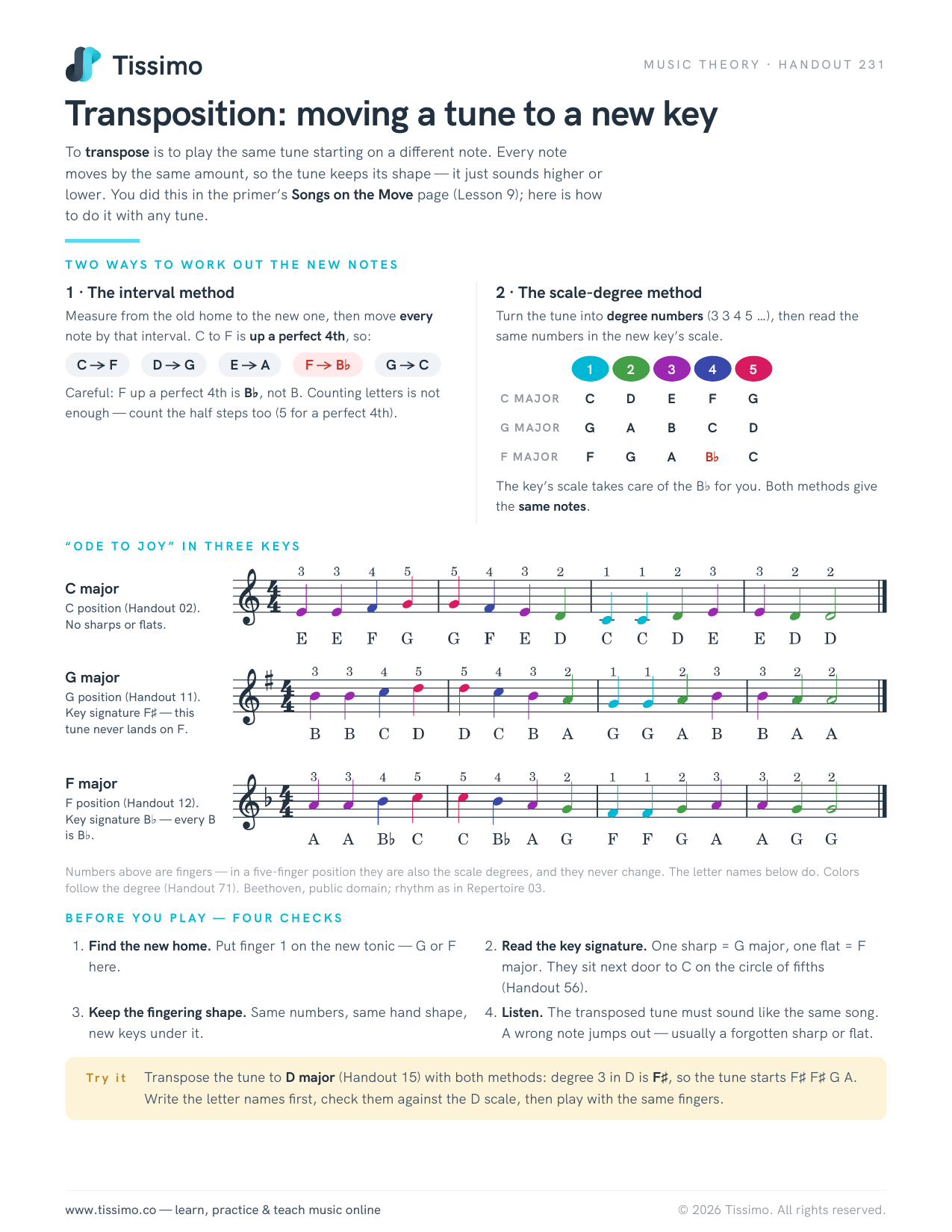 Transposition: moving a tune to a new keyTo transpose is to play the same tune starting on a different note. Every note moves by the same amount, so the tune keeps its shape — it just sounds higher or lower. Here is how to do it with any tune.
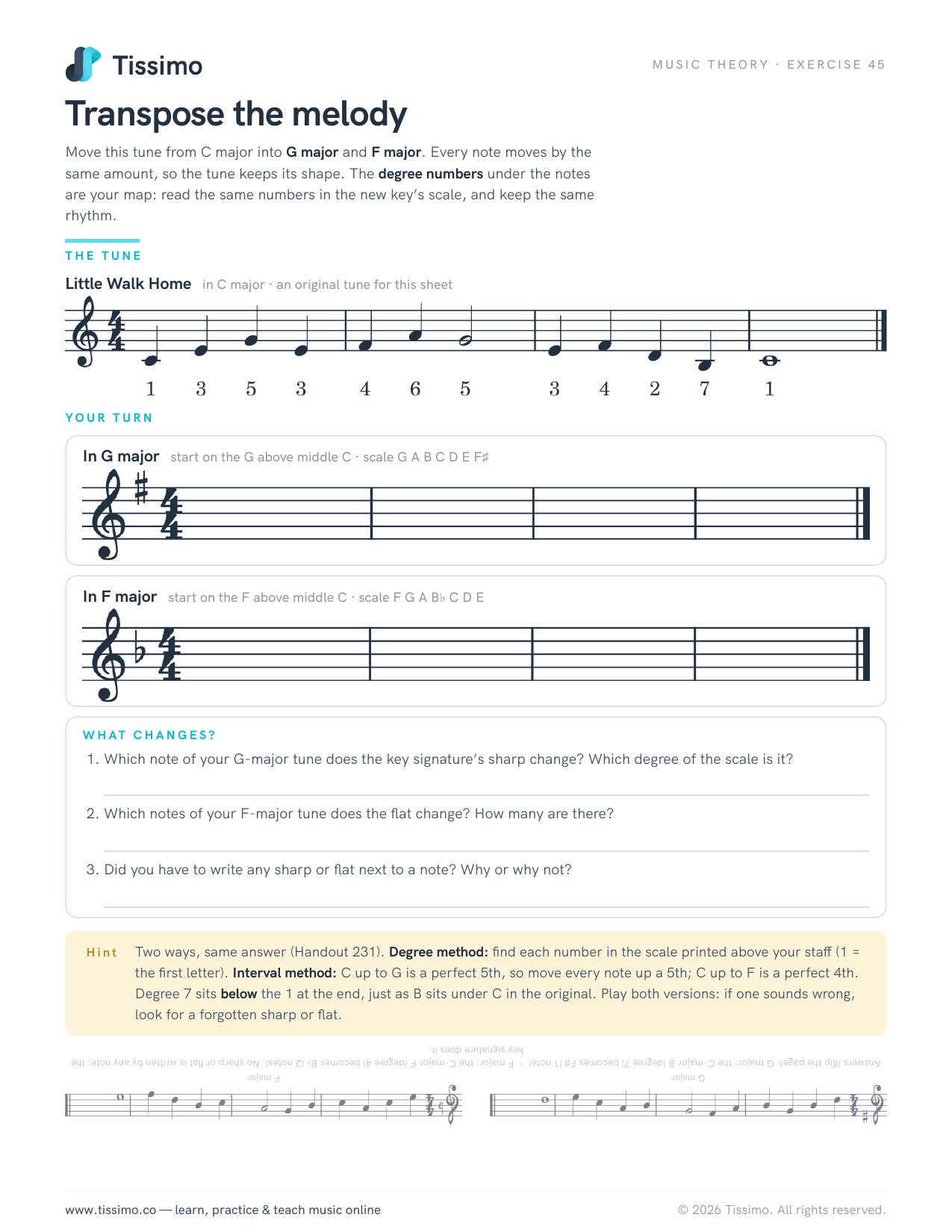 Transpose the melodyMove this tune from C major into G major and F major. Every note moves by the same amount, so the tune keeps its shape. The degree numbers under the notes are your map: read the same numbers in the new key’s scale, and keep the same rhythm.
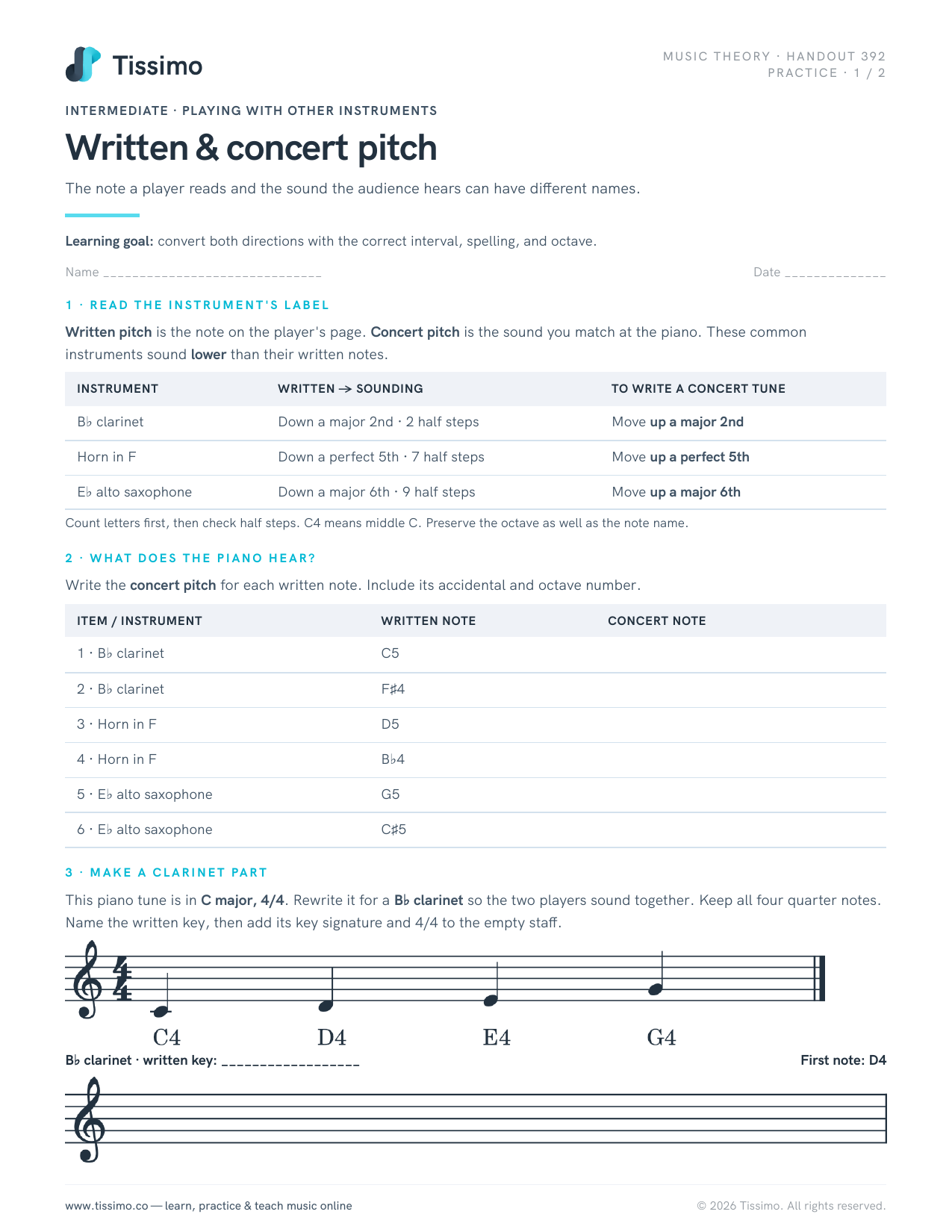 Written & concert pitchThe note a player reads and the sound the audience hears can have different names.
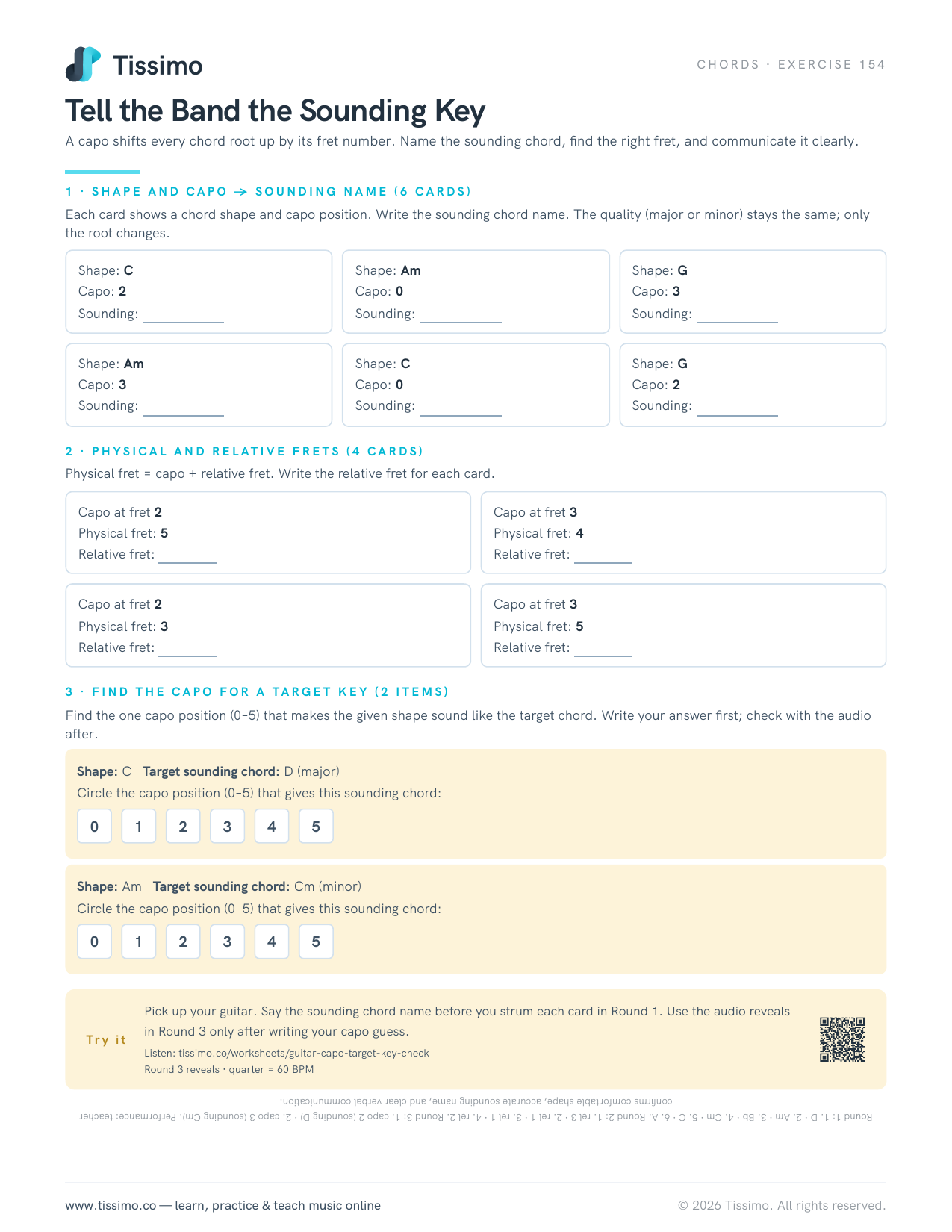 Tell the Band the Sounding KeyA capo shifts every chord root up by its fret number. Name the sounding chord, find the right fret, and communicate it clearly.
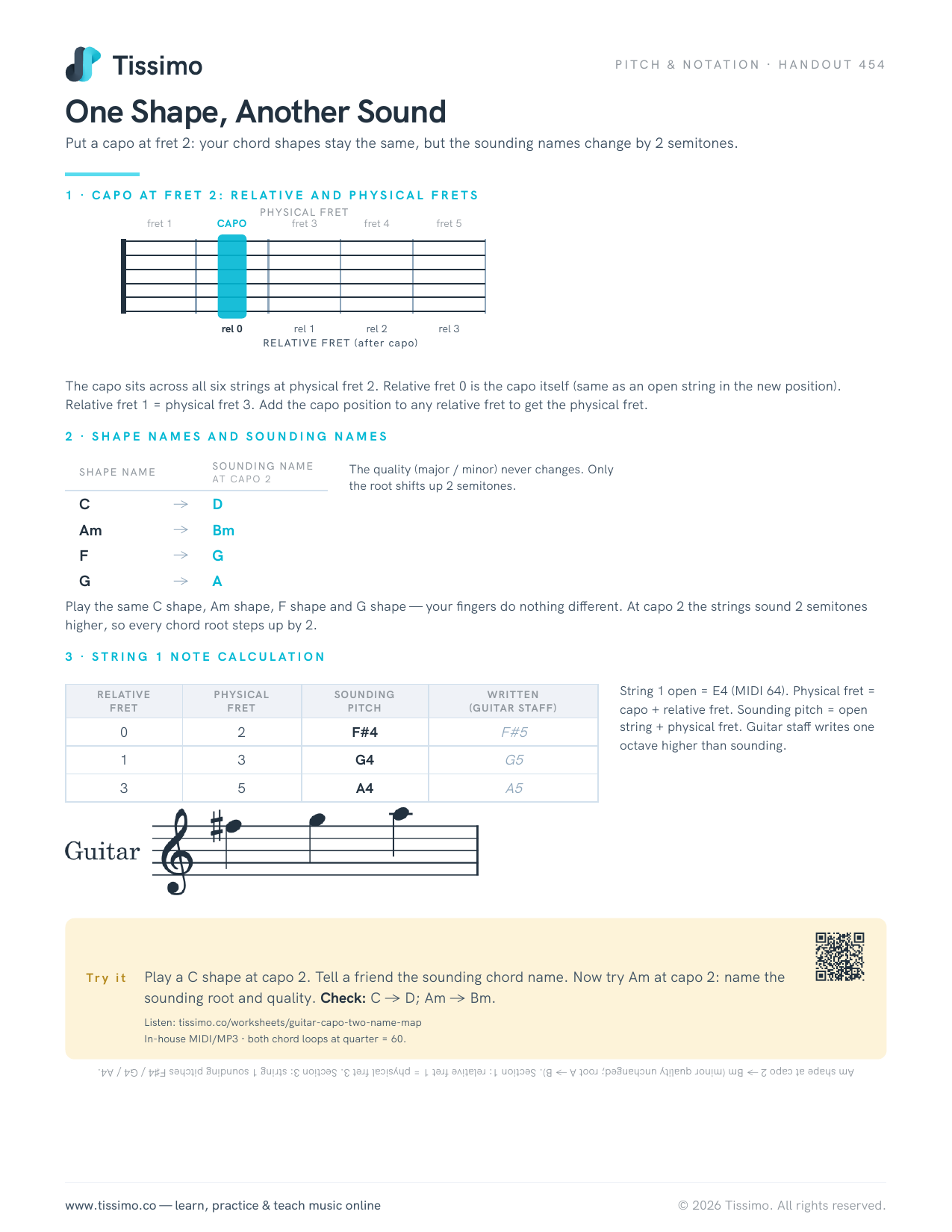 One Shape, Another SoundPut a capo at fret 2: your chord shapes stay the same, but the sounding names change by 2 semitones.