Scales, Keys & Modes
Natural Minor Scale
The natural minor scale is a seven-note scale with the step pattern whole, half, whole, whole, half, whole, whole. Compared with the major scale on the same note, its 3rd, 6th and 7th are a half step lower.
The natural minor scale is the plainest of the three minor scales, and the one the other two are built from. On the piano you find it on the white keys from A to A: A B C D E F G A.
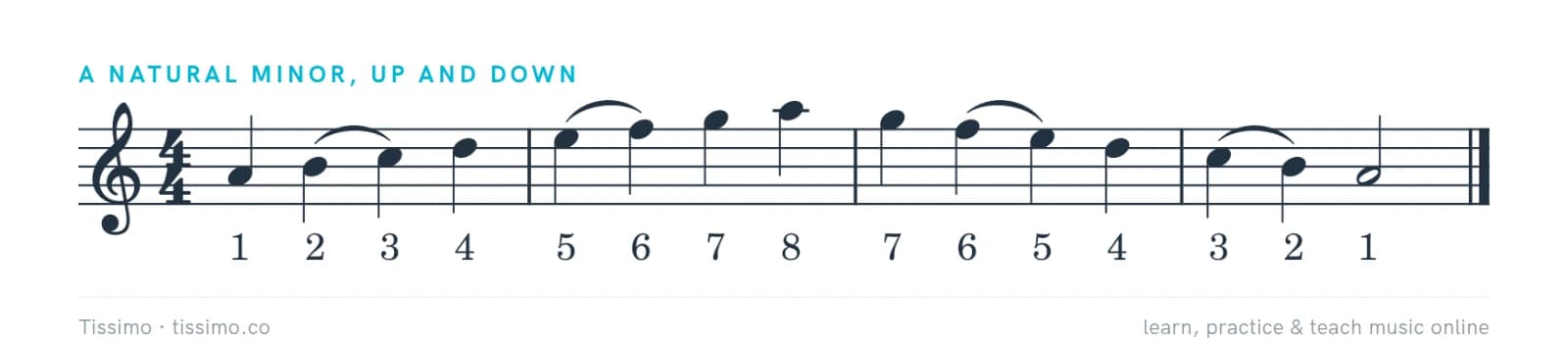
The step pattern: W–H–W–W–H–W–W
Natural minor uses this pattern of whole and half steps:
W – H – W – W – H – W – W
In A minor: A–B (W), B–C (H), C–D (W), D–E (W), E–F (H), F–G (W), G–A (W). The half steps fall between degrees 2 and 3 and between 5 and 6. Notice that the last step, from G up to A, is a whole step. That missing half step below the tonic is what separates natural minor from the harmonic and melodic forms.
Natural minor compared with major
There are two useful ways to relate natural minor to the major scale.
Same notes, different home. A natural minor uses exactly the notes of C major, starting from its 6th degree. That makes A minor the relative minor of C major, and the two keys share a key signature (no sharps or flats).
Same home, three notes lowered. Compare C major with C natural minor and three notes change: the 3rd, 6th and 7th each come down a half step, to E♭, A♭ and B♭. Musicians often number the minor scale this way, as 1 2 ♭3 4 5 ♭6 ♭7, measured against major. C minor is the parallel minor of C major.
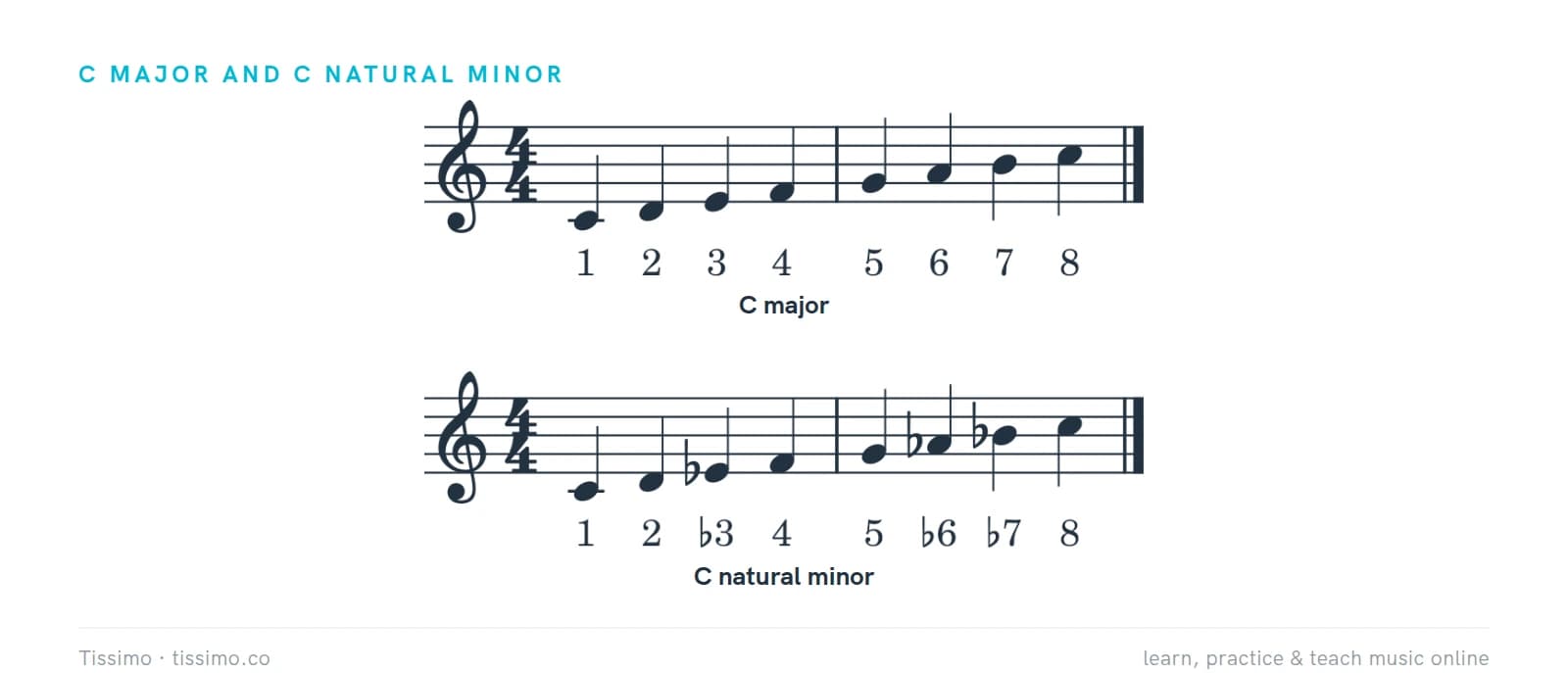
The lowered 3rd is the note that makes the scale sound minor; the lowered 6th and 7th deepen its darker color.
Where you hear it
Natural minor is the same scale as the Aeolian mode. It is common in folk songs, rock and pop, where chords such as A minor, F and G (i, ♭VI and ♭VII in A minor) come straight from its notes. In classical music, minor keys usually raise the 7th degree when the harmony moves to the dominant, so pieces mix natural and harmonic minor rather than staying in one form.
A common mix-up
A minor key is not the same thing as the natural minor scale. The key of A minor draws on all three forms of the scale; the natural form is only the starting point. The three minors sets them side by side, and Identify the minor scales lets you test yourself.
Common questions
What is the difference between natural minor and Aeolian?
There is none in the notes: the Aeolian mode and the natural minor scale are the same scale. Aeolian is the modal name, used when you talk about it alongside Dorian, Phrygian and the other modes.
Which major scale has the same notes as A minor?
C major. A natural minor scale shares its notes with the major scale whose tonic is a minor third (three half steps) higher: A minor with C major, E minor with G major, D minor with F major.
Practice it: free worksheets
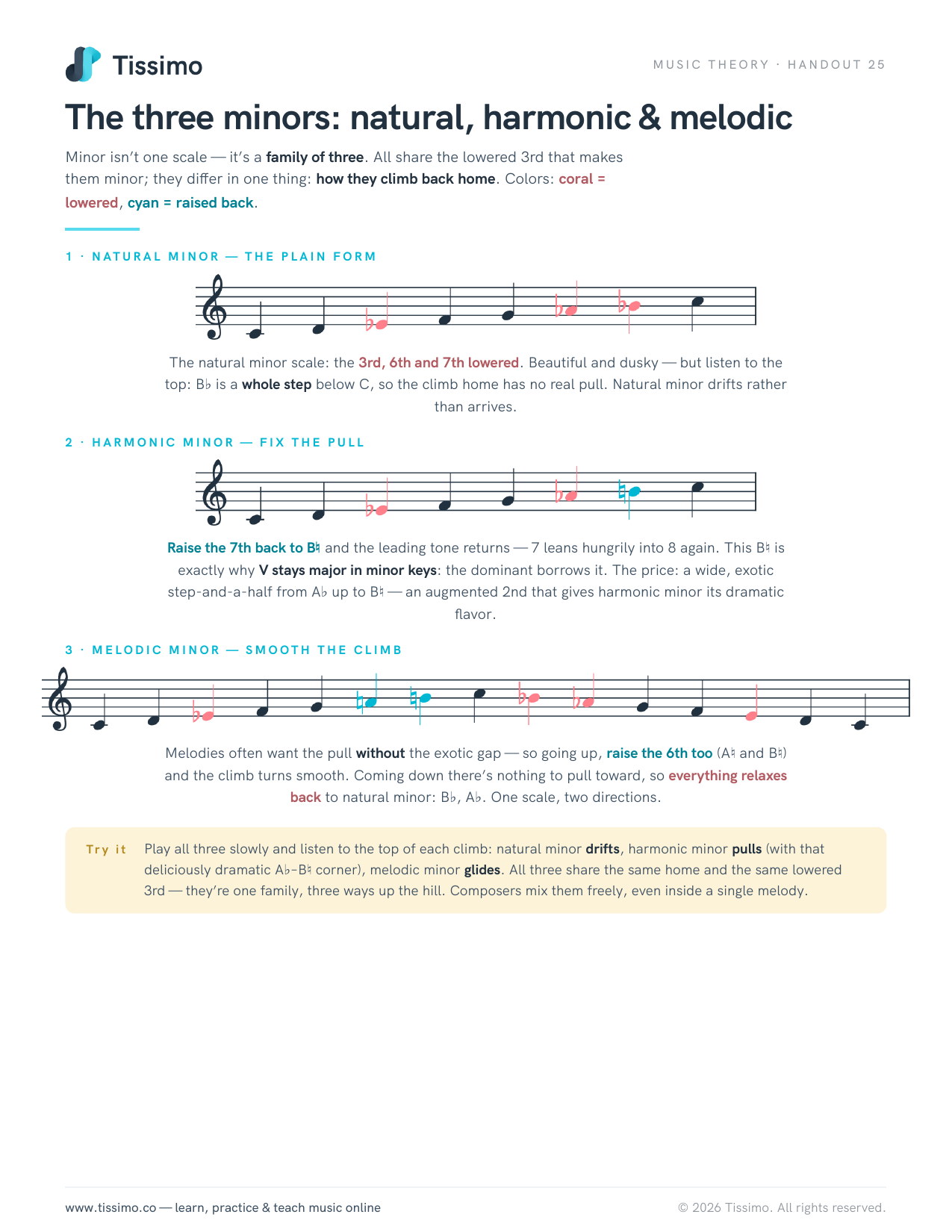 The three minors: natural, harmonic & melodicMinor isn’t one scale — it’s a family of three. All share the lowered 3rd that makes them minor; they differ in one thing: how they climb back home. Colors: coral = lowered, cyan = raised back.
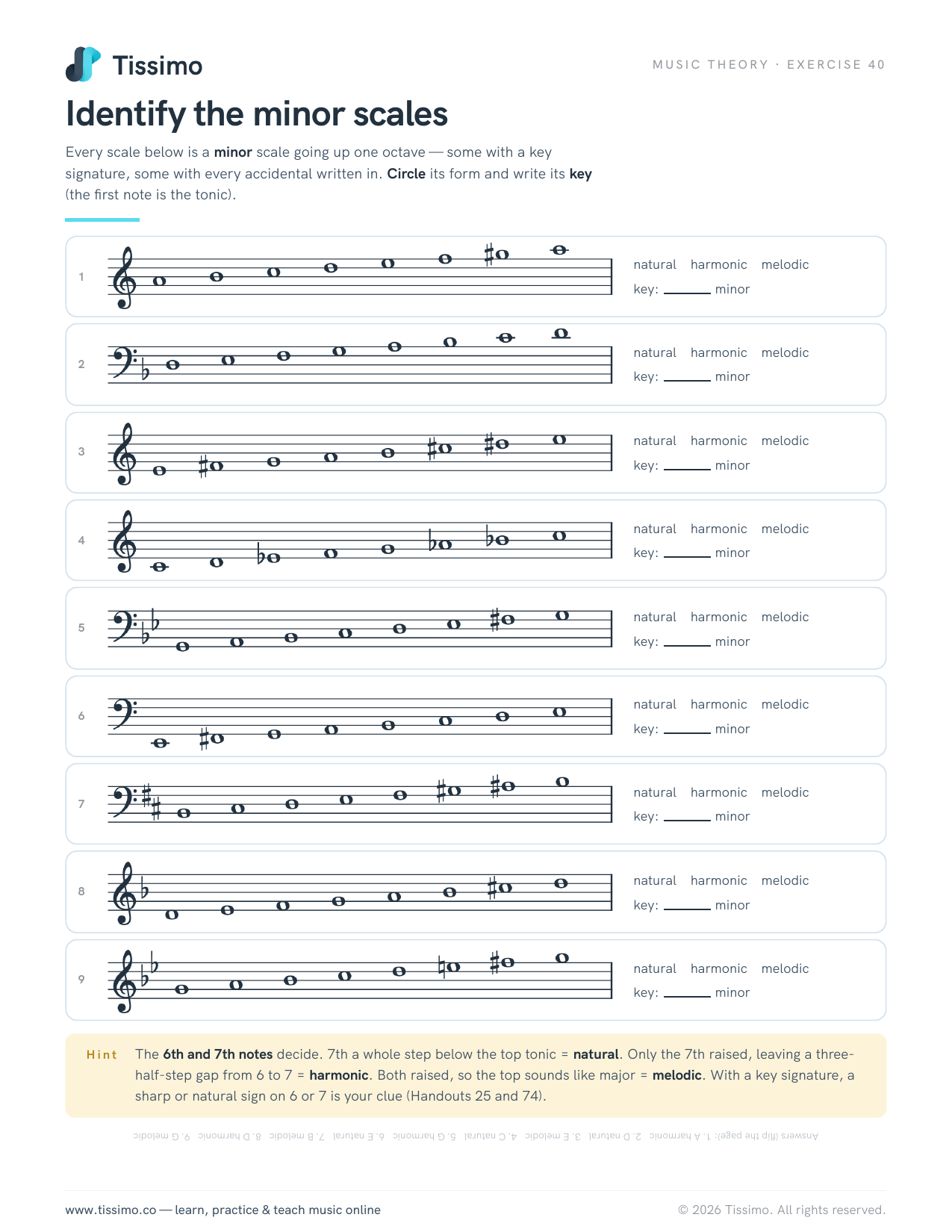 Identify the minor scalesEvery scale below is a minor scale going up one octave — some with a key signature, some with every accidental written in. Circle its form and write its key (the first note is the tonic).
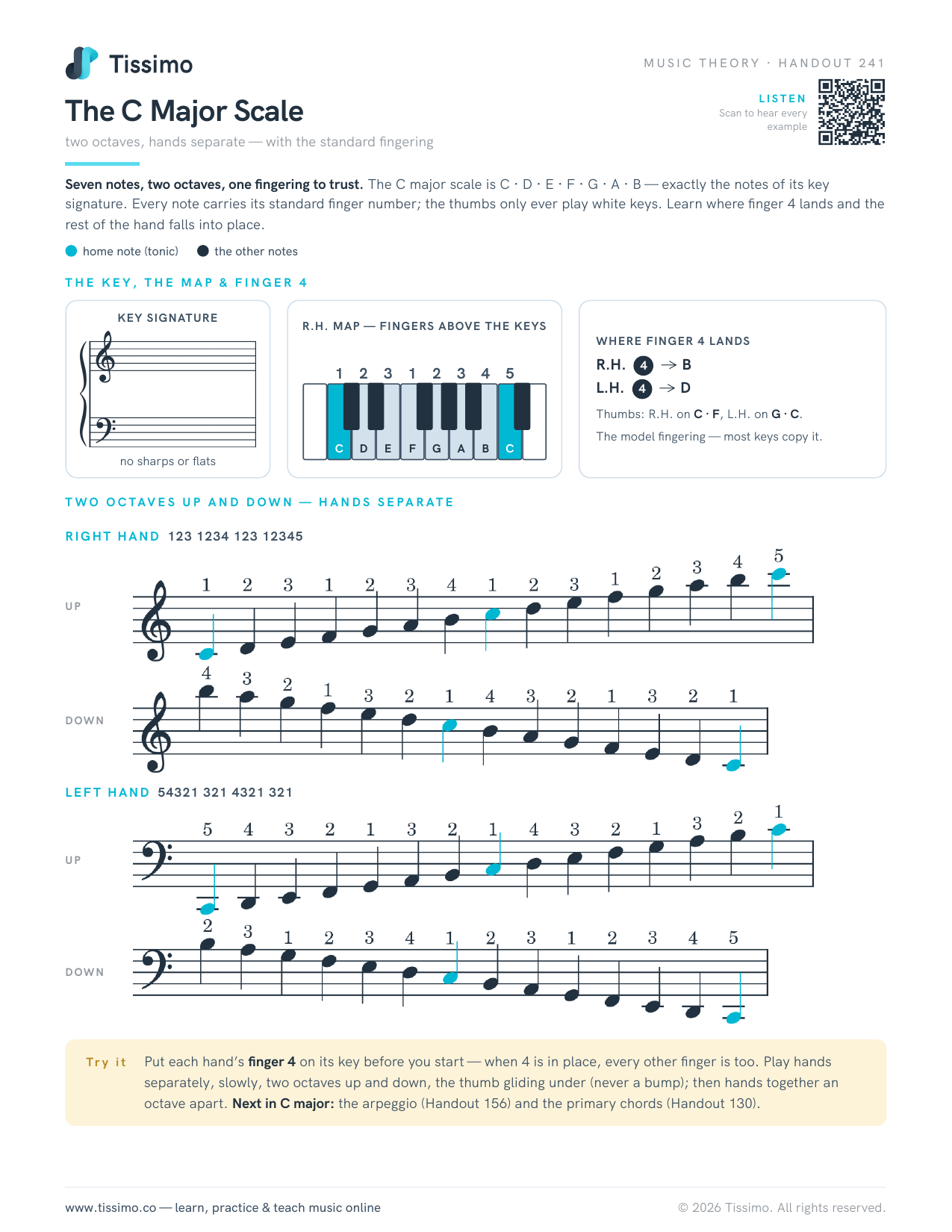 Scales in Every KeyTwo octaves up and down with the standard fingering on every note, in all 24 keys.
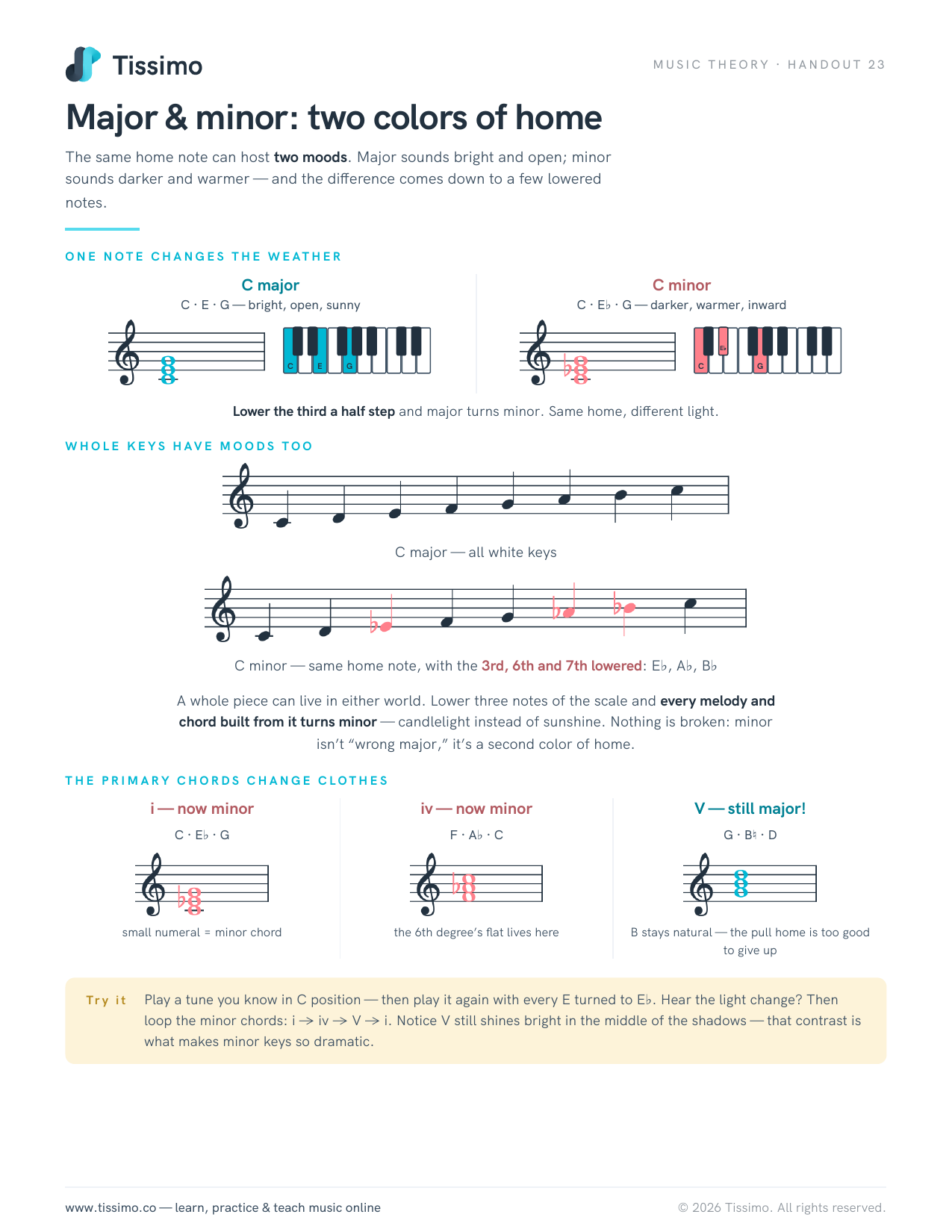 Major & minor: two colors of homeThe same home note can host two moods. Major sounds bright and open; minor sounds darker and warmer — and the difference comes down to a few lowered notes.
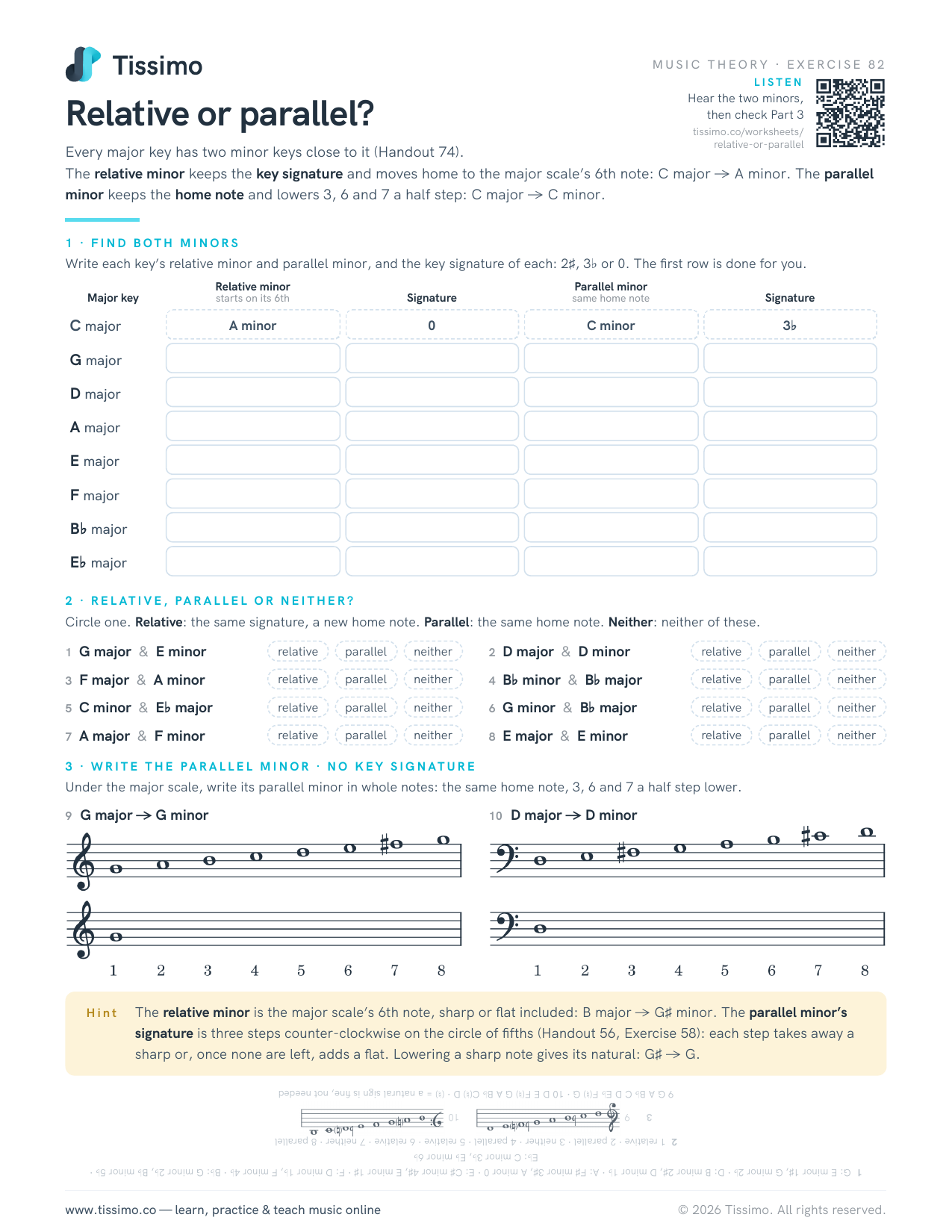 Relative or parallel?Every major key has two minor keys close to it (Handout 74). The relative minor keeps the key signature and moves home to the major scale’s 6th note: C major → A minor. The parallel minor keeps the home note and lowers 3, 6 and 7 a half step: C major → C minor.
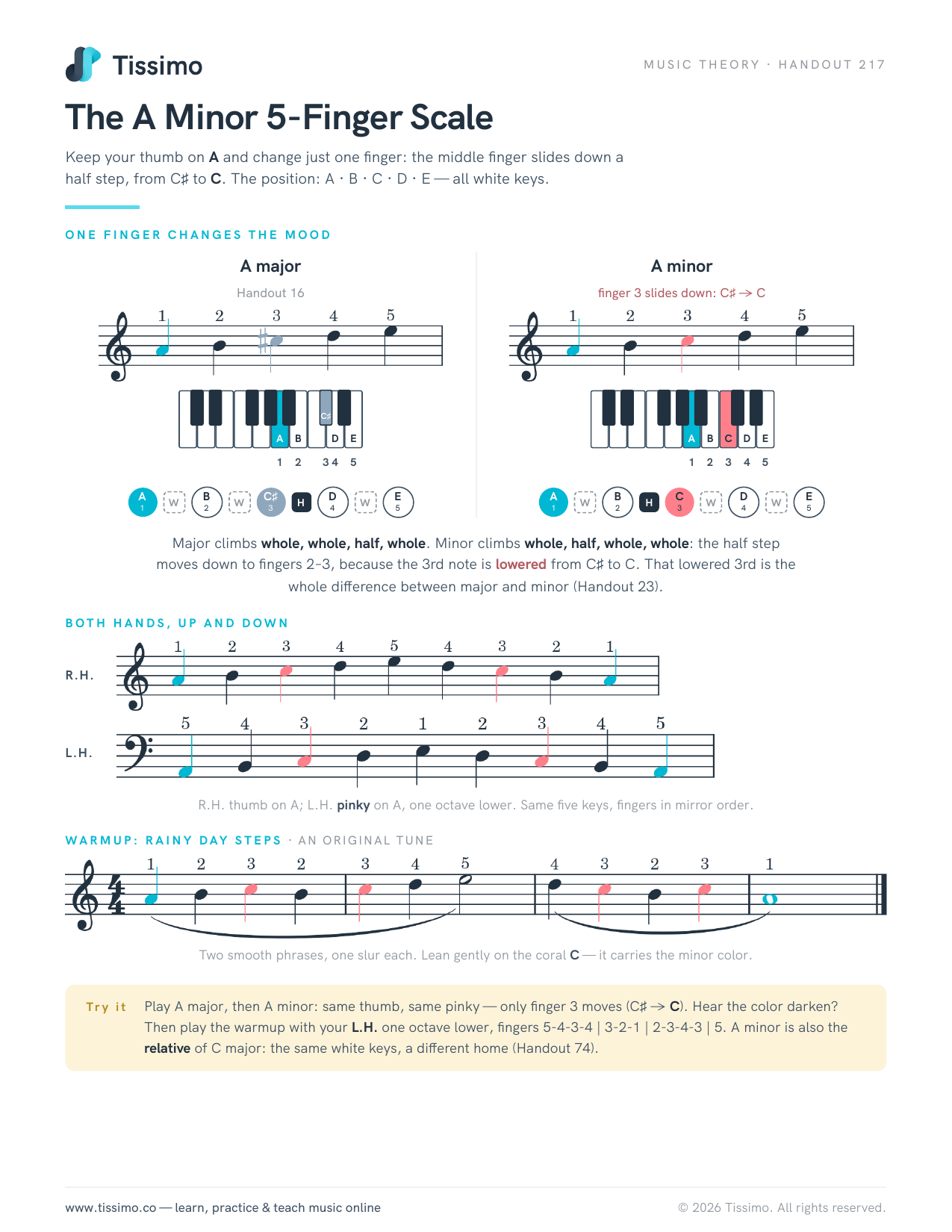 The A Minor 5-Finger ScaleKeep your thumb on A and change just one finger: the middle finger slides down a half step, from C♯ to C. The position: A · B · C · D · E — all white keys.