Scales, Keys & Modes
Parallel Key
Parallel keys are a major key and a minor key that share the same tonic, such as C major and C minor. They have different key signatures; the natural minor scale lowers the major scale's 3rd, 6th and 7th degrees.
Parallel keys share a tonic but differ in mode. C major and C minor are parallel keys: both treat C as home, but C natural minor lowers three degrees of the major scale, the 3rd, 6th and 7th, to E♭, A♭ and B♭. Minor-key music also uses raised forms of degrees 6 and 7, as in harmonic and melodic minor. Musicians call C minor the parallel minor of C major, and C major the parallel major of C minor. In British usage you will also hear tonic minor and tonic major.
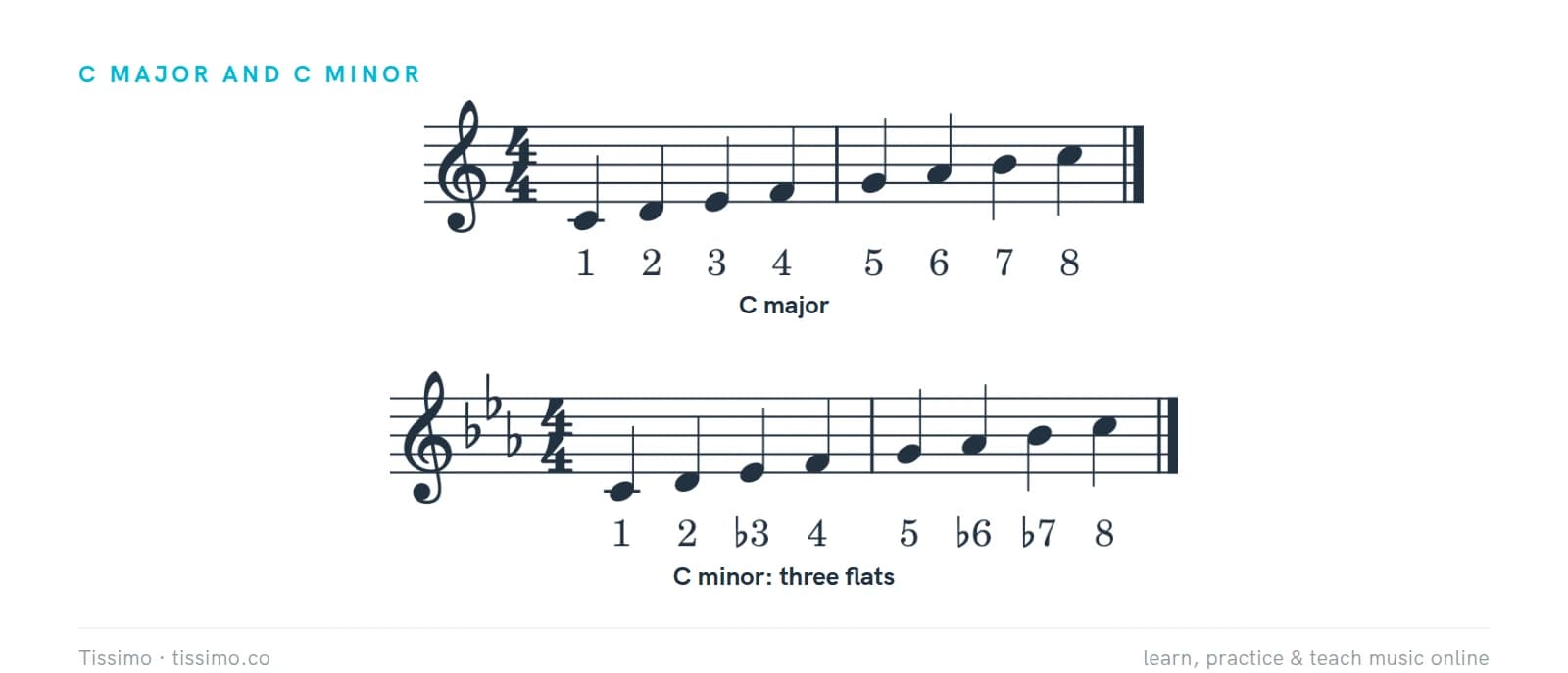
Different key signatures
Unlike relative keys, parallel keys do not share a key signature. The minor key has three more flats, or three fewer sharps, than its parallel major:
- C major: no sharps or flats. C minor: three flats.
- G major: one sharp. G minor: two flats.
- D major: two sharps. D minor: one flat.
- A major: three sharps. A minor: none.
On the circle of fifths, parallel keys sit three steps apart.
Same melody, other mode
Because the tonic stays put, switching to the parallel key keeps a melody in the same register and changes only its color. Play a tune in C major, then play it again with E♭, A♭ and B♭, and you hear the same shape turned from bright to dark.
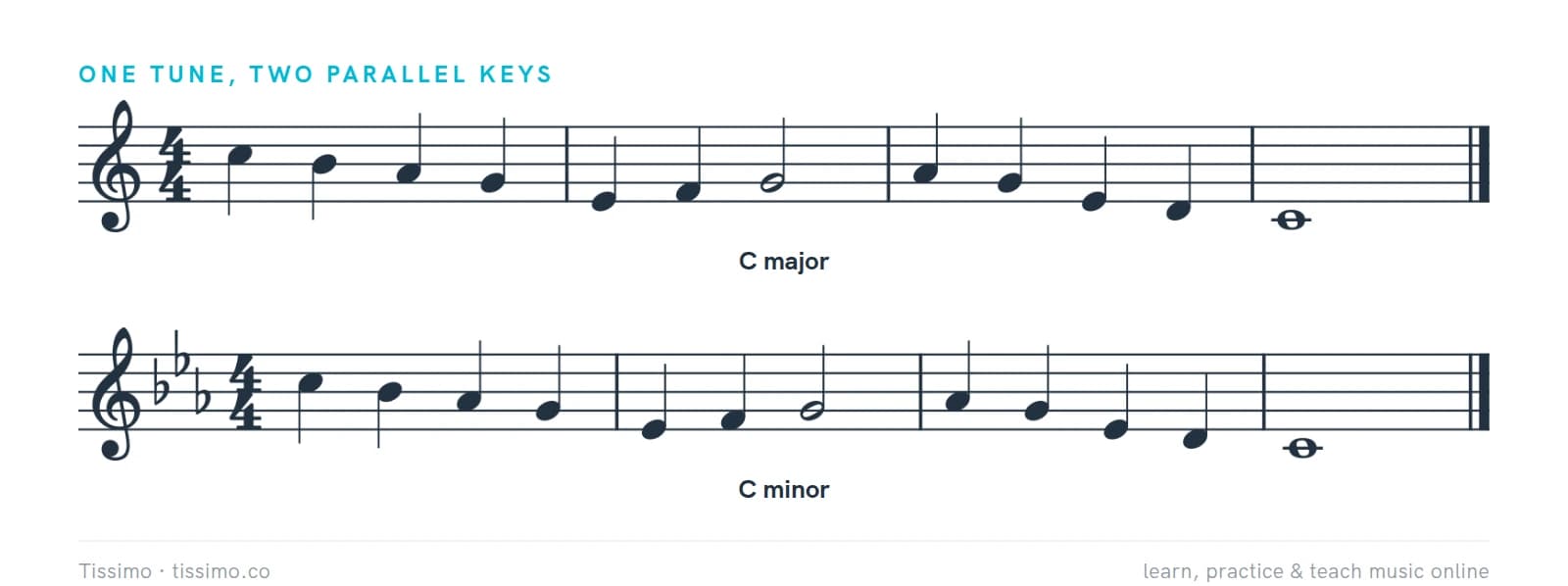
Parallel keys in music
Composers move between parallel keys often. A minor-key piece may brighten into its parallel major for a middle section or a coda, and it can end on a major tonic chord, a device called a Picardy third. Classical theme-and-variations movements often include one variation in the parallel minor, or major, for contrast. Chords taken from the parallel key for a moment, such as F minor (iv) or A♭ major (♭VI) in C major, are called borrowed chords, or modal mixture.
A common mix-up
Keep the two relationships straight: parallel keys share a tonic (C major and C minor); relative keys share a key signature (C major and A minor). And "parallel" here has nothing to do with parallel fifths and octaves, which is a voice-leading term. Parallel vs Relative Minor and Relative or parallel? help you tell them apart.
Common questions
What is the parallel minor of C major?
C minor. Its key signature has three flats. C natural minor keeps C as tonic and lowers the major scale's 3rd, 6th and 7th to E♭, A♭ and B♭; minor-key music can raise the 6th and 7th again.
What is the difference between parallel and relative keys?
Parallel keys share a tonic (C major and C minor). Relative keys share a key signature (C major and A minor). Their major and natural minor scales use the same notes, but minor-key music can raise degrees 6 and 7.
Practice it: free worksheets
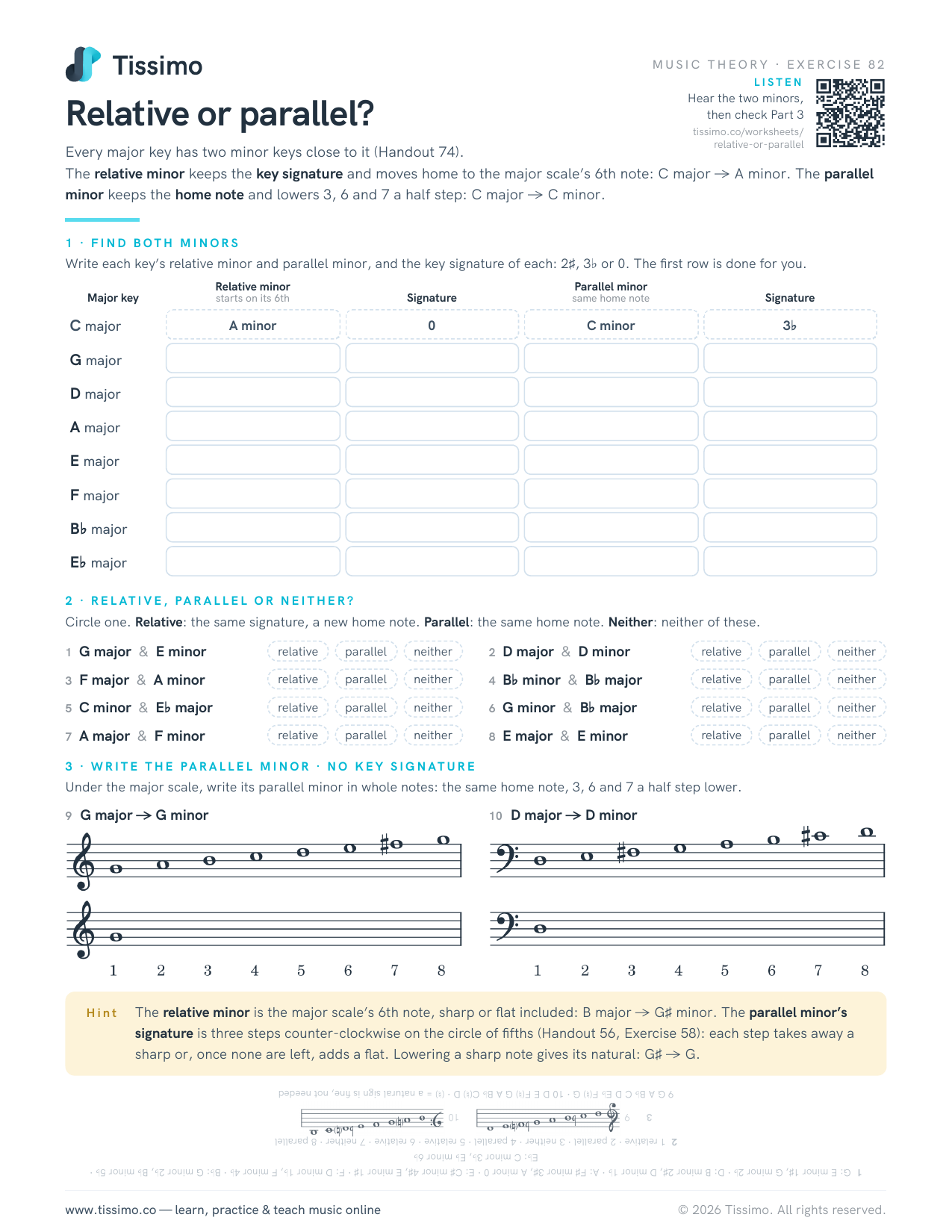 Relative or parallel?Every major key has two minor keys close to it (Handout 74). The relative minor keeps the key signature and moves home to the major scale’s 6th note: C major → A minor. The parallel minor keeps the home note and lowers 3, 6 and 7 a half step: C major → C minor.
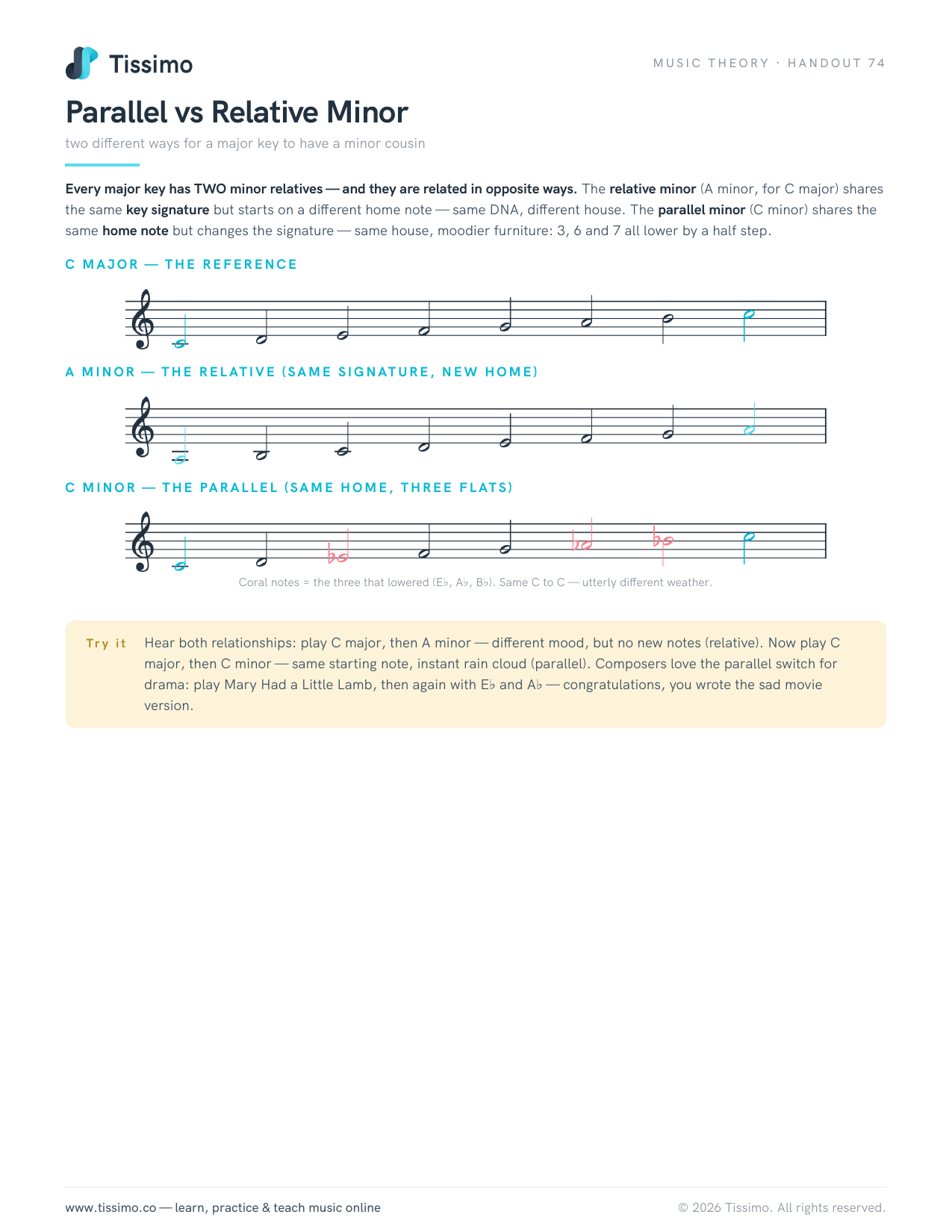 Parallel vs Relative Minortwo different ways for a major key to have a minor cousin
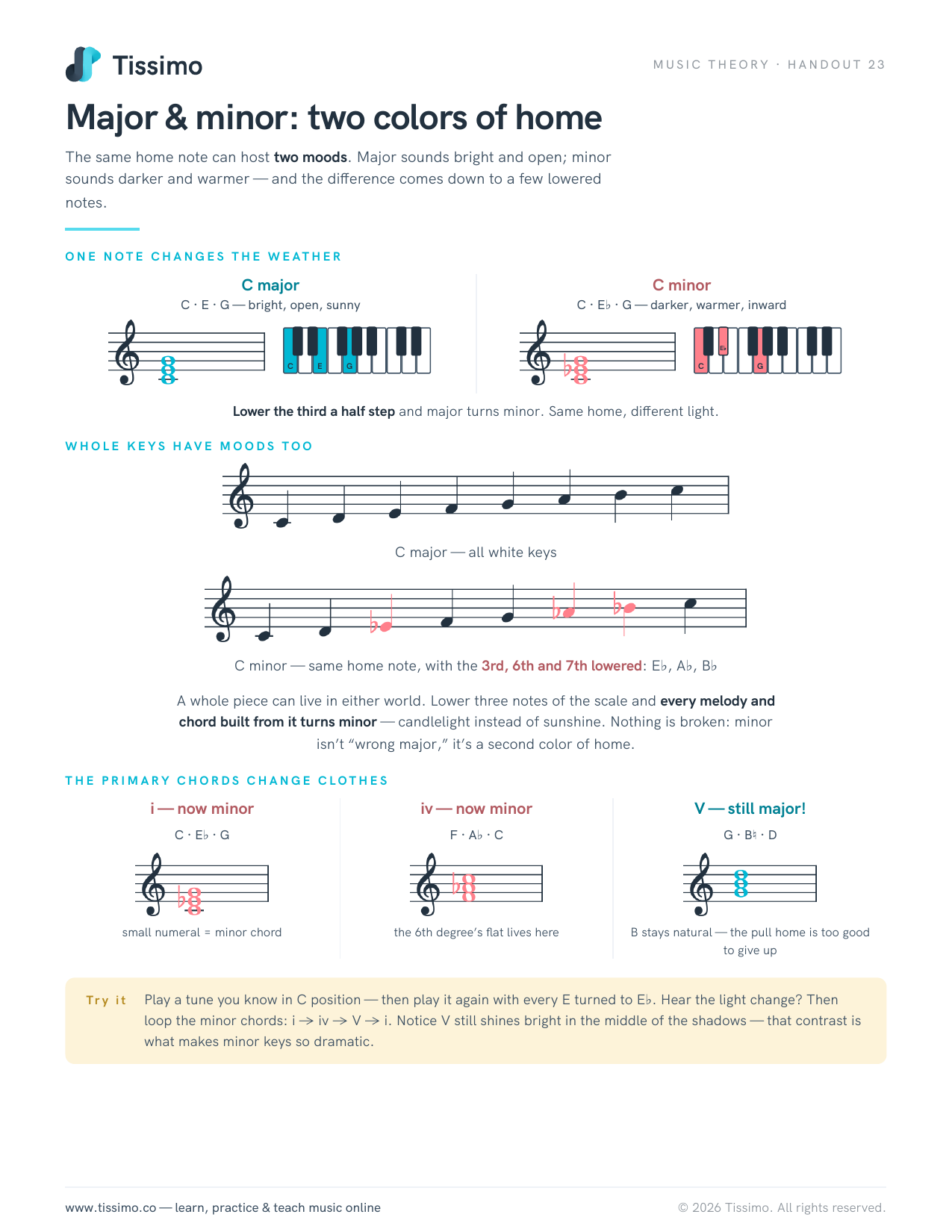 Major & minor: two colors of homeThe same home note can host two moods. Major sounds bright and open; minor sounds darker and warmer — and the difference comes down to a few lowered notes.
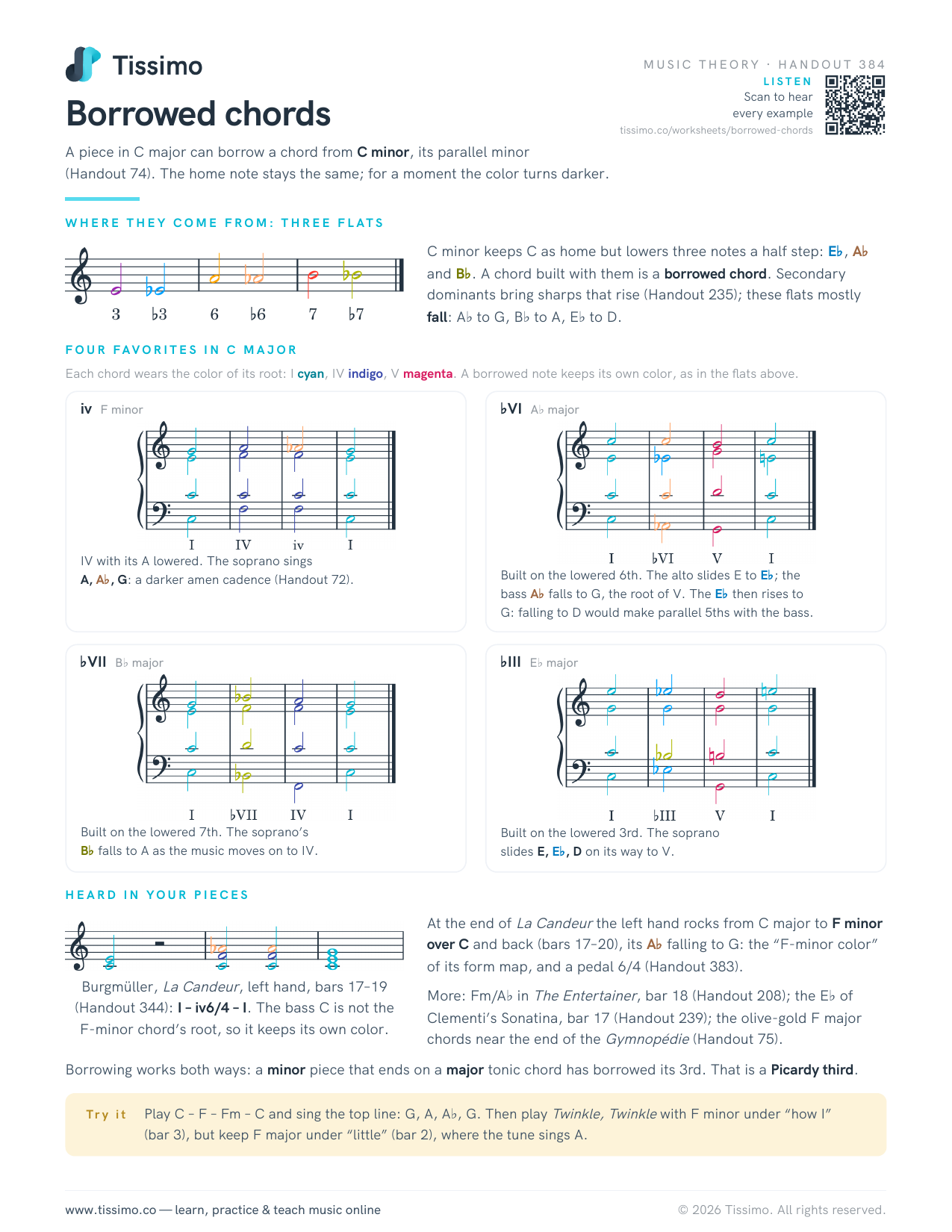 Borrowed chordsA piece in C major can borrow a chord from C minor, its parallel minor (Handout 74). The home note stays the same; for a moment the color turns darker.
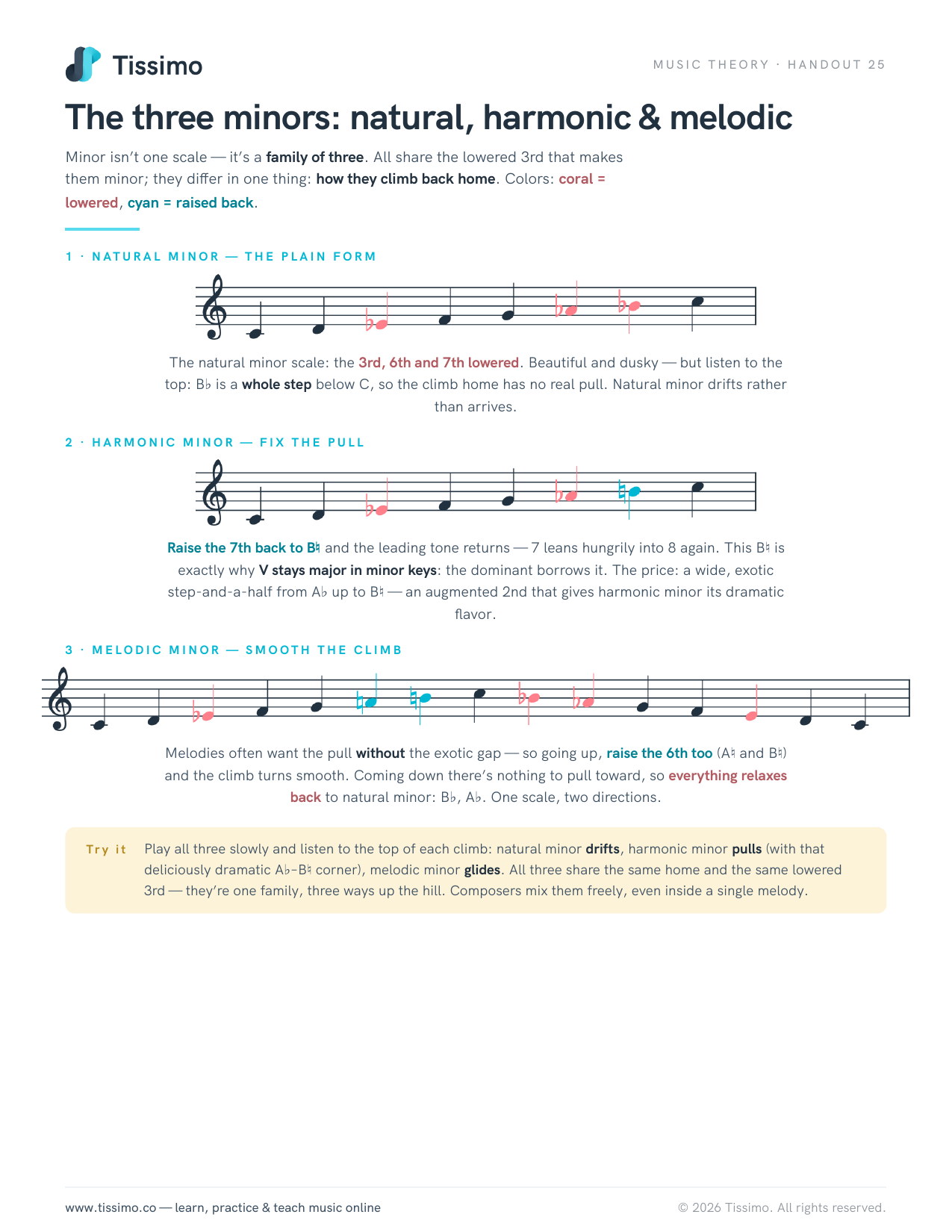 The three minors: natural, harmonic & melodicMinor isn’t one scale — it’s a family of three. All share the lowered 3rd that makes them minor; they differ in one thing: how they climb back home. Colors: coral = lowered, cyan = raised back.
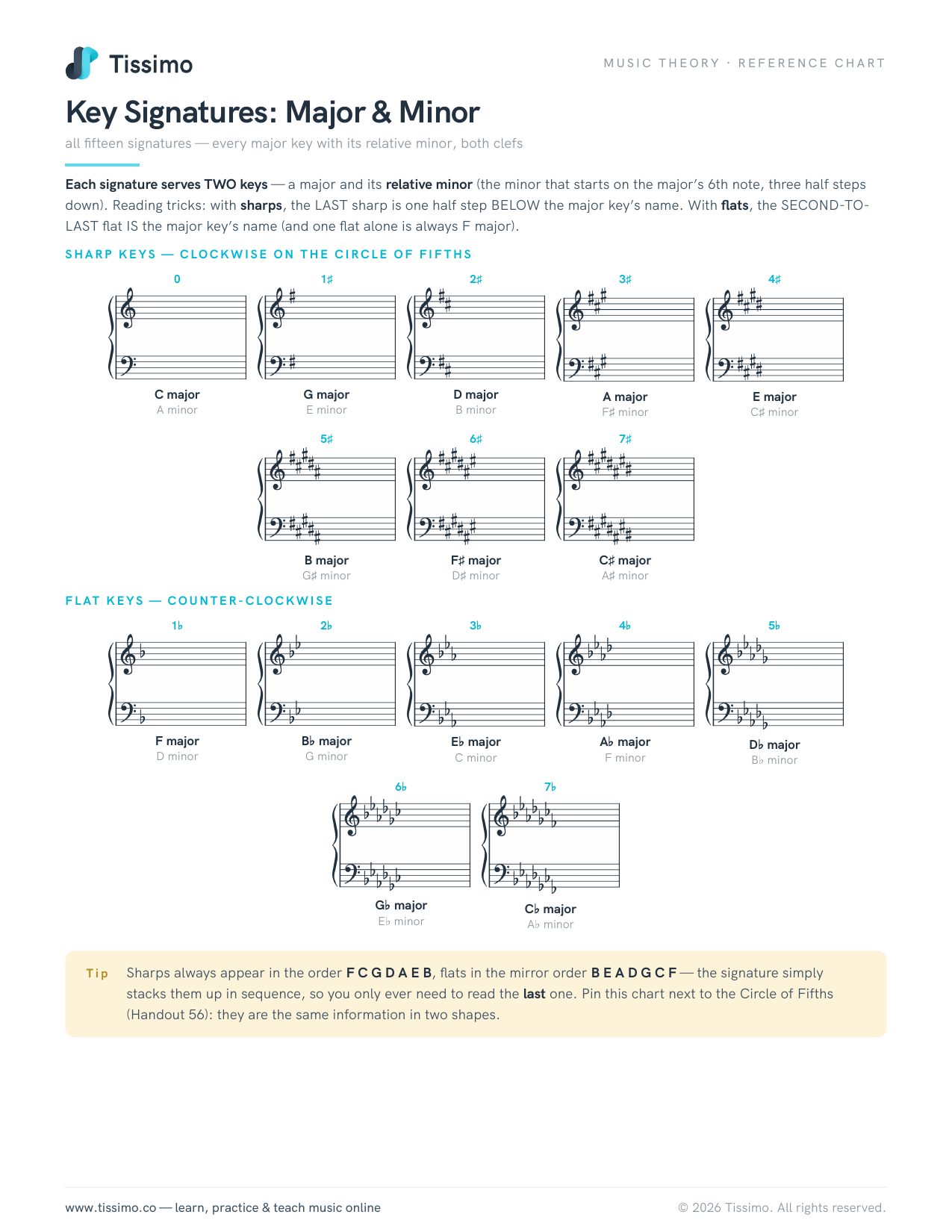 Key Signatures: Major & Minorall fifteen signatures — every major key with its relative minor, both clefs