Chords & Harmony
Borrowed Chord (Modal Mixture)
A borrowed chord is a chord taken from the parallel key, usually from minor into major, such as F minor (iv) or A♭ major (♭VI) in C major. The home note stays the same, but the color darkens.
A borrowed chord is a chord taken from the parallel key, the key with the same tonic but the opposite mode. Most often a piece in a major key borrows from its parallel minor: a song in C major uses a chord from C minor, such as F minor or A♭ major. The home note stays the same, but for a moment the color turns darker. The technique is also called modal mixture or mode mixture; jazz and pop musicians often say modal interchange.
The common borrowed chords
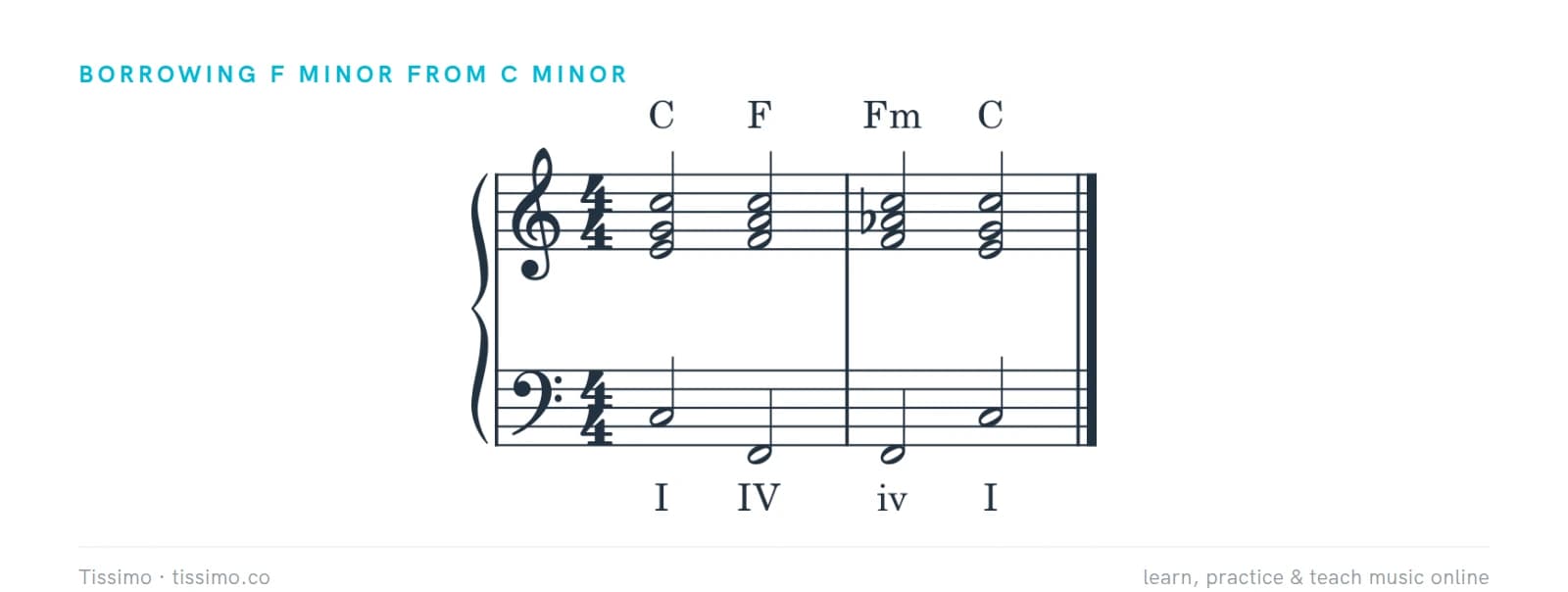
From C minor into C major, the favorites are:
- iv (F minor, F–A♭–C), often right after IV, so that A slides through A♭ to G.
- ♭VI (A♭ major, A♭–C–E♭).
- ♭VII (B♭ major, B♭–D–F).
- ♭III (E♭ major, E♭–G–B♭).
- ii° and iiø7 (D–F–A♭ and D–F–A♭–C), darker versions of ii.
- vii°7 (B–D–F–A♭), the fully diminished seventh on the leading tone.
All of them use the minor key's lowered notes: most often ♭6 (A♭), and also ♭3 (E♭) and ♭7 (B♭).
Why composers borrow
Mixture adds emotional color without leaving the key. A single minor iv can make a major-key ending sound bittersweet. Romantic composers, Schubert among them, loved to shift between major and minor on the same tonic, and film and pop music use mixture constantly.
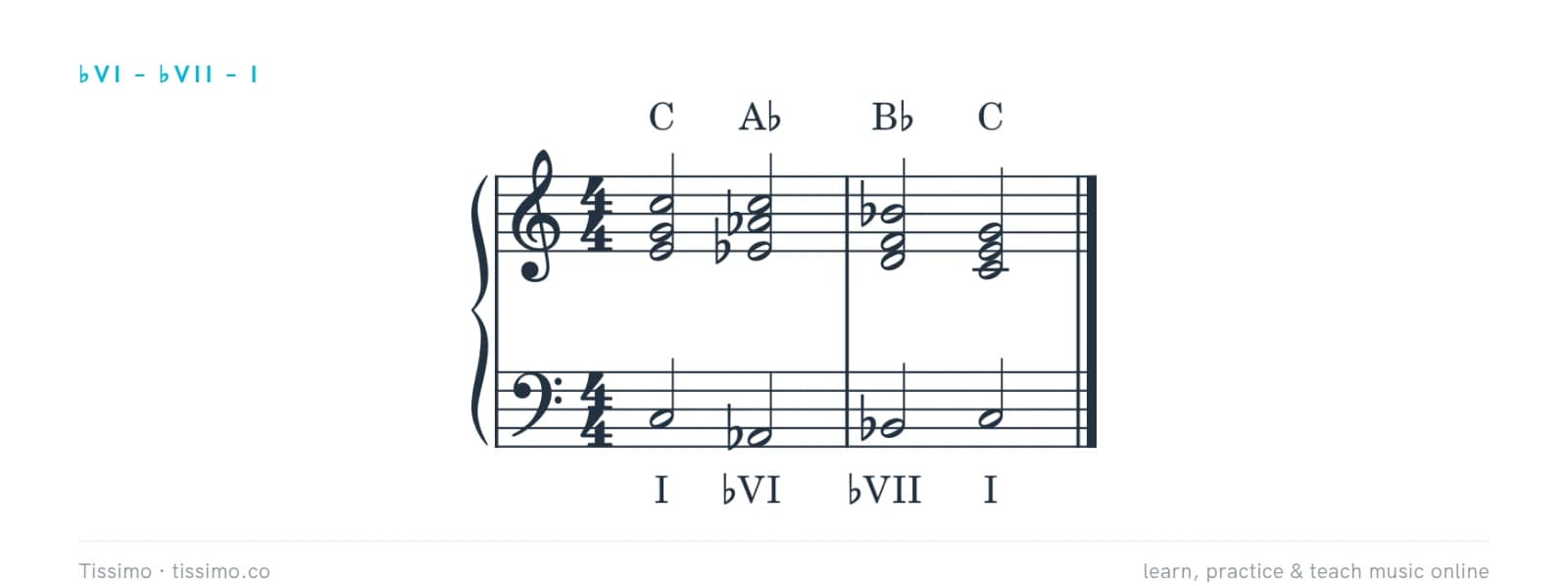
♭VI – ♭VII – I
One borrowed progression is especially familiar from rock, film and video-game music: ♭VI – ♭VII – I, or A♭ – B♭ – C in C major. It reaches the tonic from a whole step below with a major chord instead of the dominant, a bright, heroic way to end.
Reading the symbols
In Roman numerals, a flat in front of the numeral lowers the root: ♭VI is a major chord on A♭ in C major. Chord symbols simply name the chords (Fm, A♭, B♭), and the accidentals in the music show that they come from outside the key.
Practice with Borrowed chords and Label the chromatic chords. Parallel vs Relative Minor explains which minor key the chords come from.
Common questions
What is the difference between a borrowed chord and a secondary dominant?
A borrowed chord comes from the parallel key (C minor chords in C major) and darkens the color. A secondary dominant is a dominant chord aimed at another chord of the key (D7 leading to G), usually with a raised note.
What is modal interchange?
Another name for borrowing chords, used mostly in jazz and pop. It can include chords from other modes on the same tonic, such as Dorian or Mixolydian, as well as from the parallel minor.
Practice it: free worksheets
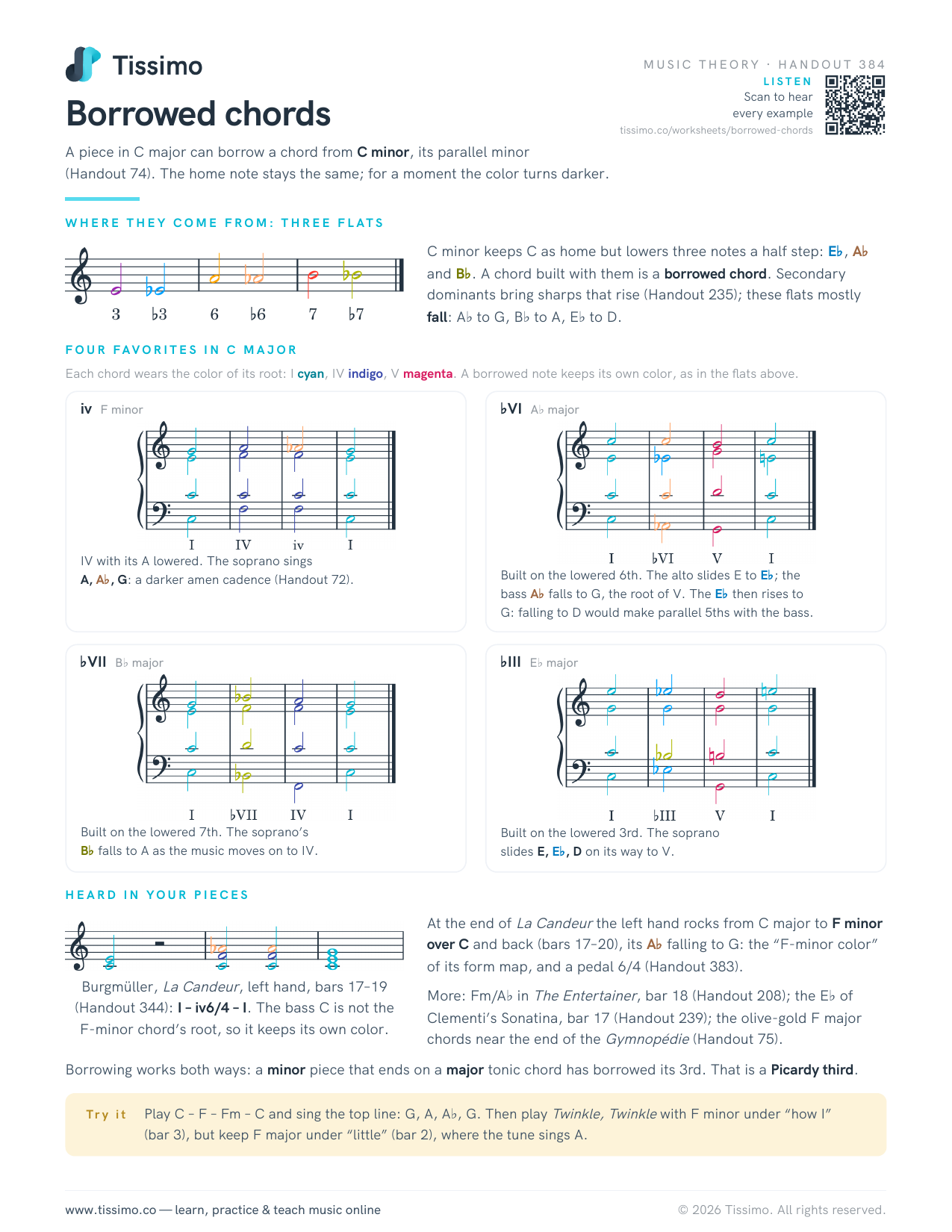 Borrowed chordsA piece in C major can borrow a chord from C minor, its parallel minor (Handout 74). The home note stays the same; for a moment the color turns darker.
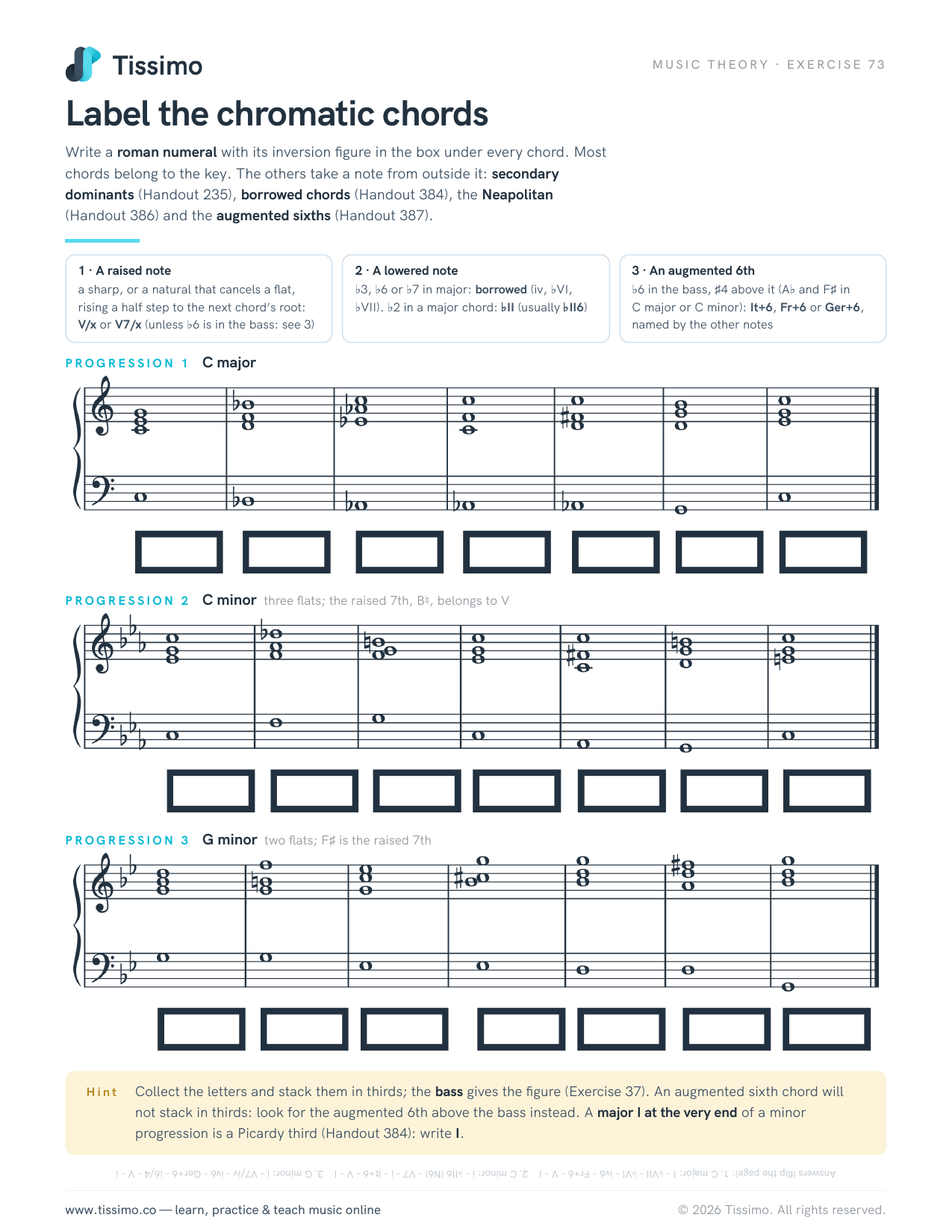 Label the chromatic chordsWrite a roman numeral with its inversion figure in the box under every chord. Most chords belong to the key. The others take a note from outside it: secondary dominants (Handout 235), borrowed chords (Handout 384), the Neapolitan (Handout 386) and the augmented sixths (Handout 387).
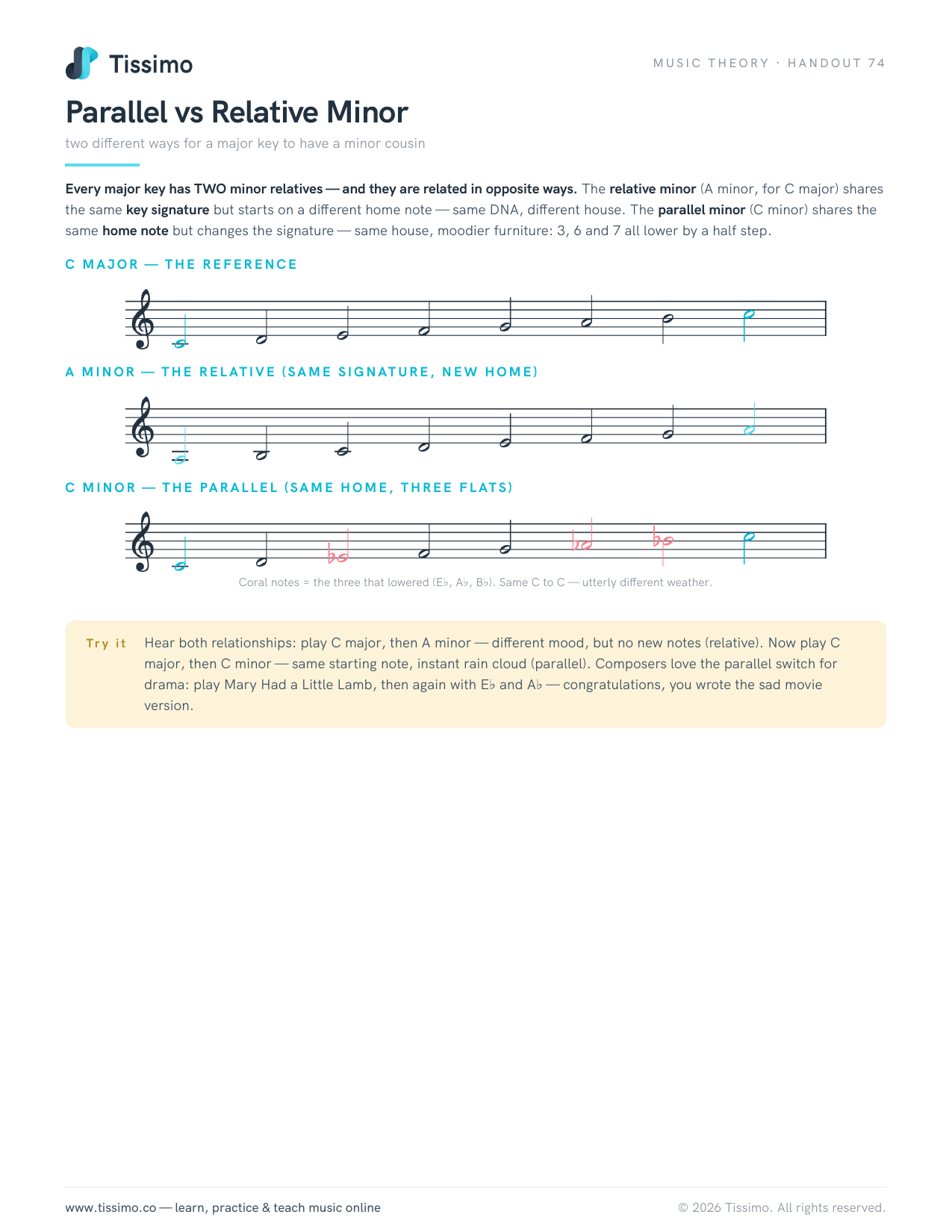 Parallel vs Relative Minortwo different ways for a major key to have a minor cousin
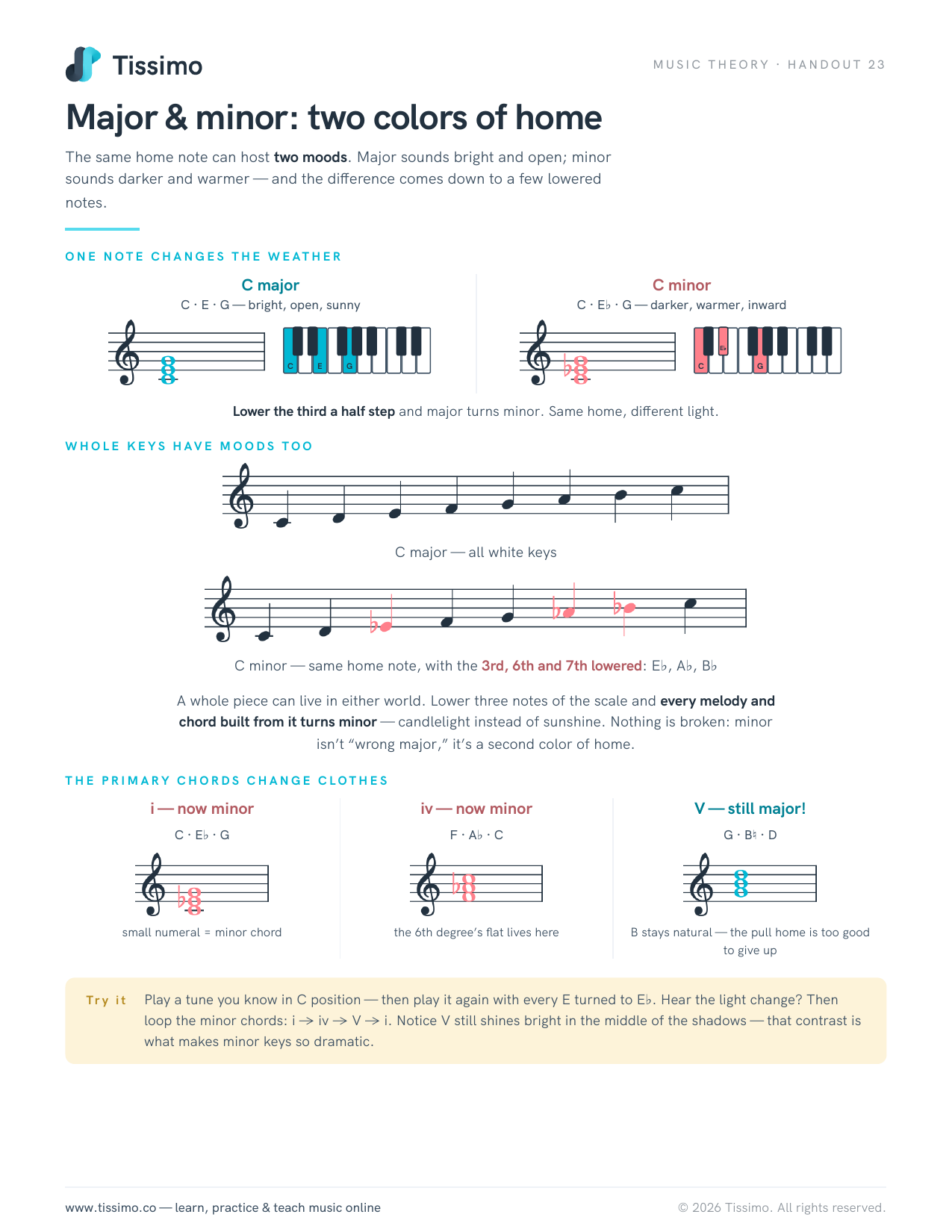 Major & minor: two colors of homeThe same home note can host two moods. Major sounds bright and open; minor sounds darker and warmer — and the difference comes down to a few lowered notes.