Styles, Genres & Eras
Bossa Nova
Pronounced BOSS-uh NOH-vuh
Bossa nova is a style of Brazilian popular music that emerged in Rio de Janeiro in the late 1950s, combining samba rhythm with jazz harmony, gentle vocals and a syncopated nylon-string guitar.
Bossa nova appeared in Rio de Janeiro in the late 1950s. It took the rhythms of samba, quieted them down, and combined them with the rich harmony of American cool jazz. The result is intimate, relaxed music: a soft voice, a nylon-string guitar and subtle, swaying syncopation.
Key figures
- João Gilberto created the style's guitar sound and its near-whispered vocal delivery. His recording of "Chega de Saudade" (released 1958) is usually seen as the start of bossa nova.
- Antônio Carlos Jobim composed many of its classics, including "The Girl from Ipanema" (with lyrics by Vinicius de Moraes), "Desafinado" and "Corcovado."
- The album Getz/Gilberto (1964), with the American saxophonist Stan Getz, João Gilberto and Astrud Gilberto, made bossa nova an international sensation.
The sound
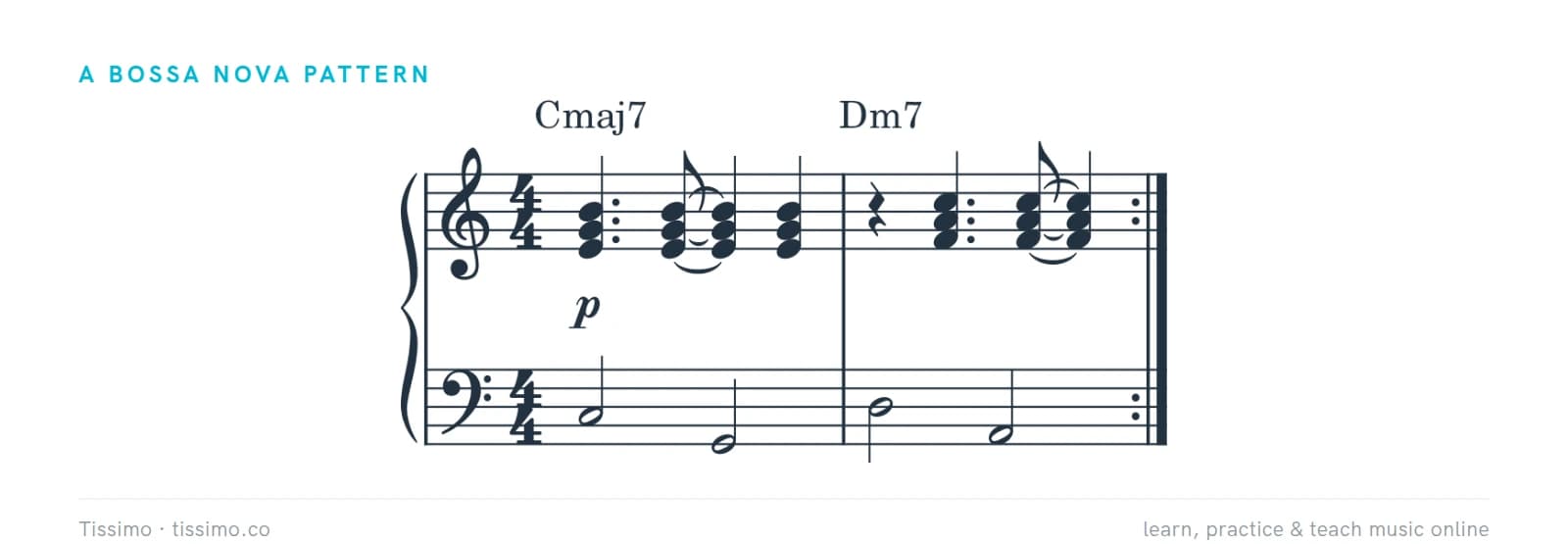
- Syncopated guitar: the thumb plays a steady bass, often root and fifth on beats 1 and 3, while the fingers play chords in a pattern that anticipates and plays between the beats.
- Jazz harmony: major seventh, minor seventh, ninth and altered chords, and smooth chromatic movement.
- Gentle vocals, sung quietly and close to speech, with little vibrato.
- Straight eighths: unlike swing, bossa nova is played with even subdivisions.
- Soft percussion: brushes, a light cross-stick on the snare, shaker.
Bossa nova and jazz
Jazz musicians embraced bossa nova from the early 1960s, and many of Jobim's songs became jazz standards. In the jazz world, "bossa" or "Latin" written on a lead sheet tells the band to play with this straight, syncopated feel rather than with swing.
Playing bossa nova
Start with the bass alone, steady on beats 1 and 3, then add the chord rhythm slowly until the two hands feel independent. Keep the volume low and the touch light; the style depends on restraint. Practice the chords in the Major 7th and Minor 7th worksheets, and the rhythm in Syncopation.
Common questions
What does bossa nova mean?
In Brazilian Portuguese it means roughly "new trend" or "new style." The name was applied to the new, cool approach to samba that appeared in Rio de Janeiro in the late 1950s.
Is bossa nova swung?
No. Bossa nova uses straight, even eighth notes. Its lilt comes from syncopation, chords placed between the beats, not from swing.
Practice it: free worksheets
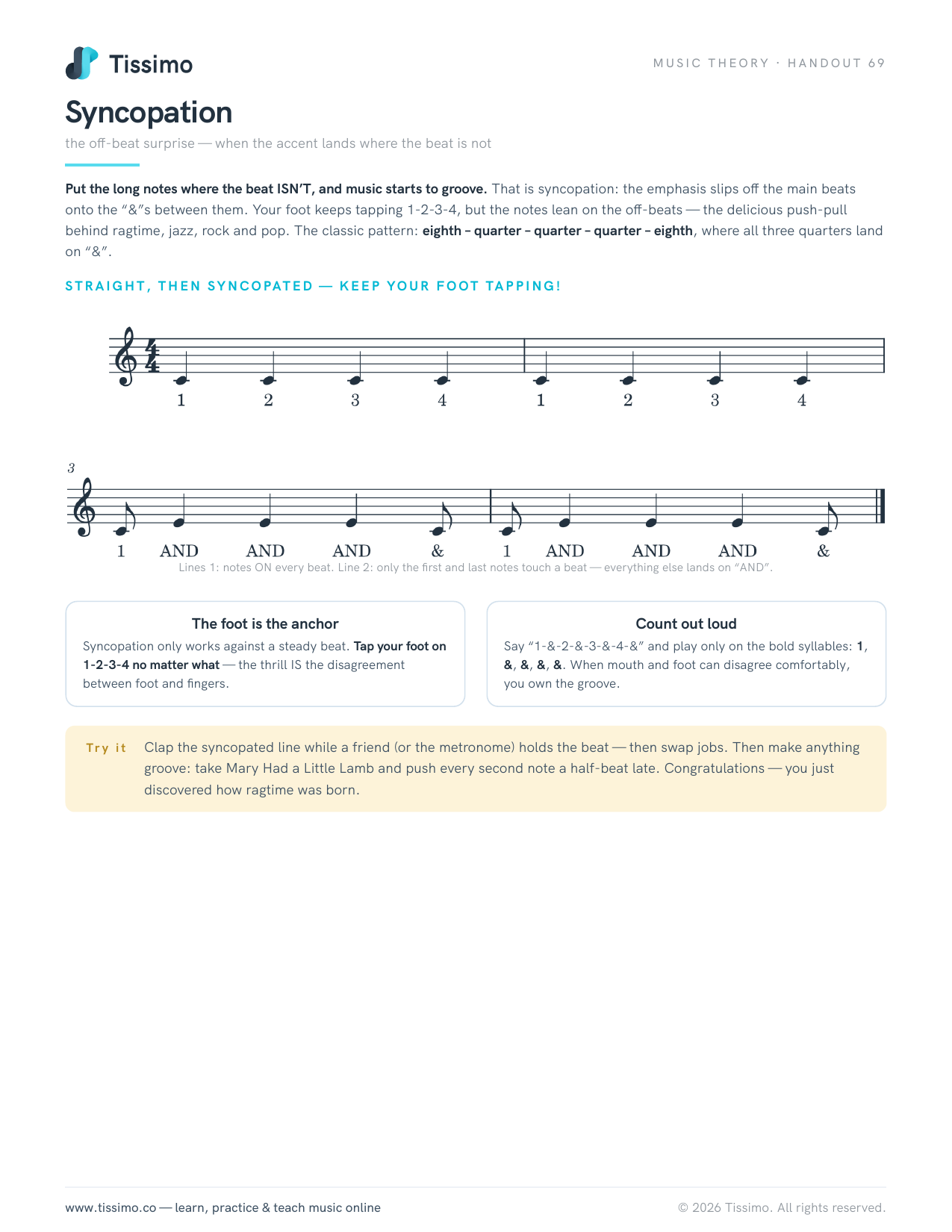 Syncopationthe off-beat surprise — when the accent lands where the beat is not
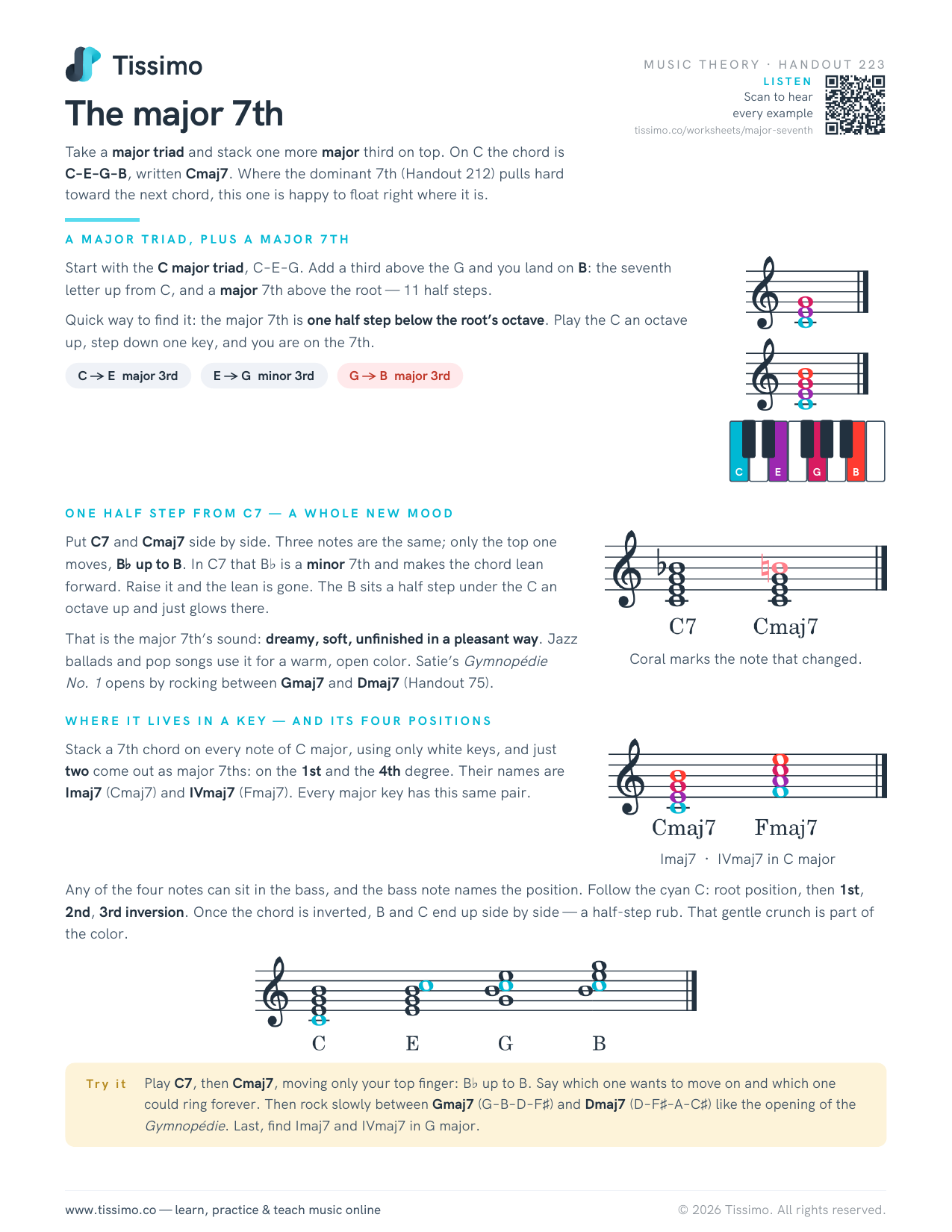 The major 7thTake a major triad and stack one more major third on top. On C the chord is C–E–G–B, written Cmaj7. Where the dominant 7th (Handout 212) pulls hard toward the next chord, this one is happy to float right where it is.
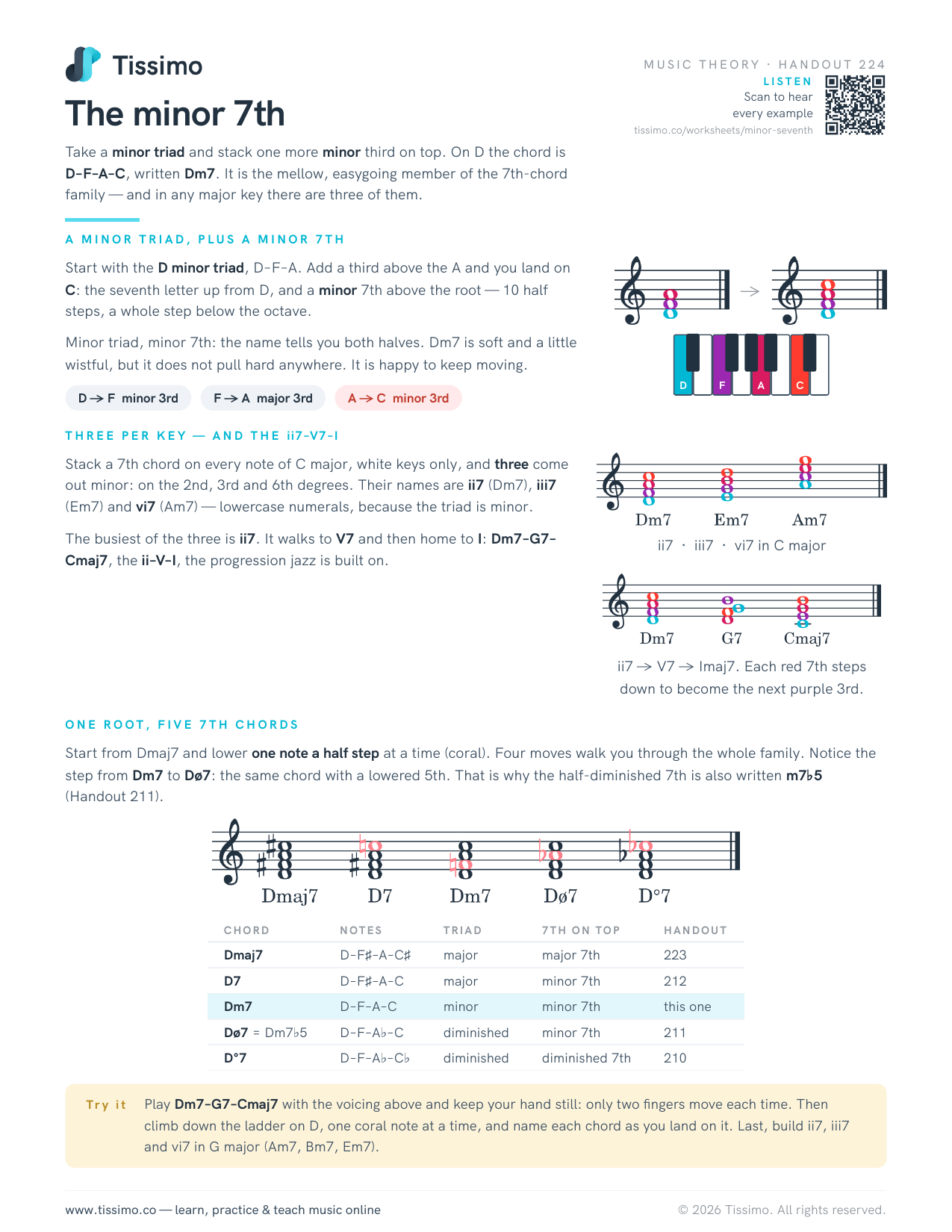 The minor 7thTake a minor triad and stack one more minor third on top. On D the chord is D–F–A–C, written Dm7. It is the mellow, easygoing member of the 7th-chord family — and in any major key there are three of them.