Technique & Performance
Bowing
Bowing is the technique of drawing a bow across the strings of a violin, viola, cello or double bass, and also the markings that tell a player which way to bow and which notes share a bow.
On a string instrument the left hand chooses the pitch, but the bow makes the sound. Bow speed, the weight sinking into the string and the contact point between the bridge and the fingerboard together decide how loud a note is, its tone color, and how it begins and ends. String players spend years refining it.
Down-bow and up-bow
- Down-bow (⊓): the bow moves from the frog, the end you hold, toward the tip. On violin and viola the arm moves away from the body.
- Up-bow (V): from the tip back toward the frog.
Down-bows tend to suit strong beats, because the stroke starts at the heavier frog end, while up-bows tend to suit upbeats and crescendos. Unmarked separate notes simply alternate down and up. A slur means that all the notes under it are played in one bow, without changing direction.
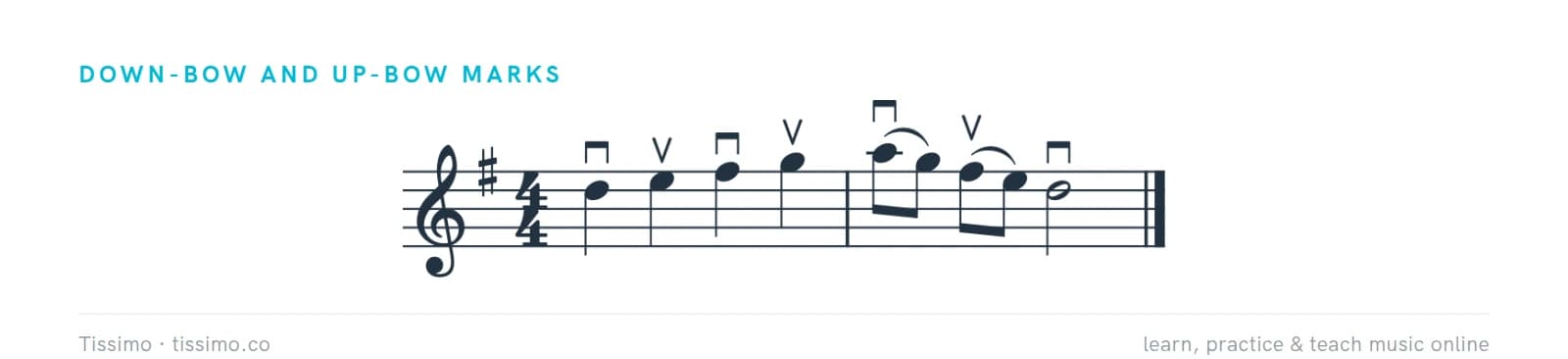
Common bow strokes
- Détaché: separate, smooth strokes, one per note, without a gap.
- Legato: several notes connected in one bow.
- Martelé ("hammered"): each note starts with a firm bite and stops on the string.
- Spiccato: the bow bounces off the string for short, light notes.
- Col legno: playing with the wood of the bow instead of the hair.
- Sul ponticello / sul tasto: bowing very close to the bridge, for a glassy, edgy sound, or over the fingerboard, for a soft, airy one.
Pizzicato (plucking) and arco (back to the bow) tell you when the bow is not used.
Planning the bow
A bow is only so long, so players plan it like a budget. A long note needs a slow bow or the whole length; a quick group of short notes uses only a small part. Running out of bow at the end of a long note is a common beginner problem. In an orchestra, the section leaders agree on bowings so that a whole section moves together, which looks and sounds unified. Plan Your Bow: Long and Short and Will There Be Enough Bow? practice this planning.
Try it today
On an open string, play four slow whole bows: down, up, down, up. Keep the bow parallel to the bridge and listen for an even sound from frog to tip. Then repeat with half the bow, then with short strokes in the middle of the bow.
Common questions
What is the symbol for a down-bow?
A bracket shape open at the bottom (⊓), printed above or below the note. An up-bow is shown with a V.
What does a slur mean for string players?
All the notes under the slur are played in one bow, without changing direction.
Practice it: free worksheets
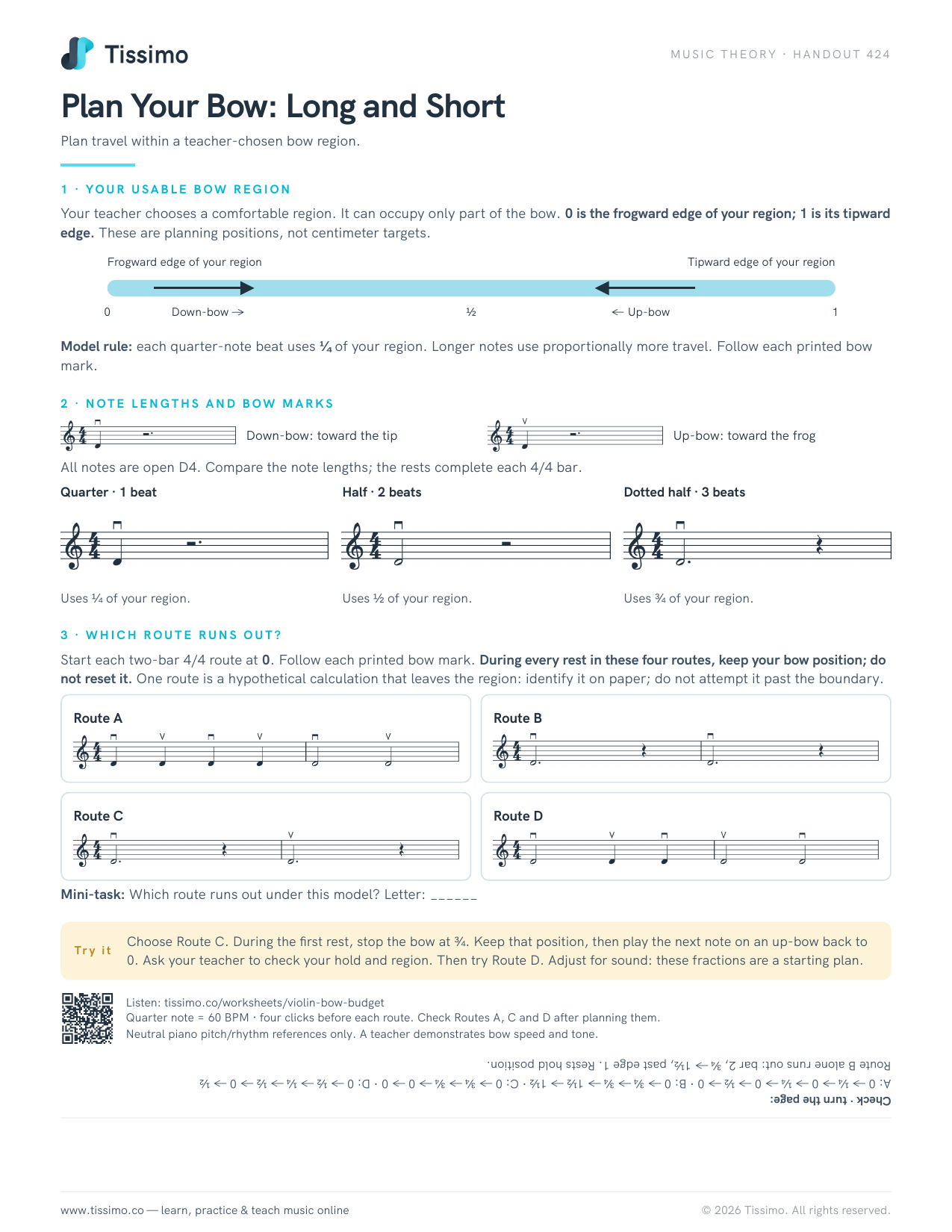 Plan Your Bow: Long and ShortPlan travel within a teacher-chosen bow region.
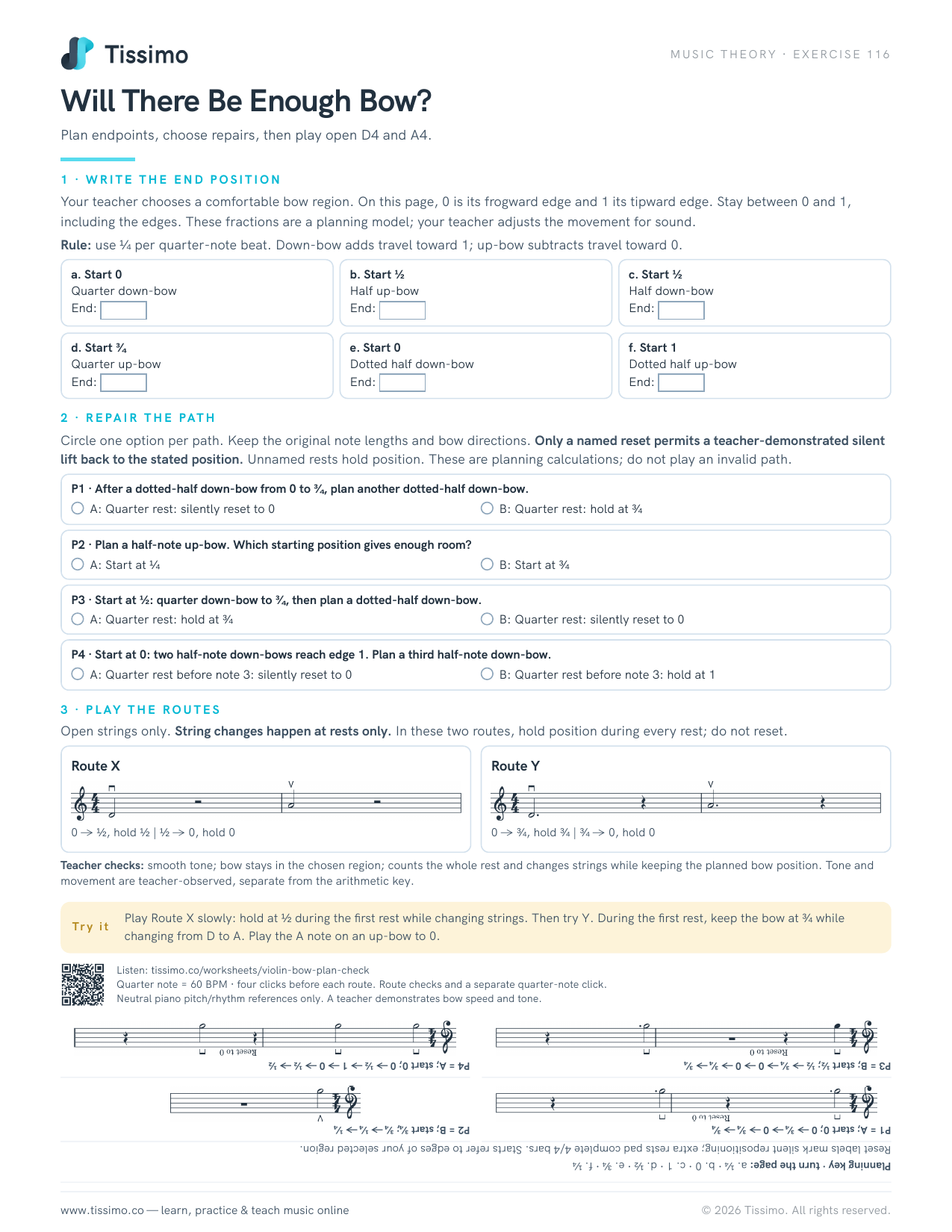 Will There Be Enough Bow?Plan endpoints, choose repairs, then play open D4 and A4.
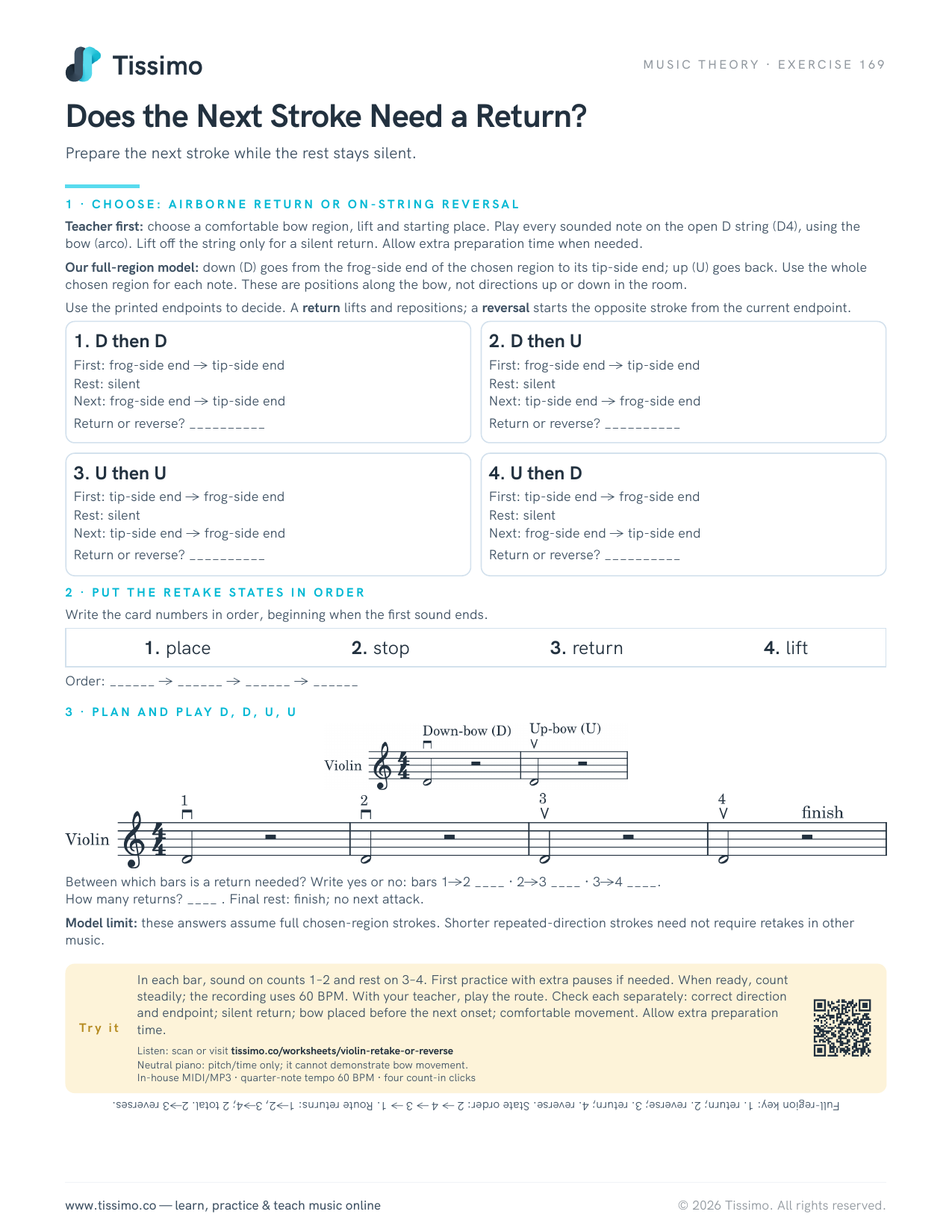 Does the Next Stroke Need a Return?Prepare the next stroke while the rest stays silent.
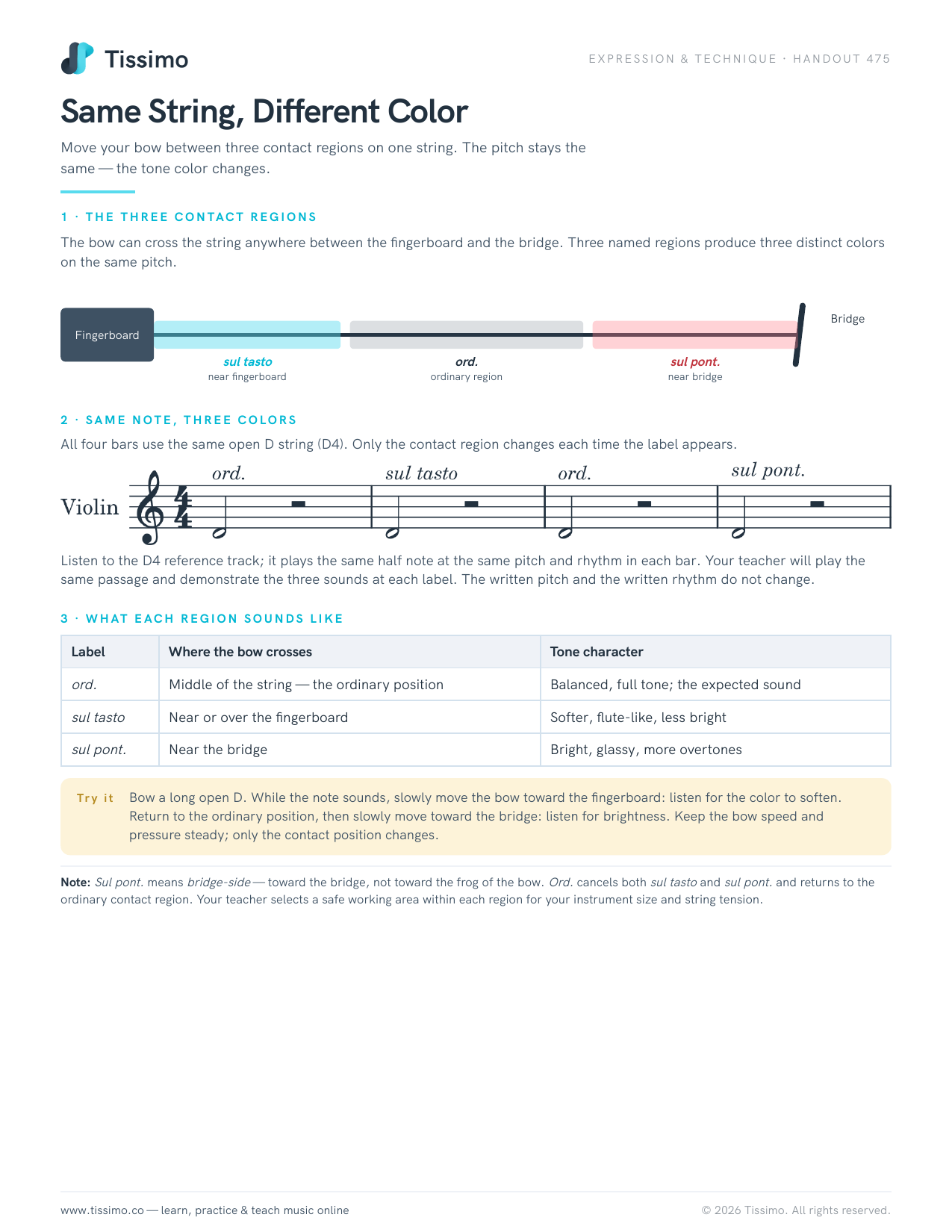 Same String, Different ColorMove your bow between three contact regions on one string. The pitch stays the same — the tone color changes.
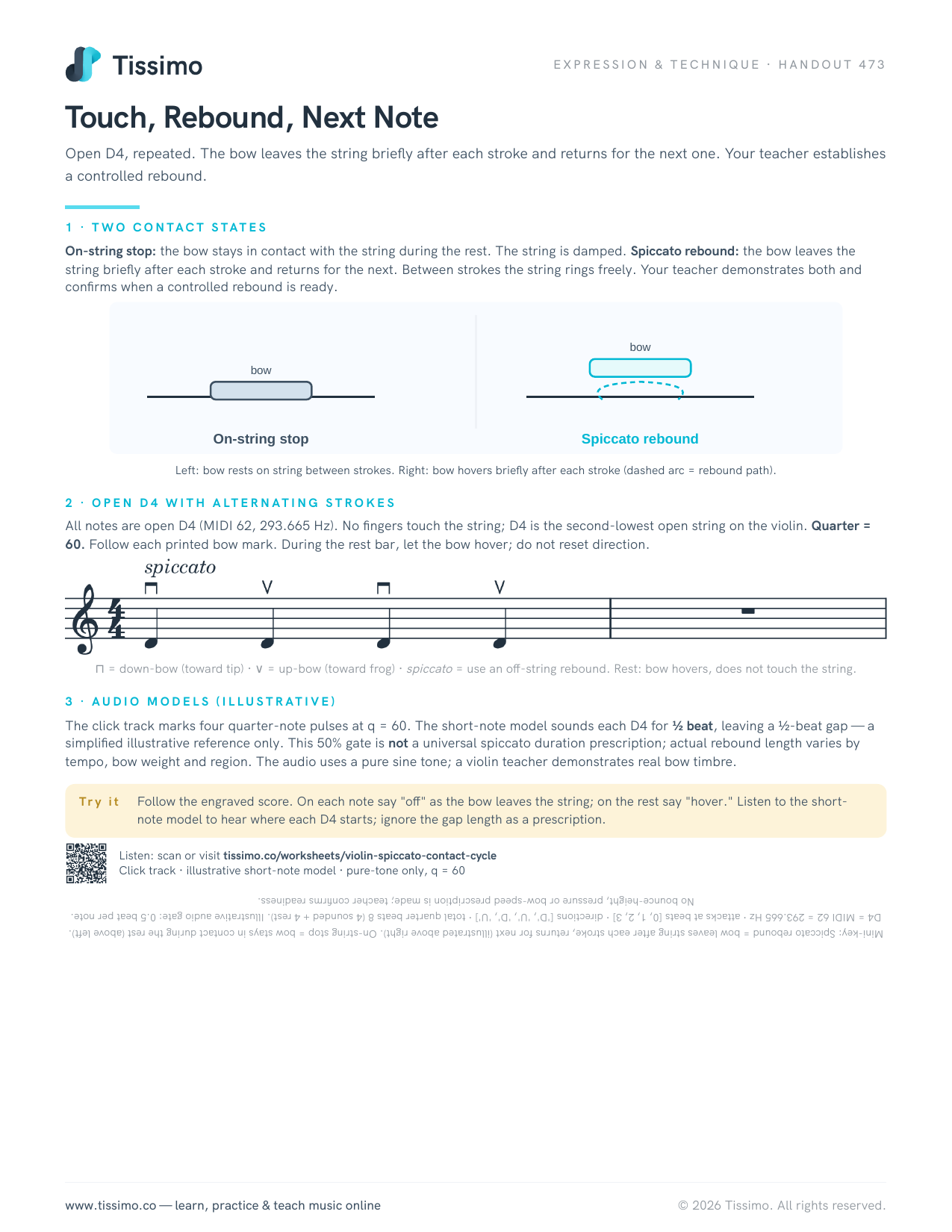 Touch, Rebound, Next NoteOpen D4, repeated. The bow leaves the string briefly after each stroke and returns for the next one. Your teacher establishes a controlled rebound.
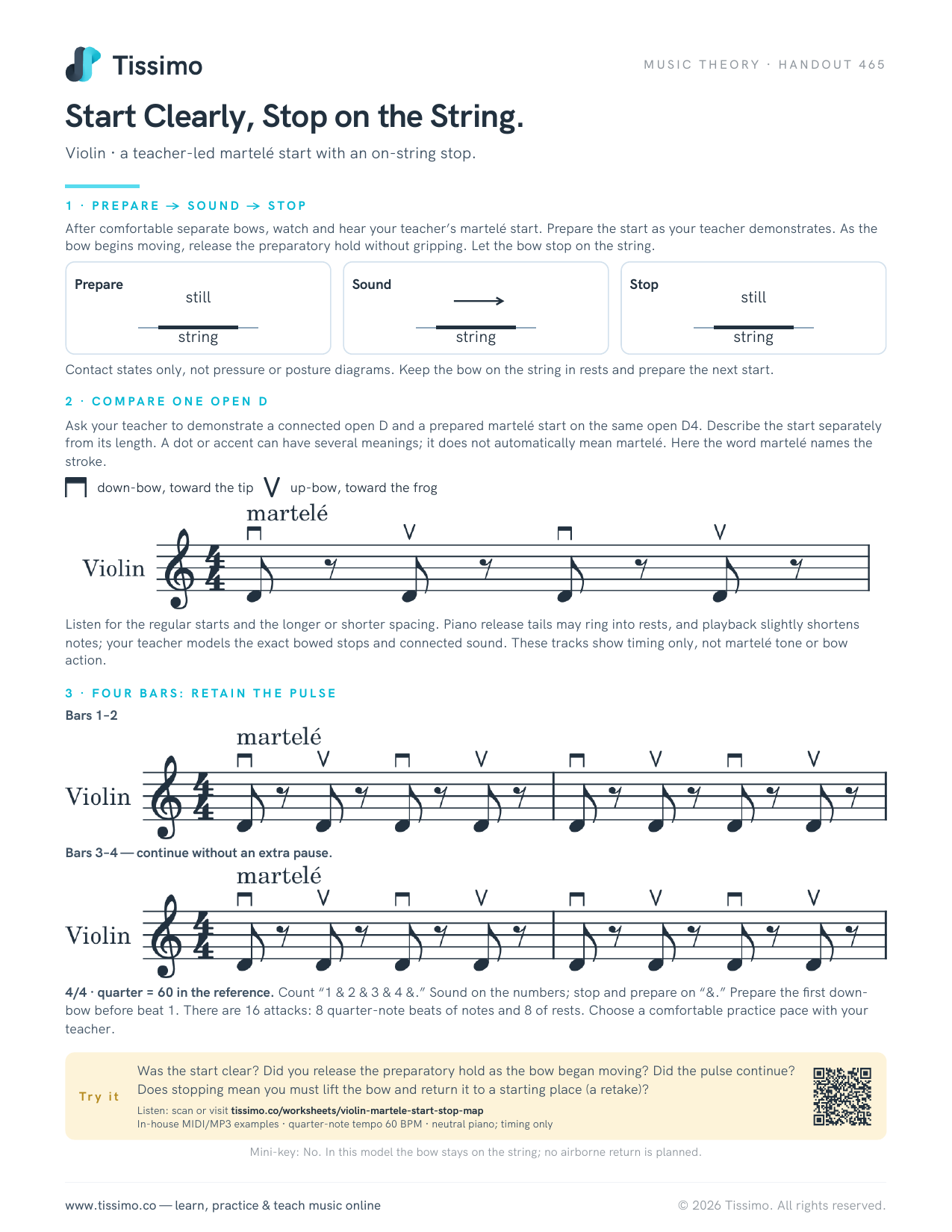 Start Clearly, Stop on the String.Violin · a teacher-led martelé start with an on-string stop.