Instruments & Voices
String Family
The string family is the instruments that sound with vibrating strings. In the orchestra it means the bowed strings (violin, viola, cello, double bass); more broadly it includes harps, guitars and other plucked strings.
String instruments make their sound with stretched strings that vibrate. When an orchestra talks about "the strings," it means the bowed string section: violins, violas, cellos and double basses. In a wider sense the family also includes the harp, the guitar, the ukulele, the mandolin and the banjo, and many instruments from around the world, from the sitar to the koto.
How strings make sound
A vibrating string on its own is very quiet. String instruments pass that vibration through a bridge to a wooden soundboard or hollow body, which resonates and makes it audible. Three things set a string's pitch: its length (shorter is higher), its tension (tighter is higher) and its thickness (thinner is higher). Players tune by changing the tension and play different notes by shortening the string with a finger.
Strings can be set vibrating in different ways:
- Bowed: a rosined bow keeps the string sounding for as long as it moves (violin family).
- Plucked: a finger or pick sets the string ringing, and the sound then fades (harp, guitar, ukulele).
- Struck: small hammers hit the strings (the piano, whose strings are often counted here too).
The bowed strings
The four members of the orchestral string section are built on the same plan and tuned mostly in fifths, from high to low:
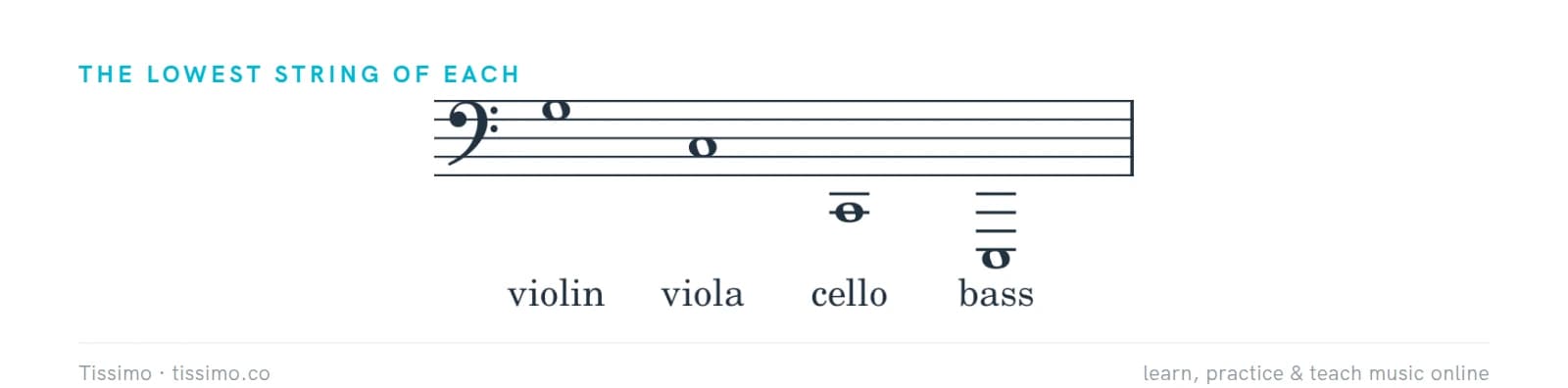
- Violin: G3, D4, A4, E5, held under the chin; treble clef.
- Viola: C3, G3, D4, A4, a little larger; alto clef.
- Cello: C2, G2, D3, A3, played seated; bass, tenor and treble clefs.
- Double bass: E1, A1, D2, G2, tuned in fourths; written an octave above its sound.
Playing techniques
Bowed strings have a large vocabulary of sounds: arco (with the bow), pizzicato (plucked), vibrato, tremolo (very fast repeated bow strokes), harmonics (light, flute-like notes made by touching the string lightly), double stops (two strings at once) and the mute, a small clamp on the bridge that softens the tone (marked con sordino).
The strings in the orchestra
The strings are usually the largest section of the orchestra and play almost all the time, often carrying the main melody and the harmony. In the score they sit at the bottom of the page, in the order first violins, second violins, violas, cellos and basses. Smaller string groups include the string quartet and the string orchestra.
Choosing a string instrument
Bowed strings come in fractional sizes, so children can start young on a small violin, viola or cello. If you like melodies and a bright sound, the violin is a natural choice; the viola and cello suit players who love a warmer, deeper tone; the bass suits anyone who enjoys holding a band together. Plucked strings such as the guitar and ukulele are easier to start alone, while bowed strings benefit most from a teacher from the first lesson.
Common questions
What instruments are in the string family?
In the orchestra: violin, viola, cello and double bass, often with the harp. More broadly, any instrument that sounds by vibrating strings, including the guitar, ukulele, mandolin, banjo and many folk and world instruments.
Is the piano a string instrument?
Its sound does come from strings, so instrument classifications put it with the string instruments. Because the strings are struck by hammers from a keyboard, most musicians call it a keyboard instrument instead.
Practice it: free worksheets
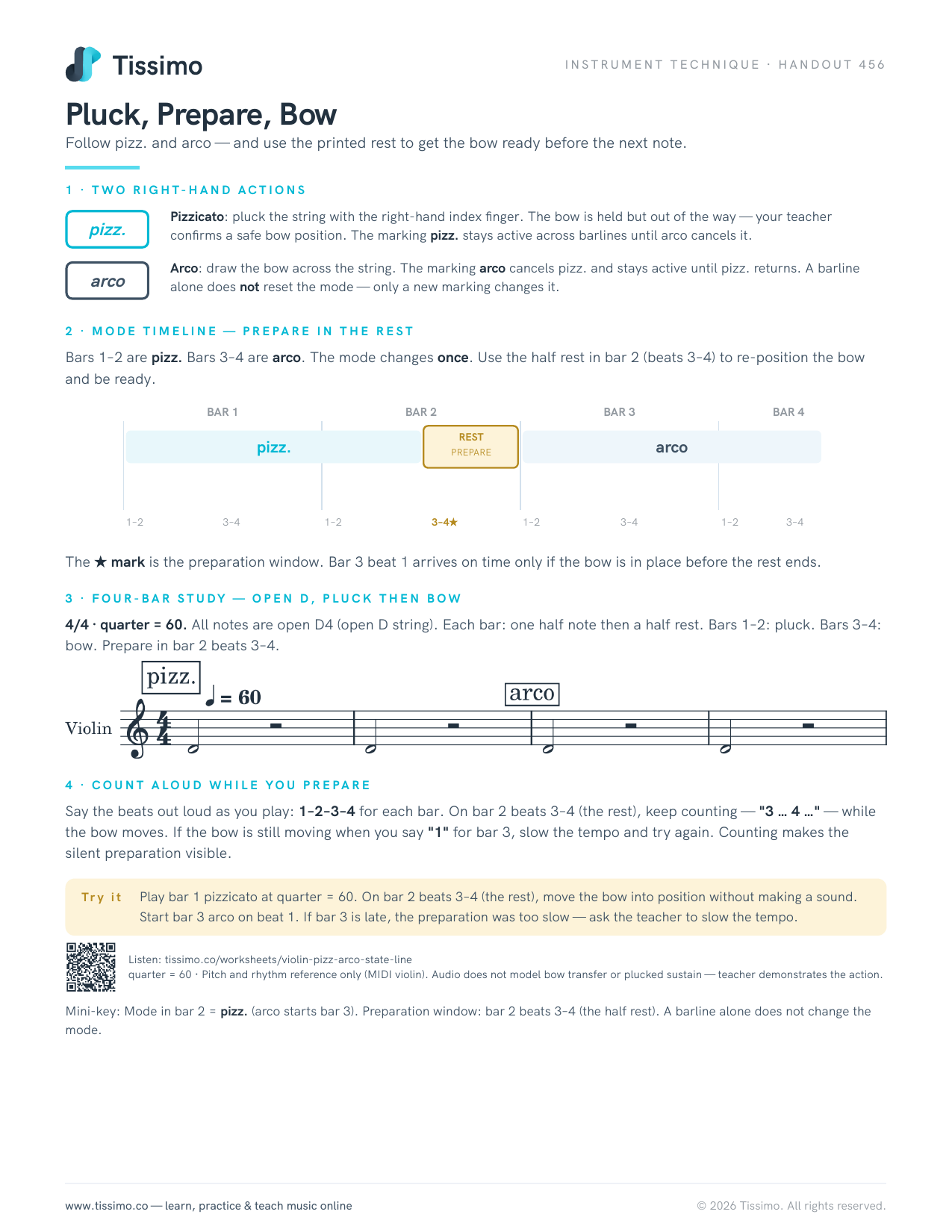 Pluck, Prepare, BowFollow pizz. and arco — and use the printed rest to get the bow ready before the next note.
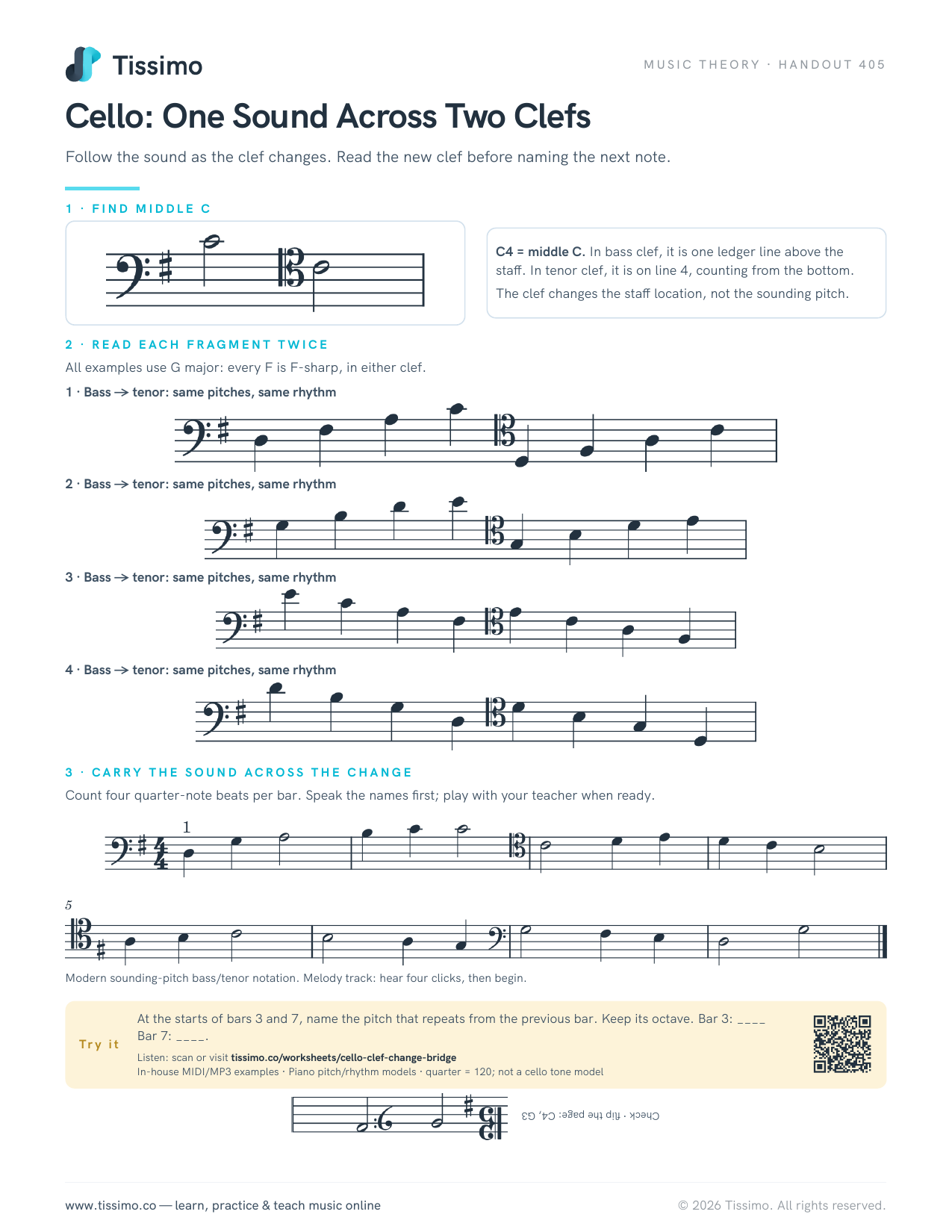 Cello: One Sound Across Two ClefsFollow the sound as the clef changes. Read the new clef before naming the next note.
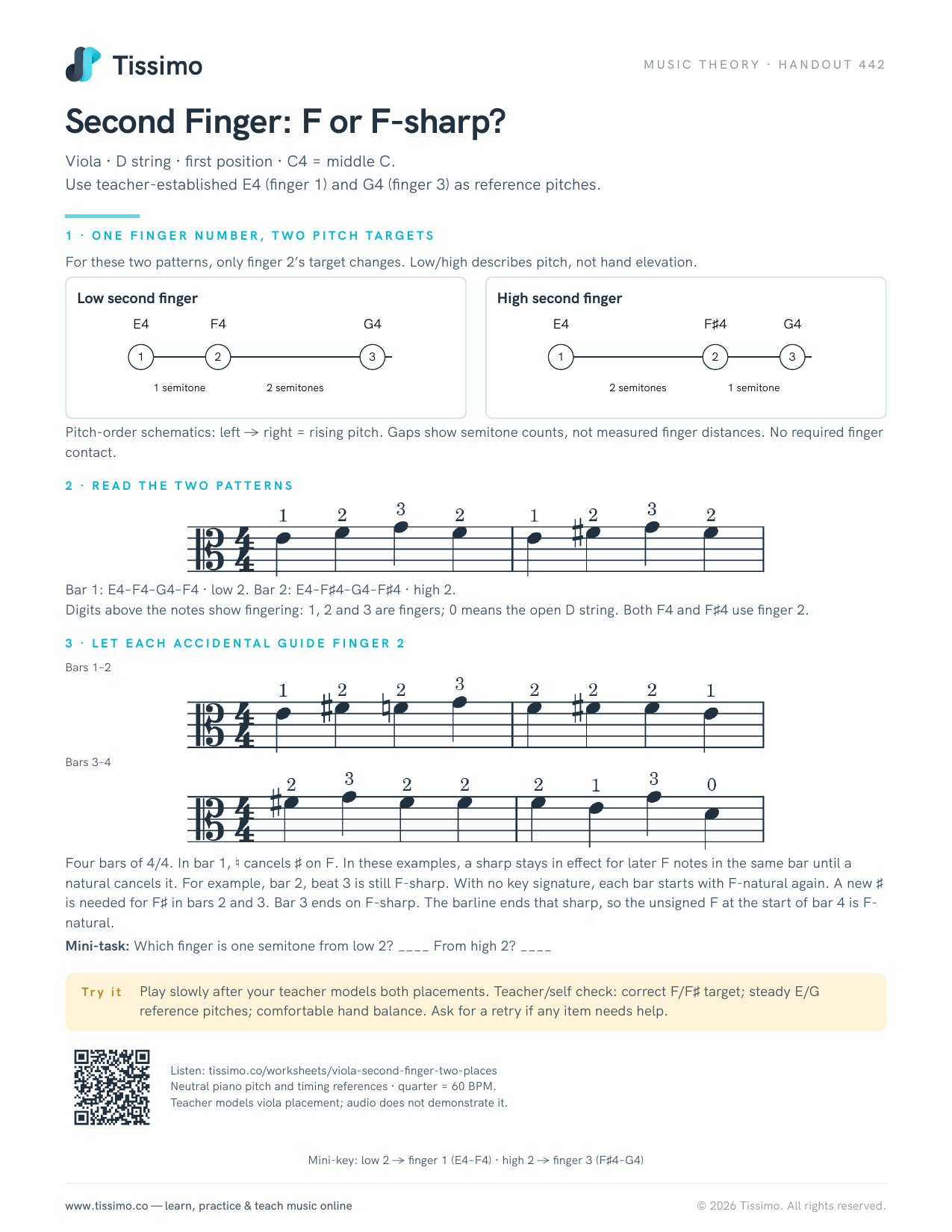 Second Finger: F or F-sharp?Viola · D string · first position · C4 = middle C. Use teacher-established E4 (finger 1) and G4 (finger 3) as reference pitches.
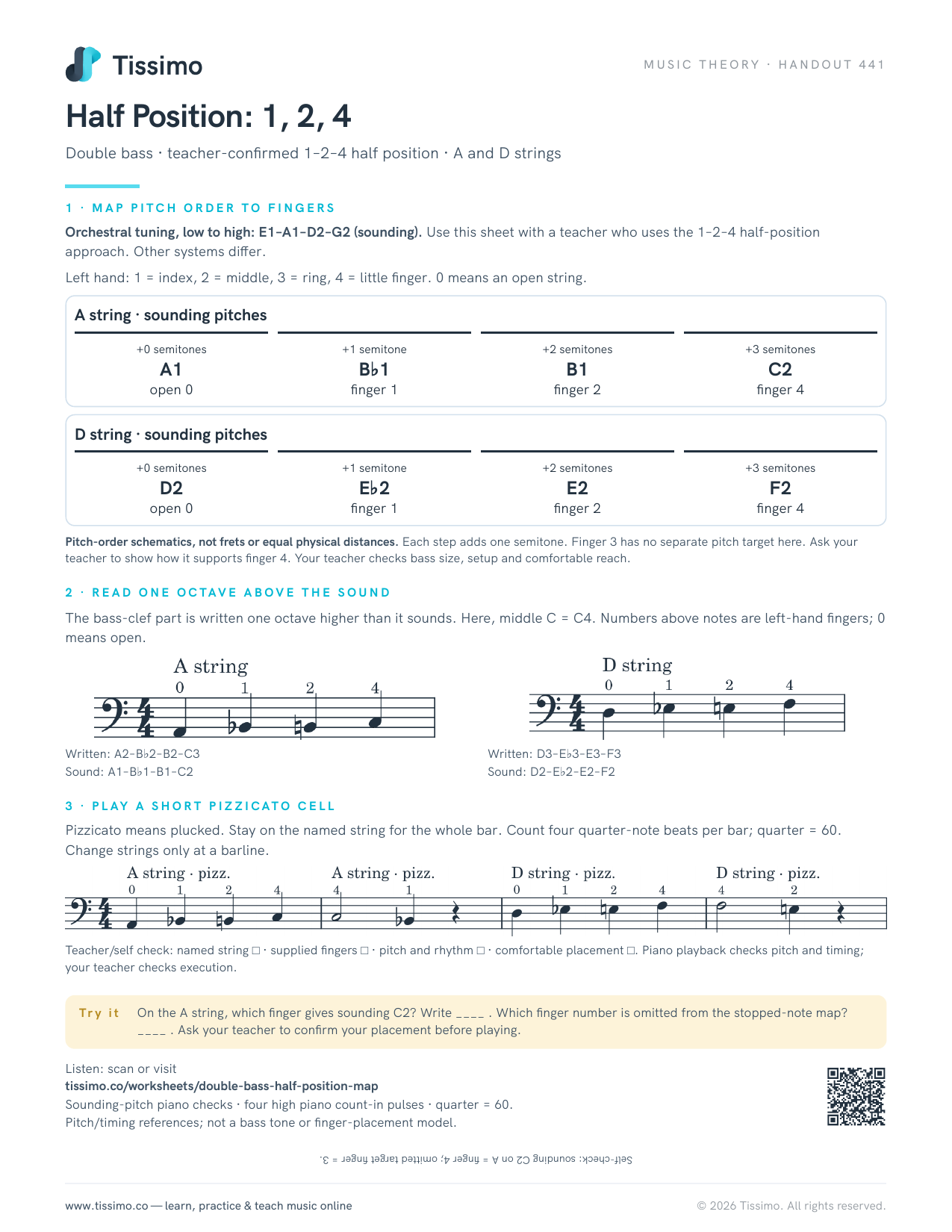 Half Position: 1, 2, 4Double bass · teacher-confirmed 1–2–4 half position · A and D strings
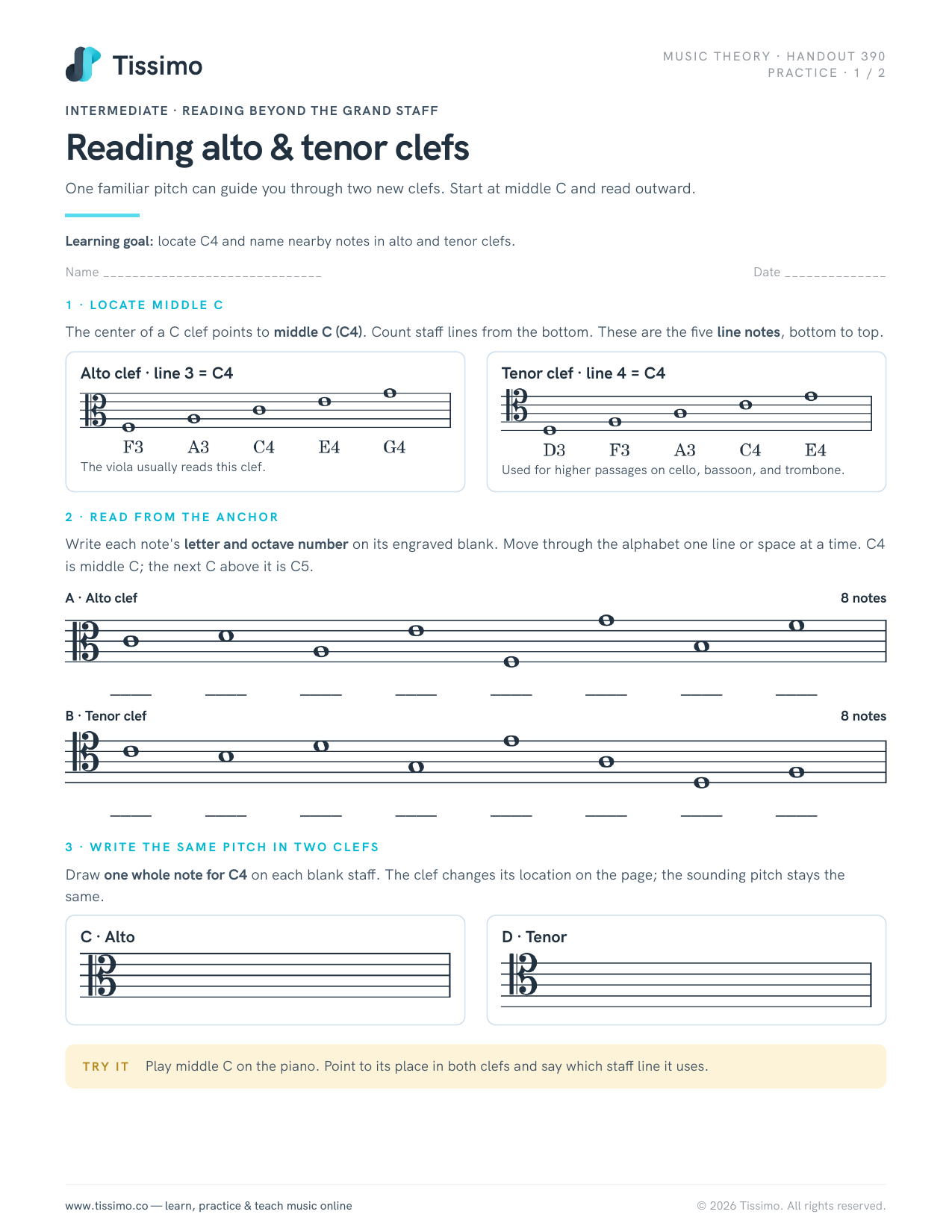 Reading alto & tenor clefsOne familiar pitch can guide you through two new clefs. Start at middle C and read outward.
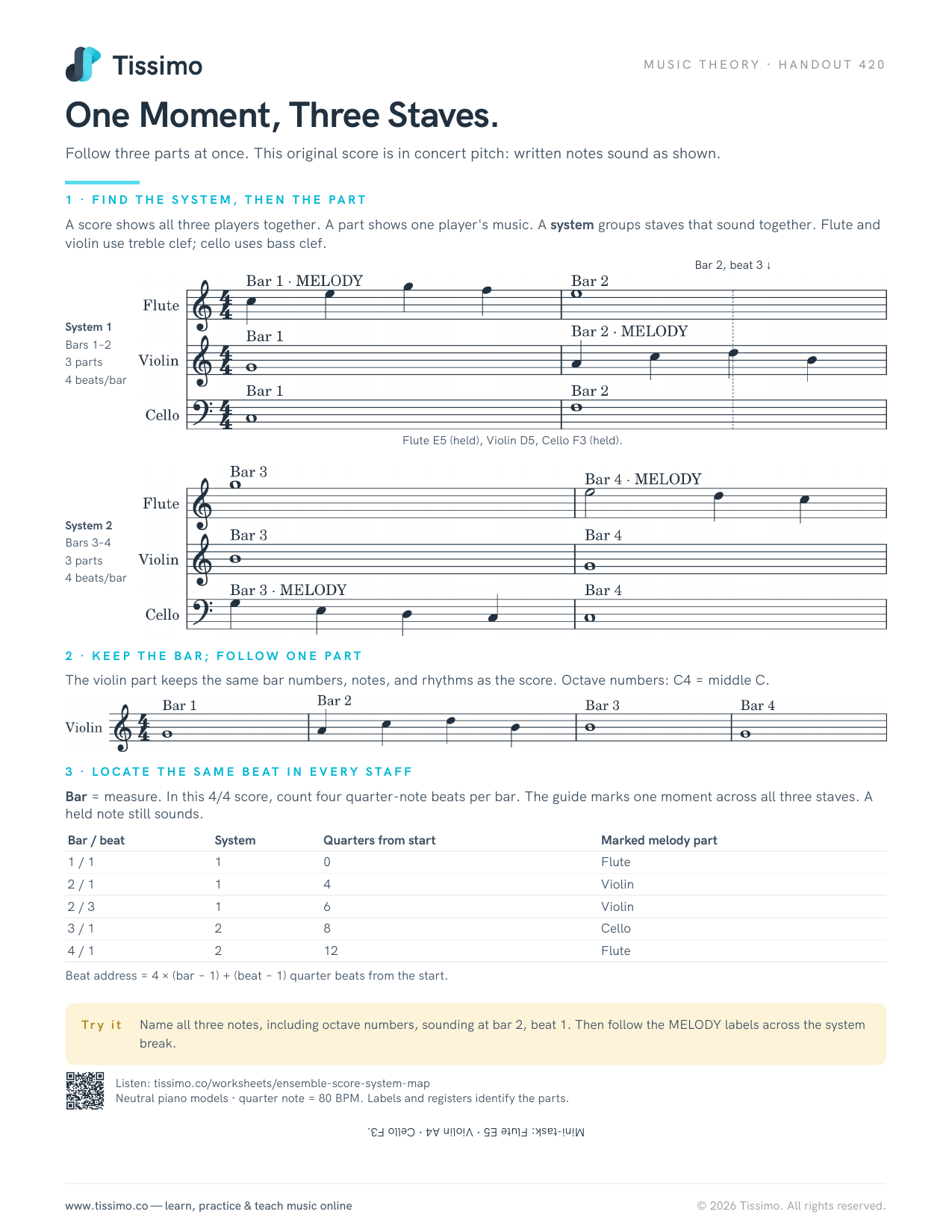 One Moment, Three Staves.Follow three parts at once. This original score is in concert pitch: written notes sound as shown.