Instruments & Voices
Cello
Pronounced CHEL-oh
The cello is a large bowed string instrument played seated, with four strings tuned C–G–D–A an octave below the viola. Its rich, singing tone covers bass lines and melodies, and it reads bass, tenor and treble clefs.
The cello (short for violoncello) is the tenor and bass voice of the violin family. You play it sitting down, with the instrument resting on the floor on an adjustable spike (the endpin) and leaning against your chest, the neck beside your left ear. Its tone ranges from deep and resonant on the low strings to a singing, voice-like sound high up, which makes it loved as both a bass instrument and a melody instrument.
How a cello makes its sound
Like the violin and viola, the cello is played with a rosined bow drawn across the strings, or plucked (pizzicato). The left-hand fingers stop the strings on a fingerboard without frets, and the large hollow body gives the sound its depth. Because the cello is held upright, the bow moves sideways across the strings, and the weight of your arm sinks naturally into them.
Tuning and range
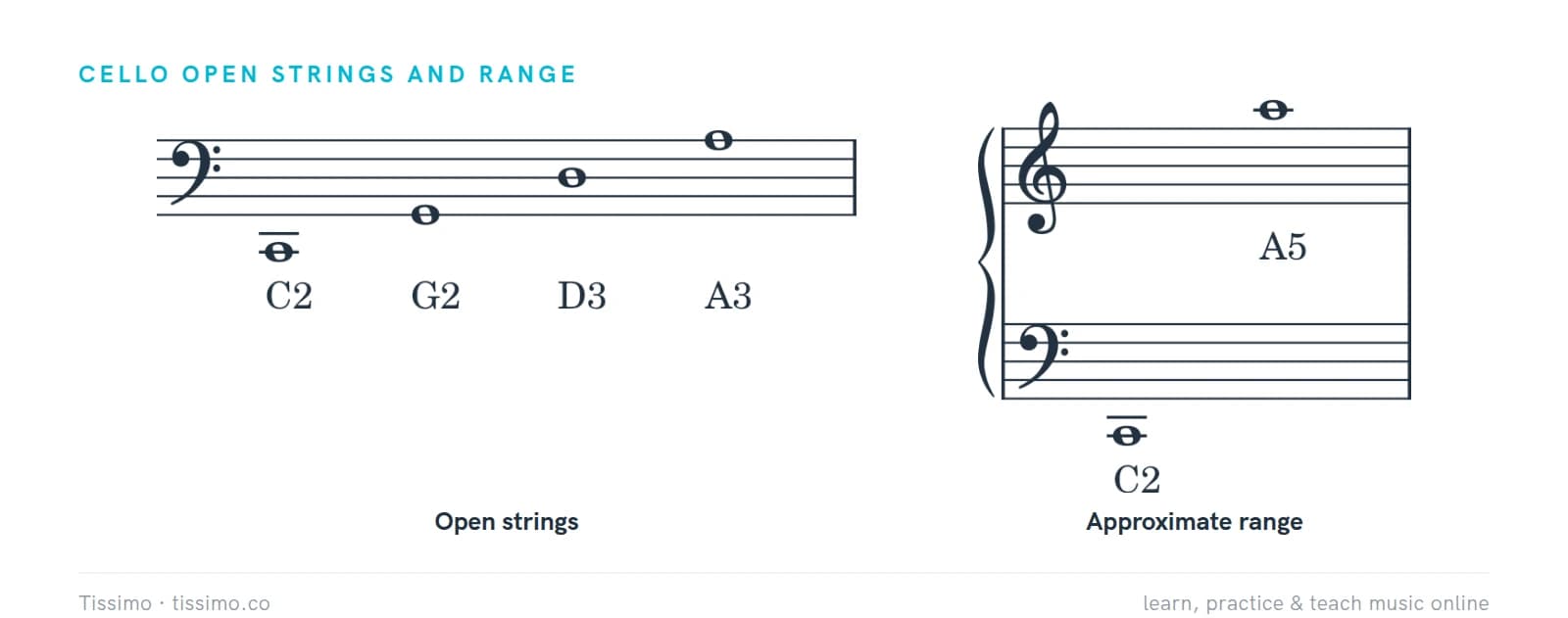
The strings are C2, G2, D3 and A3, each a perfect fifth apart and exactly one octave below the viola's. The range runs from the open C2 up to around A5 in most music, and higher in solo repertoire, where cellists use thumb position, placing the thumb on the string as an extra finger.
How cello music is written
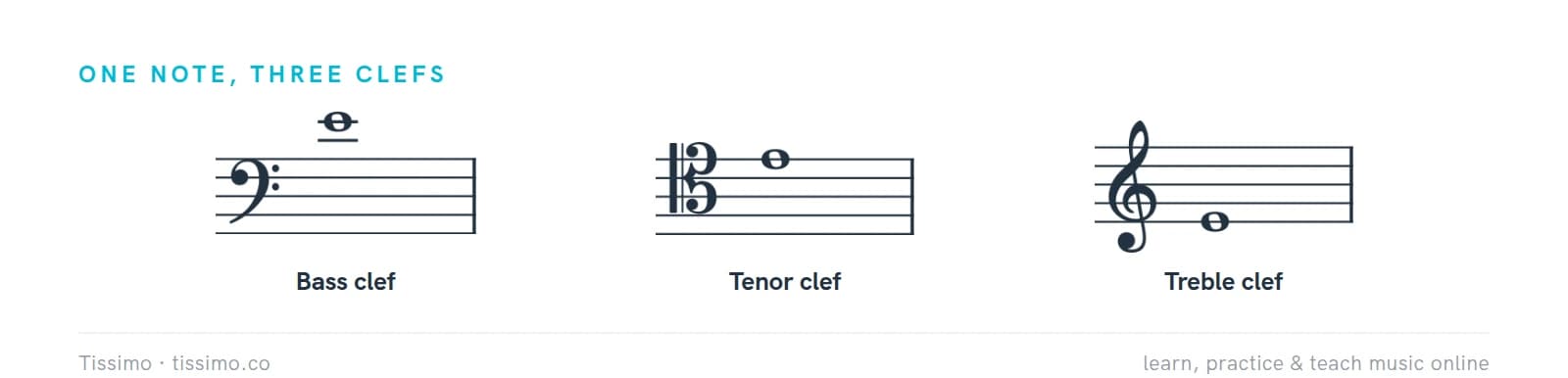
Cello music is written at the pitch it sounds, mostly in bass clef. When the line climbs, the part switches to tenor clef, a C clef that puts middle C on the fourth line, and for the highest passages to treble clef. Reading all three clefs is a normal part of learning the cello.
Its role
In the orchestra the cellos often play the bass line together with the double basses, and they also take over long, expressive melodies. In the string quartet the cello is the bass of the group. Solo works for the cello include unaccompanied suites, sonatas with piano and concertos, and the cello also appears in film scores, pop arrangements and crossover groups.
Tips for beginners
- Children start on smaller cellos (1/4, 1/2, 3/4) and move to full size as they grow. Sitting height matters: your knees should be a little lower than your hips.
- Set the endpin so the top of the cello sits near your breastbone and the C-string peg is near your left ear.
- Use arm weight rather than pressure for a big sound, and keep the bow between the bridge and the end of the fingerboard.
- Learn the tenor clef early, as soon as your music starts to go above the bass staff.
Common questions
Is the cello a bass instrument?
It is both a bass and a tenor instrument. The cello often plays the bass line, especially in small groups, but its high strings sing melodies in the same range as a tenor or baritone voice. The double bass sits an octave or so lower.
What are the notes of the cello strings?
From lowest to highest: C, G, D, A (C2, G2, D3 and A3), each a perfect fifth apart and an octave below the viola's strings.
Practice it: free worksheets
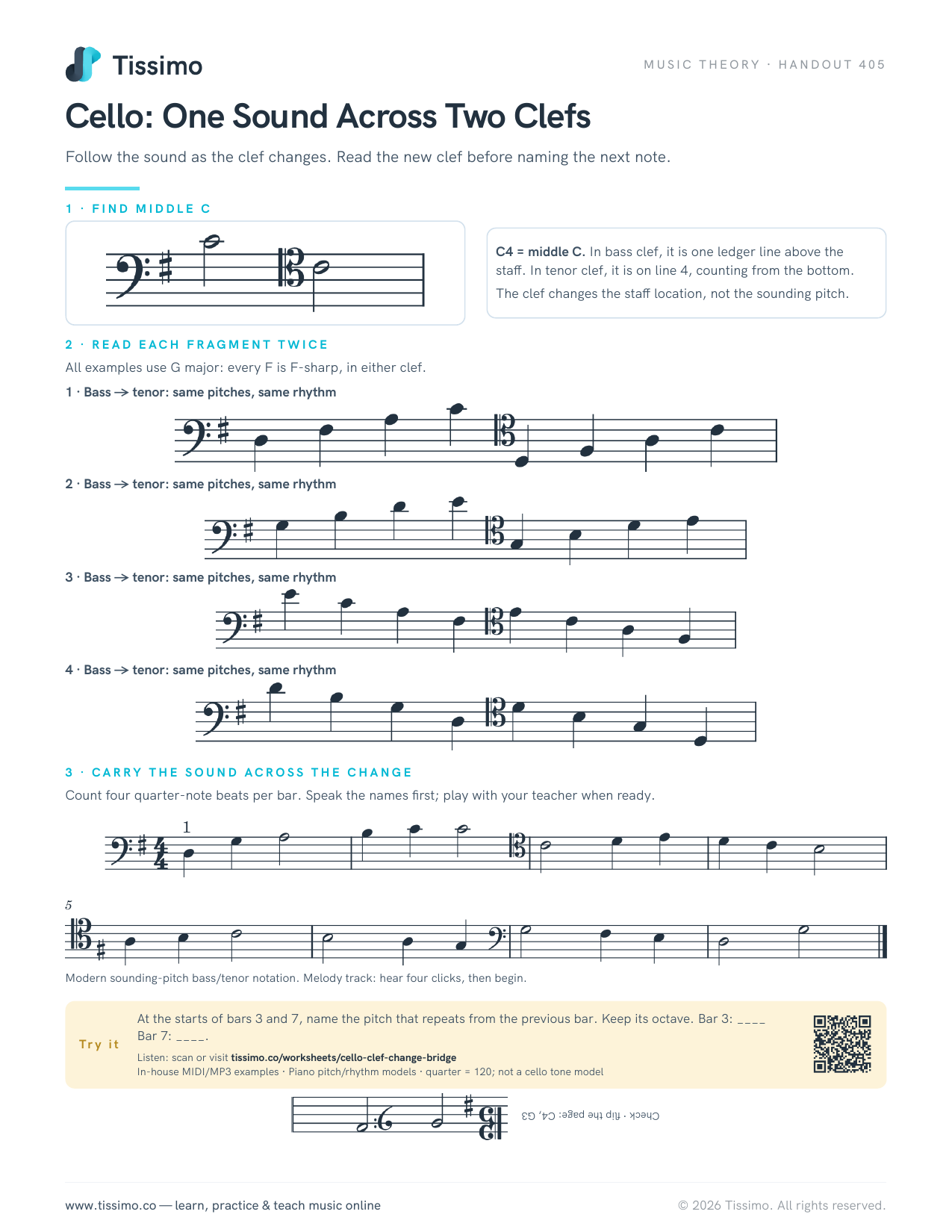 Cello: One Sound Across Two ClefsFollow the sound as the clef changes. Read the new clef before naming the next note.
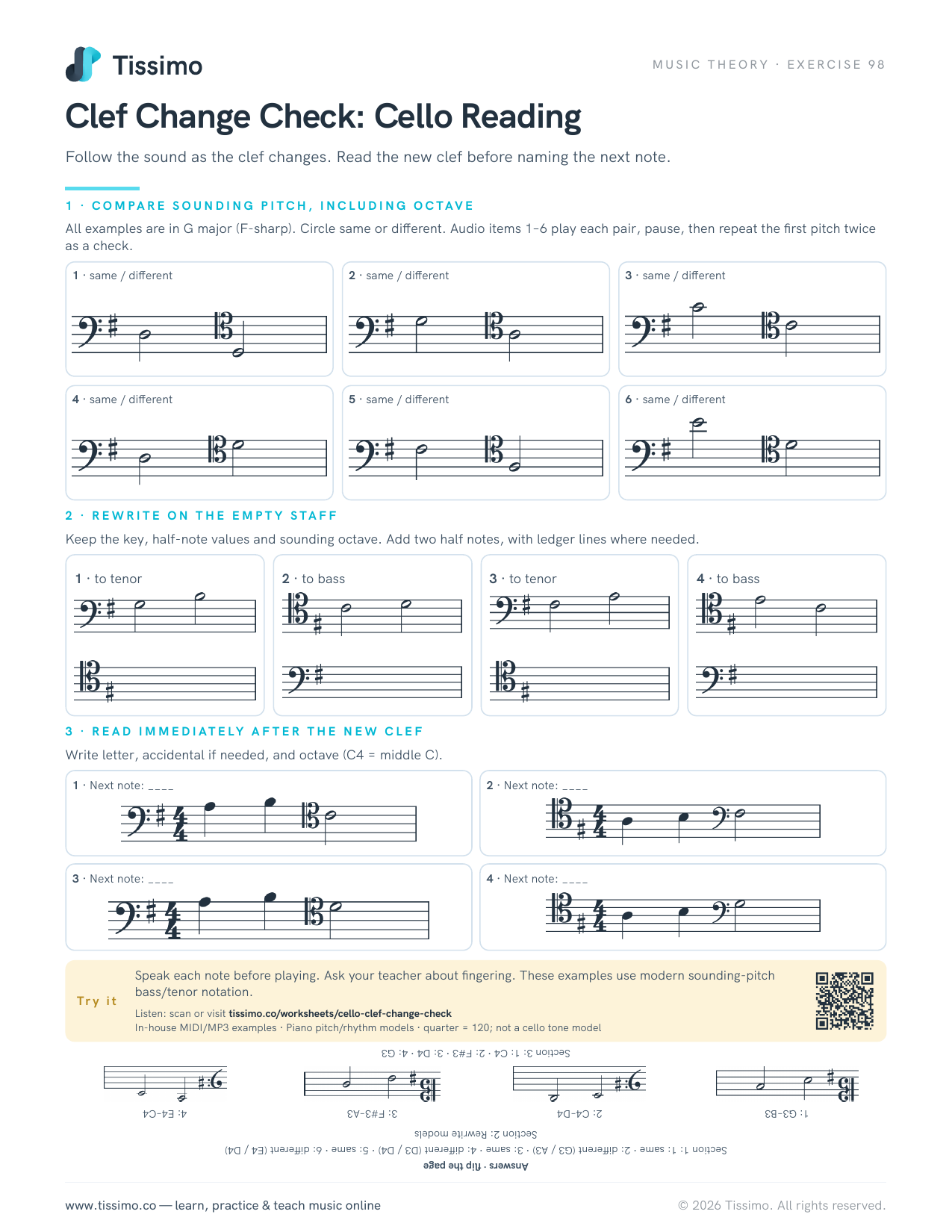 Clef Change Check: Cello ReadingFollow the sound as the clef changes. Read the new clef before naming the next note.
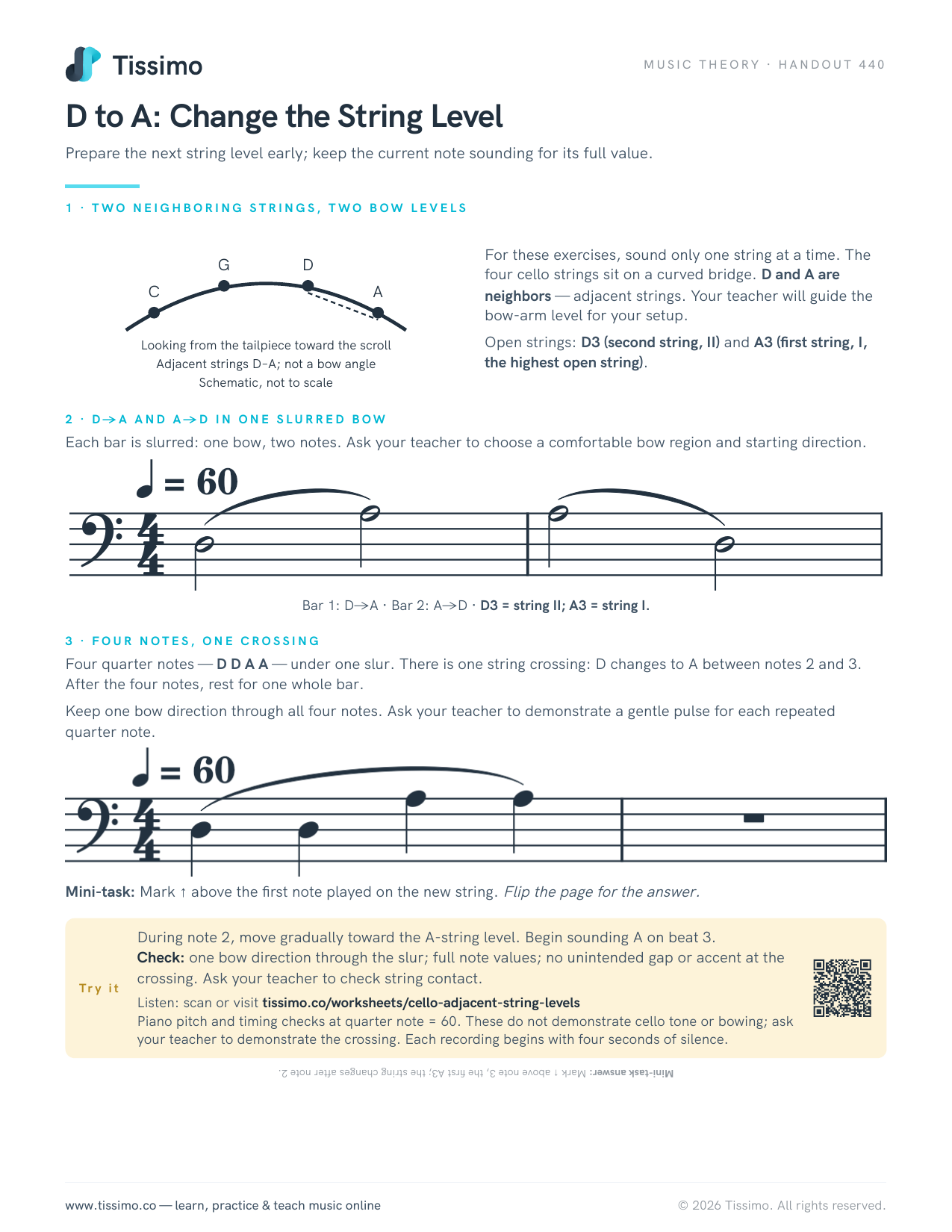 D to A: Change the String LevelPrepare the next string level early; keep the current note sounding for its full value.
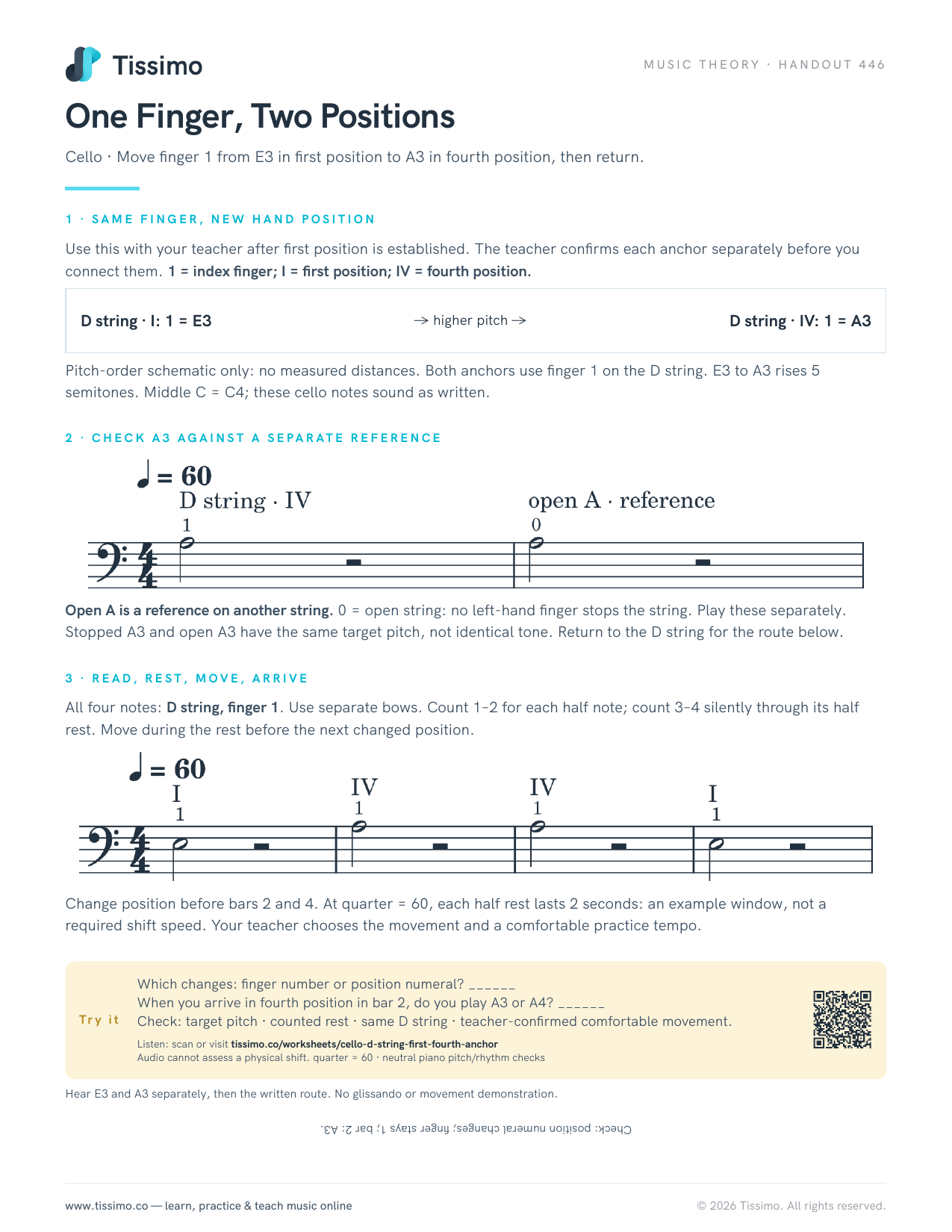 One Finger, Two PositionsCello · Move finger 1 from E3 in first position to A3 in fourth position, then return.
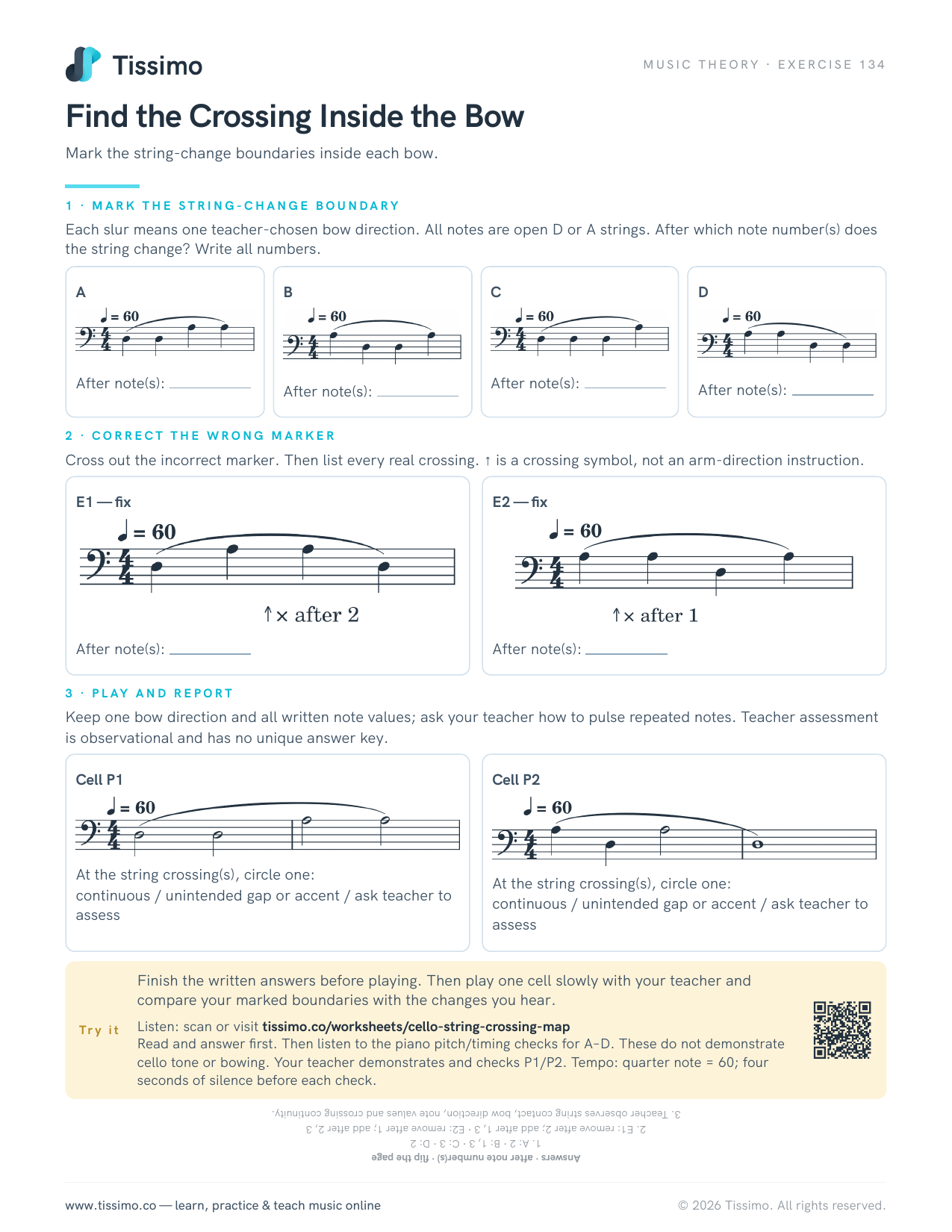 Find the Crossing Inside the BowMark the string-change boundaries inside each bow.
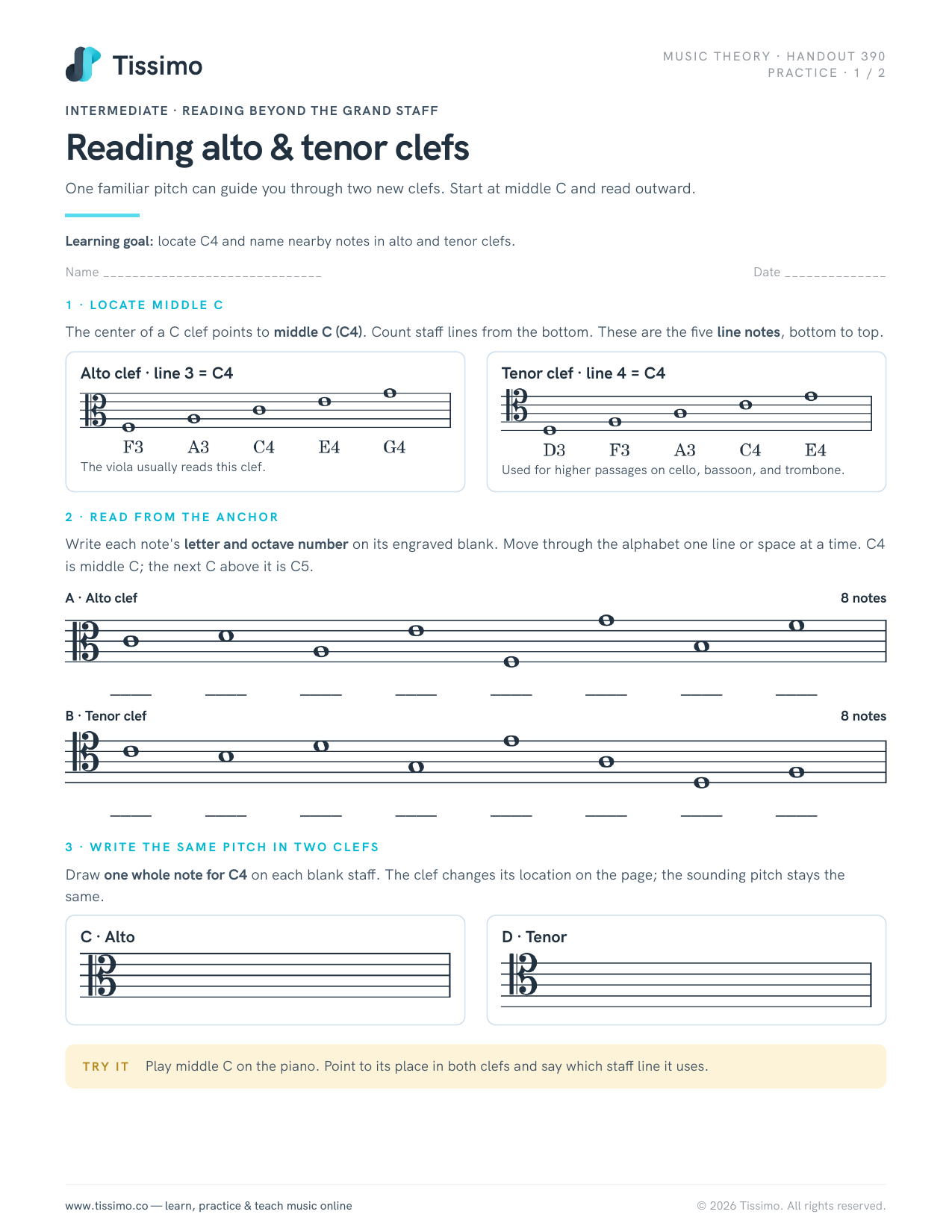 Reading alto & tenor clefsOne familiar pitch can guide you through two new clefs. Start at middle C and read outward.