Articulation & Ornaments
Vibrato
Pronounced vih-BRAH-tohWritten as vib.
Vibrato is a regular, gentle wavering of pitch on a sustained note, used by singers, string players, many wind players and guitarists to warm the tone and help it carry.
Vibrato is a regular wavering of pitch on a held note: the pitch moves a little away from its center and back, several times a second. It warms the tone, makes it more expressive and helps it carry. Singers, string players, many wind players and guitarists use it. The piano cannot: once a key is struck, its pitch is fixed.
How it is made
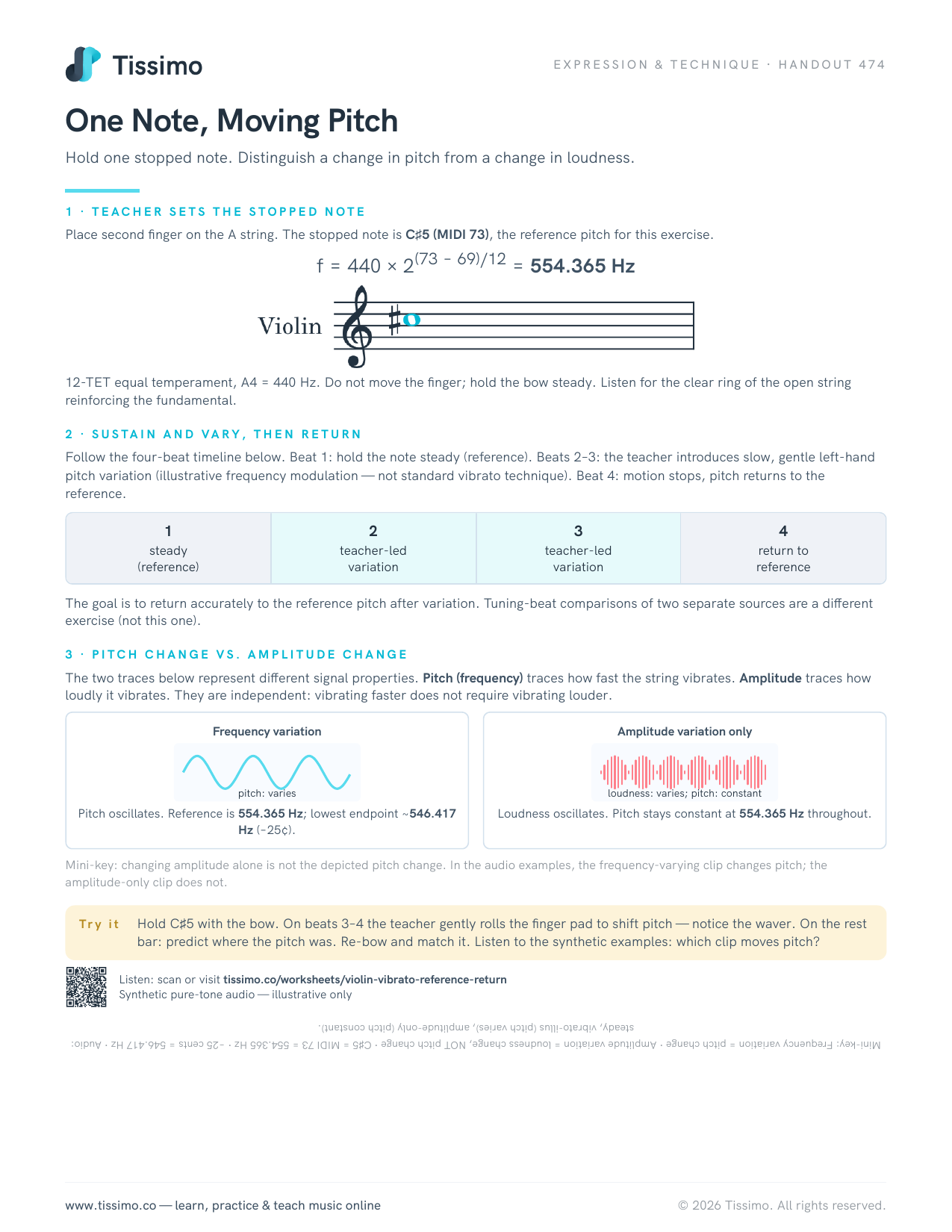
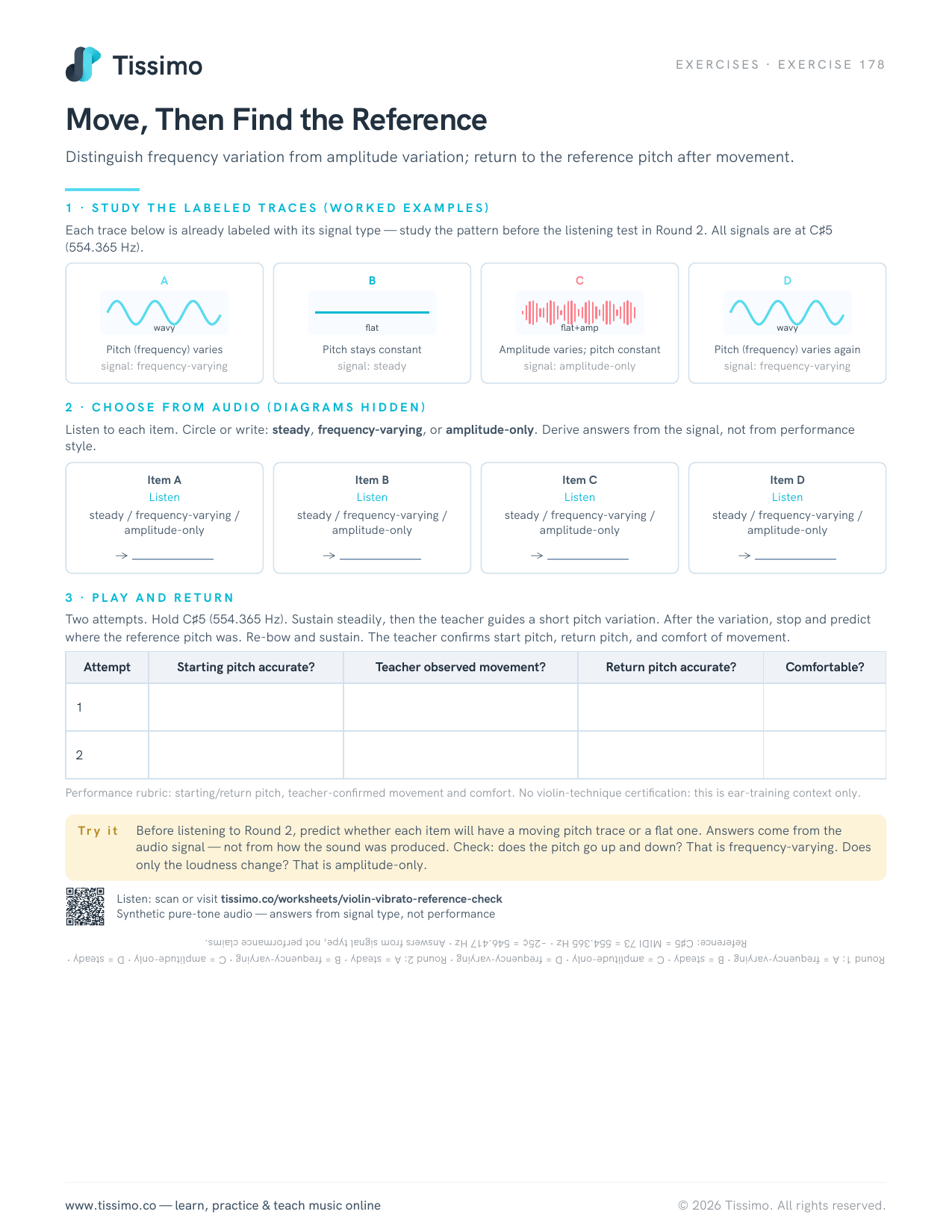
- Violin, viola, cello, double bass: the left-hand finger rocks back and forth on the string, moved by the finger, the wrist or the arm. Practice it with One Note, Moving Pitch.
- Voice: a free, well-supported voice develops vibrato naturally; it is not something singers add on top.
- Winds and brass: flute and oboe players usually shape vibrato with the air; saxophonists and many brass players with small movements of the jaw or lips.
- Guitar: the fretting finger pushes the string slightly or rocks along it, or the player uses the whammy bar.
Speed and width
A typical vibrato pulses somewhere around five to seven times a second. Its width, how far the pitch moves, is usually a small fraction of a half step on string instruments and wider in operatic singing. A vibrato that is too slow and wide sounds like a wobble; one that is too fast and narrow sounds nervous. Good players change it with the music: narrower and slower in a quiet passage, richer at a climax.
How it is written
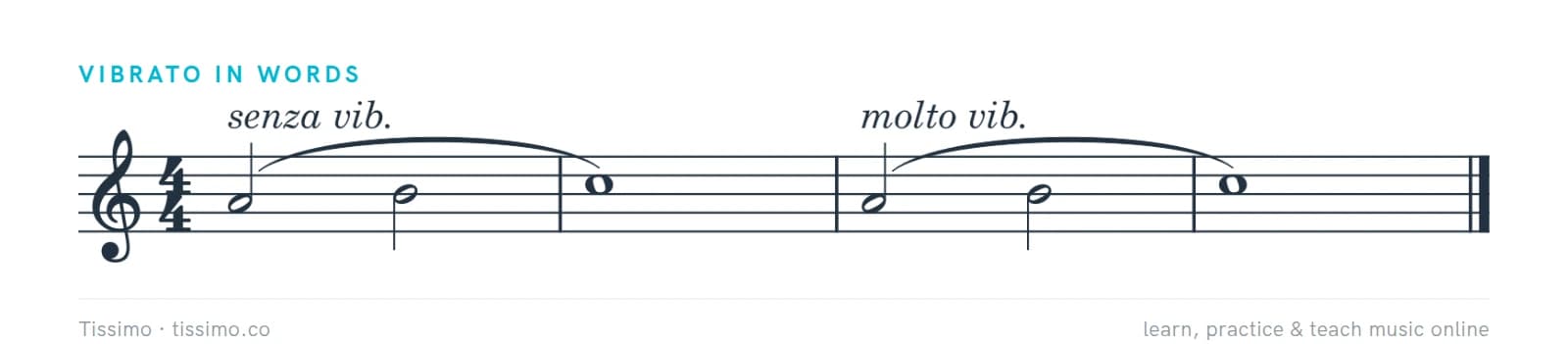
Most of the time it is not written at all: players treat vibrato as part of their normal sound and adjust it by ear. When a composer wants something specific, words do the job: senza vibrato or non vib. (no vibrato), molto vibrato (lots of it), and vib. or con vibrato to bring it back. In jazz and guitar music a wavy line over a note sometimes asks for vibrato.
A little history
Historians generally agree that continuous vibrato became normal in orchestral string playing only during the early 20th century. Before that, many players used it more sparingly, as an expression on chosen notes; exactly how much is still debated, and many performances of Baroque music today use little of it. The clavichord, an early keyboard instrument, can make a gentle vibrato called Bebung by varying the finger's pressure on a held key.
Vibrato or tremolo?
Vibrato changes the pitch of one held sound. A tremolo repeats a note, or alternates two notes, very fast. Electric guitar gear mixes the words up: the "tremolo arm" actually produces vibrato.
Common questions
Can you play vibrato on the piano?
No. A piano note's pitch is fixed once the hammer strikes the string, so there is nothing to waver. Pianists suggest warmth through voicing, touch and pedaling instead.
What is the difference between vibrato and tremolo?
Vibrato is a slight, regular wavering of pitch within one sustained note. A tremolo is a fast repetition of a note, or a fast alternation of two notes.