Articulation & Ornaments
Legato
Pronounced leh-GAH-toh
Legato means smooth and connected: each note passes into the next with no gap between them. It is shown by a slur over the notes or by the word legato.
Legato is Italian for "bound together." In a legato passage each note leads straight into the next, with no silence in between, so the line sounds like one continuous gesture rather than a row of separate sounds. On the page you will see it as a slur, a curved line over or under a group of notes, or as the word legato (often sempre legato, "always smooth") at the start of a passage.
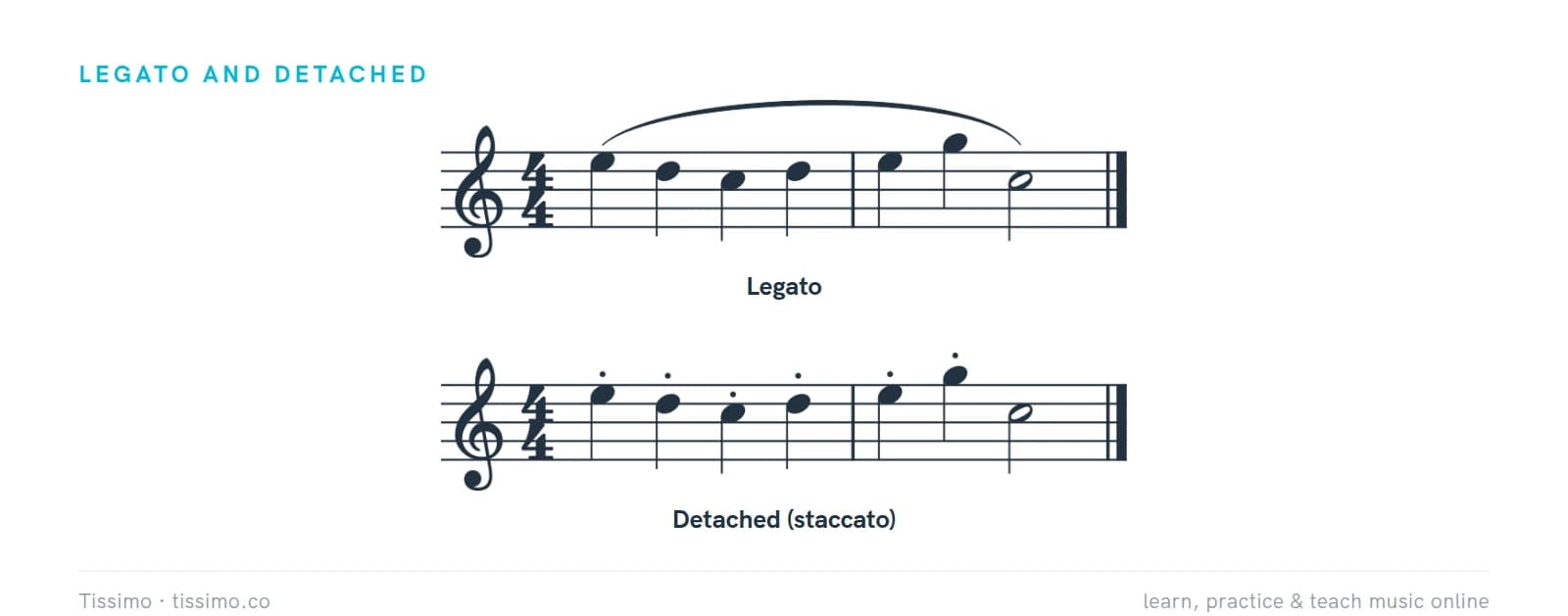
How to play legato
- Piano: a piano note starts to fade the moment you strike it, so legato is a matter of timing. Keep each key down until the next note sounds, then let it up, like walking: one foot leaves the ground just as the other lands. Good fingering makes this possible; thumb under lets a scale continue without a gap. The sustain pedal can help, but practice the connection with your fingers first.
- Strings: the notes under one slur are played in a single bow stroke.
- Winds and brass: tongue only the first note of the slur and keep the air flowing through the rest.
- Voice: sing the group on one breath and carry the vowel from note to note.
On every instrument, legato is also about matching: each new note should come in at about the volume the previous one had reached, so no note bumps out of the line.
The end of a slur
In many styles, especially Classical piano music, a slur also shows grouping. The first note of a short slur gets a little weight, the last one is played lighter and released slightly early, and the next group starts fresh. The two-note slur, a "sigh" of down-and-up, is the clearest case: see Two-Note Slurs.
Slur, tie or phrase mark?
A slur groups notes for connected playing and can include repeated pitches. A tie joins successive notes of the same pitch into one longer sound, so the second note is not played again. A very long curve over several bars is often a phrase mark, which shows a musical sentence (see phrasing) rather than strict legato. Ties vs Slurs helps you tell them apart.
Legato is the opposite of staccato. Between the two lies portato, gently separated notes under a slur.
Common questions
What is the difference between legato and a slur?
Legato is the sound: smooth and connected. A slur is one sign that can ask for it, grouping notes that may include repeated pitches. On some instruments a slur also specifies a shared bow stroke or another articulation. The word legato asks for smooth playing over a passage.
How do you play legato on the piano?
Hold each key down until the next note sounds, then release it, so there is no gap and no blur. Plan a fingering that lets your hand move without jumping, and match the volume of each new note to the one before.
Practice it: free worksheets
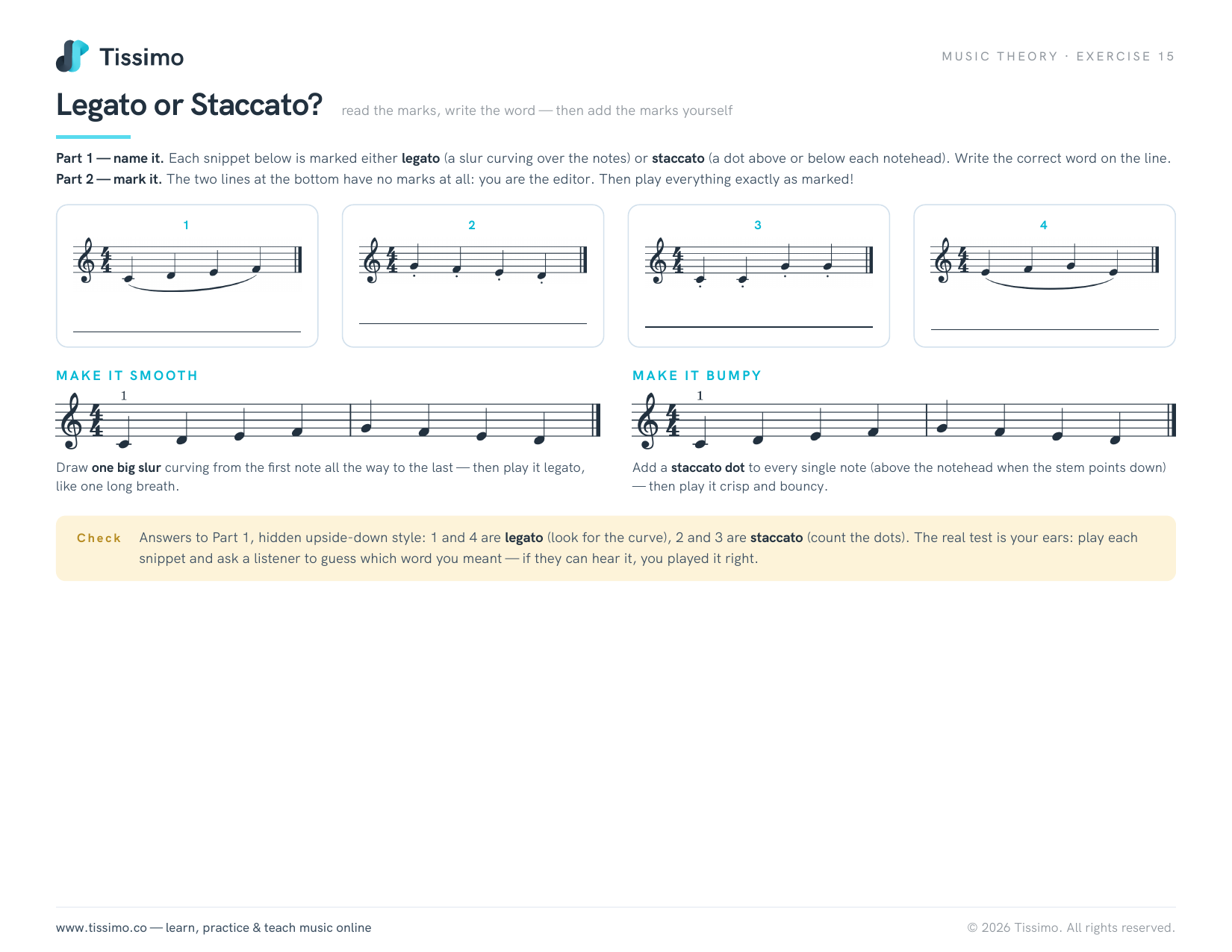 Legato or Staccato?read the marks, write the word — then add the marks yourself
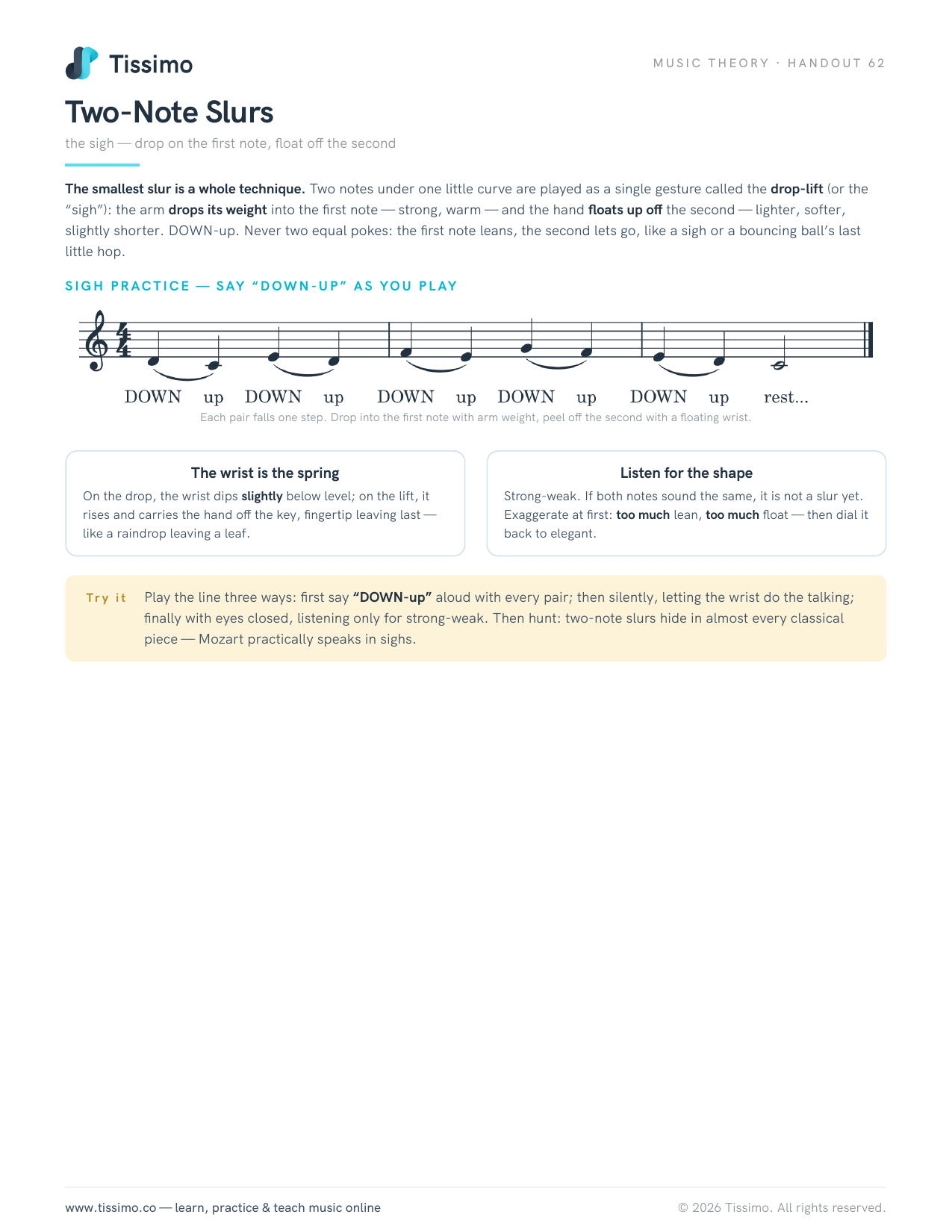 Two-Note Slursthe sigh — drop on the first note, float off the second
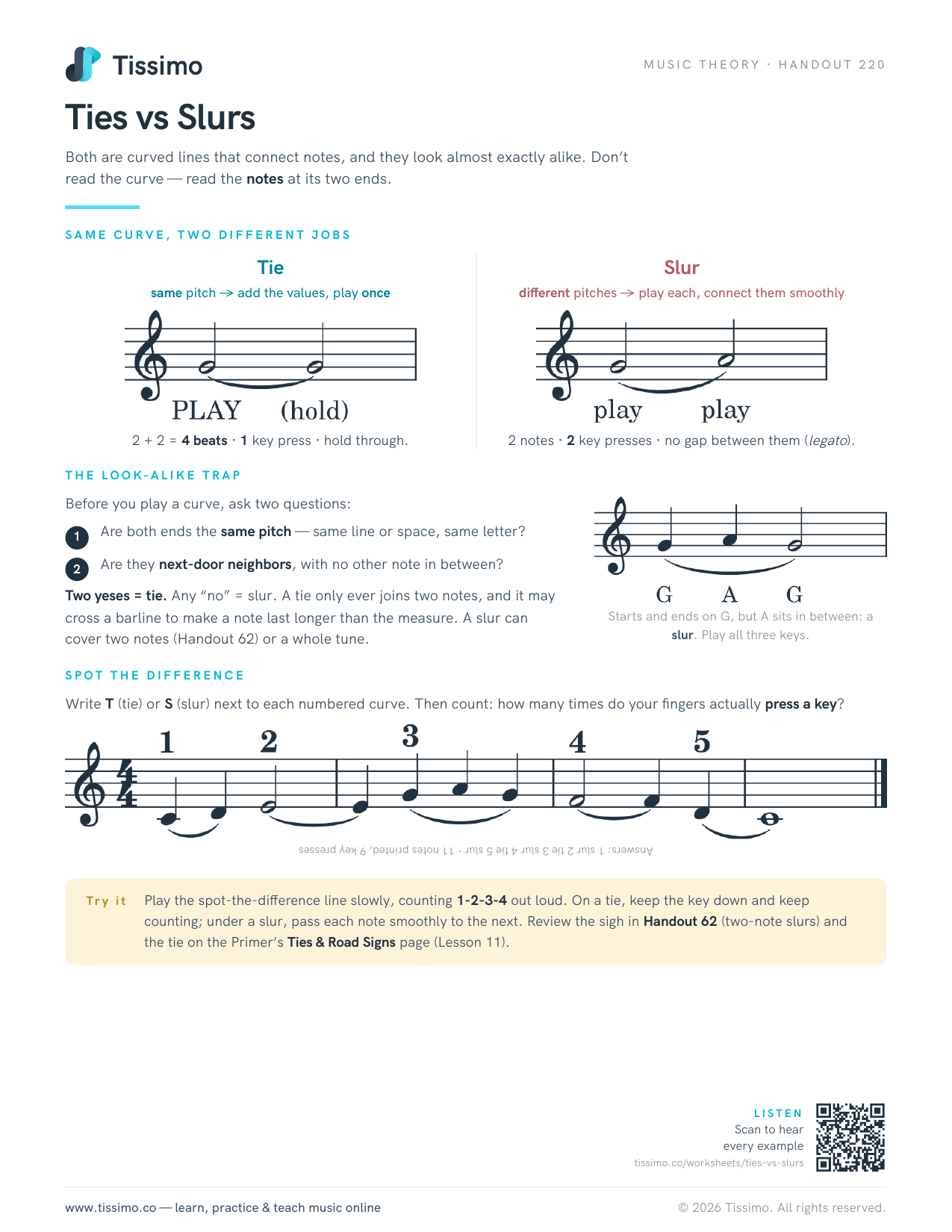 Ties vs SlursBoth are curved lines that connect notes, and they look almost exactly alike. Don’t read the curve — read the notes at its two ends.
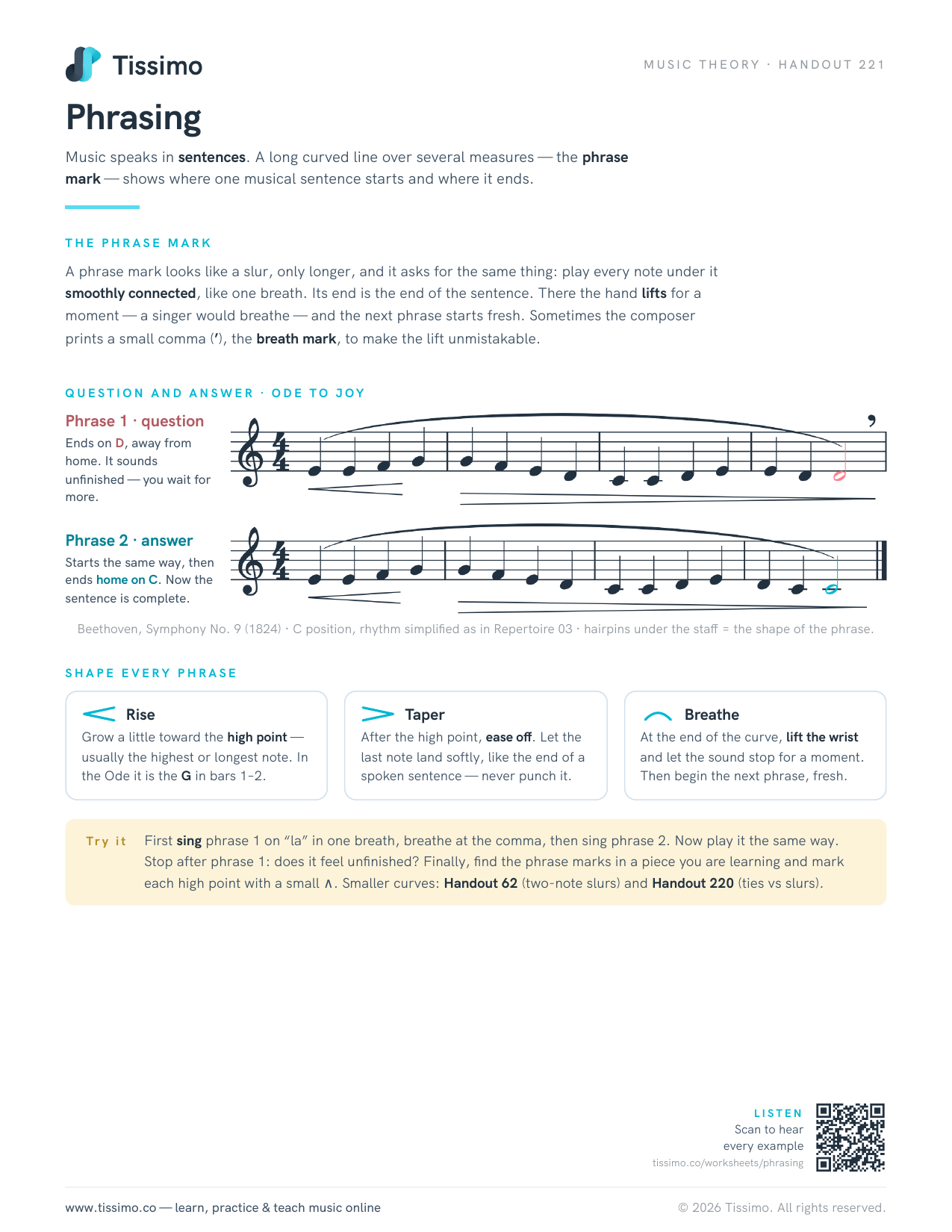 PhrasingMusic speaks in sentences. A long curved line over several measures — the phrase mark — shows where one musical sentence starts and where it ends.
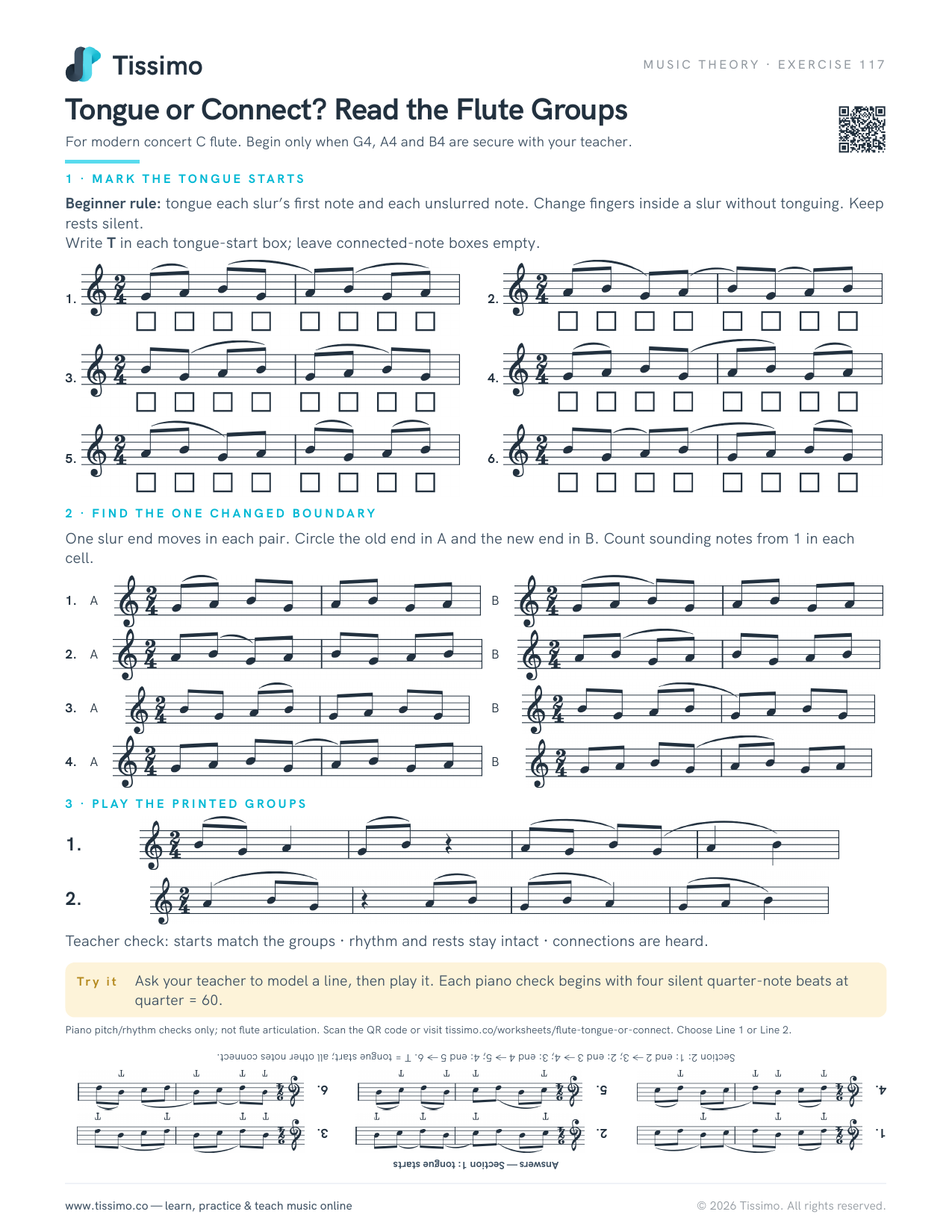 Tongue or Connect? Read the Flute GroupsFor modern concert C flute. Begin only when G4, A4 and B4 are secure with your teacher.
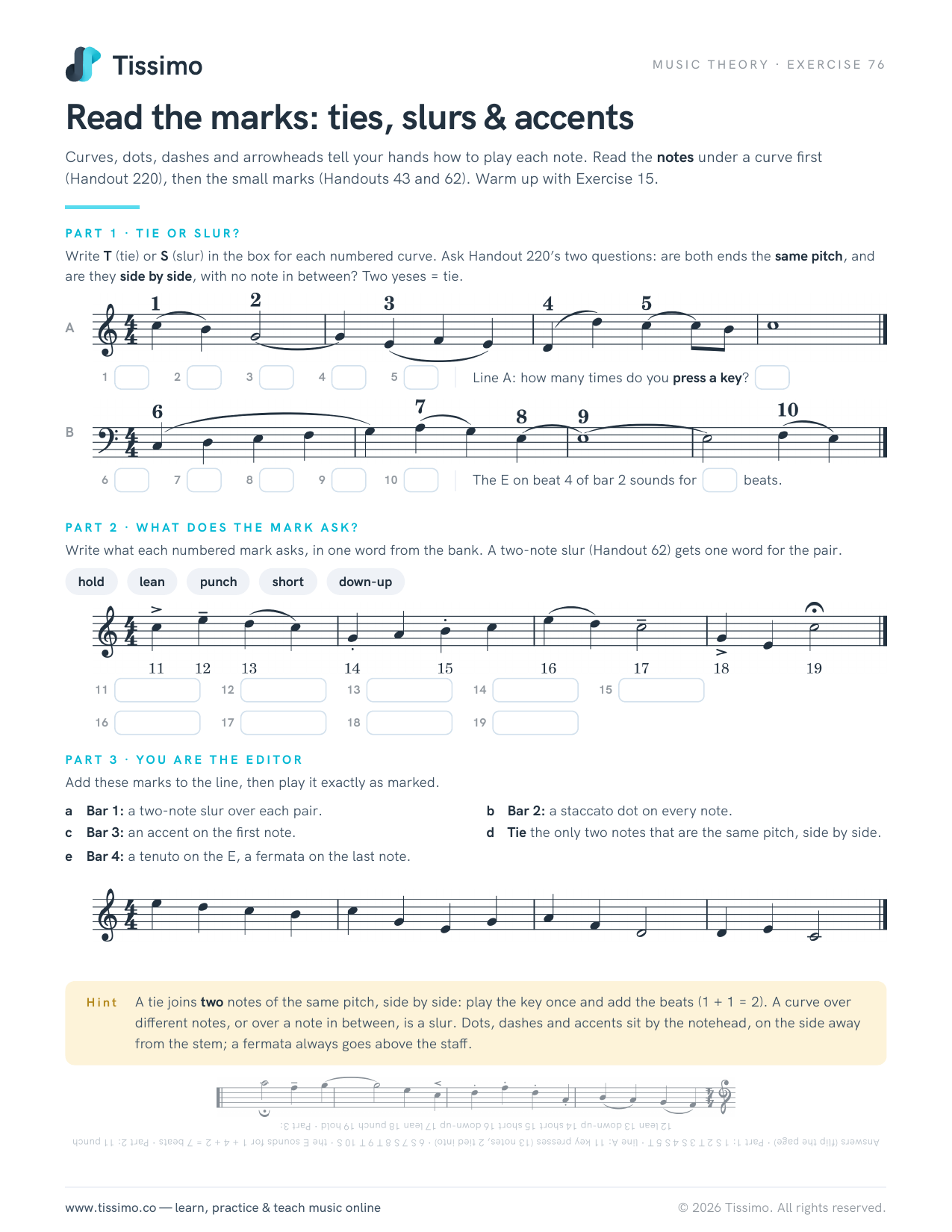 Read the marks: ties, slurs & accentsCurves, dots, dashes and arrowheads tell your hands how to play each note. Read the notes under a curve first (Handout 220), then the small marks (Handouts 43 and 62). Warm up with Exercise 15.