Technique & Performance
Fingering
Fingering is the choice of which finger plays each note, shown in music by small numbers. On the piano the thumb is 1 and the little finger is 5, in both hands.
Finger numbers on the piano
Piano fingering numbers the fingers of each hand from the thumb: thumb 1, index finger 2, middle finger 3, ring finger 4, little finger 5. The numbers are the same for both hands, so "1" means the right thumb or the left thumb depending on which hand plays the note. Right-hand numbers are usually printed above the notes and left-hand numbers below.
Other instruments
- Guitar, violin and other string instruments: the left-hand fingers are numbered 1 (index) to 4 (little finger), and 0 means an open string. Classical guitarists name the plucking fingers with letters: p, i, m and a for thumb, index, middle and ring, from their Spanish names (see fingerpicking).
- Wind instruments: fingering means which keys or holes you close for each note, usually shown in a fingering chart. Many notes have more than one fingering; an "alternate" fingering may be easier in a fast passage or better in tune.
What makes a good fingering
A good fingering lets you play the same notes the same way every time. A few principles cover most passages, and the Fingering Principles handout explains more:
- Plan for the whole phrase. Look ahead to the highest and lowest notes, and choose a starting finger that leaves room for them.
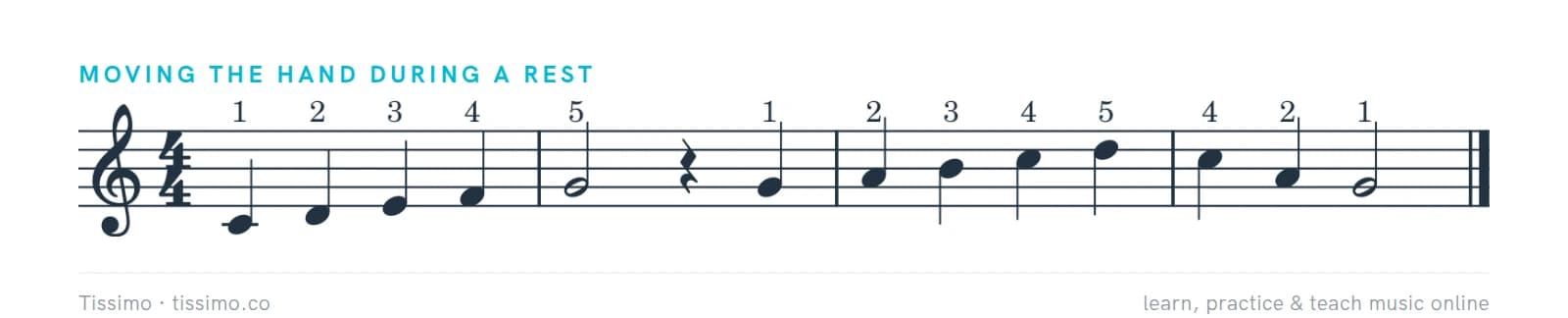
- Move the hand during rests and long notes, not in the middle of a quick run, as in the example above.
- Keep the thumb on white keys in scales and runs when you can. It is the shortest finger, so putting it on a black key pulls the whole hand forward.
- Use crossings for longer runs. The thumb under movement lets five fingers play a scale of any length.
- Fit your own hand. Printed fingering may come from the composer, an editor or a teacher. Consider its musical purpose, and adapt it with a teacher when it does not suit your hand.
How to practice it
Work out a fingering slowly, write it into the music in pencil, and then keep it. If you change fingers every time you play, your hand has no single route to learn, and that is where many slips in performance come from. When a passage keeps going wrong in the same spot, check the fingering before you blame your fingers. The Write the Fingering worksheet gives you practice choosing numbers, and a teacher can check your choices in a lesson.
Common questions
What do the numbers above piano notes mean?
They are finger numbers: 1 is the thumb, 2 the index finger, 3 the middle finger, 4 the ring finger and 5 the little finger, in either hand.
Do I have to use the fingering printed in the music?
No, but treat it as good advice. Fingerings may be the composer's or an editor's. If one does not suit your hand, consider its musical purpose and choose a workable alternative with your teacher.
Practice it: free worksheets
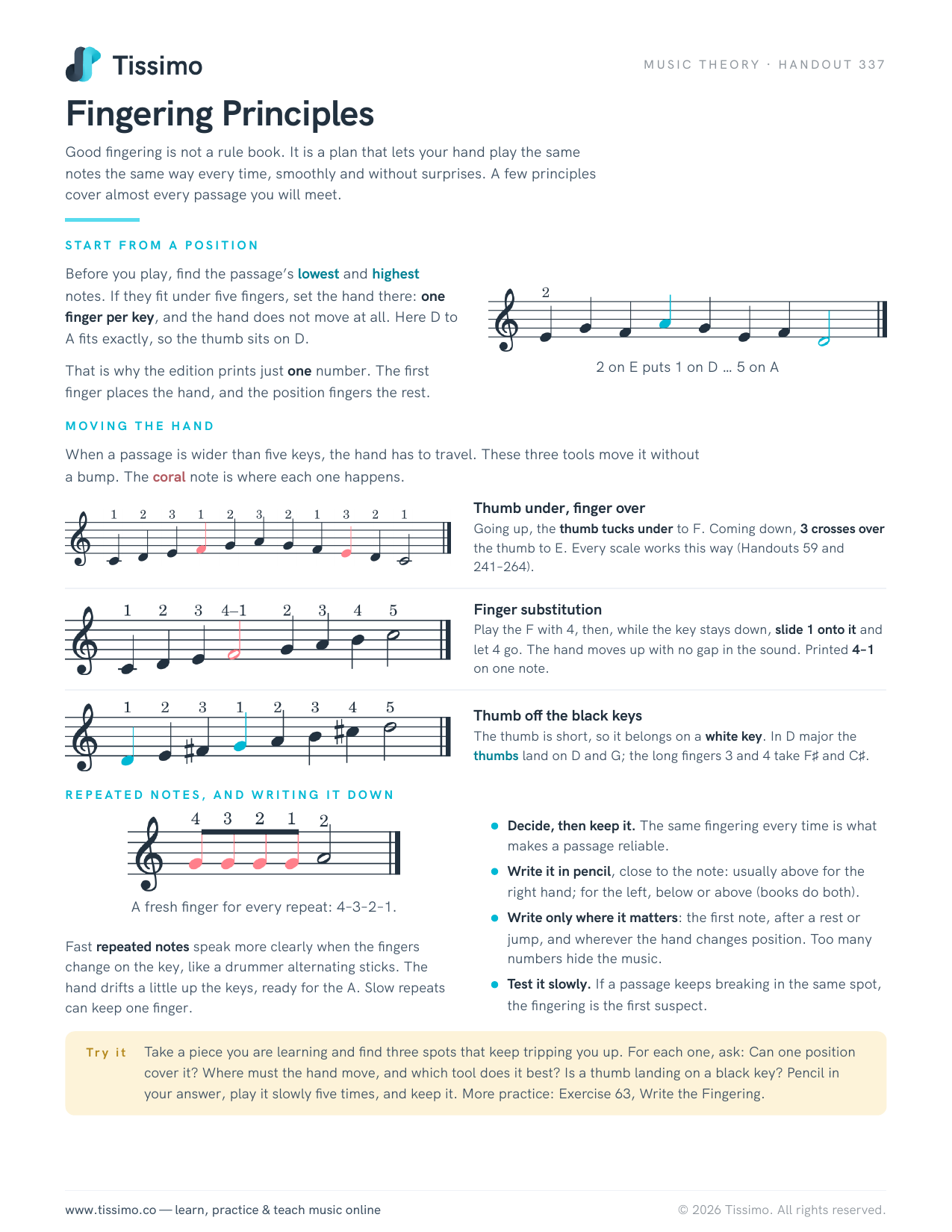 Fingering PrinciplesGood fingering is not a rule book. It is a plan that lets your hand play the same notes the same way every time, smoothly and without surprises. A few principles cover almost every passage you will meet.
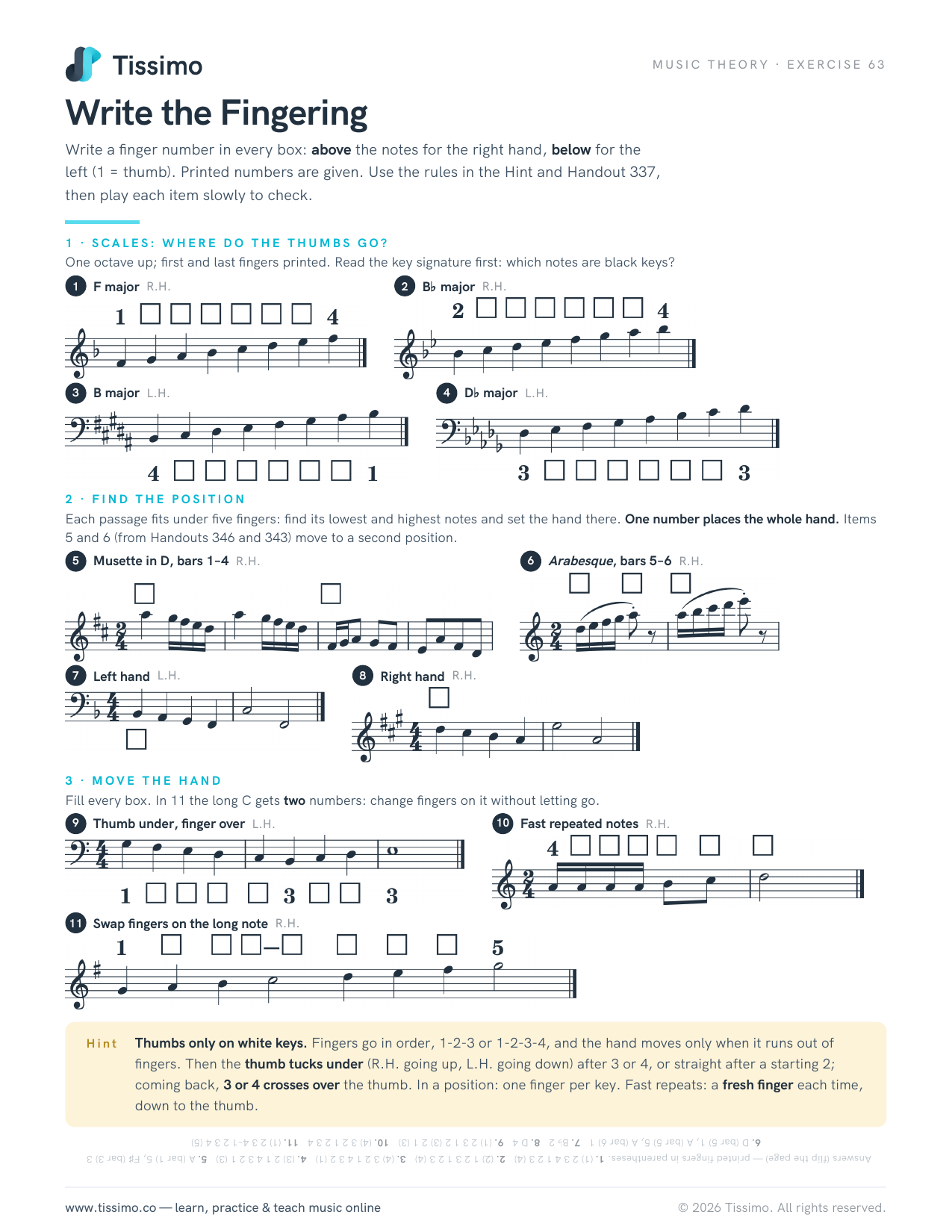 Write the FingeringWrite a finger number in every box: above the notes for the right hand, below for the left (1 = thumb). Printed numbers are given. Use the rules in the Hint and Handout 337, then play each item slowly to check.
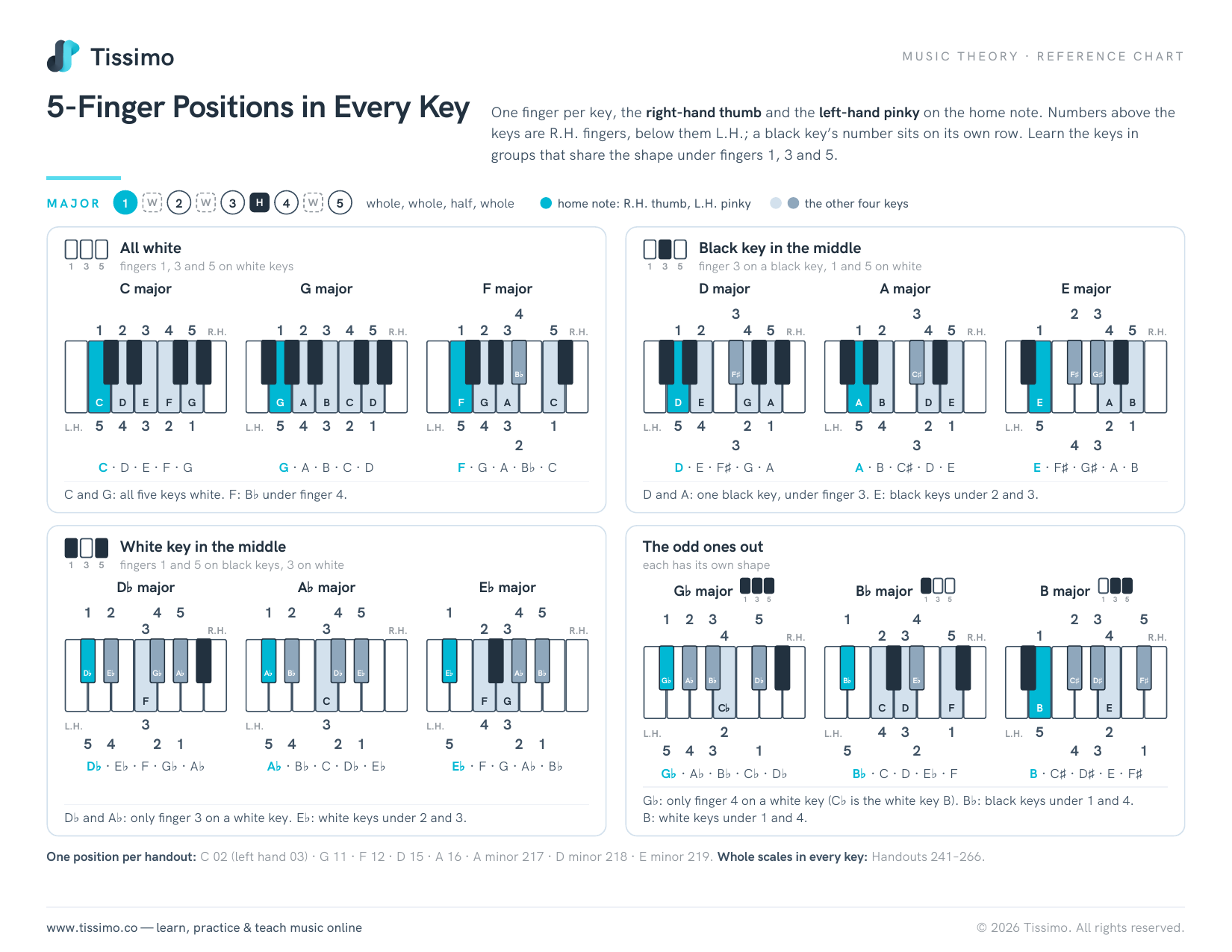 5-Finger Positions in Every KeyOne finger per key, the right-hand thumb and the left-hand pinky on the home note. Numbers above the keys are R.H. fingers, below them L.H.; a black key’s number sits on its own row. Learn the keys in groups that share the shape under fingers 1, 3 and 5.
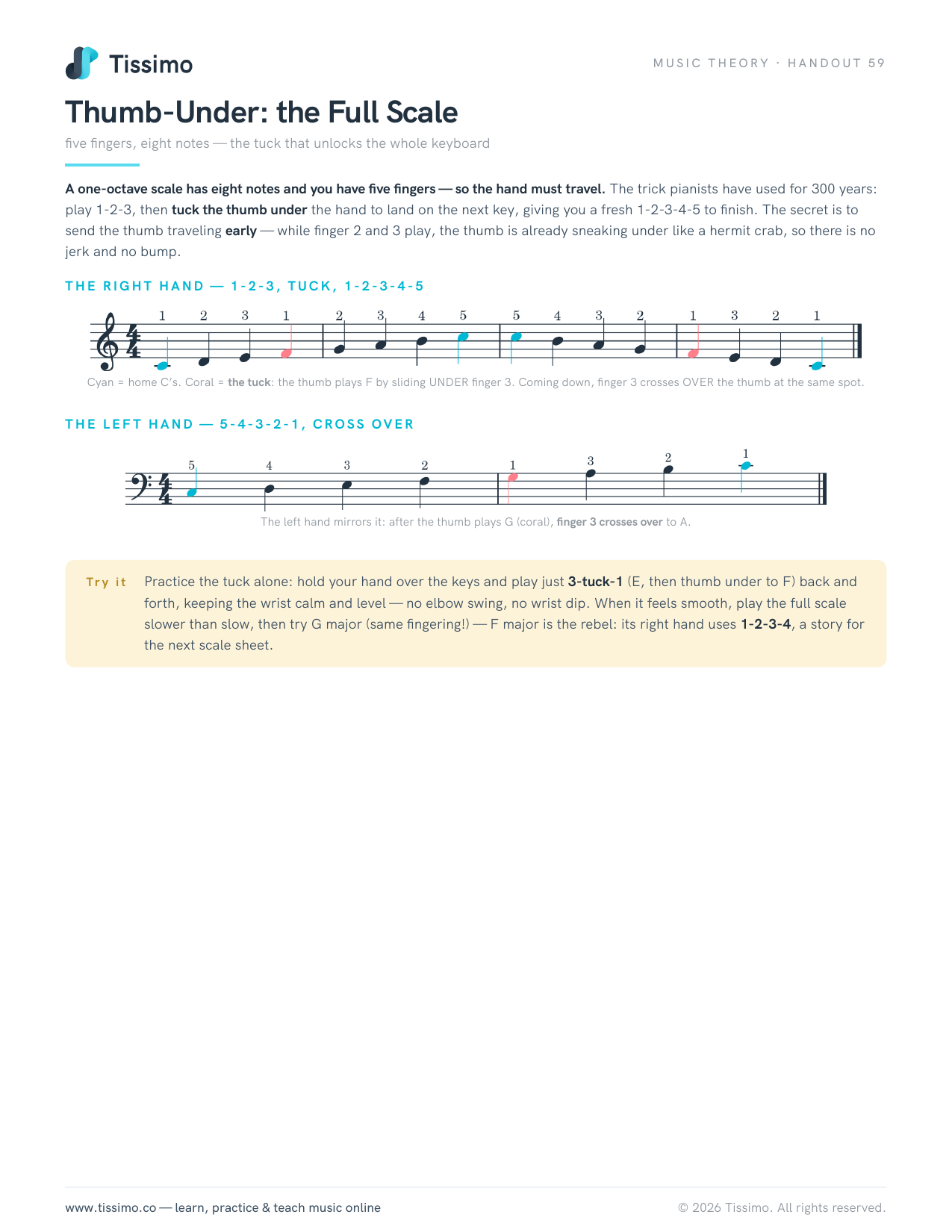 Thumb-Under: the Full Scalefive fingers, eight notes — the tuck that unlocks the whole keyboard