Technique & Performance
Ear Training
Ear training is practice that teaches you to recognize and name what you hear in music, such as intervals, chords, rhythms and melodies, and to sing or play them back.
Ear training builds the link between the sound in your head and the notes on the page or the instrument. A trained ear lets you hear whether a chord is major or minor, sing back a melody after one hearing, notice when you are out of tune, and write down a tune or rhythm you hear. Colleges and conservatories often call it aural skills and teach it alongside music theory.
What ear training covers
- Intervals: the distance between two notes, such as a perfect fifth or a minor third, heard one after the other or together.
- Chords: the quality of a triad (major, minor, diminished, augmented), seventh chords and inversions.
- Scales and modes: major, minor and the modes, each with its own color.
- Rhythm: clapping back and writing down rhythms while keeping a steady pulse.
- Melodic dictation: writing down a short tune after hearing it a few times.
- Harmony: following a chord progression and its bass line, and recognizing cadences.
- Sight-singing: singing from notation, often with solfège, which trains the inner ear from the other direction.
How to practice
- Short and often. Ten minutes a day does more than one long session a week.
- Sing. Singing an interval or a melody, even quietly, fixes it in your ear better than listening alone. Sing the next note before you play it, then check.
- Connect sounds to music you know. Many students remember intervals by the openings of familiar songs. Choose songs you know well and check them on a keyboard.
- Hear everything from home. Most music circles around a tonic. Hear each note in relation to that home note, not in isolation.
- Test yourself. Have a friend play while you answer with your eyes closed, or use Tissimo's free ear trainer, which quizzes scale degrees, intervals, chords and dictation.

Ear training and the rest of your playing
Ear training is not a separate subject; it makes everything else easier. You catch wrong notes when sight-reading, tune faster, learn pieces faster because you can hear where they are going, and grow toward playing by ear and improvisation. Most of what people call "a good ear" is relative pitch, and it can be developed at any age.
Tissimo's worksheets give you guided sets to work through: Ear Training: Set 1, Ear Training: Intervals and Melodic Dictation.
Common questions
Can you train your ear as an adult?
Yes. Recognizing intervals, chords and melodies by their relationships, relative pitch, is a skill adults learn well with regular practice. Short daily sessions work best.
What should I learn first in ear training?
Start by matching a note with your voice, hearing whether a melody goes up or down, and telling major from minor. Then add intervals one or two at a time.
Practice it: free worksheets
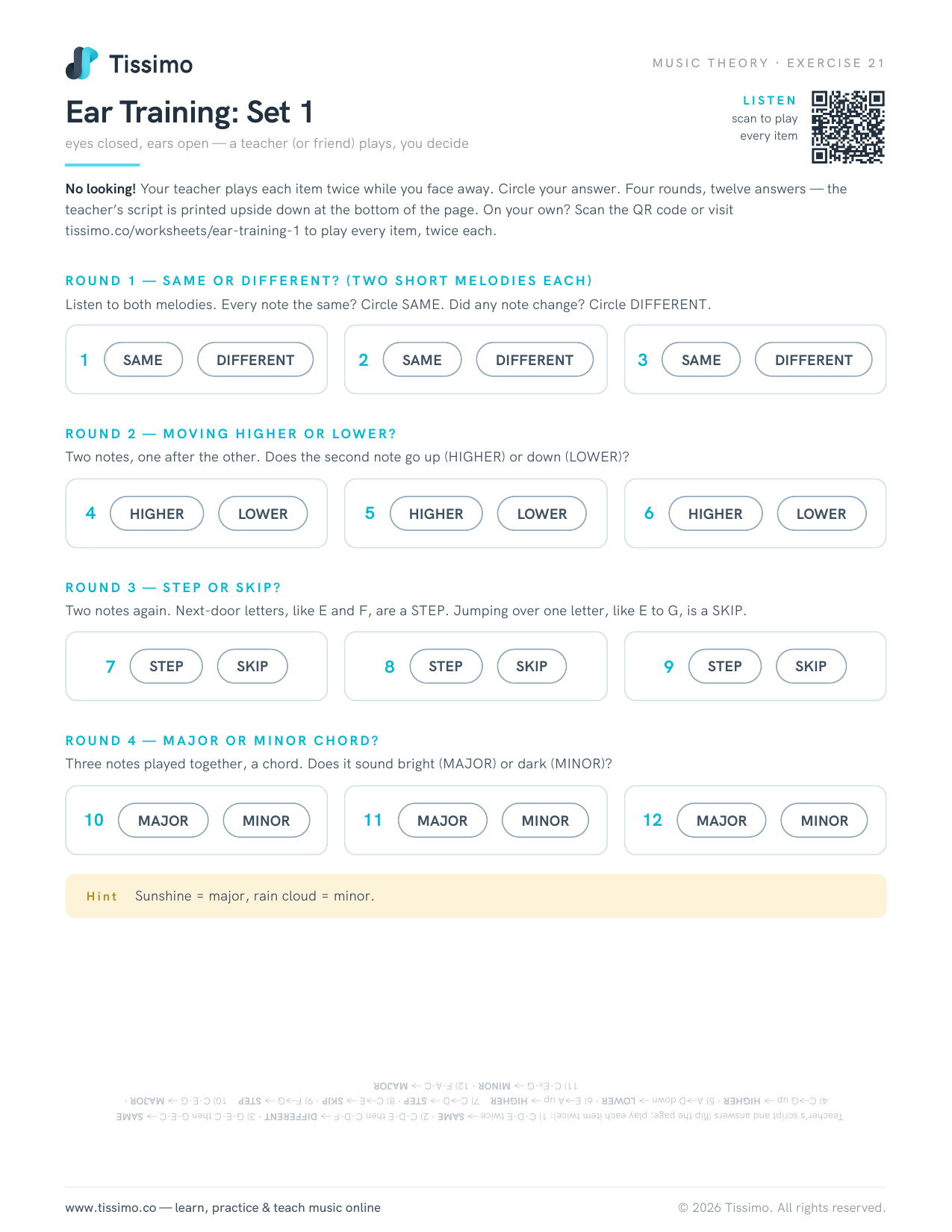 Ear Training: Set 1eyes closed, ears open — a teacher (or friend) plays, you decide
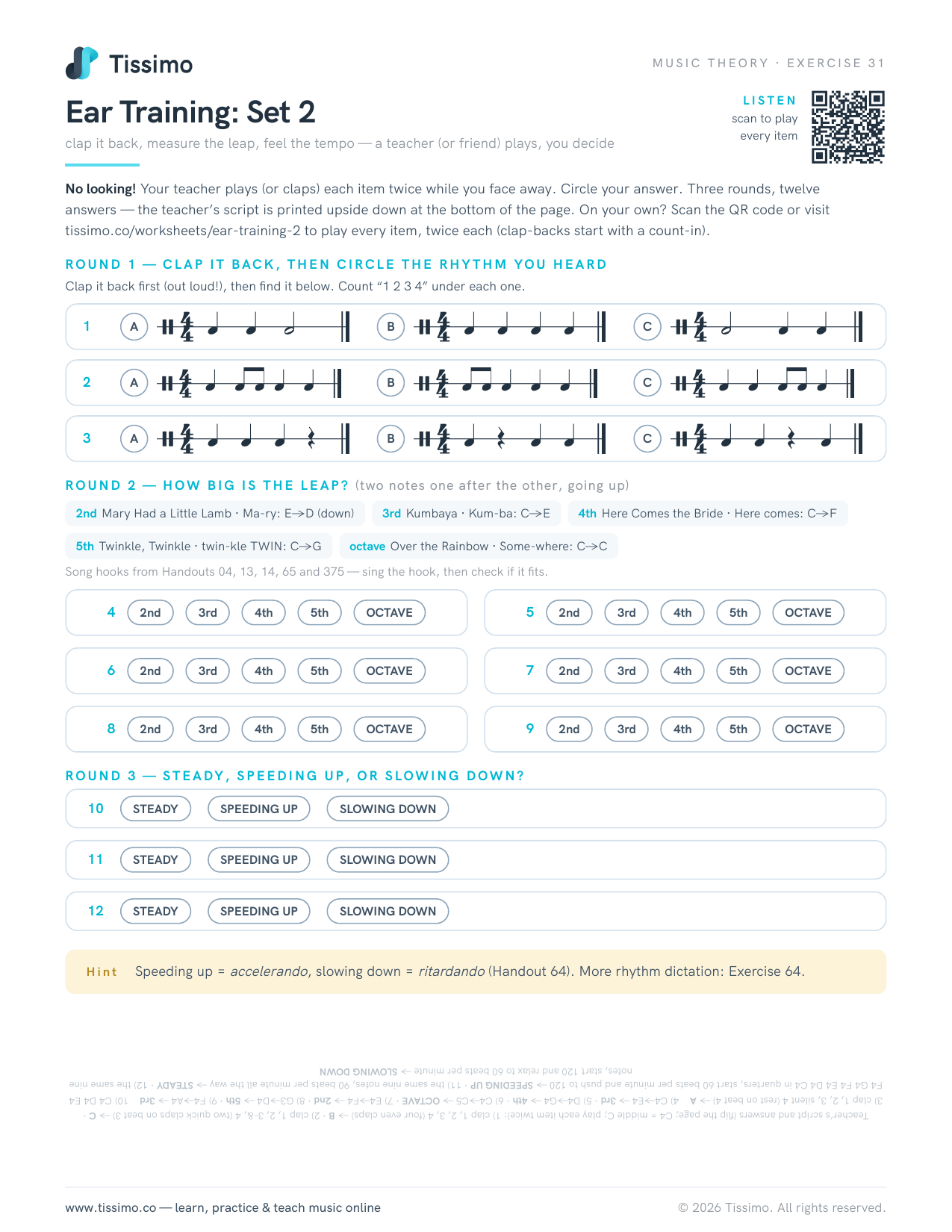 Ear Training: Set 2clap it back, measure the leap, feel the tempo — a teacher (or friend) plays, you decide
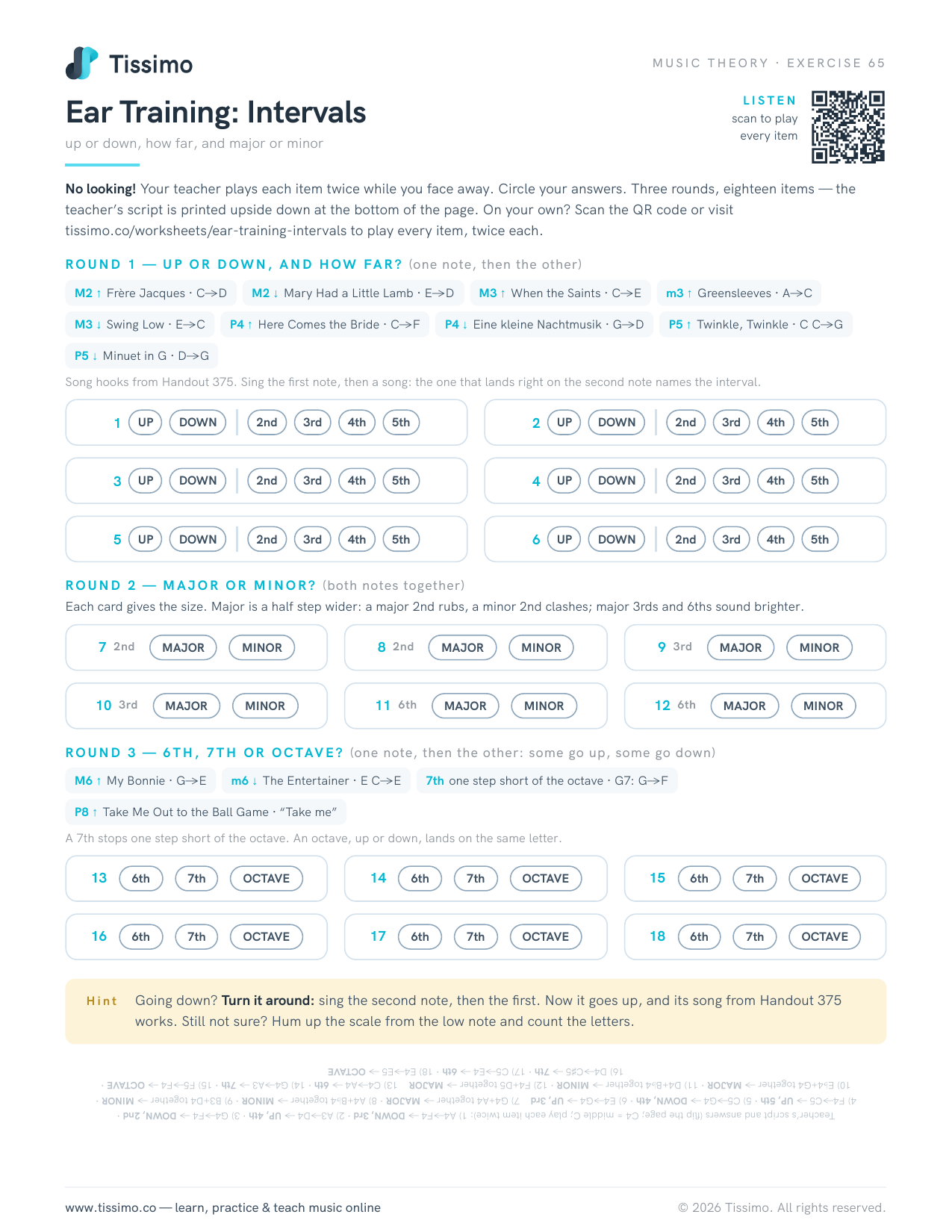 Ear Training: Intervalsup or down, how far, and major or minor
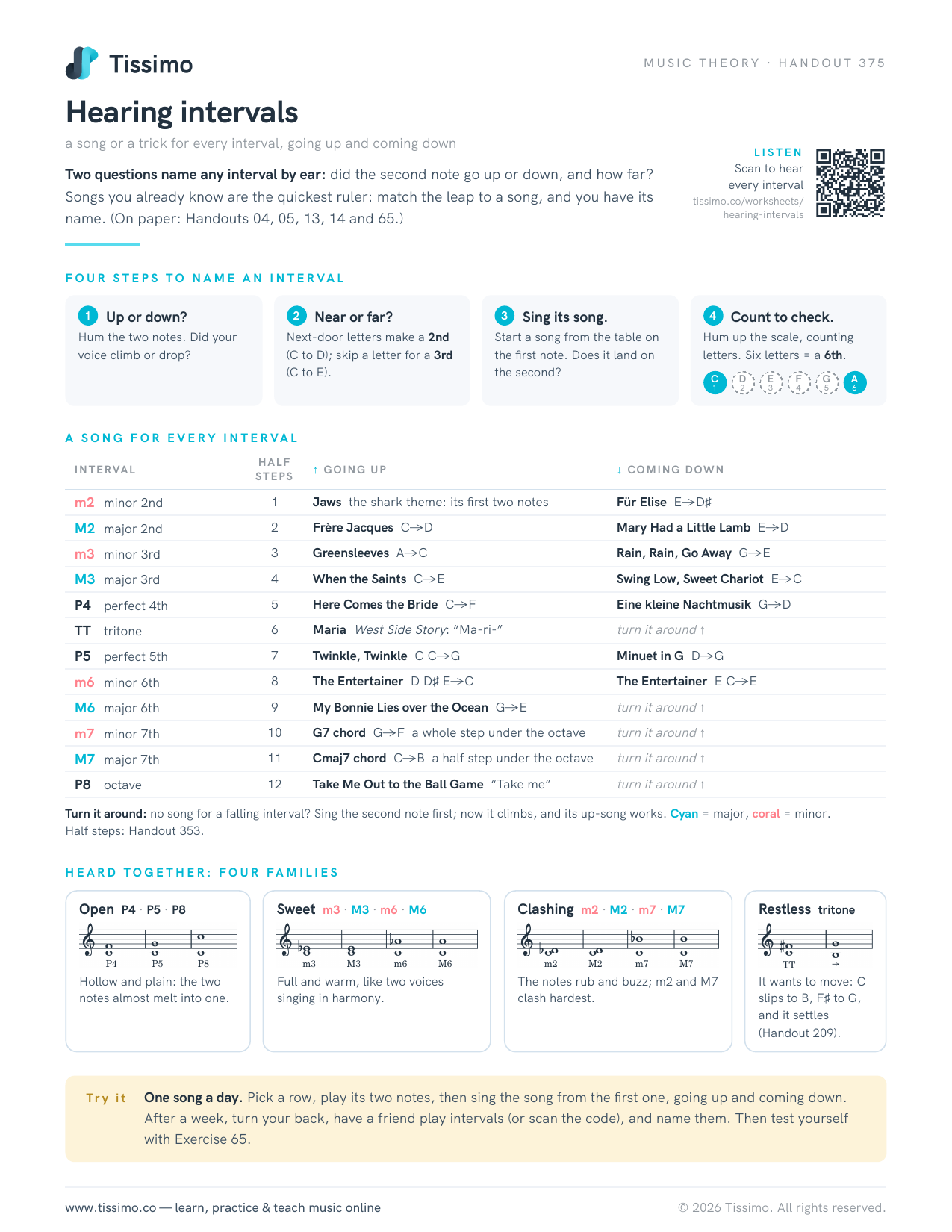 Hearing intervalsa song or a trick for every interval, going up and coming down
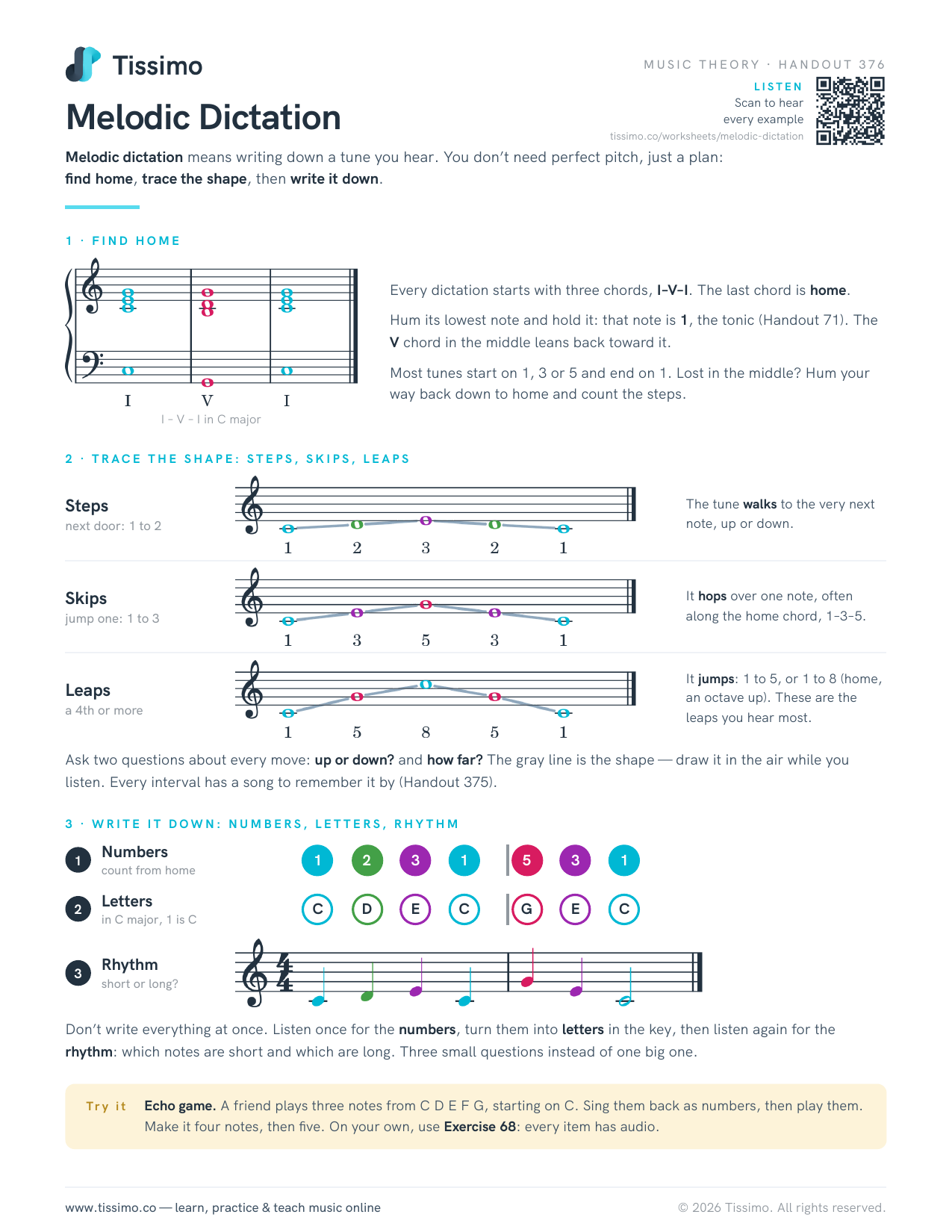 Melodic DictationMelodic dictation means writing down a tune you hear. You don’t need perfect pitch, just a plan: find home, trace the shape, then write it down.
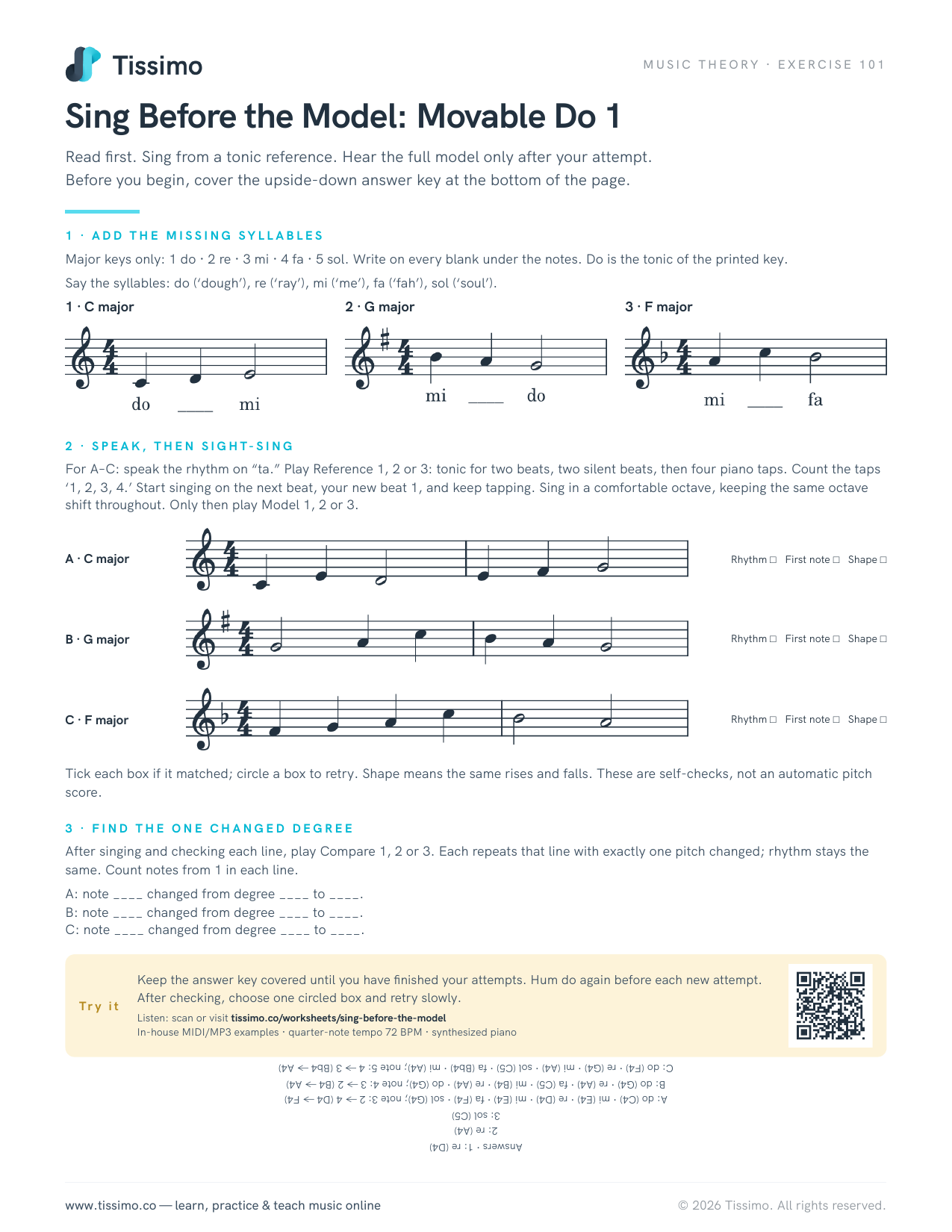 Sing Before the Model: Movable Do 1Read first. Sing from a tonic reference. Hear the full model only after your attempt. Before you begin, cover the upside-down answer key at the bottom of the page.