Chords & Harmony
Cadence
Pronounced KAY-dunss
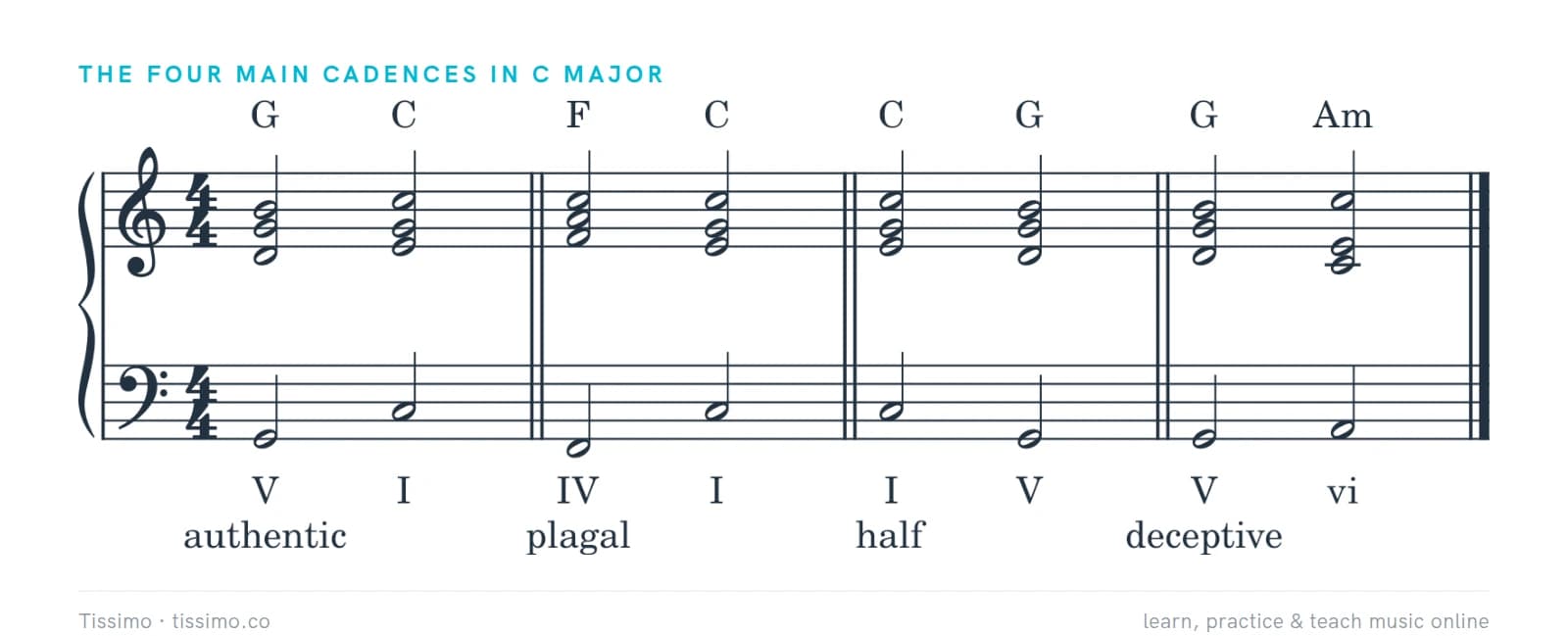
A cadence is the chord progression that ends a musical phrase, like punctuation at the end of a sentence. The main types are authentic (V–I), plagal (IV–I), half (ending on V) and deceptive (V–vi).
A cadence is the chord progression at the end of a musical phrase. It works like punctuation: some cadences sound like a full stop, others like a comma or a question mark. Recognizing cadences is one of the quickest ways to understand how a piece is built, because they show where each phrase ends, and how firmly.
The four main cadences
- Authentic cadence (V–I): the dominant resolving to the tonic. The strongest and most final ending, a full stop. See authentic cadence.
- Plagal cadence (IV–I): the subdominant moving to the tonic. A softer close, often called the "Amen" cadence because hymns traditionally set that word to it. See plagal cadence.
- Half cadence (ending on V): the phrase stops on the dominant and leaves the music open, like a comma or a question. See half cadence.
- Deceptive cadence (V–vi): the dominant makes you expect I, and the music moves to vi instead. See deceptive cadence.
Strong and weak endings
Within authentic cadences, theorists separate the perfect authentic cadence (both chords in root position, the tonic in the top voice), the most final ending in tonal music, from the weaker imperfect kinds. Composers save the strongest cadence for the end of a section or a piece, and use half and deceptive cadences to keep the music going. Two phrases that end with a half cadence and then an authentic cadence make a period, the musical version of a question and its answer.
A few more names
- Phrygian half cadence: iv6 – V in a minor key, with the bass falling a half step (F to E in A minor). Common in Baroque music.
- Picardy third: a piece in a minor key that ends on a major tonic chord.
- British names: perfect cadence for V–I, imperfect cadence for one that ends on V, and interrupted cadence for V–vi.
Hearing cadences
Listen to the bass at the end of each phrase. A bass that moves from the fifth degree to the first (G to C) usually signals an authentic cadence; a phrase that stops with the bass on the fifth degree is probably a half cadence. Then ask how settled the last chord feels. Cadences introduces all four, Identify the cadences tests you on paper, and Ear Training: Cadences & Progressions trains your ear.
Common questions
What are the four types of cadences?
Authentic (V–I), plagal (IV–I), half (a phrase that ends on V) and deceptive (V–vi).
What is the strongest cadence?
The perfect authentic cadence: V to I with both chords in root position and the tonic note in the melody on the final chord.
Practice it: free worksheets
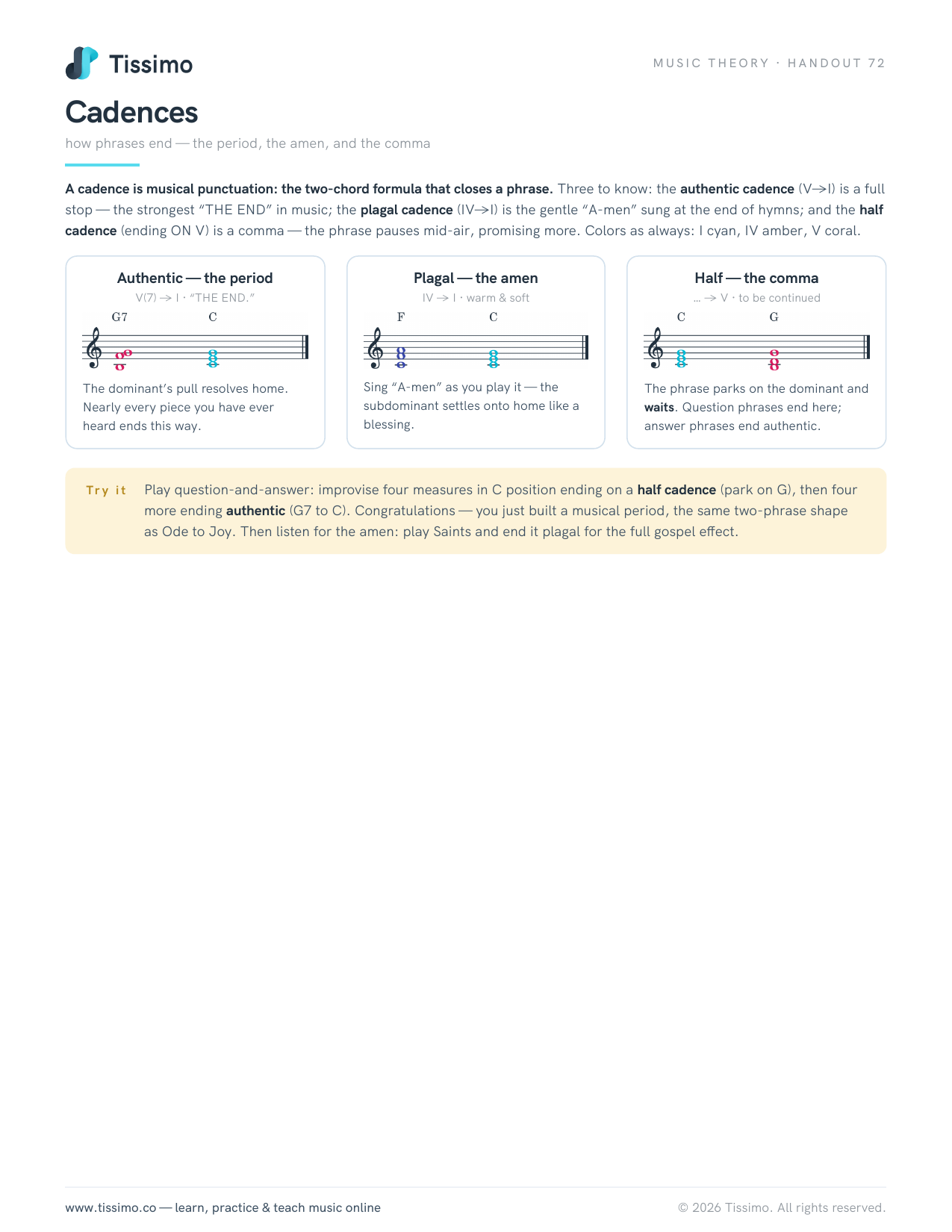 Cadenceshow phrases end — the period, the amen, and the comma
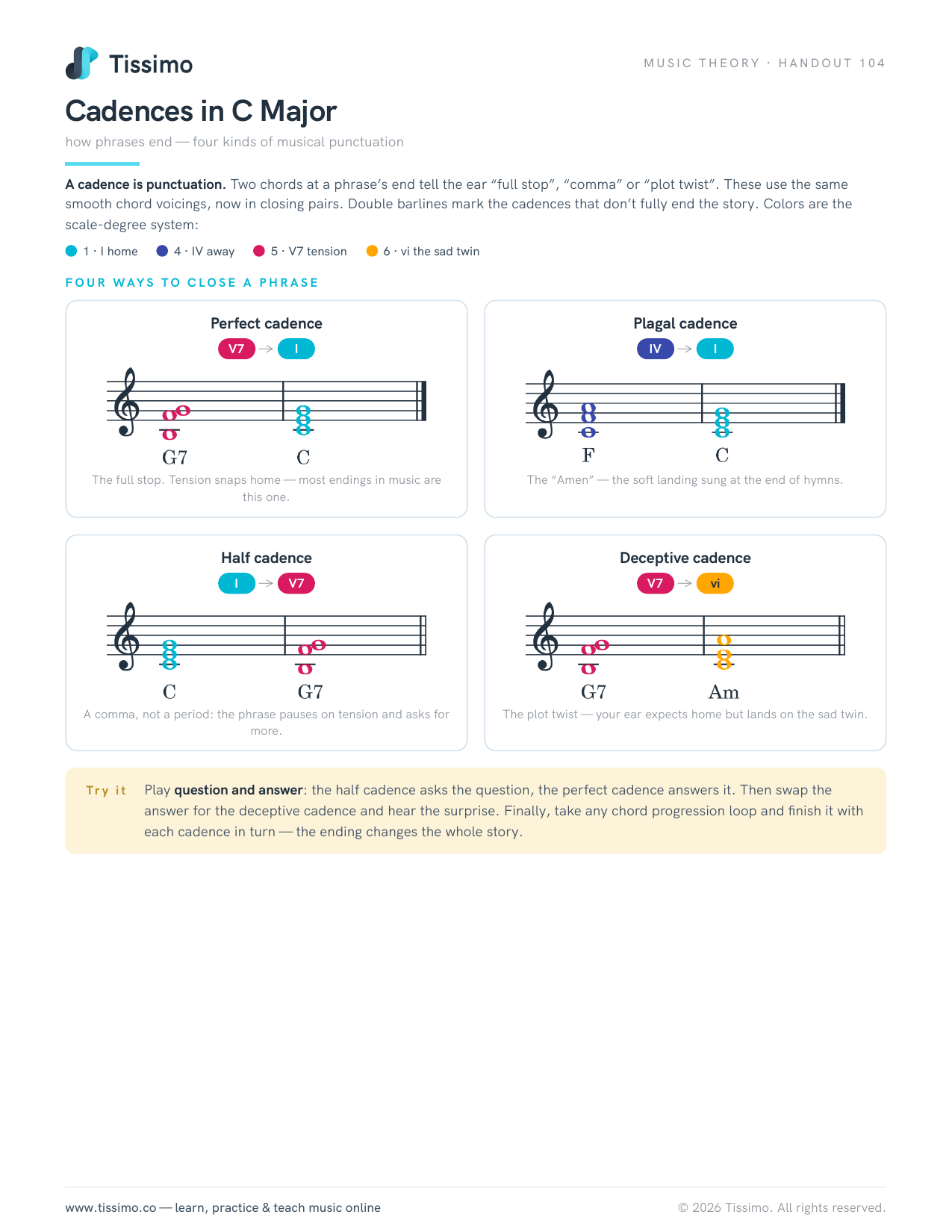 Cadences in Every KeyHow phrases end — the four kinds of musical punctuation, written out in all 24 keys.
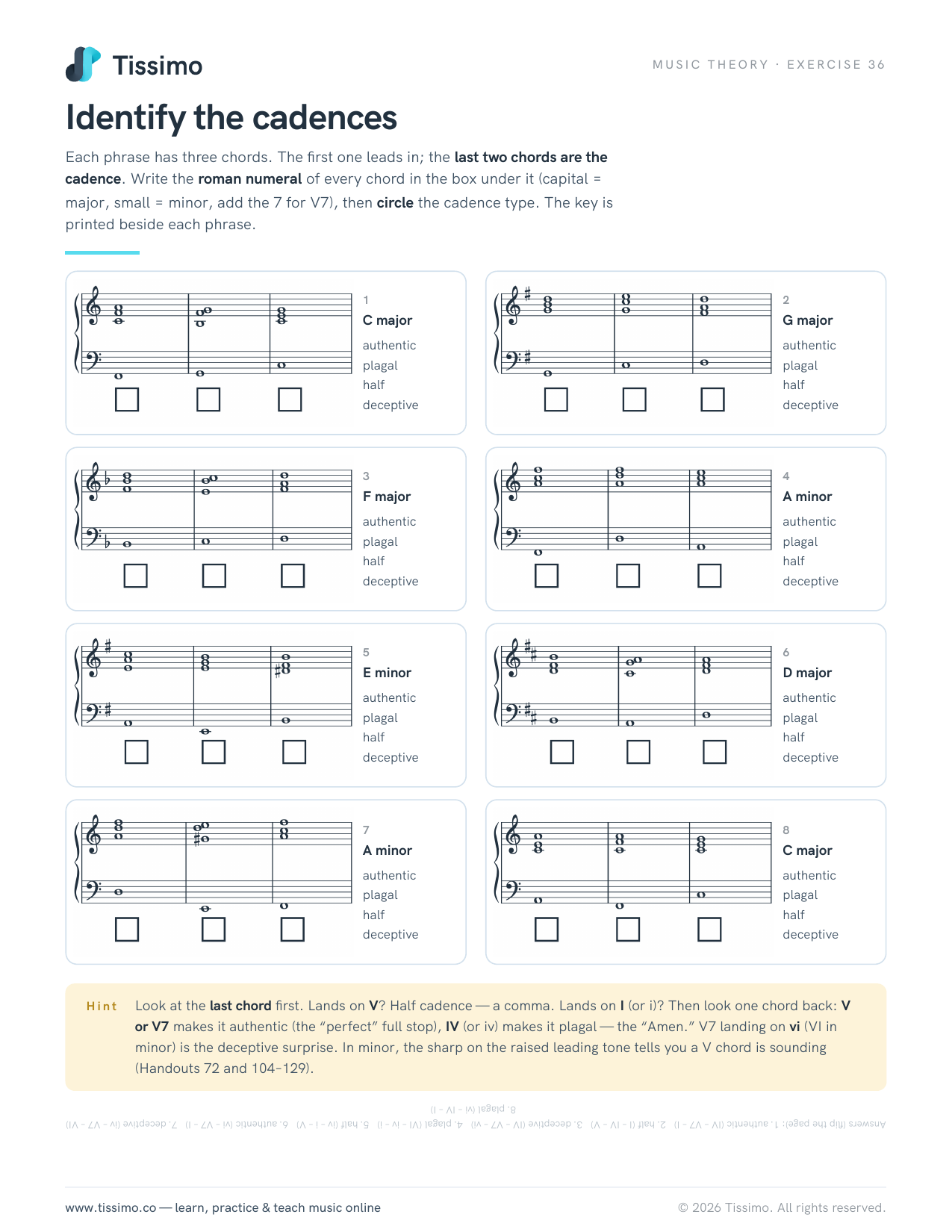 Identify the cadencesEach phrase has three chords. The first one leads in; the last two chords are the cadence. Write the roman numeral of every chord in the box under it (capital = major, small = minor, add the 7 for V7), then circle the cadence type. The key is printed beside each phrase.
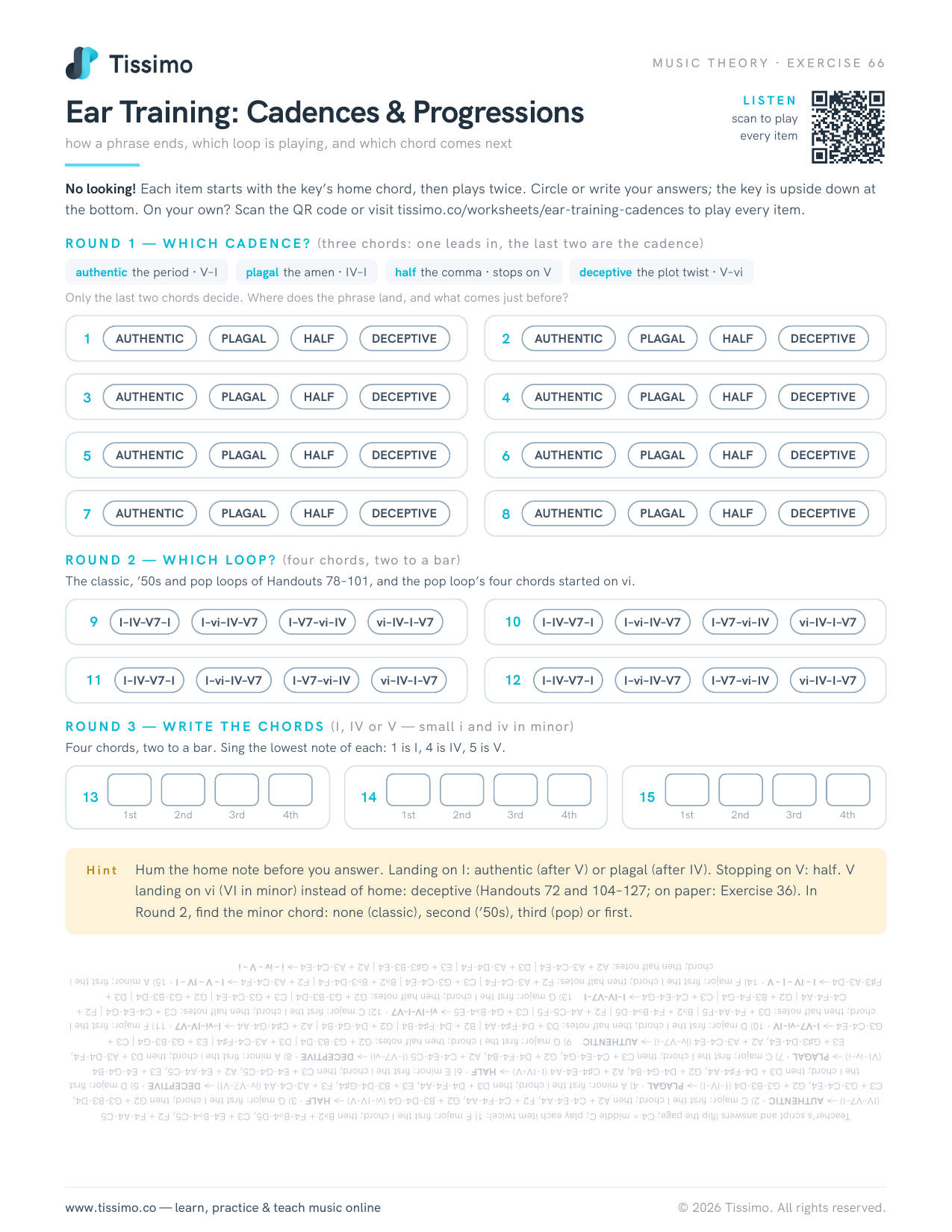 Ear Training: Cadences & Progressionshow a phrase ends, which loop is playing, and which chord comes next